Decades Pizza | Bar and Restaurant in Ridgewood, Queens - NYC
Decades Pizza sits on Woodward Avenue in Ridgewood, Queens, a neighbourhood that has absorbed wave after wave of creative migration from Brooklyn without losing its working-class footing. The bar and restaurant format places it inside a broader Queens trend of venues that blend serious drinking programs with approachable food anchors. For visitors crossing the Knickerbocker corridor, it reads as a reliable neighbourhood fixture rather than a destination built for out-of-borough crowds.
Pearl is the En Primeur Club membership app — saves, bookings, and concierge access live there. Same editors, same standards.
- Address
- 6-90 Woodward Ave, Queens, NY 11385
- Phone
- +1 347 763 0018
- Website
- decades.pizza
- Directions
- Get directions
 Saves & bookings on Pearl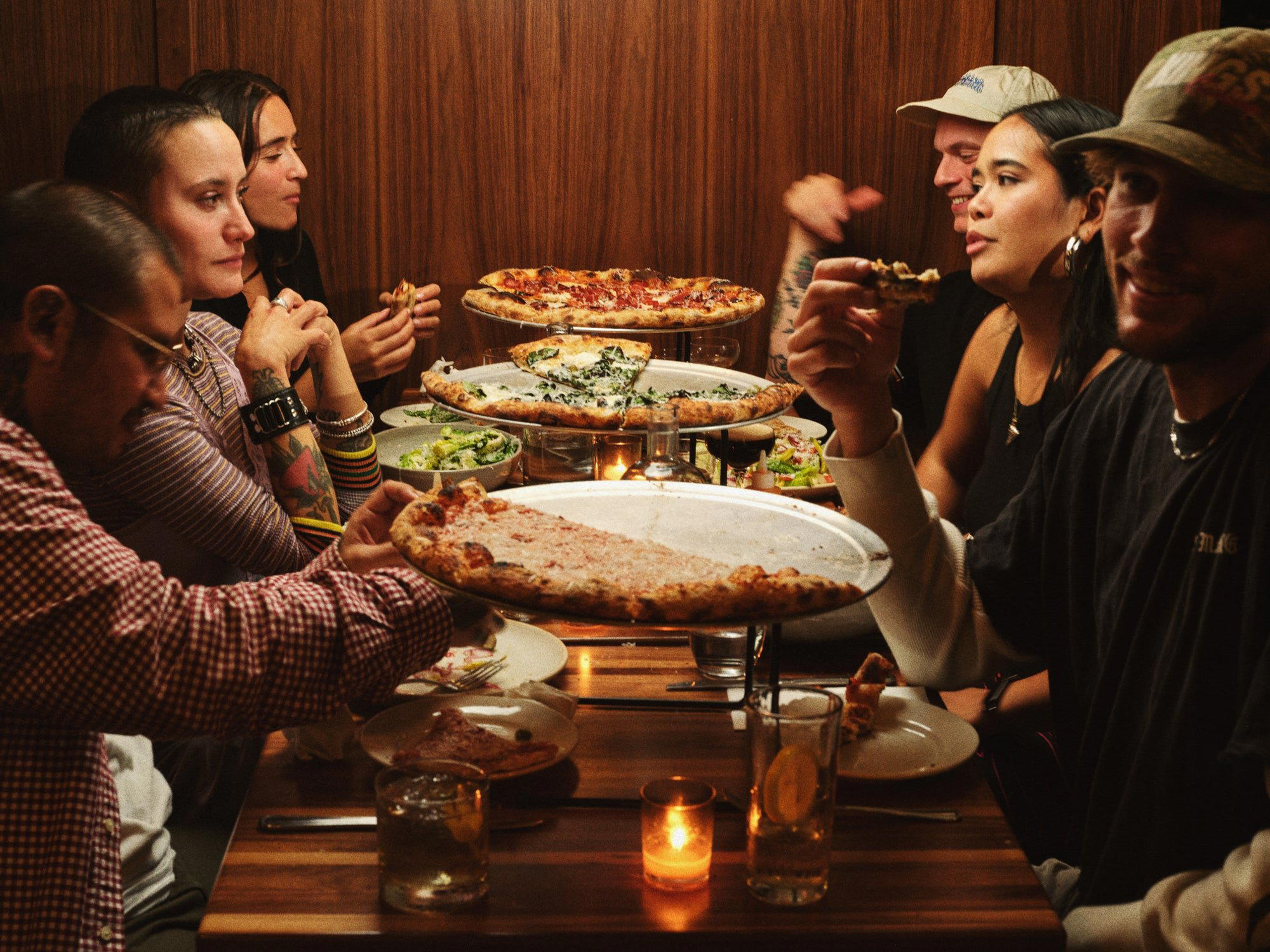
Where Ridgewood Eats on a Tuesday Night
Woodward Avenue in Ridgewood, Queens moves at a different pace than the louder stretches of the outer boroughs. The neighborhood sits at the Queens-Brooklyn border, and its commercial strips have absorbed waves of working-class communities without ever fully committing to the kind of self-conscious reinvention that tends to follow press coverage. Decades Pizza, Bar and Restaurant at 6-90 Woodward Ave operates inside that rhythm: a corner spot that reads less as a destination and more as a fixture, the kind of place where the person behind the bar already knows what the third regular through the door is drinking before the stool is warm.
That regulars-first gravity is the distinguishing feature of a certain tier of New York neighborhood dining that receives little coverage relative to its actual importance to how the city eats. The destination omakase counter and the chef-driven tasting room get the ink; the pizza and bar that keeps a block fed and socialized across decades gets the loyalty. Ridgewood has a cluster of these anchoring spots, and Decades sits among them as a reference point rather than a novelty.
The Unwritten Menu: What Regulars Actually Order
In New York's neighborhood pizza-and-bar category, the gap between the printed menu and what regulars default to is often significant. The people who return weekly to a place like this have usually field-tested the range and arrived at a short list that the menu doesn't advertise. This is less about secret items and more about sequencing and proportion: knowing when the kitchen is at full speed, which bar pours hold up across a long evening, and which combinations of food and drink make the visit feel worth the trip back.
The bar component at venues like Decades operates as a social anchor independent of the food. In outer-borough spots at this price tier, the bar tends to serve a broader cross-section of the neighborhood than the dining room does, and the drink program reflects that: accessible, consistent, priced for people who are paying their own tab rather than expensing it. This is a different value proposition than the clarified-cocktail programs at technically focused Manhattan bars like Attaboy NYC or the amaro-specialist positioning of Amor y Amargo, but it serves a genuinely distinct function in how New Yorkers actually drink across a week.
Ridgewood in the Wider Queens Dining Context
Ridgewood's dining character has been shaped by its position between two boroughs and several decades of demographic layering. The neighborhood attracted Central and Eastern European communities in the early twentieth century, followed by Latino communities from multiple national origins, and more recently a generation of residents priced out of Bushwick and Greenpoint who brought with them a demand for the kind of informal bar dining that doesn't require a reservation. That compression of influences produces an eating culture that is empirically more varied per block than most Manhattan neighborhoods, with less of the brand coherence that comes with concentrated media attention.
For a fuller map of where New York's neighborhoods sit relative to each other in dining terms, the EP Club New York City restaurants guide covers the comparative terrain across boroughs. Ridgewood appears on that map as an outer-borough district with genuine neighborhood depth rather than a curated dining corridor.
The pizza-and-bar format itself has a long institutional history in Queens. It predates the current wave of artisan-pizza attention by several decades and operates on economics that the higher-profile pizza programs cannot match: lower rent per square foot than Manhattan or north Brooklyn, a customer base with geographic loyalty rather than borough-hopping dining habits, and a format that doesn't depend on social media cycles for repeat business.
Where Decades Sits in the New York Bar Conversation
New York's bar scene has bifurcated sharply over the past fifteen years. On one end sit technically ambitious programs with international recognition: venues like Angel's Share in the East Village, which has maintained a reputation for precision across decades, or Superbueno, which positions itself at the intersection of Latin heritage and contemporary technique. On the other end sits the neighborhood bar functioning as community infrastructure, where consistency and familiarity matter more than innovation.
Decades occupies that second tier, and that positioning is not a concession: it reflects a real demand that the first tier doesn't meet. Regulars return to places like this not because they lack access to more decorated options but because the experience of being known in a room is not replicable by a well-reviewed bar in a different borough. This same dynamic plays out in well-functioning neighborhood bars across American cities: Julep in Houston operates in a different register entirely but similarly generates loyalty through a defined sense of place, as does Kumiko in Chicago in its own specialist way. The difference is that Decades does it without a national profile.
For readers interested in how this pattern plays out in other cities, the comparison extends further: ABV in San Francisco, Allegory in Washington, D.C., Jewel of the South in New Orleans, and Bar Leather Apron in Honolulu each hold a defined neighborhood or city role that operates somewhat independent of national award cycles. The Parlour in Frankfurt on the Main shows that the community-bar model with consistent regulars translates even outside the American context.
Planning Your Visit
Ridgewood is accessible from Manhattan via the M train to Forest Avenue or Seneca Avenue, putting it within a 30-35 minute subway ride from Midtown. The neighborhood draws fewer out-of-borough visitors than Astoria or Flushing, which means the practical experience is closer to visiting a local bar in a genuine residential area than navigating a dining destination. That is the appropriate expectation to set.
| Venue | Format | Location | Booking Required | Price Tier |
|---|---|---|---|---|
| Decades Pizza | Pizza, bar | Ridgewood, Queens | No (walk-in) | Neighborhood/casual |
| Dirty French | French brasserie | Lower East Side, Manhattan | Recommended | Mid-high |
| The Long Island Bar | American bar/diner | Cobble Hill, Brooklyn | Walk-in preferred | Neighborhood/casual |
| Superbueno | Cocktail bar | Manhattan | Walk-in/no reservation | Mid |
Price and Recognition
| Venue | Price |
|---|---|
| Decades Pizza | Bar and Restaurant in Ridgewood, Queens - NYCThis venue — the venue you are viewing | This venue |
| The Long Island Bar | World's 50 Best |
| Superbueno | World's 50 Best |
| Amor y Amargo | World's 50 Best |
| Angel's Share | World's 50 Best |
Continue exploring
More in New York City
Bars in New York City
Browse all →
Restaurants in New York City
Browse all →
Hotels in New York City
Browse all →






At a Glance
- Cozy
- Trendy
- Intimate
- Late Night
- Casual Hangout
- Date Night
- Standalone
- Seated Bar
- Booth Seating
- Classic Cocktails
Current opening hours
- Monday
- 5–10 PM
- Tuesday
- 5–10 PM
- Wednesday
- 5–10 PM
- Thursday
- 5–10 PM
- Friday
- 4–10 PM
- Saturday
- 4–10 PM
- Sunday
- 4–10 PM
Hours can change for holidays and private events. Last verified .
Cozy and loveable neo-classical atmosphere with creative energy.
Know Before You Go
- Getting there
- 6-90 Woodward Ave, Queens, NY 11385