Soho Sushi
Soho Sushi occupies a Sullivan Street address in Greenwich Village, sitting within a New York sushi scene that has stratified sharply across price tiers and format types over the past decade. The address places it among a dense cluster of neighbourhood dining that rewards deliberate visits over impulsive drop-ins. For context on where it fits among the city's broader dining options, see our full New York City restaurants guide.
Pearl is the En Primeur Club membership app — saves, bookings, and concierge access live there. Same editors, same standards.
- Address
- 231 Sullivan St, New York, NY 10012
- Phone
- +1 212 777 2188
- Website
- sohosushi.getsauce.com
- Directions
- Get directions
 Saves & bookings on Pearl
Sullivan Street and the Sushi Counter Tradition in Greenwich Village
Greenwich Village has hosted Japanese restaurants since the mid-twentieth century, when a cluster of small operations took hold along the blocks between Washington Square and Houston Street. That early wave established a template: compact rooms, counter seating, and a focus on fish rather than theatrical production. The sushi bars that settled into this neighbourhood operated at a different register than Midtown's expense-account rooms, serving a residential and university-adjacent crowd that valued frequency over ceremony. Soho Sushi, at 231 Sullivan Street, belongs to that tradition, a Sullivan Street address that places it squarely in the older, denser part of the Village.
The restaurant category it occupies has narrowed considerably in recent years. New York's mid-tier sushi market has been squeezed from both ends: omakase counters have pushed further upmarket, while fast-casual poke and hand-roll concepts have absorbed the casual end. Neighbourhood sushi bars in the Village now operate in a smaller, more contested band, competing on regularity and reliability rather than novelty. The venues that have held on are those with loyal ZIP-code followings and menus that don't overreach.
The Arc of the Meal: Reading a Neighbourhood Sushi Menu
The editorial angle most useful for understanding a place like Soho Sushi is the tasting progression, not a formal kaiseki arc, but the informal sequence that shapes how most guests move through a neighbourhood sushi meal. That progression typically opens with something cold and clean: a miso soup or a light salad that functions as a palate reset after the walk in from the street. From there, the middle of a neighbourhood sushi meal is where decisions diverge. Diners who lean on the kitchen tend toward chef's specials or seasonal nigiri; those with a fixed repertoire return to the same rolls and sashimi combinations they've ordered before. The final act, in most settings of this type, is a warm dish, either a simple dessert or a maki that's heavier and more filling than what came before.
This informal three-act structure is the same across dozens of Village sushi bars, and it's worth understanding before arriving at any of them. The meal isn't designed to surprise in the way an omakase counter does; it's designed to satisfy predictably. That's not a criticism, predictability at the neighbourhood level is a form of craft, and the bars that execute it consistently across years tend to develop the kind of repeat business that sustains a Sullivan Street lease.
Where Soho Sushi Sits in the New York Sushi Tier
New York's sushi scene runs from the allocation-only omakase rooms with multi-month waitlists down to the grab-and-go counters inside Midtown delis. The bar occupies the neighbourhood-restaurant tier, below the Michelin-tracked counters, above the purely transactional. This is the category that most New Yorkers actually use most of the time: a place where you don't need a reservation weeks out, where the bill is manageable on a weeknight, and where the fish quality is reliable enough that you return without anxiety.
The Village has several venues in this tier. The competition is real, and the differentiators are usually small: proximity to where you live, a preferred roll, a familiar face behind the counter. What distinguishes the long-running spots is less about any single dish and more about consistency across years, the ability to source responsibly, price sensibly, and keep regulars coming back through seasonal shifts and economic pressure alike.
Drinking Alongside the Meal
The question of what to drink with a neighbourhood sushi meal in New York has become more interesting in the past decade. The default pairing, cold Sapporo or a carafe of warm sake, has been joined by a broader set of options as the city's cocktail culture has matured. Bars with serious Japanese influences have pushed into spirit-forward formats and low-ABV structures that hold up well alongside raw fish.
If you're assembling an evening around the Sullivan Street area, New York has a number of bars worth building that itinerary around. Angel's Share, the long-running East Village Japanese cocktail bar, remains the reference point for the city's Japanese-influenced drinks tradition. Attaboy NYC on the Lower East Side operates a no-menu format that suits guests who want a bar experience as deliberate as their meal. Amor y Amargo runs a bitters-focused program that pairs better with fatty fish than you might expect. For something with more Latin energy, Superbueno in the East Village takes spirits seriously without the reverent atmosphere of the city's more austere cocktail rooms.
For those interested in how Japanese-influenced bar culture operates in other American cities, the pattern holds in surprising places: Kumiko in Chicago runs among the more technically precise Japanese-inspired programs in the country, while Bar Leather Apron in Honolulu approaches the same tradition from a Pacific vantage point. In the South, Jewel of the South in New Orleans and Julep in Houston represent how regional bar culture has absorbed and adapted Japanese technique. On the West Coast, ABV in San Francisco holds a similar position to Attaboy in New York. Further afield, Allegory in Washington, D.C. and The Parlour in Frankfurt on the Main show how the serious cocktail format has spread well beyond its American origins.
Planning a Visit
Sullivan Street in Greenwich Village is a walkable block with good subway access from the A, C, E, B, D, F, and M trains at West 4th Street-Washington Square, a short distance from the restaurant's address. The neighbourhood is dense enough that parking is not a practical option on most evenings. For a meal at a venue in this tier, the practical calculus is direct: arrive without a reservation to assess wait time, or call ahead if the venue accepts phone bookings. Weeknight evenings tend to be more manageable than Friday and Saturday, when the Village's foot traffic from NYU and surrounding residential blocks peaks.
Quick reference: 231 Sullivan St, New York, NY 10012. Neighbourhood sushi tier. Greenwich Village, near West 4th Street subway hub.
How It Stacks Up
Comparable venues nearby, for context on price, style, and recognition.
| Venue | Cuisine | Price | Notes |
|---|---|---|---|
| Soho SushiThis venue — the venue you are viewing | sake_bar | $$ | Not listed |
| LPR | lounge | $$ | Greenwich Village |
| ISE Restaurant | Bar | $$ | East Village |
| Dokebi Bar and Grill | cocktail_bar | $$ | Williamsburg |
| Public Records | lounge | $$ | Carroll Gardens-Cobble Hill-Gowanus-Red Hook |
| Greene Grape Annex | beer_bar | $$ | Fort Greene |
Continue exploring
More in New York City
Bars in New York City
Browse all →
Restaurants in New York City
Browse all →
Hotels in New York City
Browse all →





At a Glance
- Trendy
- Casual Hangout
- Seated Bar
- Sake
Current opening hours
- Monday
- 12–9:30 PM
- Tuesday
- 12–9:30 PM
- Wednesday
- 12–9:30 PM
- Thursday
- 12–9:30 PM
- Friday
- 12–9:30 PM
- Saturday
- 12–9:30 PM
- Sunday
- 12–9:30 PM
Hours can change for holidays and private events. Last verified .
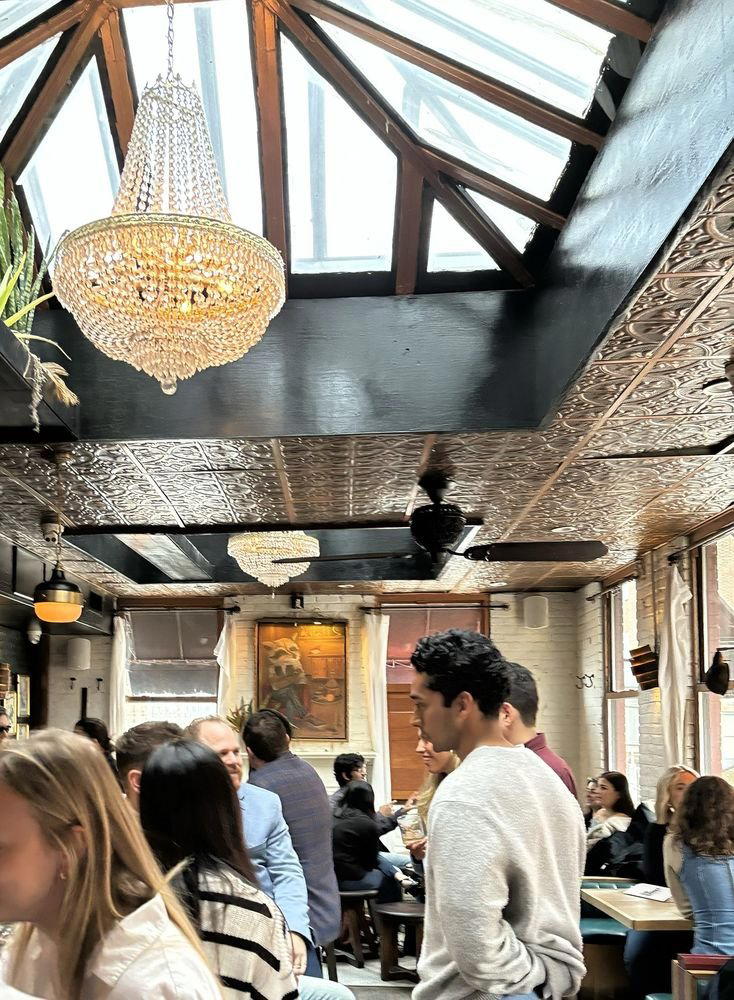
Charming and cozy atmosphere typical of a neighborhood sushi spot.