Bygone
Our verdict
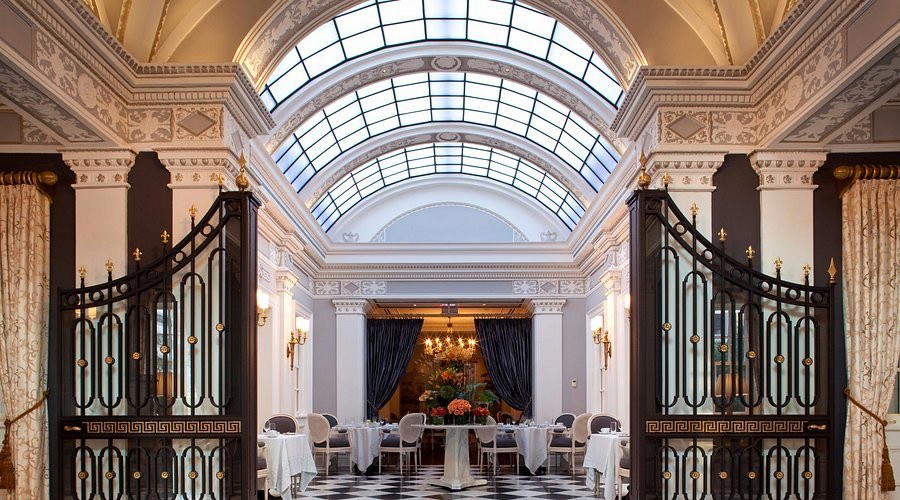
Perched on the 29th floor of 400 International Drive, Bygone occupies one of Baltimore's most commanding vantage points, positioning itself within a small tier of American fine-dining rooms where altitude and ambition converge. The setting frames Inner Harbor and the city's skyline as a working backdrop rather than a novelty. For Baltimore, that combination of elevation, formality, and culinary seriousness puts it in a distinct bracket.

Pearl is the En Primeur Club membership app — saves, bookings, and concierge access live there. Same editors, same standards.
- Address
- 400 International Drive 29th floor, Baltimore, MD 21202
- Phone
- (443) 343-8200
- Hours
- Mon–Thu 5–10 PMFri 5 PM–1 AMSat 11 AM–1 AMSun 11 AM–10 PM
- Website
- thebygonerestaurant.com
- Directions
- Get directions
- Booking
- Book on OpenTable
The menu
What to order
- Potato Leek Soup
- Papas Bravas
- Australian Dover Sole
- Beef Wellington
Twenty-Nine Floors Above the Harbor
Baltimore's dining geography tends to cluster at street level, in the rowhouse interiors and converted warehouses of neighborhoods like Fells Point and Mount Vernon. Bygone operates from a different premise entirely. Situated on the 29th floor of 400 International Drive, it holds a position that almost no other restaurant in the city can claim, with unobstructed sightlines across the Inner Harbor and a physical remove from the street that changes the atmosphere before a single dish arrives. Elevation at this scale carries its own set of expectations: the room is expected to justify the view rather than lean on it, and in American fine dining more broadly, sky-high restaurants have had a complicated record of doing exactly that.
The address places Bygone within Baltimore's waterfront corridor, a zone that draws convention business, hotel guests, and the kind of occasion dining that requires a reservation made weeks in advance rather than a walk-in. That context matters because it defines the venue's competitive frame. This is not neighborhood discovery territory in the way that dede (Turkish) or Angeli's Pizzeria operate. Bygone is anchored to a specific kind of occasion, and the room's position in the sky reinforces that signal continuously.
Where Baltimore's Fine Dining Tier Sits Nationally
American fine dining in 2024 has consolidated around a relatively small number of cities for its most recognized rooms. Venues like Le Bernardin in New York City, The French Laundry in Napa, and Smyth in Chicago operate within tightly defined peer sets where Michelin recognition, chef lineage, and booking scarcity function as shared currencies. Baltimore sits outside that primary orbit, which makes venues that reach for this register more interesting rather than less. A city without a dominant fine-dining identity has room for experimentation in format and price positioning in ways that markets like New York or San Francisco do not.
Within Baltimore specifically, the upper bracket of restaurants includes Cindy Wolf's Charleston, which has held its position as the city's most formally recognized fine-dining address for over two decades, and 16 On The Park. Bygone occupies a slightly different register from both, defined less by culinary lineage and more by physical drama and occasion-dining positioning. That is not a lesser category. Restaurants that successfully anchor the experiential dimension of fine dining, where the room and the view do substantial work alongside the kitchen, serve a function that purely chef-driven rooms do not.
The View as Architectural Argument
The editorial angle worth dwelling on here is what it means for a dining room to be physically inseparable from its location. At ground level, a restaurant can, in theory, be relocated. At 29 floors, the view is load-bearing architecture. The Inner Harbor below, the Francis Scott Key Bridge's replacement on the horizon, the density of Baltimore's downtown street grid reduced to pattern from this height — these are not decorations. They are the primary spatial experience, and everything else in the room is calibrated against them.
This puts Bygone in a specific tradition of American rooftop and high-floor dining that has evolved considerably since the revolving-restaurant era. The current format at rooms like this tends toward fixed-view seating, formal service cadence, and menus that price against special-occasion expectations rather than neighborhood frequency. Comparable positioning, if not comparable height, appears at venues like Providence in Los Angeles and Addison in San Diego, where the room's physical commitment to a certain register of dining is self-evident before the menu opens.
Baltimore's Broader Dining Context
Understanding Bygone requires some understanding of what Baltimore's dining culture has built around it. The city's strongest culinary identity remains tied to Chesapeake seafood, a tradition that runs from Faidley's counter-service crabs through to the white-tablecloth presentations of upper-tier rooms. Indian cooking has a durable presence, represented by long-standing venues like Akbar. The city's food scene is genuinely diverse across price points, with a Mexican tradition anchored in neighborhoods that rarely appear in national food coverage.
What Baltimore has historically lacked is the kind of nationally reviewed fine-dining infrastructure that cities like Washington have built, with venues such as The Inn at Little Washington functioning as destination restaurants for an entire region. That gap creates both a challenge and an opening for a room like Bygone. There is no dominant local peer applying downward pressure on price expectations or upward pressure on Michelin-tier kitchen ambition. The field is more open, and the audience is more broadly drawn from occasion-seeking Baltimore residents, visitors to the Inner Harbor hotel corridor, and travelers who cross-reference against national fine-dining reference points like Blue Hill at Stone Barns in Tarrytown, Lazy Bear in San Francisco, or Single Thread Farm in Healdsburg.
For those tracking the broader American fine-dining map, other regional reference points worth holding alongside Bygone include Emeril's in New Orleans, Atomix in New York City, and Atelier Moessmer Norbert Niederkofler in Brunico, all of which illustrate how distinct a room's identity can become when its location functions as an irreducible part of the proposition.
Planning a Visit
Bygone is located at 400 International Drive on the 29th floor, accessible via the building's elevator bank in the Inner Harbor hotel complex. The address sits within easy reach of Baltimore's convention center and the waterfront hotel district, making it logistically direct for visitors staying in that corridor. Given the occasion-dining positioning, reservations are advisable rather than optional, particularly on weekends and during peak convention periods when the Inner Harbor draws its largest visitor volumes. For a broader map of where Bygone fits within Baltimore's restaurant options, the full Baltimore restaurants guide provides additional context across price tiers and neighborhoods.
Frequently asked questions
Does Bygone work for a family meal?
Bygone's position on the 29th floor of a Baltimore Inner Harbor hotel complex, combined with its fine dining positioning, points toward adult-oriented occasions rather than casual family gatherings. The setting rewards guests who are there for the elevation and the view as much as the meal itself. Families with older teenagers comfortable in formal or semi-formal dining rooms will likely find it more appropriate than those traveling with young children.
What kind of setting is Bygone?
Bygone occupies the 29th floor at 400 International Drive in Baltimore's Inner Harbor, placing it physically above the street-level dining corridor that defines most of the city's restaurant scene. The room's relationship to its panoramic harbor and skyline views is the defining architectural fact of the space. It functions as a destination dining room where the vertical position is inseparable from the experience.
Is Bygone a good choice for a special occasion dinner in Baltimore with a view?
Among Baltimore's dining options with genuine architectural distinction, Bygone's 29th-floor position above the Inner Harbor places it in a narrow category. Few rooms in the city offer a comparable combination of vertical height and waterfront orientation. For milestone celebrations where setting carries as much weight as the menu, the address at 400 International Drive is one of the more deliberate choices available in Baltimore.
What's the must-try dish at Bygone?
For the most current menu, contacting the venue directly via the hotel at 400 International Drive, Baltimore, is the most reliable approach. Arriving with flexibility rather than a fixed target is sensible given how often fine dining menus at this tier rotate.
Where It Fits
Comparable venues nearby, for context on price, style, and recognition.
| Venue | Cuisine | Price | Notes |
|---|---|---|---|
| BygoneThis venue — the venue you are viewing | Modern French 1920s Grill | $50–100 | Not listed |
| Azumi | Contemporary Japanese Fine Dining | $100–150 | Harbor East |
| Monarque | Modern French Steakhouse Brasserie | $100–150 | Harbor East |
| Watertable | Contemporary American Seafood | Not listed | Inner Harbor |
| Proper Cuisine | Modern American with Mediterranean & Caribbean Influences | $30–50 | Downtown |
| The Prime Rib | Classic American Steakhouse | $50–100 | Mount Vernon |