Bissap Baobab SF
On Mission Street in San Francisco's most culturally layered corridor, Bissap Baobab has held its ground as one of the few West Coast venues dedicated to West African and Caribbean cooking and nightlife. The space functions as restaurant, bar, and dance floor in rotation, drawing a neighborhood crowd that treats it as a gathering point rather than a destination. The address at 2243 Mission St places it squarely in the Mission District's dense social fabric.
 Discover on Pearl
Pearl is the En Primeur Club membership app — saves, bookings, and concierge access live there. Same editors, same standards.
- Address
- 2243 Mission St, San Francisco, CA 94110
- Phone
- +1 415 235 4606
- Website
- bissapbaobab.com
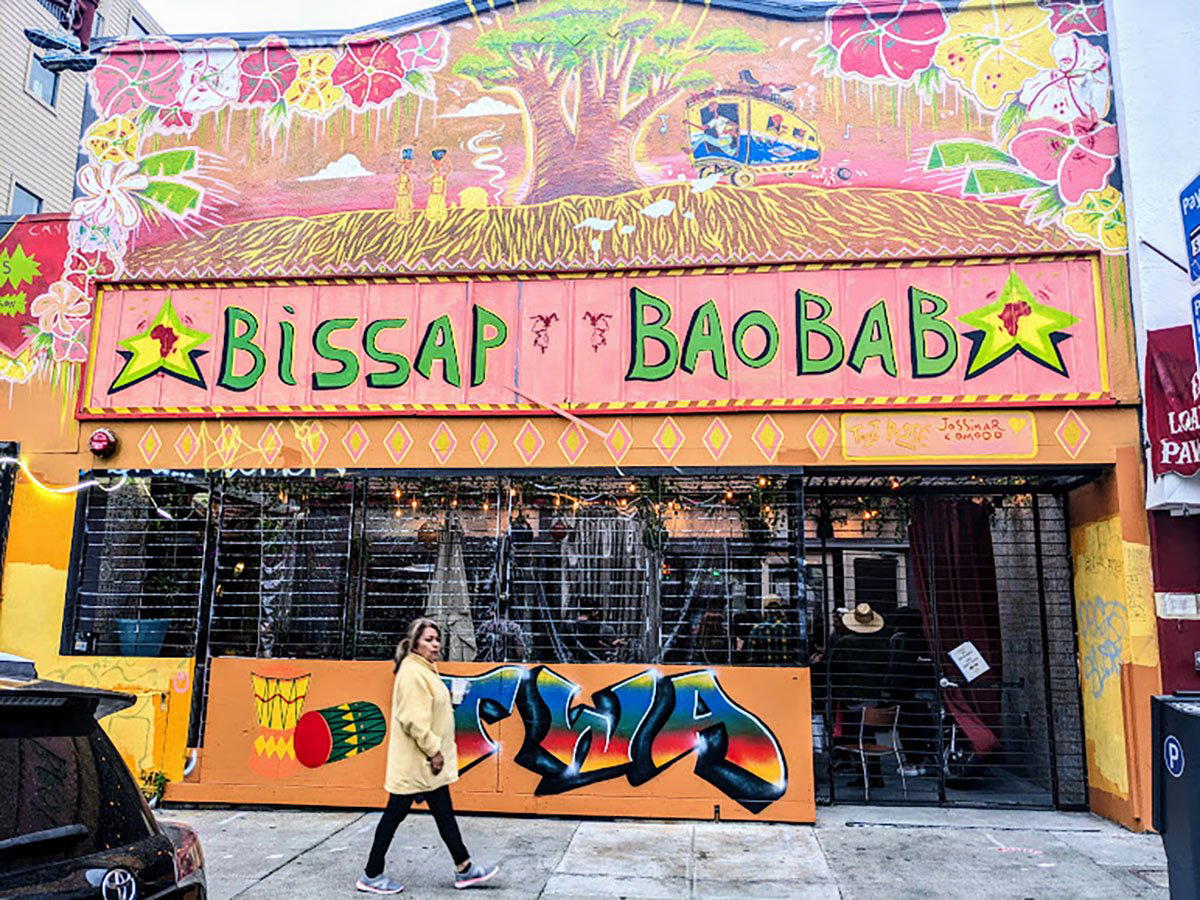
Mission Street and the Architecture of Cultural Overlap
The Mission District has always functioned as San Francisco's pressure point for cultural collision. Salvadoran pupuserias share blocks with Vietnamese bakeries, Mexican taquerias, and a generation of bars that have ranged from dive to craft-cocktail serious. Within that corridor, Bissap Baobab at 2243 Mission St occupies a different register entirely: a space that reads as West African in its palette and Caribbean in its rhythm, holding a position that has no close equivalent in the city's dining and nightlife map.
The physical environment signals that difference before anything arrives at the table. West African interiors of this type tend toward saturated color, fabric-covered surfaces, and lighting calculated for warmth rather than visibility. The spatial logic here prioritizes gathering over service efficiency: seating arrangements that accommodate groups, a floor that can transition from dining to dancing as the night advances, and a general sense that the room is meant to be occupied at length rather than turned over. In a city where the dominant contemporary restaurant design language tends toward raw concrete, open kitchens, and industrial pendant lights, that representational choice alone positions Bissap Baobab as a counterpoint.
What the Space Is Actually Doing
Across American cities, venues that carry African and Caribbean food into a bar-and-nightlife format remain a small cohort. The design challenge in that category is real: the room has to serve dinner at one temperature and late-night dancing at another, without either function feeling apologetic or provisional. Bissap Baobab has operated in this dual mode long enough that the transition feels structural rather than improvised. The furniture, the sound system placement, the bar positioning, these are choices made for a venue that knows it will be asked to do both things in the same night.
That dual function also shapes the drinking side of the program. Senegalese bissap, hibiscus, the plant that names the venue, appears in the glass as often as it appears in the food. Hibiscus-based drinks occupy a place in West African and Caribbean drinking culture that predates the craft cocktail movement's interest in the ingredient by decades. Here, the botanical arrives not as a contemporary trend marker but as a baseline reference point, which is a different kind of credibility signal than a Michelin star or a 50 Best citation.
For context on how San Francisco's bar scene sits relative to peer cities, the craft-cocktail end of the market is well-documented: venues like ABV, Pacific Cocktail Haven, Friends and Family, and Smuggler's Cove each anchor a distinct technical or thematic program. Bissap Baobab operates outside that competitive set. Its frame of reference is not the city's cocktail-bar hierarchy but a longer tradition of West African and diaspora hospitality, which is a narrower and less-crowded position.
The Cuisine as Neighborhood Fact
West African cooking in the United States remains underrepresented relative to the breadth of the tradition. Senegalese cuisine in particular, which centers rice dishes like thieboudienne and jollof alongside slow-cooked stews and grilled fish, has found consistent footholds only in cities with established Senegalese or broader West African communities: New York's Harlem, Washington D.C., Atlanta. San Francisco's version is thin by comparison. That scarcity gives Bissap Baobab a functional importance that goes beyond the quality of any individual dish: it represents a tradition that would otherwise have no physical address in the city.
The Mission location is not incidental. The neighborhood has historically absorbed immigrant food cultures and sustained them past the initial wave of interest. The longevity of Bissap Baobab in that context is itself evidence of genuine neighborhood integration rather than novelty positioning.
Across other American cities, a handful of bars and restaurants are doing comparable work of anchoring underrepresented culinary and drinking traditions to a specific place: Jewel of the South in New Orleans carries a specific historical register for that city's drinking culture, Julep in Houston makes a similar argument for Southern spirits, and Superbueno in New York City reframes Latin American spirits and food in a contemporary bar format. Kumiko in Chicago, Allegory in Washington, D.C., Bar Leather Apron in Honolulu, and The Parlour in Frankfurt on the Main each anchor a different kind of cultural specificity in their respective markets. Bissap Baobab's version of that work is the least represented in the broader critical conversation, which is itself worth noting.
How to Use This Venue
The venue functions differently depending on when you arrive. Earlier in the evening, it runs as a restaurant: food-forward, table-service, the kitchen driving the pace. Later, the floor opens and the music takes priority. Neither mode is a compromise of the other, they are sequenced, not competing. Visitors who arrive expecting a conventional dinner-and-drinks format may find the late-night transition disorienting; visitors who understand the dual structure will find it one of the more coherent evening formats the Mission offers.
For planning purposes, the Mission District is served by BART at 16th Street and 24th Street stations, both within walking distance of the address. Street parking on Mission is available but variable on weekend evenings. The area is walkable to several other bars and restaurants, making it logical as one stop in a longer Mission evening rather than a standalone destination requiring special transit planning.
Booking specifics are not confirmed in the current record, so contacting the venue directly before a weekend visit is the practical approach. For broader context on what the city offers across dining and nightlife, see our full San Francisco restaurants guide.
Where It Fits
Comparable venues nearby, for context on price, style, and recognition.
| Venue | Cuisine | Price | Awards | Notes |
|---|---|---|---|---|
| Bissap Baobab SFThis venue — the venue you are viewing | lounge | $$ | , | |
| Vesuvio Cafe | cocktail_bar | $$ | , | Chinatown |
| illy Caffè | lounge | $$ | , | Castro/Upper Market |
| Holy Water | cocktail_bar | $$ | , | Bernal Heights |
| New Delhi Restaurant & Bar | lounge | $$ | , | Tenderloin |
| Mezcalito | mezcaleria | $$ | Russian Hill |
Continue exploring
More in San Francisco
Bars in San Francisco
Browse all →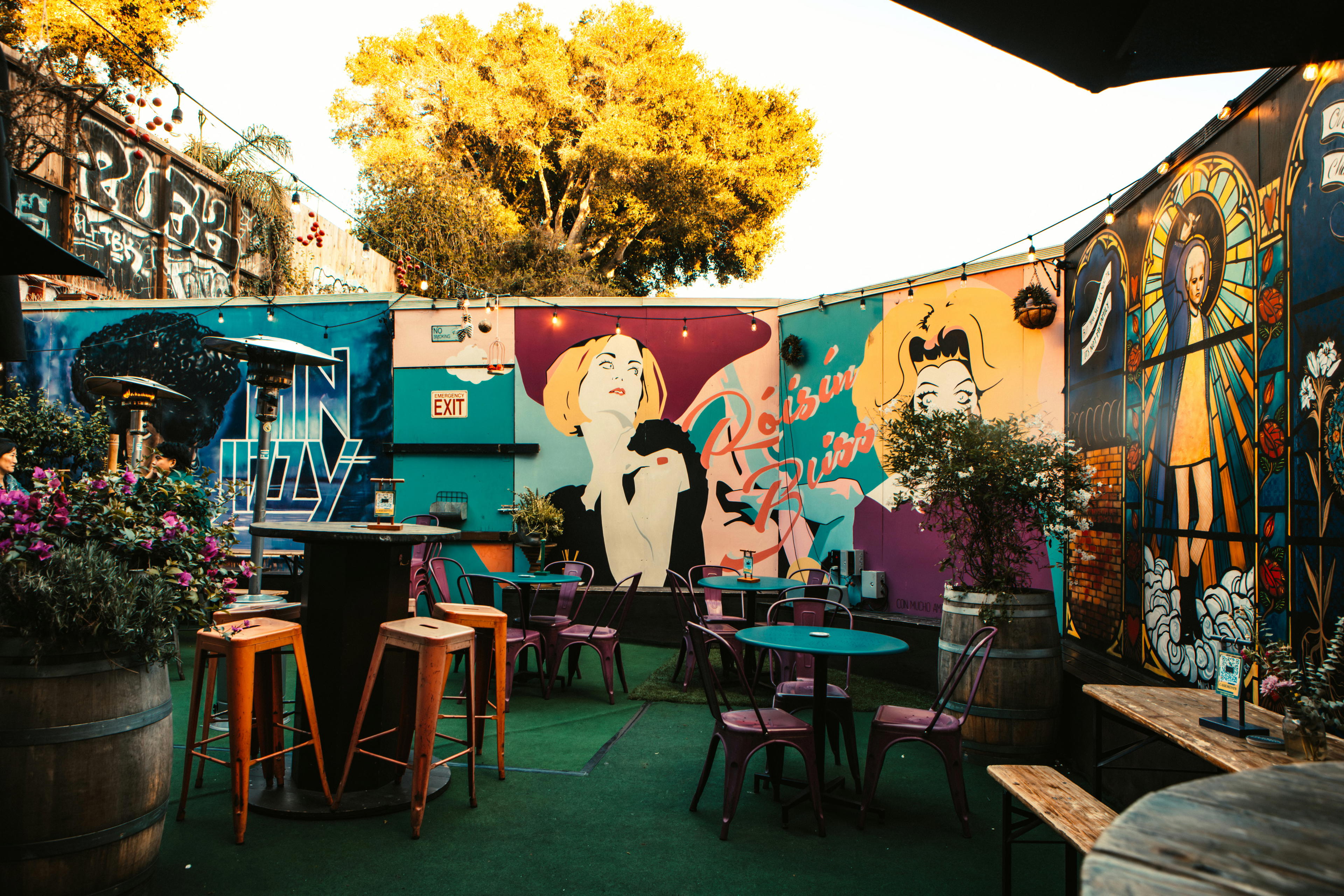
Restaurants in San Francisco
Browse all →
Hotels in San Francisco
Browse all →
At a Glance
- Lively
- Energetic
- Bohemian
- Late Night
- Group Outing
- Casual Hangout
- Live Music
- Lounge Seating
- Craft Cocktails
Laid-back yet cosmopolitan vibe like an African village, vibrant with dancing, music, and community energy.