Banzarbar

Tucked into Freeman Alley in Manhattan's Lower East Side, Banzarbar earned a Pearl Recommended Bar designation in 2025, placing it among a small tier of New York drinking rooms recognized for back-bar depth and curation. With a 4.7 Google rating across 184 reviews, it operates in the specialist end of the city's cocktail market, where bottle selection and format discipline count more than scale.
 Discover on Pearl
Pearl is the En Primeur Club membership app — saves, bookings, and concierge access live there. Same editors, same standards.
Freeman Alley and the Back-Bar Bar: Where New York's Spirits Curation Gets Serious
Freeman Alley has a particular reputation in New York's drinking geography. The narrow Lower East Side passage, accessible from Rivington Street, has functioned for years as a kind of corridor between the neighborhood's rougher bar inheritance and the more considered tier of drinking room that arrived in the 2010s. The alley format is not incidental: it filters casual foot traffic and selects for the drinker who is there with purpose. Banzarbar, at number 2, sits at the sharper end of that selection.
The bar received a Pearl Recommended designation from the 2025 Pearl Bar Guide, a credential that places it in the ranked tier of New York bars recognized for program quality rather than visibility alone. Pearl recommendations in New York carry weight partly because the market is so dense: the city runs several hundred bars with genuine cocktail programs, and the Pearl list narrows that to a fraction. A 4.7 Google rating across 184 reviews adds a separate data point from the editorial tier, suggesting that the customer experience holds up against the specialist positioning.
The Spirits Collection: Curation Over Volume
New York's higher-tier cocktail bars have, over the past decade, split into two distinct camps. The first is the theater-led format: elaborate presentations, house-made modifiers, and a menu organized around concepts. The second is the back-bar-led format: a room where the bottle selection itself is the argument, where rare spirits, obscure producers, and deep category coverage define the offer rather than any single signature drink. Banzarbar belongs to the second camp.
This distinction matters for how you approach the bar. At a theater-forward room like some of the more experiential Lower East Side venues, you move through the menu and trust the format. At a back-bar-led bar, you engage the selection: you ask what's open, what's rare, what the program is reaching for in a given category. The leading rooms of this type reward a drinker who arrives with some fluency, and they tend to hold interest across repeat visits in a way that concept-driven menus often don't.
The Pearl recognition signals that Banzarbar's curation has been assessed and found credible by a source that applies consistent criteria across the New York market. That is a more precise signal than a generalist review platform, because it speaks specifically to what the bar is trying to do rather than whether it is pleasant to spend an evening in.
Context in the Lower East Side Bar Scene
The Lower East Side has historically been one of the more competitive blocks of real estate for serious drinking in New York. The neighborhood produced Attaboy NYC, which operates without a set menu and relies entirely on the bartender's reading of what you want, a format that demands genuine depth of knowledge and bottle access to execute well. Amor y Amargo, a few blocks north toward the East Village border, built its entire identity around bitters and amaro, demonstrating that narrow category focus can sustain a bar program over years when the curation is deep enough.
Banzarbar occupies a different position in this local map: the alley address, the Pearl credential, and the review profile position it as a room that has developed its own serious following without needing the broader footprint of a well-publicized opening. That's a recognizable pattern in New York's specialist bar tier. Angel's Share spent years as one of the city's most carefully maintained Japanese-influenced cocktail rooms, known mainly to those who sought it out. The bars that build durable reputations through back-bar depth and customer loyalty rather than press cycles tend to age better.
For a broader picture of where Banzarbar fits in the New York drinking map, see our full New York City restaurants and bars guide.
Peer Comparison: Specialist Bars in the US Market
Pearl-recognized bars across American cities share a set of characteristics worth noting. Kumiko in Chicago built its reputation around Japanese whisky access and a methodical cocktail approach, demonstrating that the back-bar-led model works in markets outside New York when the curation is strong enough. ABV in San Francisco occupies a similar position in the Mission District, where the bottle selection anchors a program that doesn't need a conceptual hook. Jewel of the South in New Orleans, a James Beard-recognized room, shows what back-bar depth looks like when it's grounded in regional spirits history.
Outside the US, Bar Leather Apron in Honolulu and The Parlour in Frankfurt on the Main represent the international expression of the same format: specialist curation, limited capacity, and a reputation built on the quality of the pour rather than the size of the room. Allegory in Washington, D.C. and Julep in Houston extend the comparison into markets where the back-bar format has established a clear critical foothold. Superbueno in New York demonstrates how a tightly defined spirits focus can coexist with a louder, more neighborhood-facing format, which marks out a contrast with Banzarbar's alley-address selectivity.
Planning Your Visit: Practical Logistics
| Bar | Location | Recognition | Format |
|---|---|---|---|
| Banzarbar | Freeman Alley, Lower East Side | Pearl Recommended (2025) | Back-bar led, specialist spirits |
| Attaboy NYC | Eldridge St, Lower East Side | 50 Best Bars recognition | No-menu, bartender-led |
| Amor y Amargo | East Village | Critically recognized | Amaro and bitters focus |
| Angel's Share | East Village | Longstanding New York institution | Japanese-influenced cocktails |
Freeman Alley is accessed from Rivington Street between Chrystie and Bowery, in the Lower East Side. The alley address means the bar does not benefit from walk-in foot traffic in the way a street-facing room would. First-time visitors should confirm current hours and booking requirements directly before arrival, as this type of specialist room frequently adjusts its operating schedule. Phone and website details were not available at publication; checking current listings is advisable. The Pearl designation was awarded in 2025, making this a current recommendation rather than a legacy credential from a different era of the program.
Price Lens
A short peer set to help you calibrate price, style, and recognition.
| Venue | Price | Awards | Notes |
|---|---|---|---|
| Banzarbar | This venue | ||
| The Long Island Bar | World's 50 Best | ||
| Dirty French | |||
| Superbueno | World's 50 Best | ||
| Amor y Amargo | World's 50 Best | ||
| Angel's Share | World's 50 Best |
Continue exploring
More in New York City
Bars in New York City
Browse all →
Restaurants in New York City
Browse all →
Hotels in New York City
Browse all →


At a Glance
- Intimate
- Trendy
- Hidden Gem
- Sophisticated
- Date Night
- Special Occasion
- Speakeasy
- Seated Bar
- Lounge Seating
- Craft Cocktails
- Low Abv
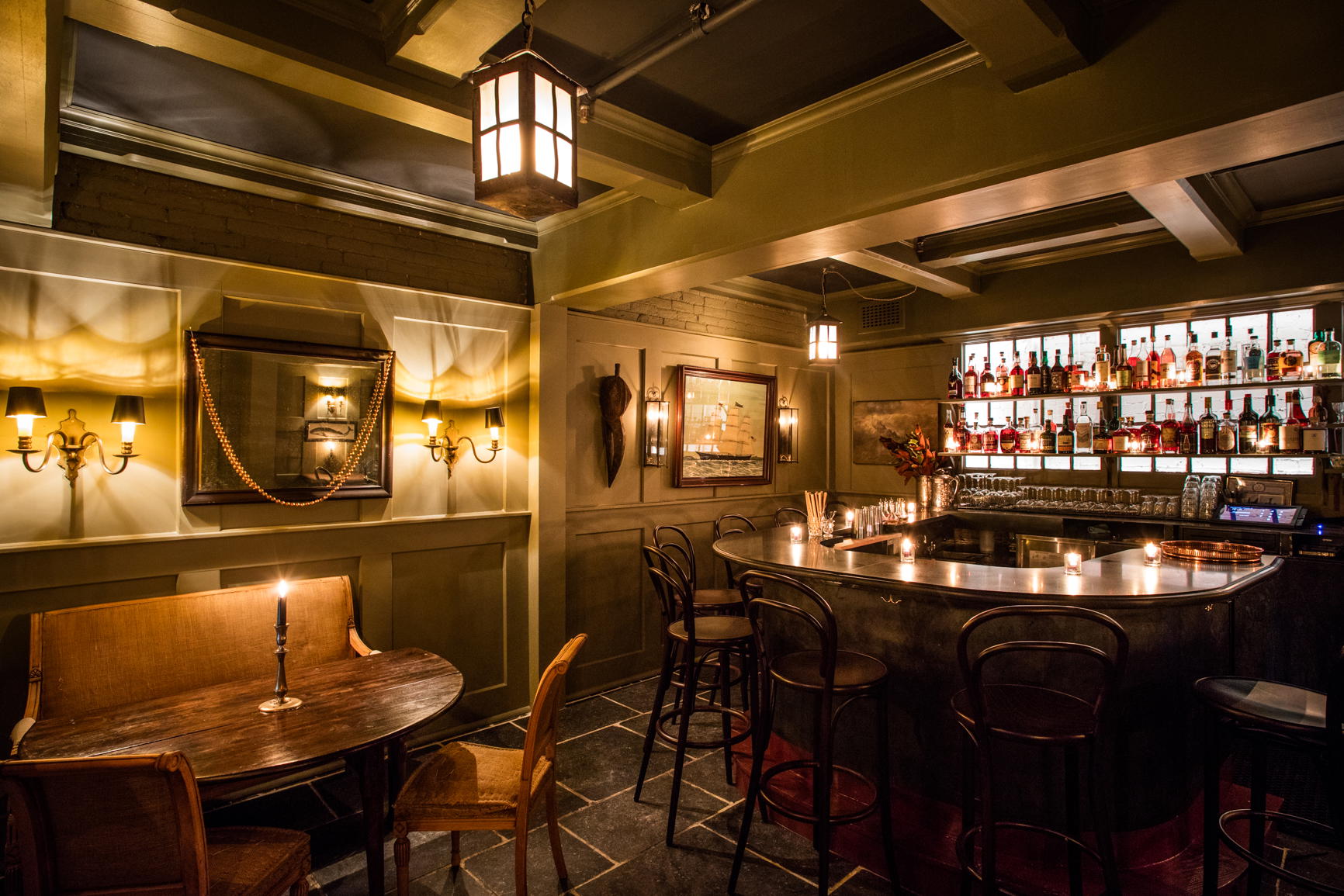
Dimly lit, candlelit space resembling a 19th-century sea captain's haunted mansion or 18th-century seaside tavern with olive-green paneling, seafaring paintings, and an intimate, formal yet comfortable atmosphere.