Apotheke Chinatown
Apotheke occupies a former opium den on Doyers Street, one of Lower Manhattan's oldest and most atmospheric bends, and has spent over a decade positioning itself as a craft cocktail laboratory inside Chinatown's most storied address. The bar's apothecary-meets-laboratory concept places it in a distinct tier among New York's serious cocktail rooms, drawing on botanical sourcing and precise technique rather than novelty theatrics.
Pearl is the En Primeur Club membership app — saves, bookings, and concierge access live there. Same editors, same standards.
- Address
- 9 Doyers St, New York, NY 10013
- Phone
- +1 212 406 0400
- Website
- apothekemixology.com
- Directions
- Get directions
 Saves & bookings on Pearl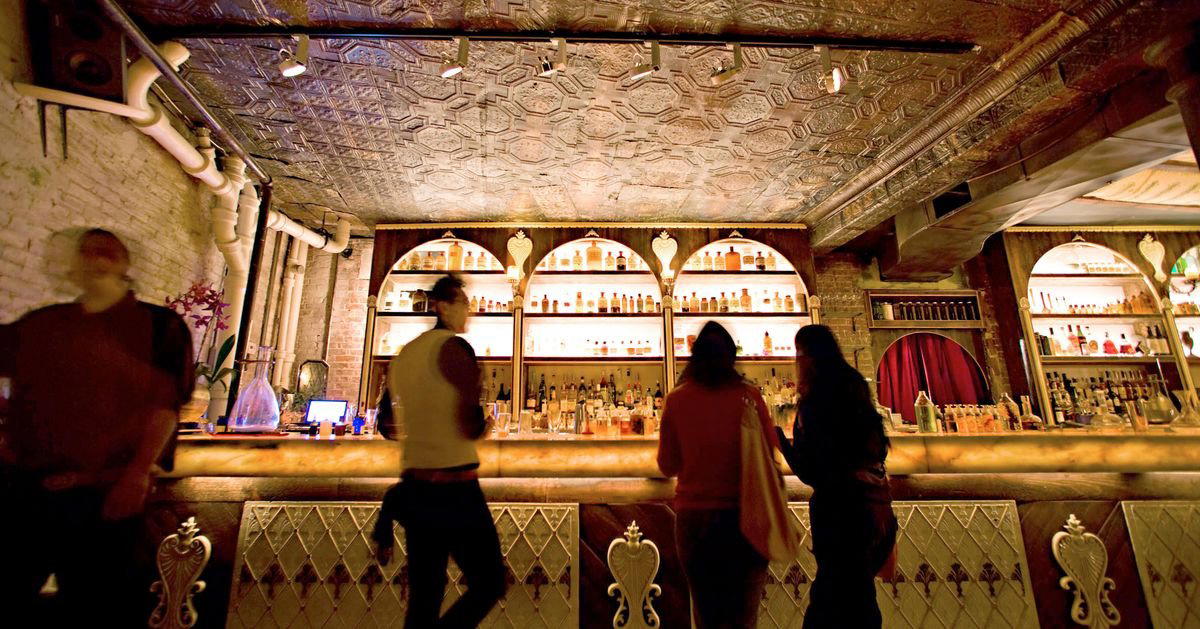
Doyers Street and the Architecture of Atmosphere
Apotheke Chinatown is a cocktail bar in New York City, located at 9 Doyers St. Doyers Street in Chinatown is one of them. The sharp, almost theatrical bend in the road — historically known as the Bloody Angle — concentrates foot traffic, lantern light, and a low-level ambient noise that the rest of Lower Manhattan rarely produces. Apotheke sits at number 9, in a space that carried a different kind of clandestine identity for much of the twentieth century. Former opium dens do not make neutral backdrops. The weight of the room's history is legible in the compressed ceiling, the worn surfaces, and the sense that the building predates every cocktail trend it now houses.
That physical context matters when comparing Apotheke to the broader cohort of serious New York cocktail bars. Venues like Attaboy NYC operate on the premise of the almost-unmarked door; Angel's Share works through the quiet remove of its upstairs Japanese-bar format. Apotheke's version of atmospheric entry is different: the street itself performs. The walk down Doyers, past roast-duck windows and the particular smell of a working Chinatown block, is part of the experience in a way that a Nolita side street or an East Village basement simply cannot replicate.
The Apothecary Framework and What It Signals
New York's cocktail bar market has moved through several distinct phases over the past two decades. The speakeasy revival of the mid-2000s prioritized concealment and password theater. The technical precision wave that followed centered on clarification, fat-washing, and carbonation as the primary identity markers. Apotheke's concept sits at an earlier and more durable inflection point: the apothecary model, in which cocktails are structured around botanical sourcing, herbal infusions, and a menu organized by effect rather than spirit category.
This framework places Apotheke in a specific competitive position relative to New York peers. Amor y Amargo takes the bitters-forward, medicinal-bar concept to one deliberate extreme. Superbueno works the other end of the spectrum with Latin-rooted ingredient logic. Apotheke's apothecary framing is broader and more theatrical than either, placing it in a tier where the room design, menu language, and ingredient sourcing all reinforce a single coherent identity. When that coherence works, it produces the kind of bar that regulars return to not because the cocktail list changes seasonally but because the atmosphere remains one of the more fully committed in the city.
Nationally, bars pursuing a comparable level of environment-and-concept integration include Allegory in Washington, D.C. and Kumiko in Chicago, both of which treat the room itself as an argument about what the bar stands for. Bar Leather Apron in Honolulu and Jewel of the South in New Orleans approach similar territory from different regional traditions. The comparison is useful because it frames what separates atmosphere-led bars from technically-led ones: the former ask you to settle into a place; the latter ask you to pay attention to a glass.
Sound, Light, and the Sensory Argument for Chinatown
The sensory register at Apotheke is worth addressing directly, because the bar operates in a neighborhood that generates more ambient atmosphere than almost any other block in Manhattan. The sound profile on Doyers Street is compressed and particular: delivery carts, Cantonese conversation from nearby restaurants, the occasional burst of music from a neighboring doorway. Inside, the bar absorbs and filters that noise rather than competing with it. The interior lighting tends toward the low and amber-warm, the kind that makes the glassware do work it cannot do under brighter conditions.
This is a bar built for the kind of evening that begins later and accelerates slowly. The apothecary shelving, the laboratory-style bottles, and the general theatrical staging of the space mean that the first twenty minutes of any visit are spent orienting to the environment before the drinking logic of the menu takes over. For bars that use the room this aggressively as a persuasion tool, the risk is that the drinks become secondary. Apotheke's better moments are when the two stay in balance: when a botanical-forward cocktail arrives with enough precision to hold attention alongside the room rather than beneath it.
Bars operating in similarly loaded environments elsewhere, Julep in Houston with its Southern-coded visual language, or ABV in San Francisco with its approachable-but-serious format, demonstrate that environmental commitment and drink quality are not mutually exclusive. The challenge is consistent execution across both, night after night. The Parlour in Frankfurt manages a similar dual argument in a European context, where the room and the program are co-equal priorities.
Planning a Visit: What the Address Requires
Doyers Street is accessible from both the Canal Street and Chambers Street subway stops, and the walk through Chinatown from either direction adds to the ambient build-up that the bar relies on. Apotheke draws a mixed crowd that skews toward cocktail-aware visitors and neighborhood locals rather than purely tourist traffic, which affects the pacing and noise level inside in ways that most comparable bars in more heavily trafficked neighborhoods do not experience.
The bar does not position itself as a high-volume throughput venue. Arriving without a reservation on a Friday or Saturday means a wait is plausible, particularly as the evening advances past ten o'clock. Midweek visits, or arriving in the earlier evening window, tend to produce a calmer version of the same environment.
The Case for the Address
What Apotheke represents in the wider context of New York cocktail bars is a sustained bet on place-as-argument: that the address on Doyers Street, with all its layered history, is doing something that a more neutral room in a more accessible neighborhood could not replicate. That bet requires the drinks, the service, and the staging to all hold weight simultaneously. When they do, the result is one of the more complete atmospheric propositions in a city where atmospheric propositions are not in short supply. The Chinatown context is not incidental decoration. It is the bar's primary editorial statement, and the one most worth understanding before you arrive.
The Short List
Comparable venues nearby, for context on price, style, and recognition.
| Venue | Cuisine | Price | Notes |
|---|---|---|---|
| Apotheke ChinatownThis venue — the venue you are viewing | Chinatown-Two Bridges, speakeasy | $$$ | Not listed |
| Nami Nori West Village | Not listed | $$$ | West Village, sake_bar |
| Karasu | Fort Greene, speakeasy | $$$ | Not listed |
| 1 OR 8 | Not listed | $$$ | Fort Greene, cocktail_bar |
| Red Rooster Harlem | Not listed | $$$ | Harlem (South), cocktail_bar |
| JIMMY | Not listed | $$$ | SoHo-Little Italy-Hudson Square, rooftop_bar |
Continue exploring
More in New York City
Bars in New York City
Browse all →


Restaurants in New York City
Browse all →
Hotels in New York City
Browse all →








At a Glance
- Intimate
- Sophisticated
- Cozy
- Elegant
- Date Night
- Late Night
- Special Occasion
- Speakeasy
- Design Destination
- Seated Bar
- Lounge Seating
- Booth Seating
- Craft Cocktails
Current opening hours
- Monday
- 6:30 PM–12 AM
- Tuesday
- 6:30 PM–2 AM
- Wednesday
- 6:30 PM–2 AM
- Thursday
- 6:30 PM–2 AM
- Friday
- 6:30 PM–2 AM
- Saturday
- 6:30 PM–2 AM
- Sunday
- 6:30 PM–12 AM
Hours can change for holidays and private events. Last verified .
Dark and moody with low lighting, evoking a vintage Parisian apothecary and 17th-century Austrian apothecary vibe.