Karasu
A Fort Greene bar that arrived at the intersection of Japanese drinking culture and Brooklyn's ingredient-led bar scene, Karasu sits on DeKalb Avenue in a neighbourhood that has built a credible dining reputation over the past decade. The program draws on Japanese technique and imported spirits traditions while working within a New York sensibility that prizes restraint over spectacle.
Pearl is the En Primeur Club membership app — saves, bookings, and concierge access live there. Same editors, same standards.
- Address
- 166 Dekalb Ave, Brooklyn, NY 11217
- Phone
- +1 718 488 7800
- Website
- karasubk.com
- Directions
- Get directions
 Saves & bookings on Pearl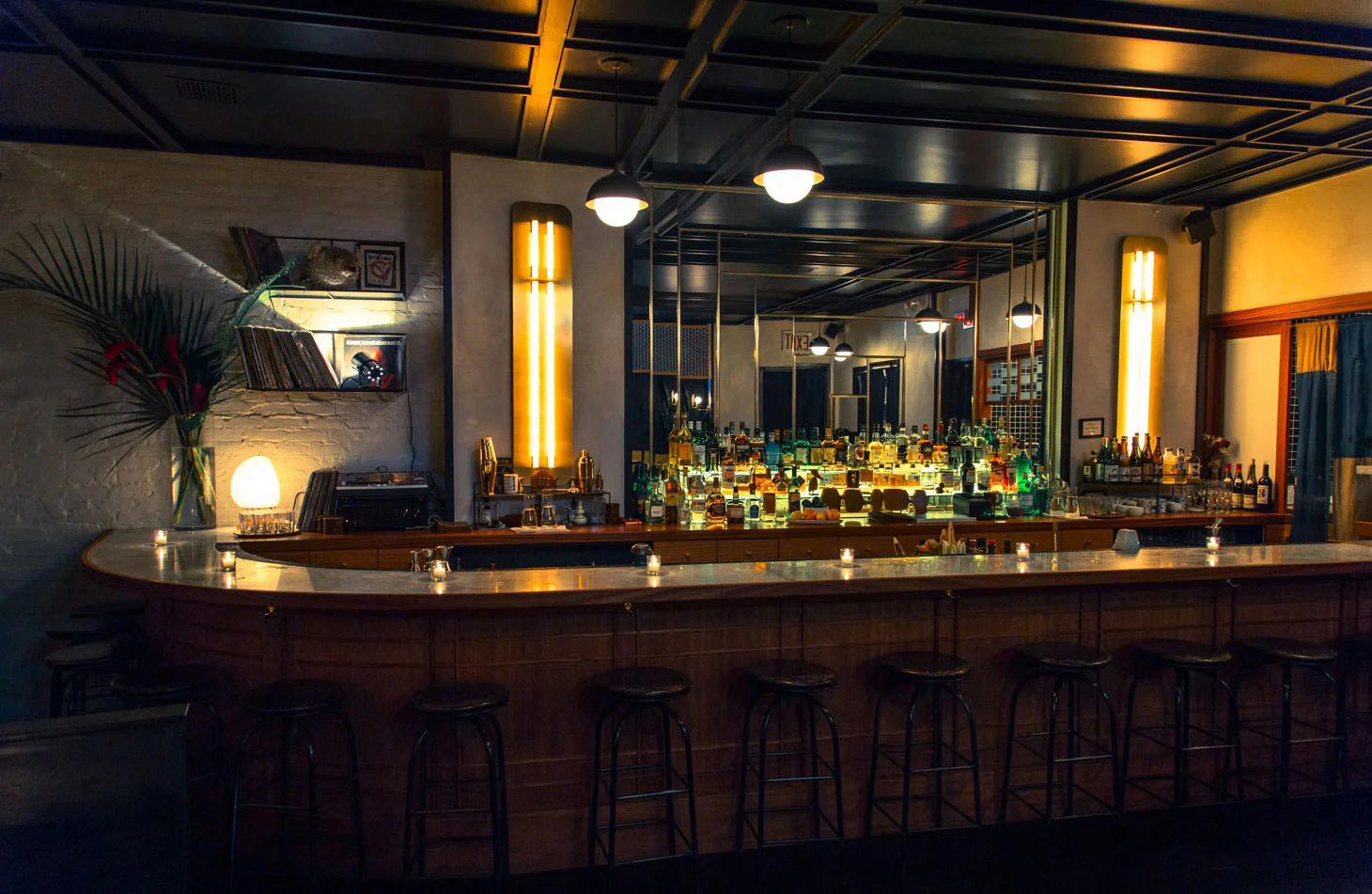
Fort Greene and the Brooklyn Bar That Took Its Time
Brooklyn's bar scene has matured considerably since the early 2010s, when novelty and neighbourhood cachet did most of the heavy lifting. By the mid-2010s, a smaller cohort of operators began building programs with genuine depth: spirits selection grounded in category knowledge, food menus that treated the kitchen as a peer to the bar rather than an afterthought, and physical spaces designed for the long sit rather than the quick pour. Karasu, at 166 DeKalb Ave in Fort Greene, belongs to that second wave. The address places it in a neighbourhood that has accumulated serious culinary credibility over the past fifteen years, and the format reflects a particular strand of New York drinking culture that looks toward Japan for structural cues without abandoning the city's own instincts.
Japanese Technique in a Brooklyn Frame
The bar program at Karasu operates within what has become a recognisable approach in American cocktail culture: the application of Japanese bartending discipline to locally sourced and seasonally available ingredients. This is not fusion in the loose sense. Japanese bartending traditions, particularly those associated with the Ginza and Kyoto school bars, emphasise dilution control, temperature precision, and restraint in flavour construction. When those methods meet New York's ingredient culture, the results tend toward clarity rather than complexity for its own sake.
Bars that work in this register typically carry a serious whisky selection, with Japanese expressions sitting alongside American and Scotch bottles without the hierarchy that often dominates more conventional American programs. The cocktail list usually reflects the same discipline: drinks that read simply on paper but require precise execution to land correctly.
The DeKalb Ave Address and What It Means
Fort Greene is not the neighbourhood it was in 2005, nor is it the neighbourhood it was in 2015. The area around DeKalb and Fulton has attracted a concentration of food and drink operations that hold their own against Manhattan comparisons, and Karasu benefits from that context without depending on it. Diners and drinkers arriving from Manhattan via the B, Q, or C trains find a neighbourhood that rewards the crossing of the bridge.
The bar functions partly as an anchor for a broader evening in the area. Fort Greene's dining options include spots that reward pre- or post-drinks planning, and the format at Karasu, which pairs a considered food menu with the bar program, suits that rhythm. The kitchen operates as a genuine contributor rather than a support function, which places Karasu in a specific category of New York bar: one where arriving hungry is not a compromise.
Where It Sits in the New York Bar Conversation
New York's cocktail scene has fragmented productively over the past decade. The speakeasy model, which dominated the late 2000s, gave way to more transparent formats where the program itself carries the interest. That shift produced distinct clusters: the high-volume Lower East Side bar, the technically rigorous Downtown Manhattan operation, and the neighbourhood-anchored Brooklyn spot that draws from both without fully belonging to either.
Karasu occupies the third category. Bars like Amor y Amargo and Angel's Share define different ends of the Manhattan spectrum, with Amor y Amargo's bitters-focused program representing deep category specialism and Angel's Share representing the Japanese-influenced precision bar in its purest New York form. Attaboy NYC operates on the bespoke, guest-led model that prizes bartender intuition over fixed menus. Karasu's positioning in Brooklyn, with a food program attached, makes it a different proposition from all three, closer in spirit to what Superbueno does for the Latin-inflected Brooklyn bar, but through a Japanese lens.
Nationally, the Japanese-technique bar has found footing in several cities. Jewel of the South in New Orleans brings a different regional ingredient set to a historically informed program, while Julep in Houston and ABV in San Francisco demonstrate how the format adapts across American drinking cultures. Allegory in Washington, D.C. applies a similarly considered approach within a hotel context. Internationally, The Parlour in Frankfurt on the Main represents how European bars have absorbed similar influences. Karasu's version of this is distinctly Brooklyn: less ceremonial than the Tokyo original, more grounded in the neighbourhood's own register.
What to Drink at Karasu
Bars operating in the Japanese technique tradition typically structure their drinks around clarity of spirit, seasonal modifiers, and precise dilution. At Karasu, the whisky selection is the anchor, with Japanese expressions representing a serious portion of the back bar. Highballs, where the quality of the dilution water and the carbonation technique matter as much as the spirit, are a reliable starting point in this format. The cocktail list rewards specificity: asking what is currently working, or what the bar is doing with a particular spirit category, tends to yield better results than defaulting to a classic.
The food menu operates on small plates logic, suited to a drinking-led visit but capable of carrying a full evening's eating. Pairing kitchen and bar menus in this format is where the Japanese structural influence shows most clearly: the kitchen is expected to complement rather than compete with what is in the glass.
What Karasu Is Leading At
Within the Brooklyn bar set, Karasu occupies a specific position: a bar where the technical program and the food menu carry equal weight, set in a neighbourhood that has earned its culinary reputation. The Japanese-inflected approach to spirits and cocktails places it in a peer group defined less by geography than by method. For drinkers who find the East Village whisky bar too crowded and the cocktail bar tasting-menu format too formal, Karasu's Fort Greene address and format represent a productive middle point. The price positioning, consistent with Brooklyn's bar market rather than the premium Manhattan tier, makes it accessible for a full evening rather than a single drink.
Frequently Asked Questions
- What should I drink at Karasu?
- The bar program sits in the Japanese technique tradition, which means whisky, both Japanese and American expressions, plays a central role. Highballs are a reliable entry point in this format, where the quality of carbonation and dilution is as considered as the spirit choice. For cocktails, asking the bar what is currently performing well rewards the visit more than ordering from a fixed classic list.
- What is Karasu leading at?
- Karasu holds a specific position in the Brooklyn bar set: a technically grounded program with a food menu that functions as a genuine partner to the drinks, rather than a secondary offering. Within New York City's bar conversation, it sits between the deep-specialism Manhattan operations and the casual neighbourhood bar, and the DeKalb Ave address in Fort Greene places it in one of Brooklyn's more food-serious corridors. The pricing is consistent with the Brooklyn market, making it practical for a full evening rather than a one-drink stop.
- Is Karasu a good option for visitors who want to explore Brooklyn's drinking scene beyond Manhattan?
- Fort Greene is a credible destination in its own right, and Karasu's format, combining a Japanese-influenced bar program with a kitchen that holds its own, makes it a reasonable anchor for an evening in the neighbourhood. The DeKalb Ave address is accessible from Manhattan via several subway lines, and the bar's approach to both spirits and food reflects the broader maturity of Brooklyn's bar culture over the past decade. For those building a New York itinerary with depth across boroughs, it belongs on the list alongside Manhattan operations covered in our full New York City restaurants guide.
Planning Your Visit
Address: 166 DeKalb Ave, Brooklyn, NY 11217. Getting there: Fort Greene is served by the B and Q trains at DeKalb Ave and the C train at Lafayette Ave. Format: Bar with full food menu; suited to drop-in drinking or a longer table-based evening. Booking: Walk-in is typical for bar seating in this format; table reservations are advisable for groups or weekend visits. Timing: The bar draws a neighbourhood crowd on weekday evenings and a broader audience on weekends; arriving before 8pm on Friday and Saturday gives the leading chance of preferred seating.
| Venue | Cuisine |
|---|---|
| KarasuThis venue — the venue you are viewing | This venue |
Continue exploring
More in New York City
Bars in New York City
Browse all →

Restaurants in New York City
Browse all →


Hotels in New York City
Browse all →







At a Glance
- Intimate
- Cozy
- Sophisticated
- Date Night
- Special Occasion
- Speakeasy
- Seated Bar
- Craft Cocktails
- Sake
- Whiskey
Current opening hours
- Monday
- 5–11 PM
- Tuesday
- 5–11 PM
- Wednesday
- 5–11 PM
- Thursday
- 5–11 PM
- Friday
- 5 PM–12 AM
- Saturday
- 5 PM–12 AM
- Sunday
- 5–10 PM
Hours can change for holidays and private events. Last verified .
Moody dark interior with stylish decor, sultry vibe, and intimate lighting well-suited for dates.
Know Before You Go
- Getting there
- 166 Dekalb Ave, Brooklyn, NY 11217