

.png)


A Casa do Porco sits at the intersection of democratic pricing and serious culinary ambition in downtown São Paulo. Chef Jefferson Rueda's whole-animal pork programme has earned a World's 50 Best ranking (#83 in 2025, previously as high as #7 in 2022) and a Michelin Bib Gourmand, placing this República address in a different competitive tier from the tasting-menu circuit that surrounds it.
Pearl is the En Primeur Club membership app — saves, bookings, and concierge access live there. Same editors, same standards.
- Address
- R. Araújo, 124 - República, São Paulo - SP, 01220-020, Brazil
- Phone
- +55 11 3258-2578
 Saves & bookings on Pearl
Downtown São Paulo and the Case for the Whole Animal
República, São Paulo's dense, unglamorous downtown district, is not where most internationally recognised restaurants plant their flag. The neighbourhood trades in street food, office workers, and the low-friction economics of urban density. A Casa do Porco, on Rua Araújo, sits inside that texture rather than against it, a quirkily decorated room that codes as neighbourhood rather than destination dining, right up until you look at what's on the plate and in the rankings. In 2022, the restaurant reached number seven on the World's 50 Best list. In 2025, it holds position 83, with a Michelin Bib Gourmand and 94 points from La Liste. The trajectory reflects broader shifts in how the global dining conversation has reframed pork-focused, whole-animal cooking from a peasant tradition into a technically demanding discipline worth serious critical attention.
That reframing has happened across several cuisines simultaneously. In Spain, nose-to-tail Iberian pork culture moved from regional identity to fine-dining subject matter over the past two decades. In Brazil, the equivalent tradition draws on a different matrix of ingredients and technique, the churrasco culture of the south, the pork-heavy interior of São Paulo state, the colonial-era practicality of using every cut. A Casa do Porco sits inside that tradition but pulls it into a format, tasting menu alongside à la carte, open from midday through to 11pm six days a week, that makes it accessible across multiple visitor types and budgets.
Pork as Technique, Not Just Ingredient
The editorial assignment for this page asked for a lens on mole, Brazil's complex, layered sauce traditions rather than the Mexican form, though the culinary logic overlaps in important ways. Both traditions ask the cook to balance multiple flavour registers simultaneously: sweet, bitter, smoky, acidic, sometimes heat. Both reward patience and an understanding of how fat carries and extends flavour over time. Both traditions also resist the kind of clean, single-note presentation that modernist tasting menus often default to.
Brazilian cooking has its own equivalents to mole's layered complexity: the slow-reduced molhos (sauces) built from pork offcuts, the tutu de feijão that thickens bean broth with manioc flour, the sarapatel that combines blood, liver, and heart into a dish that requires precise temperature management to avoid curdling or losing its structural integrity. These are not simple preparations. They represent accumulated technique passed through regional cooking traditions in Minas Gerais, the interior of São Paulo state, and the northeast. A restaurant that works with the whole animal across both a tasting menu and à la carte format is, in effect, running a live demonstration of how that technique vocabulary functions when applied with contemporary precision.
Jefferson Rueda's position as the named chef gives the programme a recognisable authorial point of view within the São Paulo scene, where a tier of Michelin-starred addresses, including D.O.M. at the $$$$ price point with two Michelin stars, and Evvai at the same tier, represent the city's international fine-dining face. A Casa do Porco operates at the $$ price point but has at various points ranked above those addresses on the World's 50 Best list, which says something about how the global critical conversation values accessibility and conceptual rigour together rather than as separate criteria.
São Paulo's Two-Tier Creative Scene
São Paulo's restaurant scene has split over the past decade into two fairly distinct creative tiers. The first is prix-fixe, high-investment dining with long tasting menus, serious wine programmes, and price points that align with European fine dining: Tuju, Maní, and Fame Osteria all sit within or adjacent to that bracket. The second tier is more interesting to watch: restaurants that carry genuine conceptual ambition but price and format for broader reach, operating on the logic that the most powerful food argument is one that doesn't require a special occasion to test.
A Casa do Porco belongs to that second group. The Bib Gourmand designation, which Michelin applies to restaurants offering quality cooking at prices it considers accessible, signals this positioning explicitly. The $$ price range and the all-day format (noon to 11pm through the week, noon to 5pm on Sundays) place the restaurant within reach of a wider São Paulo audience than most internationally ranked addresses. The 14,544 Google reviews averaging 4.4 reflect that the experience lands consistently across a large and varied visitor base, not just in the curated conditions of a tasting menu sitting.
For visitors mapping São Paulo against Brazil's wider restaurant scene, the comparison set extends well beyond the city. Lasai in Rio de Janeiro, Manga in Salvador, Manu in Curitiba, Mina in Campos do Jordão, and Orixás in Itacaré each represent the regional distinctiveness that makes Brazilian restaurant travel particularly layered. São Paulo itself, with its scale and immigrant history, produces a different cooking grammar from the northeast or the south. A Casa do Porco is specifically, emphatically Paulistano in its downtown DNA while drawing on interior São Paulo state pork traditions, a regional argument made through ingredients and technique rather than through flag-planting.
Internationally, restaurants applying similar whole-animal rigour within accessible price formats have found sustained critical traction. Le Bernardin in New York City represents the maximalist end of that spectrum, total focus on one protein category, in that case fish, at the highest price point, while Atomix, also in New York, demonstrates how concept-led tasting menus can build a different kind of long-term reputation. A Casa do Porco's model sits between those poles: a defined ingredient focus with a democratic format, which is a harder commercial balance to sustain than either extreme.
Planning Your Visit
The restaurant operates Monday through Saturday from noon to 11pm and closes earlier on Sundays at 5pm. The República address is central and accessible by public transport from most parts of the city. The $$ price range means that both tasting menu and à la carte options sit well below the cost of equivalent international rankings-adjacent dining, though booking in advance is advisable given the volume of critical attention the address has received since its first World's 50 Best appearance in 2019 at number 39. Castelo Saint Andrews in Gramado is worth noting for visitors extending their Brazil itinerary beyond the city.
What It’s Closest To
Comparable venues nearby, for context on price, style, and recognition.
| Venue | Cuisine | Price | Awards | Notes |
|---|---|---|---|---|
| A Casa do Porco | Modern Brazilian Pork-Centric | $$$ | Bib Gourmand | Republica |
| Maní | Modern Creative Brazilian | $$$ | Michelin 1 Star | Pinheiros |
| Cepa | Contemporary Brazilian | $$ | Bib Gourmand | Pinheiros |
| Nelita | Modern Italian Fine Dining | $$$ | Michelin Plate, World's 50 Best #12 | Alto de Pinheiros |
| Tuju | Modern Brazilian Fine Dining | $$$$ | Michelin 2 Star | Pinheiros |
| Evvai | Modern Italian-Brazilian Fusion | $$$$ | Michelin 2 Star | Pinheiros |
Continue exploring
More in São Paulo
Restaurants in São Paulo
Browse all →
Bars in São Paulo
Browse all →



At a Glance
- Lively
- Trendy
- Modern
- Energetic
- Date Night
- Special Occasion
- Group Dining
- Open Kitchen
- Craft Cocktails
- Sommelier Led
- Organic
- Local Sourcing
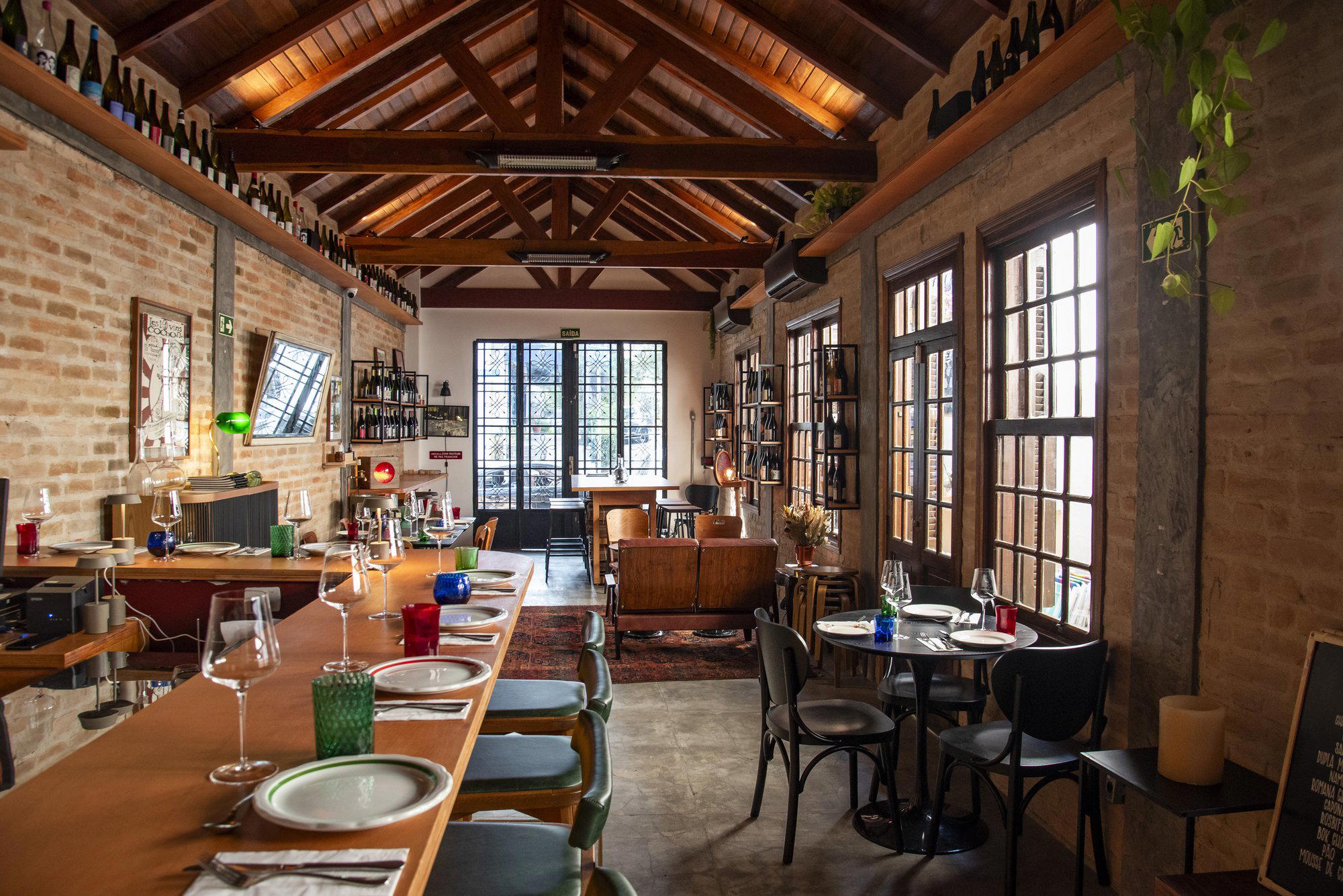
Relaxed and modern atmosphere, welcoming yet vibrant with high energy and a kitsch touch.