
Weingut Thörle operates from Saulheim in Rheinhessen, Germany's largest wine region by area, where limestone and loess soils produce wines of notable mineral definition. The estate holds a Pearl 2 Star Prestige award for 2025, placing it among a select tier of German producers. For visitors planning a Rheinhessen itinerary, Thörle represents a serious reference point for the region's evolving identity.
 Discover on Pearl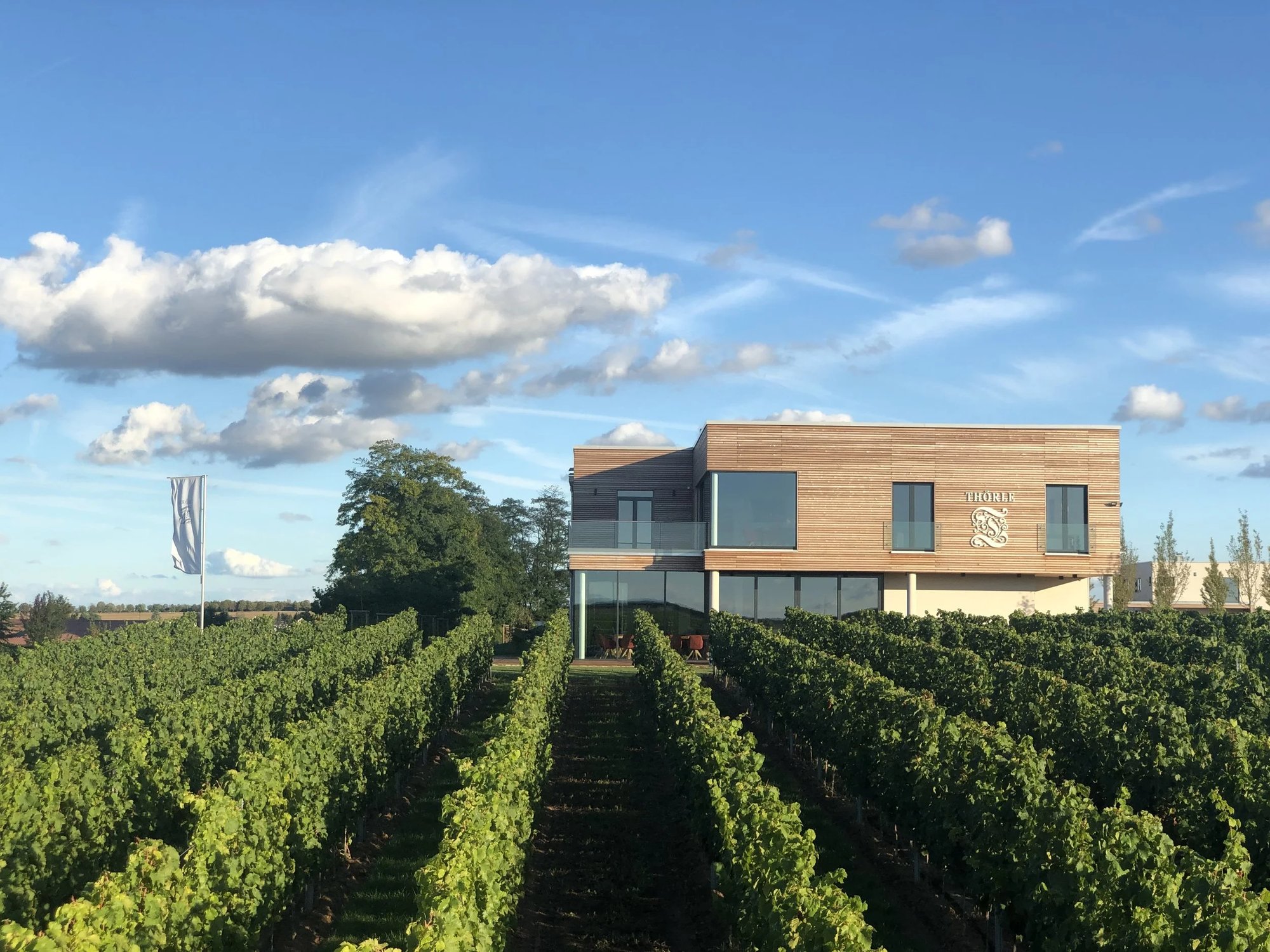
Saulheim and the Rheinhessen Question
Rheinhessen spent decades carrying an unfair reputation — a region defined in export markets by Liebfraumilch and volume production, despite covering more than 26,000 hectares of genuinely varied terrain. The shift that has occurred over the past twenty years, driven by a generation of estates working specific sites with greater precision, has repositioned the region in serious wine circles. Saulheim sits within this revised map, a village in the heart of Rheinhessen where the soil composition tilts toward limestone and loess rather than the sandier profiles found closer to the Rhine bend. That geological specificity matters: limestone-heavy soils in this part of Germany tend to produce wines with a structural backbone that distinguishes them from softer, rounder expressions. Weingut Thörle works within this framework, and its 2025 Pearl 2 Star Prestige recognition reflects a standing that places it inside the region's serious upper tier.
What the Land Produces Here
The terroir argument for central Rheinhessen is not direct, and that is precisely what makes it worth understanding. Unlike the Mosel's slate-driven precision or the Pfalz's warmer, more generous profile, Rheinhessen's inland plateau creates a continental climate where diurnal temperature variation preserves acidity even in warm vintages. Saulheim's position, sitting above the Rhine plain without direct river moderation, means the vines experience genuine heat accumulation during the growing season, balanced by cooler nights. The result, in capable hands, is Riesling and Silvaner with density and freshness in the same glass — a combination that has taken estates in this zone from regional footnote to national conversation. The loess component in the soil adds a textural quality to wines that is difficult to replicate on purely sandy or gravelly bases.
Weingut Thörle's Pearl 2 Star Prestige award for 2025 positions it within a narrow cohort of German estates receiving that level of formal recognition. The Pearl system, operating alongside Germany's established VDP classification and international critical attention, signals a consistent quality standard rather than a single exceptional vintage. For context, estates at that recognition level in Rheinhessen sit alongside peers such as Weingut Battenfeld-Spanier in Hohen-Sülzen, which has drawn attention for its Laumersheim sites, and Weingut A. Christmann in Neustadt an der Weinstraße in the adjacent Pfalz. These estates form a reference group defined less by marketing and more by what the individual site delivers year after year.
Placing Thörle in the German Wine Conversation
Germany's premium winery tier has never been geographically uniform. The conversation has historically clustered around the Mosel, with estates such as Weingut Clemens Busch in Pünderich representing the steep-slate benchmark, and around the Rhine's historic institutions , Kloster Eberbach in Eltville and Schloss Vollrads in Oestrich-Winkel carrying centuries of Rheingau identity. Further south, Franken producers such as Weingut Bürgerspital zum Heiligen Geist in Würzburg anchor Silvaner's heartland. Rheinhessen has had to work harder to establish critical legitimacy, and estates like Thörle are part of why the argument is now easier to make.
The comparison with Nahe producers is also relevant. Schlossgut Diel in Rümmelsheim operates on Nahe soils with a different mineralogical story , volcanic porphyry and colored sandstone rather than Saulheim's loess , but both regions share the challenge of communicating terroir specificity to audiences conditioned to think of German wine through a narrower lens. That the broader German fine-wine conversation now includes Rheinhessen producers at the prestige-award level is a shift worth noting for anyone building a serious cellar from German appellations.
Visiting: What to Expect and How to Plan
Saulheim is a working wine village rather than a tourist destination with developed infrastructure, which shapes the visit accordingly. The address , Am Norenberg, 55291 Saulheim , places the estate within easy reach of Mainz, approximately 20 kilometres to the northeast, making it accessible as a day excursion from the city or as part of a broader Rheinhessen wine route. Visitors intending to combine Thörle with other estates in the region should consider pairing it with producers in Hohen-Sülzen or along the Zellertal for a coherent geographical arc through Rheinhessen's most serious zones.
Because confirmed booking details are not publicly listed at time of writing, contacting the estate directly before visiting is advisable. German wine estates at this recognition level typically operate a mix of appointment-based tastings and open cellar events tied to regional wine weekends, which take place at various points through spring and autumn. The annual Rheinhessen Wine Night and regional open-winery events (Weinbörsen) provide structured access points that do not require individual appointments. Planning around those events gives visitors both access to Thörle and a wider Rheinhessen context in a single trip. For complementary accommodation and dining options, our full Saulheim hotels guide and our full Saulheim restaurants guide cover options in and around the village.
Those using Saulheim as a base for the wider region will find that Rheinhessen's wine route connects easily to the Nahe valley to the west and the Pfalz to the south, with the Mosel reachable within an hour and a half. For drinks and evening options beyond the winery visit itself, our full Saulheim bars guide and our full Saulheim experiences guide offer additional planning reference. The broader Saulheim wineries guide maps the local producer landscape for visitors wanting to build a more complete itinerary.
The Wider Prestige-Award Context
Across the German wine world, estates carrying formal prestige recognition at the two-star level occupy a tier that attracts buyers from both the domestic fine-wine trade and international collectors beginning to look beyond Bordeaux and Burgundy for structured, age-worthy whites. Rheinhessen's limestone-based Rieslings have shown particular appeal in that context, with their combination of weight and acidity making them candidates for medium-to-long cellaring , a quality that allocations-focused buyers have started to track with the same attention given to leading Mosel or Pfalz producers. Weingut Thörle's position in that system, confirmed by the 2025 award, is not incidental to how the estate should be read by anyone building a cellar rather than shopping for immediate consumption.
For international context on what prestige-level estate wine production looks like outside Germany, reference points such as Abadía Retuerta in Sardón de Duero illustrate how estate-level terroir focus translates across very different wine cultures. Closer to home, the comparison with Weingut Bassermann-Jordan in Deidesheim , one of the Pfalz's longest-established VDP estates , is instructive for understanding how Rheinhessen producers are beginning to occupy similar critical territory with a different soil story behind them.
Frequently Asked Questions
- How would you describe the overall feel of Weingut Thörle?
- Thörle operates as a focused estate producer in Saulheim, a village in central Rheinhessen. The feel is that of a working winery rather than a hospitality destination, with the 2025 Pearl 2 Star Prestige award positioning it firmly in Germany's serious upper tier. Visitors should expect a production-first environment rather than a polished tasting-room experience, though that directness is itself consistent with the no-ceremony approach that characterises the leading of Rheinhessen's emerging prestige estates.
- What wines is Weingut Thörle known for?
- Specific wine details are not confirmed in available records, but Rheinhessen producers working Saulheim's limestone and loess soils at this recognition level typically focus on Riesling and Silvaner as their primary varieties. The Pearl 2 Star Prestige recognition for 2025 suggests consistent quality across the range rather than a single standout bottling. For verified current release information, contacting the estate directly is the most reliable approach.
Peer Set Snapshot
These are the closest comparables we have in our database for quick context.
| Venue | Awards | Notes |
|---|---|---|
| Weingut Thörle | Pearl 2 Star Prestige | This venue |
| Schloss Johannisberg | 50 Best Vineyards #2 (2025); Pearl 4 Star Prestige | |
| Weingut Dr. Loosen | 50 Best Vineyards #16 (2025); Pearl 4 Star Prestige | |
| Weingut Balthasar Ress | Pearl 2 Star Prestige | |
| Weingut Battenfeld-Spanier | Pearl 3 Star Prestige | |
| Schloss Vollrads | 50 Best Vineyards #33 (2019); Pearl 3 Star Prestige |
Access the Cellar?
Our members enjoy exclusive access to private tastings and priority allocations from the world's most sought-after producers.
Get Exclusive Access