
Weingut Rainer Christ operates from Vienna's 21st district, producing wines from vineyards that sit within city limits — one of the few wine-growing traditions in the world conducted at an urban scale. The estate holds a Pearl 2 Star Prestige rating for 2025, placing it among Vienna's most recognised producers and pointing visitors toward a viticultural story that is as much about place as it is about the glass.
 Discover on Pearl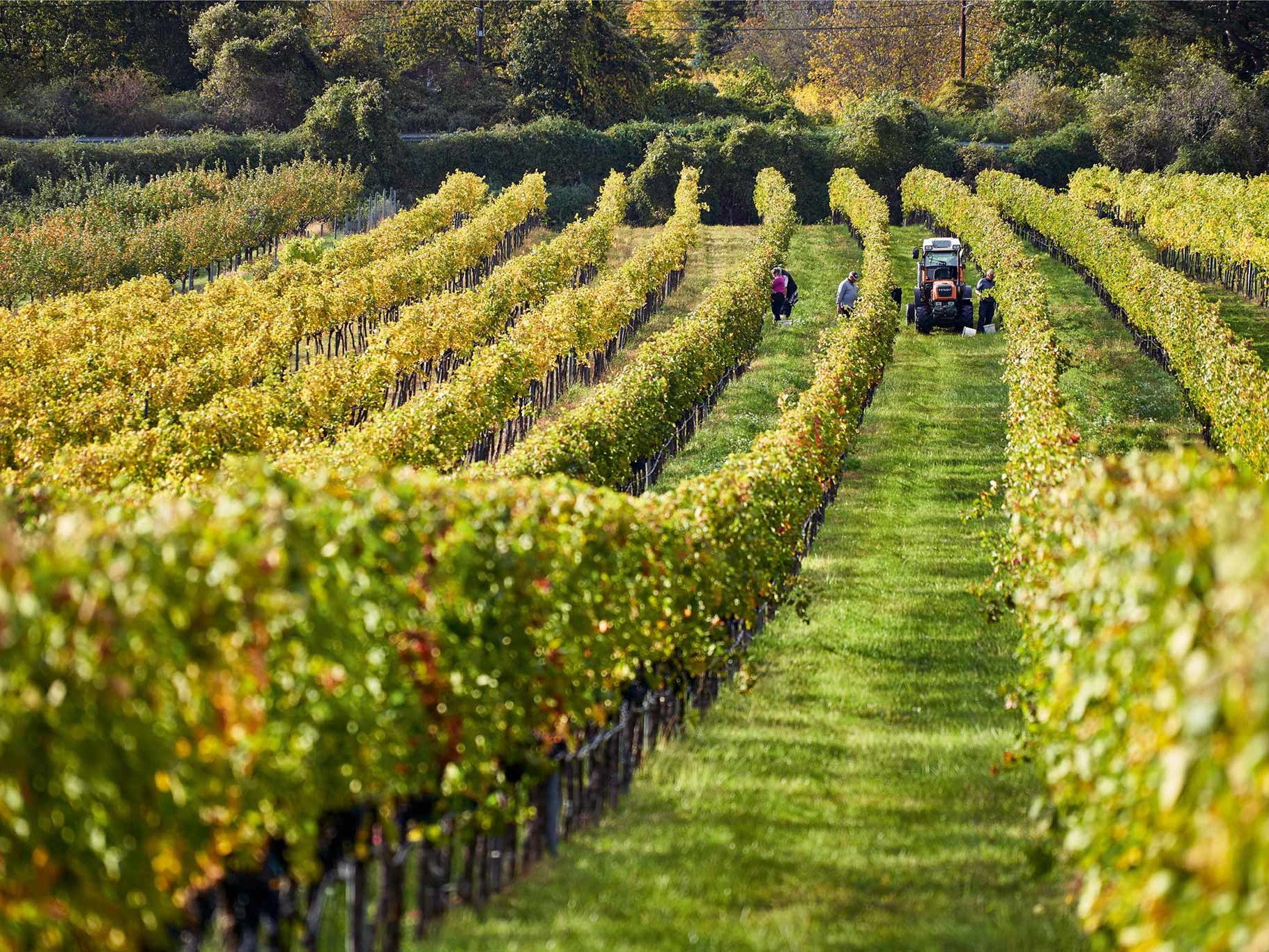
Vienna's Northern Vineyards and What Grows There
The 21st district of Vienna — Floridsdorf — is not where most visitors expect to find serious wine production. The area sits north of the Danube on terrain that has supported viticulture since the Roman period, and the vineyards that remain here occupy a compressed strip of loess and sandy soils bordered by suburban development on nearly every side. This is the operational reality for urban wine producers in Vienna: the city has grown around them, not away from them. Weingut Rainer Christ, addressed at Amtsstraße 12, works within that geography, producing wines from vines that are legally and physically within the Austrian capital.
Vienna is one of the few capital cities in the world with a functioning wine appellation, and the designation carries real weight. The Wiener Gemischter Satz , a field blend of multiple white grape varieties harvested and vinified together , is the city's most historically embedded style, and the vineyards of Floridsdorf and the surrounding districts have been cultivating multi-variety plots for centuries. That tradition shapes the category of producer Christ represents: a grower working from specific parcels, within a bounded urban geography, answerable to an appellation with documented historical roots rather than a marketing framework assembled in recent decades.
Sustainability as Method, Not Marketing
Across Austrian viticulture, the shift toward lower-intervention farming has moved from fringe practice toward broad expectation. The DAC and Gemischter Satz appellation frameworks have both absorbed producers increasingly committed to organic or biodynamic methods, and the Vienna wine scene has followed that arc. Urban producers face particular pressures in this regard: vineyard plots close to residential areas carry additional scrutiny over chemical applications, and growers working in Floridsdorf are operating in a context where the relationship between agricultural land and urban community is unusually direct.
The editorial angle here is not simply that some producers are certified organic and some are not. It is that the discipline of low-intervention viticulture changes what ends up in the glass in ways that matter to a specific kind of drinker. Wines from vines farmed without synthetic inputs tend to express soil character more clearly, partly because the vines are encouraged to root deeper in search of nutrients, and partly because the microbial environment of the vineyard is left to do work that chemistry would otherwise short-circuit. For producers in Vienna's northern districts, this means wines that carry some of the city's distinctive loess and gravel character rather than a profile engineered toward generic palatability.
Weingut Rainer Christ's Pearl 2 Star Prestige recognition for 2025 places it in a peer group of producers who have demonstrated consistency at a level above standard regional benchmarks. Within the Vienna wine scene, that positioning matters partly because the city's appellation is still building its international reputation, and individual producers who accumulate recognition contribute to the credibility of the designation as a whole. Visitors who engage with producers at this level are, in effect, engaging with the evidence base for Vienna wine's ambitions as a serious appellation.
The Floridsdorf Context
Arriving at a working winery in Floridsdorf is a different experience from arriving at a purpose-built tasting facility in a tourist-facing wine region. The 21st district has a working-class, functional character: wide roads, utilitarian architecture, tram lines running through commercial corridors. The wine estates here occupy street addresses that would not look out of place in any mid-density residential neighbourhood. What they deliver is access to production at close quarters, without the layer of hospitality infrastructure that exists at estates in, say, the Kamptal or Wachau.
That directness is part of the appeal for visitors who come specifically to understand how urban viticulture operates. There is no stage-set of a historic cellar or a panoramic terrace to frame the experience. What exists is the actual work: vineyards on the urban periphery, cellars adapted to city-scale production, and wines that carry the specific mineral and textural signatures of their terroir without being dressed up for a rural wine tourism market.
For context on the broader Viennese wine landscape, Weingut Fritz Wieninger and Weingut Mayer am Pfarrplatz represent the more visitor-facing end of the city's wine production, with established tasting rooms and Heuriger operations that draw significant foot traffic. Weingut Fuhrgassl-Huber occupies the Grinzing and Neustift am Walde belt in the 19th district, offering a contrasting geography and a more conventionally picturesque wine estate setting. Christ's Floridsdorf location positions it in a less-trafficked tier of Vienna's wine circuit , visited by those who are specifically seeking out the northern districts rather than those following a standard wine tourism route.
Placing Christ in Vienna's Award Tier
The Pearl 2 Star Prestige designation for 2025 is the clearest external signal available about where Weingut Rainer Christ sits relative to peers. Within Vienna's wine production community, which includes estates ranging from high-volume Heuriger suppliers to small-parcel prestige producers, a 2 Star Prestige rating places Christ in the upper band. This is not the category of producer who fills carafes for tourist-facing wine taverns; it is the category whose bottles appear on lists at serious restaurants and whose allocations attract attention from collectors building Austrian wine cellars.
For comparison, other producers working with Austrian appellations at award-recognised levels include Weingut Emmerich Knoll in Dürnstein and Schloss Gobelsburg (Weingut) in Langenlois, both operating in the Wachau and Kamptal regions respectively, where the critical and commercial infrastructure for premium Austrian wine is more established. Christ's recognition within a Vienna-specific context makes the case that the city appellation can produce at a level that invites comparison with those more prominent regional benchmarks.
Visitors with an interest in the full range of Vienna's drinks production beyond still wine can also consider 1516 Brewing Company Distillery and Weingut Walter Wien Distillery, both of which represent the parallel craft fermentation and distillation sector that has developed alongside the city's wine scene.
Planning a Visit
Weingut Rainer Christ is located at Amtsstraße 12 in Vienna's 21st district. Floridsdorf is served by the U6 U-Bahn line, which connects directly to the city centre, making the estate accessible without a car. Visitors planning a focused day around Vienna's northern wine districts can combine a visit here with stops at other Floridsdorf producers or cross into the 19th district's Neustift and Grinzing neighbourhoods for a fuller read of how the city's viticultural geography divides across the Danube.
As booking method and current opening hours are not available in our current data, confirming visit arrangements directly with the estate before travelling is the practical approach. Vienna wine tourism does not operate on the drop-in model common in more tourist-dense regions, and producers in Floridsdorf in particular tend to receive visitors by prior arrangement. Plan accordingly, especially if travelling from outside Vienna specifically for the estate visit.
For broader trip planning, our full Vienna wineries guide maps the city's full producer landscape across all districts. The full Vienna restaurants guide covers where to eat in the context of the wine you have been tasting; Austrian cuisine and Viennese wine are more closely paired than the city's international gastronomy reputation might suggest. The full Vienna hotels guide, full Vienna bars guide, and full Vienna experiences guide complete the picture for visitors spending meaningful time in the city.
Those interested in how Viennese wine fits into the wider Austrian premium category can also find useful comparative context at Weingut Heinrich Hartl in Oberwaltersdorf, which operates in the Thermenregion south of the city. For those building a broader European wine itinerary, Abadía Retuerta in Sardón de Duero and Aberlour in Aberlour offer instructive contrasts in how estate-based production operates in Spanish and Scotch whisky contexts respectively.
Frequently Asked Questions
Peer Set Snapshot
These are the closest comparables we have in our database for quick context.
| Venue | Awards | Notes |
|---|---|---|
| Weingut Rainer Christ | Pearl 2 Star Prestige | This venue |
| 1516 Brewing Company Distillery | Pearl 2 Star Prestige | |
| Alt Wiener Schnapsmuseum | Pearl 1 Star Prestige | |
| Koskij Distillery | Pearl 1 Star Prestige | |
| Lederhaas Distillery | Pearl 1 Star Prestige: 0pts | |
| Stock Austria Distillery | Pearl 1 Star Prestige |
Access the Cellar?
Our members enjoy exclusive access to private tastings and priority allocations from the world's most sought-after producers.
Get Exclusive Access