Weingut Arndorfer

Weingut Arndorfer operates from Weinbergweg 16 in Straß im Straßertale, a compact Kamptal village that sits within one of Lower Austria's most productive wine corridors. Recognised with a Pearl 2 Star Prestige award in 2025, the estate belongs to a tier of Austrian producers working with the precision and restraint that defines the region's better Grüner Veltliner and Riesling output.
 Discover on Pearl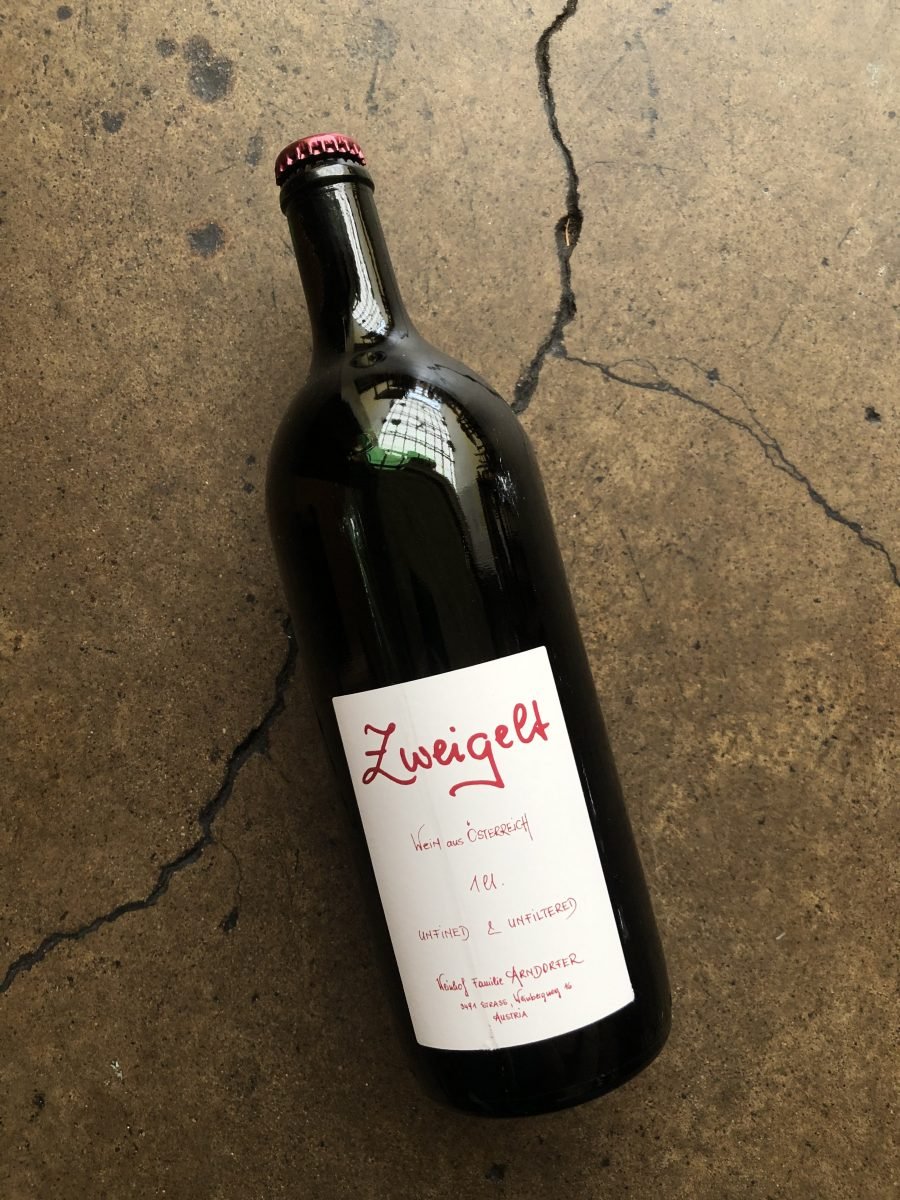
Straß im Straßertale and the Kamptal Winery Tier
The Kamptal wine region does not announce itself through grand architecture or roadside spectacle. Drive north from Krems along the Kamp river valley and the landscape resolves into a pattern of steep terraced vineyards, loose village clusters, and modest estate buildings that give almost no indication of what is being produced inside. Straß im Straßertale sits near the southern edge of this corridor, close enough to the Danube influence that diurnal temperature swings remain pronounced through the growing season — the single most important factor in the cool-climate aromatic precision that Kamptal has built its reputation on.
Within the village, two approaches to winemaking have emerged that mirror a broader Austrian split: the classical, terroir-expressive style aligned with DAC (Districtus Austriae Controllatus) designations, and a more intervention-light, low-sulphur approach that has gained traction across Lower Austria in the past fifteen years. Weingut Arndorfer has drawn attention for operating in that second camp, and its 2025 Pearl 2 Star Prestige recognition places it in a peer set that rewards consistency and philosophical coherence as much as single-vintage scores. Neighbours including Weingut Allram and Weingut Johann Topf represent the range of ambition operating from the same postcode.
What the Pearl 2 Star Prestige Rating Signals
Austria's premium wine award circuit has become more stratified over the past decade. The broad mid-tier of competent regional producers has expanded, while the leading brackets have thinned into a smaller group of estates operating with a defined house style and documented track record. A Pearl 2 Star Prestige recognition in 2025 places Weingut Arndorfer inside that upper bracket, benchmarked against a national field that includes well-capitalised estates with longer public profiles. In the Kamptal specifically, the reference points are significant: Schloss Gobelsburg in Langenlois and Weingut Emmerich Knoll in Dürnstein occupy that same prestige tier from different stylistic angles, which makes Arndorfer's positioning within it worth understanding on its own terms rather than as a footnote to larger names.
Across Austria, producers earning equivalent recognition tend to share a few characteristics: small to mid-sized holdings, high site selectivity, and a reluctance to adjust wine toward international palate benchmarks. Whether that description precisely fits Arndorfer in every detail would require tasting the current releases, but the award signal is consistent with that profile. For buyers sourcing Austrian wine at the prestige tier rather than the mass-export level, this is the relevant context.
The Winemaking Philosophy in Regional Context
Lower Austria's natural wine movement did not emerge in isolation. It developed in conversation with a generation of producers across Burgenland and the Wachau who were re-examining the role of sulphur, indigenous yeasts, and extended skin contact in wines that had been made conventionally for decades. By the mid-2000s, a cohort of younger estates — many of them family operations with older vine access but no obligation to a large commercial portfolio , began releasing wines under the natural or minimal-intervention designation. The Kamptal's climate makes this approach demanding: the region's cooler temperatures and variable vintages mean that low-sulphur production requires precise harvest timing and clean fruit to avoid oxidative instability in bottle.
Arndorfer sits within that generation of producers and has become one of the more discussed Austrian names in the natural wine import market, particularly in Germany and Japan, where the combination of Kamptal terroir and minimal-intervention production has found a receptive audience. That export reach matters as a credential signal: distributors in those markets apply their own screening, and sustained placement across multiple seasons reflects more than a single strong vintage. Comparable estates working in similar territory elsewhere in Austria include Weingut Pittnauer in Gols and Weingut Heinrich Hartl in Oberwaltersdorf, both operating in the same philosophical zone from different appellations.
Kamptal Varieties and What to Expect in the Glass
Kamptal's primary varieties , Grüner Veltliner and Riesling , behave differently in minimal-intervention production than in conventional winemaking. Grüner Veltliner processed with extended skin contact or without sulphur additions tends to lose some of the white pepper and green herb typicity that defines the classical DAC style, trading it for a more textural, oxidative-adjacent character that reads as either complexity or instability depending on the producer's control. The better natural Kamptal Grüners retain site character through the vinification; the weaker ones flatten into generic orange wine territory.
Arndorfer's releases, based on their positioning and market reception, skew toward the site-expressive end of that spectrum. Riesling from the Kamptal's primary sites adds further interest: the variety's higher acidity provides structural protection in low-sulphur environments, which is partly why it has become a reference point for minimal-intervention Austrian production. For visitors or buyers approaching the estate without prior tasting experience, starting with Riesling from a recent vintage is a reasonable orientation strategy before moving to the more stylistically demanding skin-contact or low-intervention Grüner expressions.
Austria's broader premium wine tier includes estates working across significantly different stylistic registers , Weingut Kracher in Illmitz defines the country's sweet wine benchmark, while Weingut Scheiblhofer in Andau bridges wine and distillate production. Arndorfer's focus on still table wine within a natural production framework represents a narrower and more specific offer, which makes comparative tasting across the region genuinely instructive rather than redundant.
Planning a Visit to Straß im Straßertale
Straß im Straßertale is a working agricultural village, not a wine tourism hub in the Bordeaux or Napa sense. The estate at Weinbergweg 16 is accessible by car from Krems, which sits approximately twenty kilometres to the southeast and connects to Vienna by rail in under an hour. Visiting in late September or October places you in harvest season, when estate access is often restricted but the vineyards are at their most instructive. Spring, particularly May and early June, offers a quieter window with cellar visits more frequently available and no harvest-period logistical pressure.
Contact details for Weingut Arndorfer are not currently listed in our database, so advance planning through wine fair appearances or importer networks is the more reliable approach for visitors arriving without a prior relationship. Arndorfer wines appear at VieVinum, Austria's principal fine wine trade fair, and at natural wine events in Vienna and Berlin where tasting before visiting makes practical sense. For a broader orientation to the area before travelling, our full Straß im Straßertale wineries guide covers the complete local picture, while our Straß im Straßertale restaurants guide, hotels guide, bars guide, and experiences guide map out the surrounding offer for a longer stay.
For reference points beyond Austria, natural and minimal-intervention production at prestige level takes different forms in other wine regions: Abadía Retuerta in Sardón de Duero and the single-malt tradition at Aberlour both illustrate how terroir-anchored production operates under different climatic and regulatory conditions, which sharpens the Kamptal context rather than diluting it.
Frequently Asked Questions
- What wines should I try at Weingut Arndorfer?
- Arndorfer operates in the Kamptal, a region built on Grüner Veltliner and Riesling, and has established a reputation within the natural and minimal-intervention tier of Austrian production. The 2025 Pearl 2 Star Prestige award reflects consistent quality across the range. Riesling from Kamptal sites offers the most structurally coherent entry point for new visitors to the estate's style, with the region's natural acidity providing stability in low-sulphur production. Grüner Veltliner in skin-contact or extended-maceration format represents the more characterful and demanding end of the offer.
- What should I know about Weingut Arndorfer before I go?
- The estate is in Straß im Straßertale, a small agricultural village in Lower Austria's Kamptal region, accessible by car from Krems. Arndorfer holds a Pearl 2 Star Prestige recognition as of 2025, placing it in the upper tier of Austrian estate producers. Phone and website details are not currently listed in our records, so contacting the estate through importer networks or wine fair encounters before arriving is advisable. No confirmed price or tasting format data is available in our database at this time.
- Can I walk in to Weingut Arndorfer?
- Walk-in access to Austrian family estates varies widely by season and appointment practice, and Weingut Arndorfer does not currently have confirmed booking or hours information in our records. Given its location in a small village rather than a dedicated wine tourism cluster, unannounced visits carry meaningful risk of finding the estate unavailable, particularly during harvest (September to October). A confirmed appointment, arranged through the estate's importer network or at an event such as VieVinum, is the more reliable approach for those travelling specifically to visit.
Peer Set Snapshot
These are the closest comparables we have in our database for quick context.
| Venue | Awards | Notes |
|---|---|---|
| Weingut Arndorfer | Pearl 2 Star Prestige | This venue |
| Weingut Allram | Pearl 2 Star Prestige | |
| Weingut Johann Topf | Pearl 2 Star Prestige | |
| Domäne Wachau | 50 Best Vineyards #68 (2025); Pearl 4 Star Prestige | |
| Familienweingut Tement | 50 Best Vineyards #82 (2025); Pearl 4 Star Prestige | |
| Schloss Gobelsburg (Weingut) | 50 Best Vineyards #50 (2022); Pearl 3 Star Prestige |
Access the Cellar?
Our members enjoy exclusive access to private tastings and priority allocations from the world's most sought-after producers.
Get Exclusive Access