Wedding Oak Winery
Situated in the Hill Country's northern edge, the winery draws attention for what the region's limestone-rich terrain and semi-arid climate can produce when handled with intention. A visit here doubles as an argument for Texas wine's growing credibility.
Pearl is the En Primeur Club membership app — saves, bookings, and concierge access live there. Same editors, same standards.
- Address
- 316 E Wallace St, San Saba, TX 76877
- Phone
- +1 325-372-4050
- Website
- weddingoakwinery.com
- Directions
- Get directions
 Saves & bookings on Pearl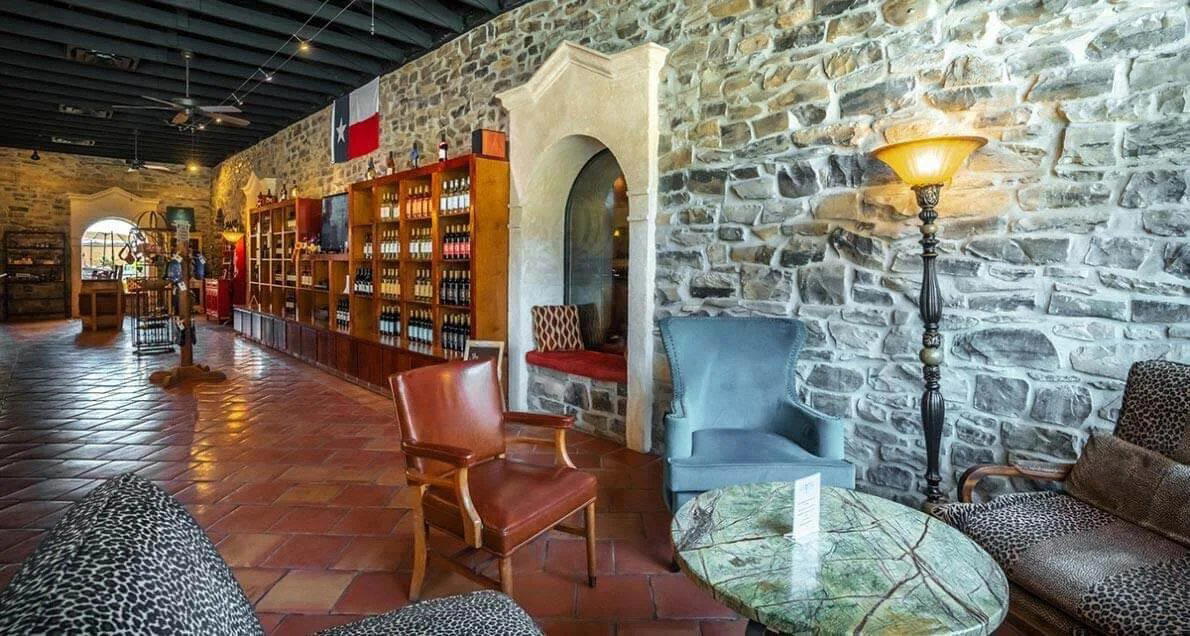
Limestone Country, Serious Wine
San Saba sits at the northern margin of the Texas Hill Country, where the Edwards Plateau begins to flatten and the pecan orchards that define the county's agricultural identity give way to cedar and live oak. It is not where most wine drinkers would think to look. The established Texas wine conversation tends to center on the higher-elevation vineyards further south and west, or on the showroom estates clustered along Highway 290 between Fredericksburg and Johnson City.
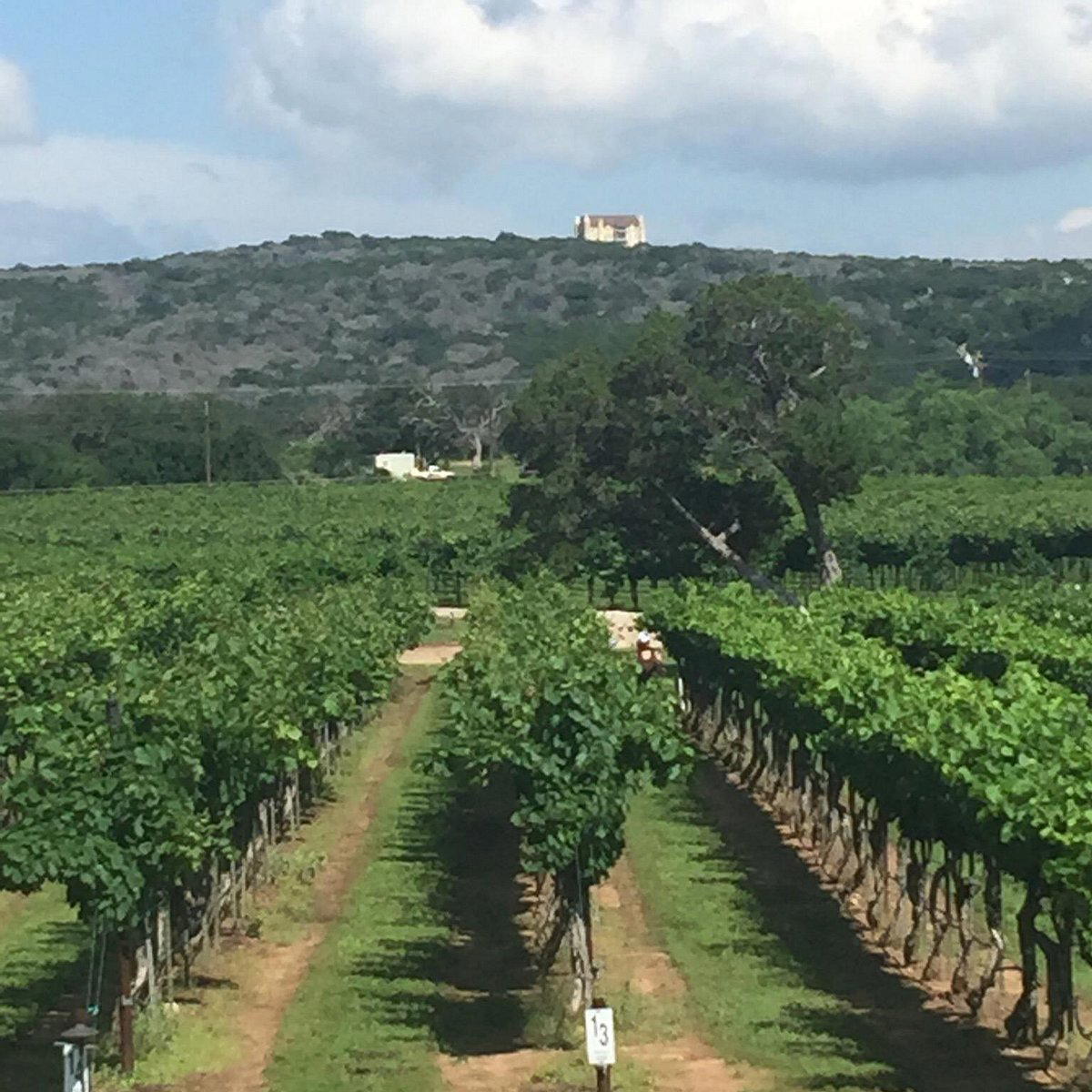
The Hill Country's geological profile matters here more than its promotional narrative. The region sits atop ancient Cretaceous limestone, with soils that drain quickly, stress vines in productive ways, and carry a mineral character that shows up in wines made from grapes grown directly in them. Rainfall is irregular, summers are long and hot, and the elevation provides enough diurnal temperature swing to preserve acidity in fruit that would otherwise arrive at harvest overripe. These are not gentle conditions. They demand varieties and viticulture adapted to them, and they punish wineries that try to force California-style results from Texas-grown fruit.
What the Region Produces
Texas wine has spent two decades arguing about which varieties belong to the state's long-term identity. The early reliance on Cabernet Sauvignon and Merlot, varieties carried over from their California prestige, has gradually given way to broader experimentation with Rhône and Iberian grapes better suited to the heat and the alkaline soils. Tempranillo has emerged as a credible candidate for the Hill Country's signature red, while Viognier, Mourvèdre, and Sangiovese have found partisans among producers willing to match variety to site rather than to market expectation.
San Saba's position at the edge of the plateau means its growing conditions share characteristics with the main Hill Country but carry their own micro-regional nuances. Producers working here are, in effect, running a slower, less publicized version of the same experiment happening further south: which grapes thrive in this specific combination of soil, heat, water stress, and altitude. The results inform not just what ends up in the bottle but what the Texas wine category can credibly claim as it competes for attention against established American regions.
For comparison, producers like Andrew Murray Vineyards in Los Olivos have built reputations by committing hard to Rhône varieties in California's Central Coast, accepting that the varieties demand longer timelines to show their full range. Texas producers working with similar grapes face a harder marketing challenge but a genuinely interesting set of growing questions. Artesa Vineyards and Winery in Napa offers a different reference point: a producer where the intersection of geology and winemaking philosophy became central to the estate's identity over time.
The Experience at Wedding Oak
Arriving at 316 E Wallace St in the town of San Saba, the setting reads as small-town Texas rather than wine-country destination. That is not a drawback; it is a calibration. The winery operates within the fabric of an actual working agricultural town, which gives it a grounded quality absent from tasting rooms designed as theatrical set pieces. The pace is measured, the scale is human, and the conversation tends to be more direct than the scripted hospitality routines common in higher-traffic wine regions.
The tasting experience skews toward the lower-key end of the spectrum. Visitors come to engage with the wines rather than to be entertained, and the setting supports that. It functions as a working introduction to what the northern Hill Country can produce rather than a branded lifestyle performance. For readers used to the polished circuit of Napa tasting rooms, the adjustment is minor and the payoff is a more candid sense of where Texas wine actually stands right now, not where its marketing says it is heading.
Specific hours, reservation requirements, and tasting formats should be confirmed directly with the winery. San Saba is a roughly two-hour drive northwest of Austin, making it a feasible day trip from the city rather than a multi-day itinerary requirement. The town offers limited accommodation, so most visitors structure the visit as a single destination within a broader Hill Country route.
Where Wedding Oak Sits in the Texas Wine Picture
The Texas wine category has a credibility problem it is actively working to solve. A decade ago, the easiest criticism was that most wines priced and presented as serious were not carrying their weight against equivalent bottles from California, the Pacific Northwest, or established European producers. That criticism has softened as more producers commit to site-appropriate varieties and abandon the reflex toward over-oaking and residual sugar as compensation for fruit that was pushed too hard.
For a sense of how seriously credentialed producers in adjacent American wine traditions approach the same questions of terroir expression and variety selection, it is worth looking at what has defined quality in regions that solved similar identity problems earlier. Accendo Cellars in St. Helena and Aubert Wines in Calistoga represent the California model at its most refined, where site specificity and production discipline converged into consistent recognition. Adelsheim Vineyard in Newberg shows how Oregon built credibility over a longer arc by insisting on variety-to-climate fit. Texas is at an earlier stage in that arc, but producers earning Prestige-tier recognition are evidence the arc is real.
Other American producers worth reading alongside Wedding Oak's trajectory include Alpha Omega Winery in Rutherford, Alexander Valley Vineyards in Geyserville, Au Bon Climat in Santa Barbara, Babcock Winery and Vineyards in Lompoc, and B.R. Cohn Winery in Glen Ellen. None are direct peers in geography or variety, but all illustrate how regional wine credibility is built through sustained, evidence-based production rather than through marketing positioning alone. For readers interested in international reference points, Aberlour and Achaia Clauss in Patras represent older traditions where place-expression and formal recognition converged across generations.
In Context: Similar Options
Comparable venues nearby, for context on price, style, and recognition.
| Venue | Cuisine | Price | Notes |
|---|---|---|---|
| Wedding Oak WineryThis venue — the venue you are viewing | Tannat, Tempranillo | $$ | Not listed |
| Carter Creek Winery | Riesling, Pinot Grigio | $$ | Johnson City |
| Texas Hills Vineyard | Chardonnay, Tempranillo | $$ | Pedernales River Valley |
| Milam & Greene Whiskey Distillery | Texas Hill Country | $$ | outskirts of Blanco |
| Bending Branch Winery | Tannat, Tempranillo | $$ | Comfort |
| Andalusia Whiskey Co. | malted barley | $$ | Blanco |
Continue exploring
More in San Saba
At a Glance
- Rustic
- Scenic
- Cozy
- Intimate
- Group Outing
- Celebration
- Wine Education
- Family
- Special Occasion
- Barrel Room
- Estate Grounds
- Terrace
- Historic Building
- Private Tasting
- Sustainable
- Vineyard
- Garden
- Texas Hill Country AVA
- Tannat
- Tempranillo
- Merlot
- Mourvèdre
- Rousanne
- Tioja
- Dolcetto
- Moscato
- Still Red
- Still White
- Dessert
- Flight Tasting
- Glass Pour
- Bottle Purchase
- Hosted Seated Tasting
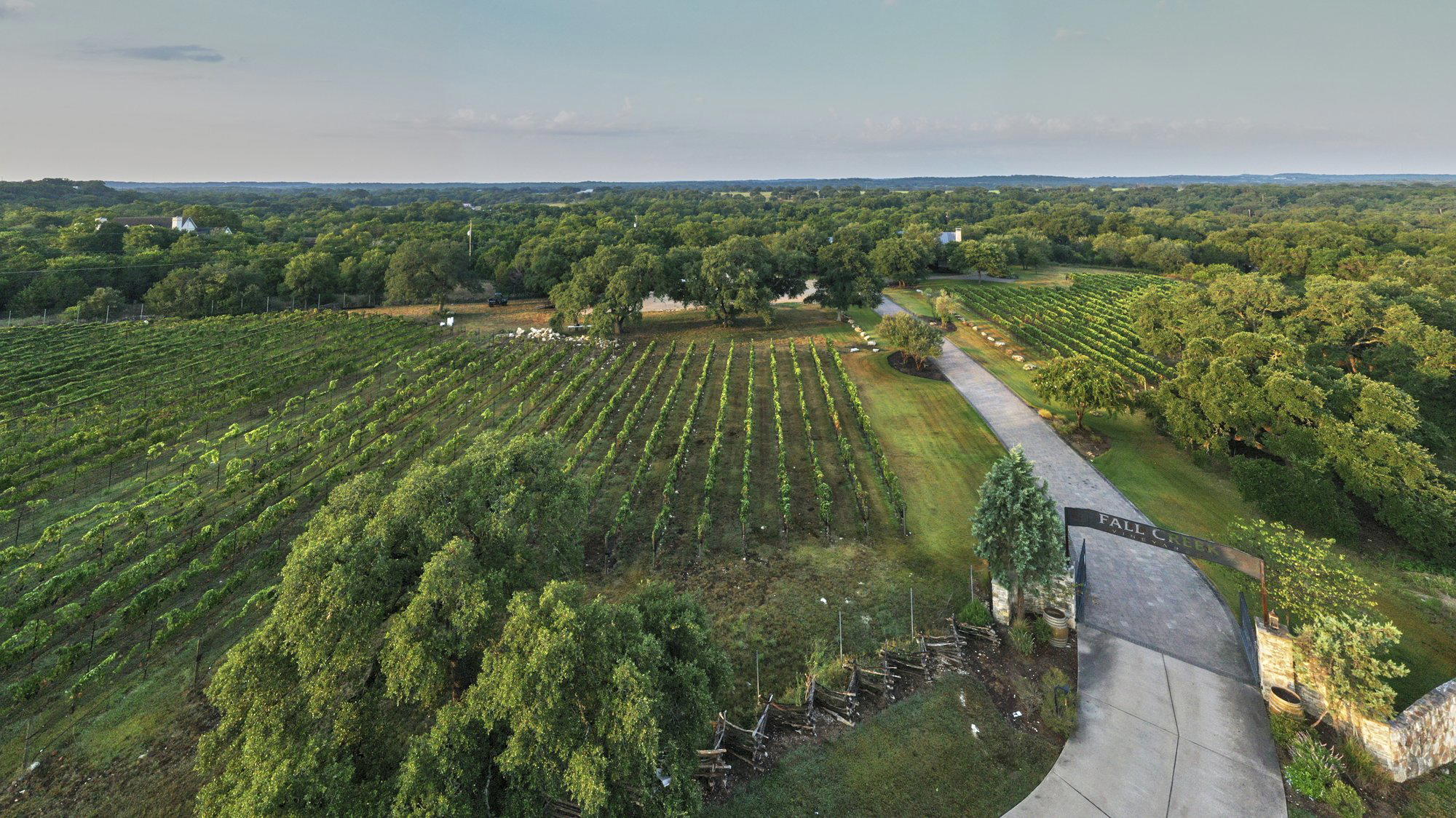
Warm and inviting with restored historic charm, ambient lighting, and a relaxed atmosphere enhanced by potted plants and cushioned outdoor seating.