
The estate that gave birth to Sassicaia and defined the Super Tuscan category, Tenuta San Guido operates from a coastal Tuscan terroir that has since attracted dozens of imitators. Under winemaker Graziana Grassini, the property holds a Pearl 5 Star Prestige rating for 2025 and draws collectors and serious wine travellers to the cypress-lined roads of Bolgheri.
 Discover on Pearl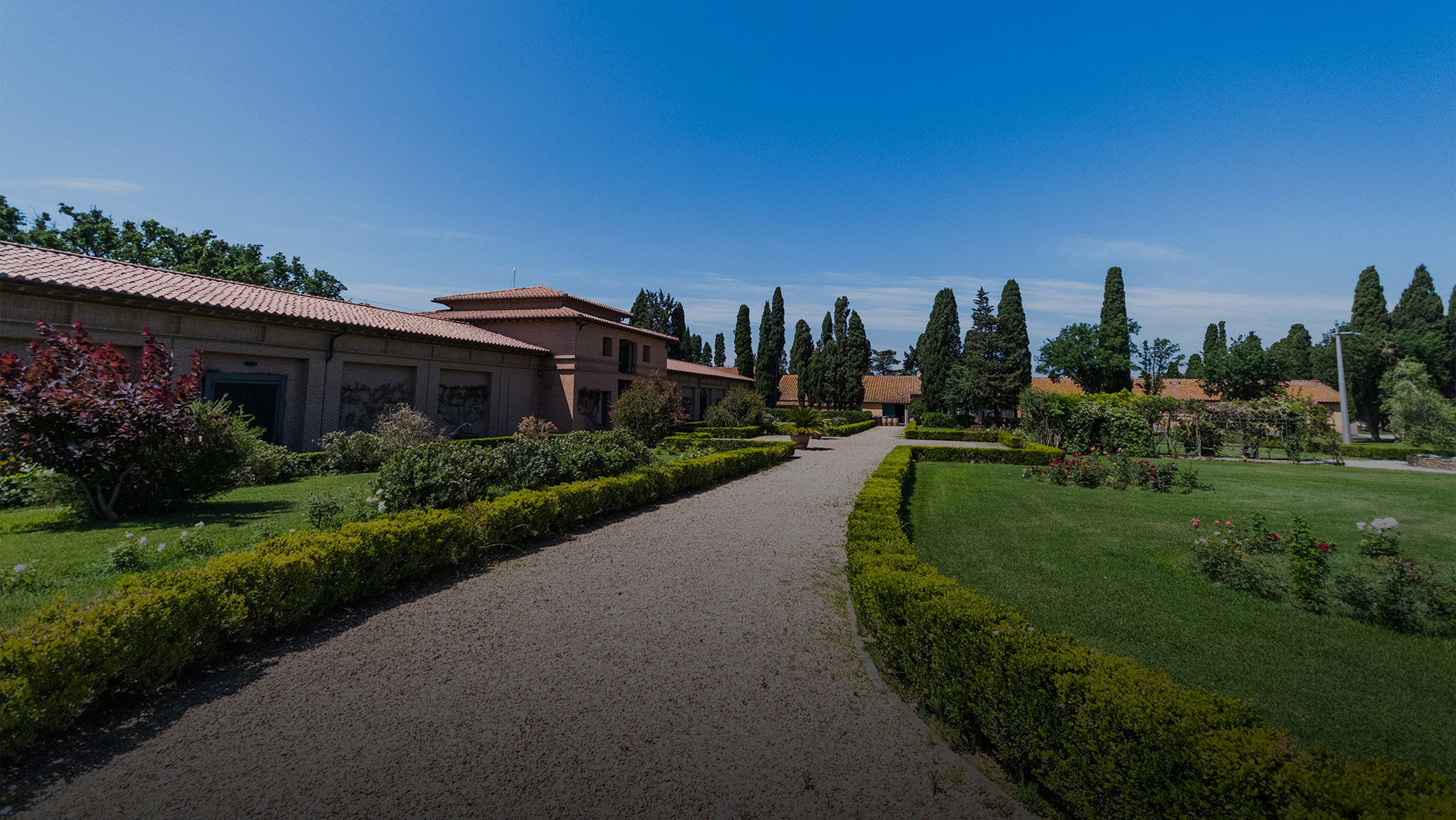
The Road to Bolgheri and What It Tells You
The approach to Tenuta San Guido is one of the more instructive drives in Italian wine country. The long cypress-lined avenue that cuts through the coastal Maremma — immortalised in Carducci's verse and now inseparable from the identity of Bolgheri itself — frames the estate before a single bottle is opened. This is wine country that announces itself through landscape first: flat agricultural plains giving way to low hills, maritime air from the Tyrrhenian coast pressing in from the west, and a light that feels softer and more diffuse than the harder-edged Chianti or Brunello zones further inland.
That physical setting matters because it explains everything about how Bolgheri's wines taste and why this particular slice of Tuscany drew such attention in the latter half of the twentieth century. The coastal influence moderates summer heat, extends the growing season, and produces a style of Cabernet Sauvignon and Merlot markedly different from the same varieties grown further east. Tenuta San Guido did not choose this landscape by accident , it worked with it, and the wines that emerged changed the Italian classification system's credibility permanently.
Where Tenuta San Guido Sits in the Bolgheri Hierarchy
Bolgheri has grown from a handful of pioneering estates in the 1970s into one of Italy's most densely observed wine appellations. Within that appellation, the estates divide roughly into three tiers: the founding properties whose first vintages predate the DOC designation, second-generation estates that followed the commercial success of the 1980s and 1990s, and more recent entrants building on established land prices and international recognition. Tenuta San Guido belongs firmly to the first group, with a first vintage recorded in 1968 , before Sassicaia had a DOC of its own, when the wine was classified at the lowest rung of Italian appellation law purely because no framework existed for what it was.
That position as an originating estate carries weight in a way that peer comparison alone cannot capture. Tenuta di Biserno, Le Macchiole, and Tenuta Guado al Tasso are all serious producers working the same coastal terroir, but none can claim to have defined the category. The 2025 Pearl 5 Star Prestige award places Tenuta San Guido in the uppermost recognition tier for current releases, confirming that prestige built over five decades has not drifted into irrelevance or nostalgia.
For Italian wine comparison at this level, the relevant peer set extends beyond Bolgheri. Biondi-Santi Tenuta Greppo in Montalcino holds a comparable founding-estate status in the Brunello world. Antinori nel Chianti Classico in Tuscany operates at a similar intersection of historical authority and modern winemaking discipline. Further north, Aldo Conterno in Monforte d'Alba and Bruno Giacosa in Neive occupy analogous positions in the Barolo and Barbaresco hierarchy. What these estates share is a founding logic that proved correct over time, and a reputation that now functions as a category signal rather than mere marketing.
Terroir, Winemaker, and the Question of Continuity
Coastal Tuscany's terroir argument rests on a combination of factors that took decades to gain acceptance in Italian wine discourse. The schist and clay soils of the Bolgheri hills drain quickly and warm early, favouring Bordeaux varieties that the local classification system had no mechanism to reward. When Sassicaia first achieved serious international recognition in the 1970s, it did so despite, not because of, its official classification , a fact that made the eventual creation of the Bolgheri Sassicaia DOC in 1994 feel like institutional catching-up rather than genuine discovery.
Winemaker Graziana Grassini now holds continuity responsibility for an estate whose stylistic reputation was forged over a very specific arc. In Italian wine, the estates that have maintained quality across winemaking transitions , rather than spiking in one era and softening in another , command the most consistent secondary market attention. The 2025 Pearl 5 Star Prestige rating suggests the current releases are holding position rather than coasting on inherited credibility.
For context on how other premium Italian estates approach this continuity question, Ca' del Bosco in Erbusco provides a useful Lombard parallel: a property where founder-era innovation was eventually codified into a consistent house style that survives personnel changes. European comparisons extend to properties like Abadía Retuerta in Sardón de Duero, where estate-scale ambition and terroir specificity operate at a similarly high investment level.
The Physical Estate and the Sense of Place
The Capanne locality address places the estate on the agricultural flatlands south of the village of Bolgheri, in the zone that produces the appellation's most studied soils. Arriving at the estate, the visual logic of the terroir becomes legible: a flat horizon that reads agricultural rather than dramatically scenic, punctuated by the cypress lines and olive groves that define Maremma's worked landscape. This is not the photogenic hillside drama of Chianti Classico or the fortress-village backdrop of Montalcino. The beauty here is quieter, more structural , the kind that rewards attention rather than demanding it.
That restraint in landscape corresponds to a restraint in how the estate presents itself to visitors. Tenuta San Guido is not a hospitality operation in the contemporary agriturismo sense; it is a working wine estate with a reputation that draws specialists, collectors, and serious visitors rather than casual wine tourists. Travellers planning a Bolgheri visit with deeper hospitality needs will find more extensive options covered in our full Bolgheri hotels guide, while dining around the appellation is mapped in our full Bolgheri restaurants guide. The bars guide and experiences guide cover the broader visit context for those spending multiple days in the zone.
Planning a Visit
Bolgheri sits on the Tuscan coast roughly midway between Livorno and Grosseto, accessible by car from Florence in approximately two hours. The estate address at Località Capanne, 27 places it within the appellation's core zone, south of the village. Harvest season , typically September through October for Cabernet Sauvignon and Merlot in this coastal climate , brings the most activity to the appellation and the most logistical competition for accommodation. Spring visits, particularly April and May, offer cooler temperatures and a quieter approach. Given that public contact details are not available in current records, visitors should approach via official channels once confirmed, or explore the full Bolgheri wineries guide for estates with confirmed visit programs in the appellation.
For international wine travellers comparing single-estate visit programs across Europe, analogous experiences at Aberlour in Aberlour , in a completely different tradition but at a comparable prestige tier , illustrate how founding-era estates in any category tend to structure access around quality signals rather than volume throughput.
Frequently Asked Questions
Peer Set Snapshot
These are the closest comparables we have in our database for quick context.
| Venue | Awards | Notes |
|---|---|---|
| Tenuta San Guido | Pearl 5 Star Prestige | This venue |
| Le Macchiole | Pearl 2 Star Prestige | |
| Tenuta di Biserno | Pearl 2 Star Prestige | |
| Tenuta Guado al Tasso | Pearl 4 Star Prestige | Renzo Cotarella, Est. 1990 |
| Aldo Conterno | Pearl 3 Star Prestige | |
| Allegrini | Pearl 2 Star Prestige |
Access the Cellar?
Our members enjoy exclusive access to private tastings and priority allocations from the world's most sought-after producers.
Get Exclusive Access