
Ramón Bilbao is one of Haro's established names in Rioja winemaking, earning a Pearl 2 Star Prestige rating in 2025. The bodega sits on Avenida Santo Domingo de la Calzada in the heart of Spain's most concentrated wine district, where aging philosophy and barrel selection define reputations as much as the harvest itself.
Where Rioja's Cellar Culture Runs Deepest
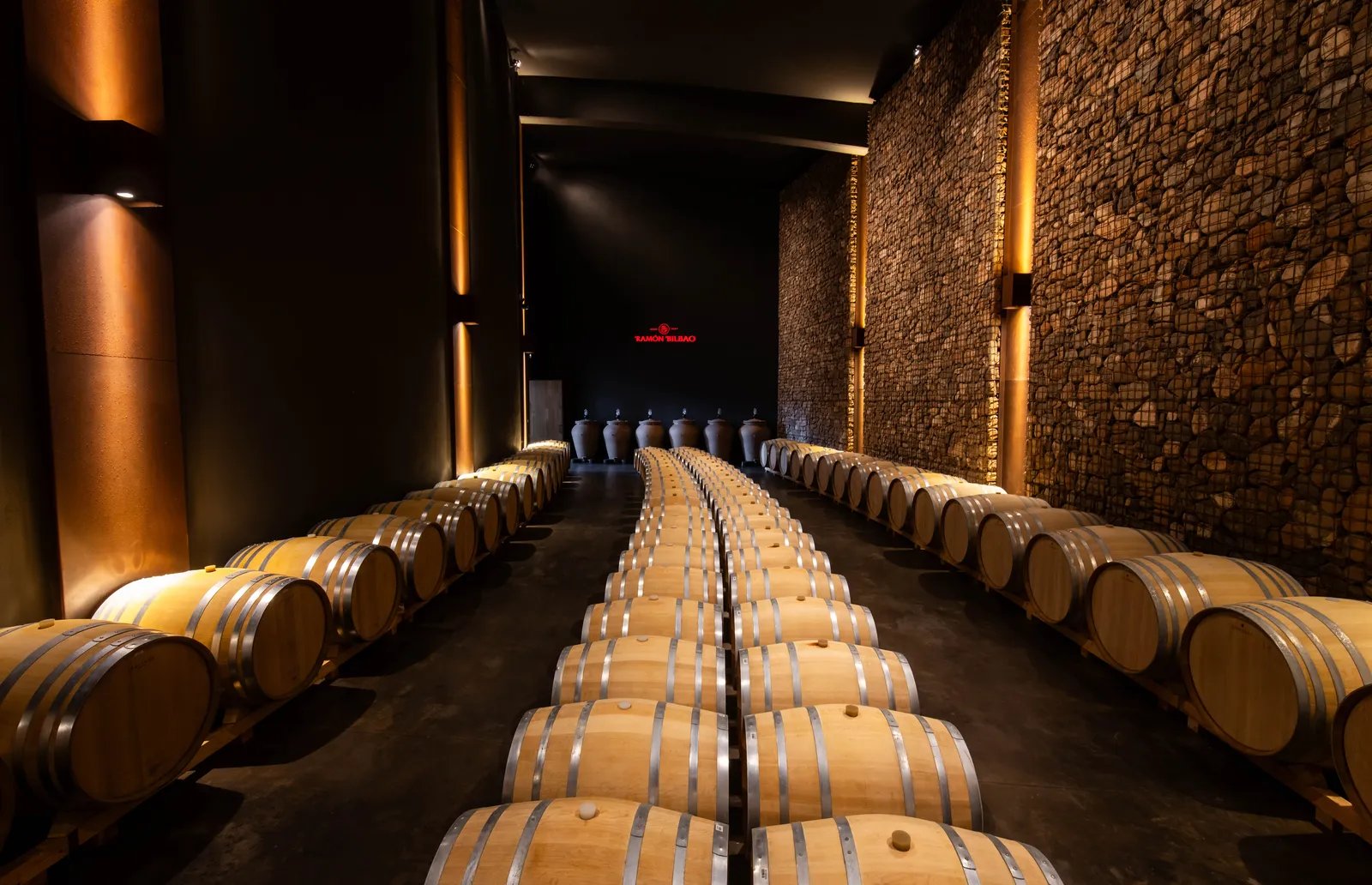
The road into Haro from the west passes through a corridor of bodegas so dense that wine storage and wine production become indistinguishable from the town's civic architecture. Avenida Santo Domingo de la Calzada, where Ramón Bilbao sits at number 34, is not a scenic wine route designed for visitors — it is a working address in a town that has been making Rioja for generations without much interest in dressing itself up. That context matters. In Haro's winery district, a producer's reputation is built underground, in barrel halls and aging cellars, rather than through tasting-room theatrics.
Ramón Bilbao received a Pearl 2 Star Prestige rating in 2025, a designation that places it within a recognised tier of producers whose work in the cellar is considered to meet a defined standard of craft and consistency. In a region where the gap between a Crianza, a Reserva, and a Gran Reserva is decided almost entirely by aging decisions — how long the wine spends in oak, how long it rests in bottle, which barrels are selected for the leading labels , that kind of recognition carries weight beyond marketing.
The Aging Logic Behind Rioja's Hierarchy
To understand why cellar and aging programmes define prestige in Rioja, it helps to understand how the appellation structures its quality ladder. Rioja Crianza requires a minimum of two years of aging, with at least one spent in oak. Reserva demands three years total, with at least one in barrel and one in bottle. Gran Reserva pushes that further: five years minimum, with at least two in oak. These are regulatory floors, not ceilings. The producers who build lasting reputations are those who exceed the minimums , choosing longer barrel contact, selecting specific French or American oak for specific parcels, and making blending calls late in the aging process rather than early.
This is the terrain where Rioja's internal hierarchy actually forms. Haro's concentration of historic bodegas, including La Rioja Alta, López de Heredia (Viña Tondonia), CVNE (Cune), Bodegas Muga, and Bodegas Roda, means that Ramón Bilbao competes in a peer set where the reference points are very high. López de Heredia, for example, releases wines that have spent a decade or more in barrel and bottle before they reach the market. Muga operates its own cooperage. In that company, the decisions made in the cellar are understood by locals and serious visitors alike as the real measure of a producer's ambition.
Haro's Station Quarter and the Bodega Belt
The neighbourhood around the train station in Haro contains one of the highest concentrations of historic wine estates in Spain. This is not an accident of geography: the railway line, constructed in the late nineteenth century, gave the town direct access to export markets in the Basque Country and beyond, and the bodegas clustered nearby to reduce transport time and costs. The infrastructure shaped the industry, and the industry shaped the town. Walking between bodegas here, you pass stone facades that have absorbed decades of barrel aging aromas , the ethanol and oak compounds that give cellar districts their particular atmospheric character.
Ramón Bilbao's address on Avenida Santo Domingo de la Calzada places it in this district. For visitors arriving from Logroño, the most common access point, the journey by car takes under an hour. Haro itself is compact enough to cover the key winery addresses on foot or by short taxi rides. The hotel options in Haro are limited but functional; most serious wine visitors treat the town as a full-day destination from a base in Logroño or the surrounding villages, though staying overnight gives access to the early morning and late afternoon hours when the bodega district is quieter and more legible as a place.
Planning a Visit to Ramón Bilbao
Visits to Rioja bodegas, including Ramón Bilbao, typically require advance arrangement rather than walk-in access. The region's most established producers operate structured tours and tastings that must be booked ahead, sometimes weeks in advance during the harvest period in late September and October, when the bodegas are active and access windows tighten. Spring and early autumn are generally the most atmospheric times to visit: temperatures are moderate, the vineyards are at their most visible either in new growth or pre-harvest weight, and the production facilities are easier to understand in context.
Haro's restaurant options are worth factoring into any visit. The town has a strong tapas tradition centred on its old quarter, with bars serving pintxos and plates built around local produce. Combining a morning cellar visit with lunch in the old town and an afternoon at a second bodega is a practical template that the local hospitality infrastructure is well set up to support. There is also a well-established bar culture in Haro that operates on different hours than tourist-facing venues, meaning that visitors who arrive with enough time to follow the locals into the evening will find a layer of the town that shorter itineraries miss.
For visitors building a wider Iberian wine itinerary, the context beyond Haro is worth noting. Rioja's aging-led model has close parallels in other Spanish regions: Abadía Retuerta in Sardón de Duero operates with a similarly cellar-focused philosophy in Ribera del Duero, as does Arzuaga Navarro in Quintanilla de Onésimo and Bodegas Protos in Peñafiel. Comparing the barrel-aging traditions of Rioja and Ribera del Duero , both Tempranillo-dominant, both with structured classification systems, but with different stylistic tendencies , is one of the more instructive exercises available to anyone serious about Spanish wine. Further afield, the long-aging logic at Aberlour in Scotland or the small-production cellar discipline at Accendo Cellars in St. Helena offer transatlantic reference points for how maturation-focused producers think about release timing and cellar investment.
See the full Haro experiences guide for a broader view of what the town and its surroundings offer beyond individual bodega visits.
Frequently Asked Questions
- What do visitors recommend trying at Ramón Bilbao?
- Ramón Bilbao's position in the Rioja Alta sub-zone, where the combination of Atlantic climate influence and clay-limestone soils supports Tempranillo-dominant wines with structured aging capacity, makes its Reserva and Gran Reserva tiers the most discussed among visitors. The 2025 Pearl 2 Star Prestige recognition reflects the cellar programme's consistency rather than a single vintage. For regional comparison, the Reserva tier from Haro's established producers, including those at Bodegas Muga and La Rioja Alta, is the benchmark against which most serious visitors measure what they taste here.
- What's the standout thing about Ramón Bilbao?
- Its location in Haro, the town with the highest density of historically significant Rioja producers in the appellation, gives Ramón Bilbao an immediate competitive context. The Pearl 2 Star Prestige rating earned in 2025 places it within a defined quality tier, and the bodega's address on Avenida Santo Domingo de la Calzada puts it in the middle of the winery district that defines the town's character. Price information is not currently listed, so visitors should confirm directly before visiting.
- Do they take walk-ins at Ramón Bilbao?
- Like most established bodegas in Haro, Ramón Bilbao is unlikely to accommodate unannounced visits, particularly during peak harvest season in September and October. Booking in advance is the standard approach for the Haro winery district as a whole. Phone and website details are not currently listed in our database; contacting the bodega directly or through a local concierge is advisable. The Pearl 2 Star Prestige rating (2025) suggests demand is consistent, which reinforces the case for planning ahead.
- What kind of traveller is Ramón Bilbao a good fit for?
- Visitors with an existing interest in how aging classifications work in practice, rather than those looking for an introductory wine experience, will get the most from a visit here. Haro's winery district rewards curiosity about production and cellar decisions more than scenic tourism. The 2025 Pearl 2 Star Prestige recognition signals that Ramón Bilbao operates at a level where the technical programme is worth the attention of a serious wine traveller. Price details are not currently available, so the visit's cost structure should be confirmed in advance.
- How does Ramón Bilbao's aging approach compare to other Haro producers?
- Rioja's classification system sets regulatory aging minimums, but the producers who earn sustained recognition tend to exceed those floors considerably. Ramón Bilbao's Pearl 2 Star Prestige award in 2025 places it in a tier where the cellar programme is a primary indicator of quality. Within Haro, the reference points for extended aging are significant: López de Heredia releases wines after a decade or more of barrel and bottle time, while CVNE and Bodegas Roda each bring distinct approaches to barrel selection and blending timelines. Understanding where Ramón Bilbao sits within that range is part of what makes a visit to the Haro district worthwhile for anyone tracking how aging philosophy shapes wine style.
Peers Worth Knowing
A compact peer snapshot based on similar venues we track.
| Venue | Cuisine | Price | Notes |
|---|---|---|---|
| Ramón Bilbao | This venue | ||
| CVNE (Cune) | |||
| Bodegas Roda | |||
| Bodegas Muga | |||
| La Rioja Alta | |||
| López de Heredia (Viña Tondonia) |
Access the Cellar?
Our members enjoy exclusive access to private tastings and priority allocations from the world's most sought-after producers.
Access the Concierge