Origen Raíz (Vinata El Ojo)

In the highlands of Durango, Origen Raíz (Vinata El Ojo) represents a side of Mexican spirits production that operates far outside the agave tourism mainstream. A 2025 Pearl 2 Star Prestige recognition places it among the most credentialed producers in the country's emerging vinata circuit, making it a reference point for anyone tracing how altitude, volcanic soil, and indigenous agave varieties shape what ends up in the glass.
 Discover on Pearl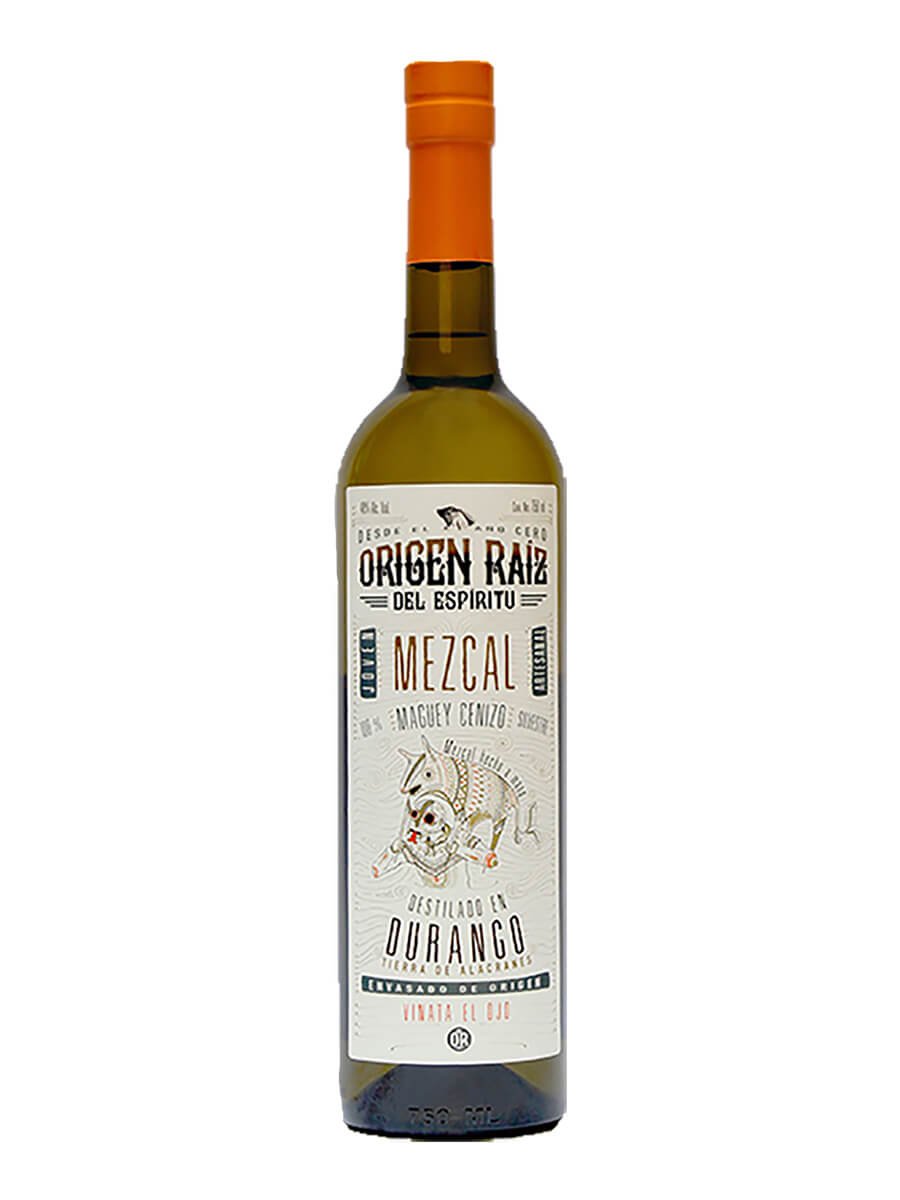
Where Durango's High Desert Speaks Through the Still
The road into Nombre de Dios moves through terrain that does most of the explaining before you arrive. The Sierra Madre Occidental drops toward the high desert of Durango at an altitude that creates thermal swings few lowland agave-producing regions can match: warm days that push photosynthesis, cold nights that slow sugar accumulation and concentrate compounds that no distillery intervention can replicate. This is the landscape context that makes a producer like Origen Raíz (Vinata El Ojo) legible. The vinata sits at coordinates that place it squarely in this climatic middle ground, and everything about what it produces reflects those conditions rather than any attempt to soften or override them.
Durango rarely appears on the first page of Mexican spirits itineraries. That omission has more to do with infrastructure than quality. The state lacks the marketing apparatus of Jalisco and the gastro-tourism draw of Oaxaca, which means producers here have operated in relative obscurity even as their output has quietly accumulated critical recognition. The 2025 Pearl 2 Star Prestige award earned by Origen Raíz is a marker worth reading carefully: in a country where spirit quality awards are increasingly contested and granular, a two-star Prestige designation signals a producer operating at a tier that positions it against the most credentialed names in the national conversation, not simply within a regional bracket.
Terroir in a Vinata Context
The concept of terroir, borrowed from wine and now applied with varying degrees of rigor across the spirits world, has particular resonance in Durango's agave production. Here, the relevant variables compound. Altitude affects not just the agave's sugar profile but the speed of fermentation, the character of the wild yeasts present in the environment, and the rate at which aromatics develop during distillation. Volcanic and alluvial soils in the Nombre de Dios corridor contribute mineral texture that shows up in the finish of well-made vinata spirits in ways that are detectable in blind tastings against Oaxacan or Jalisco-sourced product.
The agave varieties used by Durango producers are often distinct from those dominating other regions. While Espadín dominates Oaxacan mezcal and Blue Weber Agave defines tequila production at operations like Jose Cuervo (La Rojeña) in Tequila and La Primavera (Don Julio) in Atotonilco El Alto, Durango's highland vinatas have access to wild-harvested varieties adapted over centuries to this specific climate. Slow-growing plants that spend a decade or more accumulating sugars in thin, mineral-rich soil produce a different base material than their lowland counterparts, and the difference is not subtle.
This is the axis on which Origen Raíz operates and on which its recognition should be understood. The Pearl 2 Star Prestige designation in 2025 reflects not just technical competence but the kind of provenance-driven production that awards bodies increasingly prioritize as the global spirits market matures. Compare this positioning to cooperative-scale operations like Banhez (UPADEC cooperative) in San Miguel Ejutla, which operates within a collaborative framework in Oaxaca, and the contrast clarifies something about the vinata model: smaller, site-specific, with the attendant constraints and advantages that come from working with one location's microclimate over time.
The Vinata Format and What It Asks of Visitors
A vinata is not a distillery in the industrial sense and is not a tasting room in the winery tourism sense. It is closer to an artisanal production site where the process and the place are inseparable, and where visits tend to reward patience and prior knowledge more than casual drop-ins. Nombre de Dios is not set up for high-volume spirits tourism. Visitors arriving here should plan accordingly: this is a destination that requires scheduling, local contact, and the kind of preparation that distinguishes a productive visit from a frustrating one.
For those building a wider Mexican spirits itinerary, Nombre de Dios pairs logically with Oaxacan mezcal production circuits. Operations like Los Danzantes in Santiago Matatlán, Casa Cortés in La Compañía, and Convite in San Baltazar Guelavila represent the Oaxacan palenque model at its most considered, and visiting those alongside a Durango vinata creates a comparative education that no single-region trip can replicate. The contrast between high-altitude Durango production and Oaxaca's valley-floor and sierra operations is the kind of difference that reorganizes how you think about the category.
Jalisco's tequila estates, including Casa Herradura in Amatitán and Cazadores in Arandas, represent a different end of the spectrum entirely: scaled, branded, structured for visitor throughput. Origen Raíz at the vinata level operates with none of those logistical accommodations, which is precisely what makes the award recognition meaningful. Producing at Prestige tier from an operation without a marketing department or a visitor center built for groups is a different kind of achievement.
Planning a Visit to Nombre de Dios
Nombre de Dios sits in Durango state, reachable from the city of Durango, which has air connections to Mexico City and other major hubs. The address on record places Origen Raíz (Vinata El Ojo) along the 24.117578 latitude line in the 34080 postal district. Direct website and phone contact information is not currently published, which is consistent with producers at this scale who manage visits through local networks rather than open booking systems. Anyone serious about a visit should factor in lead time and plan through regional guides or contacts with established relationships in the Durango spirits community.
For the wider Nombre de Dios area, including dining, accommodation, and other experiences worth building a trip around, see our full Nombre de Dios restaurants guide, our full Nombre de Dios hotels guide, our full Nombre de Dios bars guide, our full Nombre de Dios wineries guide, and our full Nombre de Dios experiences guide. For international comparison points in the premium spirits and winery space, Abadía Retuerta in Sardón de Duero and Aberlour in Aberlour illustrate how single-site terroir programs operate within structured visitor infrastructure, offering a useful reference for what the vinata format looks like before such infrastructure is in place.
Frequently Asked Questions
- Is Origen Raíz (Vinata El Ojo) more formal or casual?
- Based on what the vinata format typically involves in Durango and the absence of a structured visitor-facing presence, the experience here sits far from formal. There is no dress code on record, no published seating format, and no indication of restaurant-style service. The 2025 Pearl 2 Star Prestige award reflects production quality rather than hospitality format. Visitors should expect a working production environment rather than a curated tasting-room setting. Nombre de Dios is not a spirits-tourism town in the way that parts of Oaxaca or Jalisco are, and a visit here rewards those who arrive with flexibility and an interest in process over presentation.
- What wines should I try at Origen Raíz (Vinata El Ojo)?
- Origen Raíz is a vinata, not a winery in the grape-wine sense. The production here is agave-based spirit in the tradition of Durango's highland distillation culture. No specific expressions are confirmed in the available record, but the 2025 Pearl 2 Star Prestige recognition, combined with the terroir conditions described above, suggests the output reflects the minerality and structural complexity associated with high-altitude, wild-agave production. For those building a tasting framework, the contrast with Oaxacan and Jalisco-region spirits from operations like Los Danzantes or Cazadores provides the most useful reference points.
Peer Set Snapshot
These are the closest comparables we have in our database for quick context.
| Venue | Awards | Notes |
|---|---|---|
| Origen Raíz (Vinata El Ojo) | Pearl 2 Star Prestige: 0pts | This venue |
| Banhez (UPADEC cooperative) | Pearl 2 Star Prestige | |
| Casa Cortés – La Soledad Palenque | Pearl 2 Star Prestige | |
| Casa Herradura (Hacienda San José del Refugio) | Pearl 2 Star Prestige | |
| Casa Orendain (La Mexicana) | Pearl 2 Star Prestige | |
| Casa Siete Leguas | Pearl 2 Star Prestige |
Access the Cellar?
Our members enjoy exclusive access to private tastings and priority allocations from the world's most sought-after producers.
Get Exclusive Access