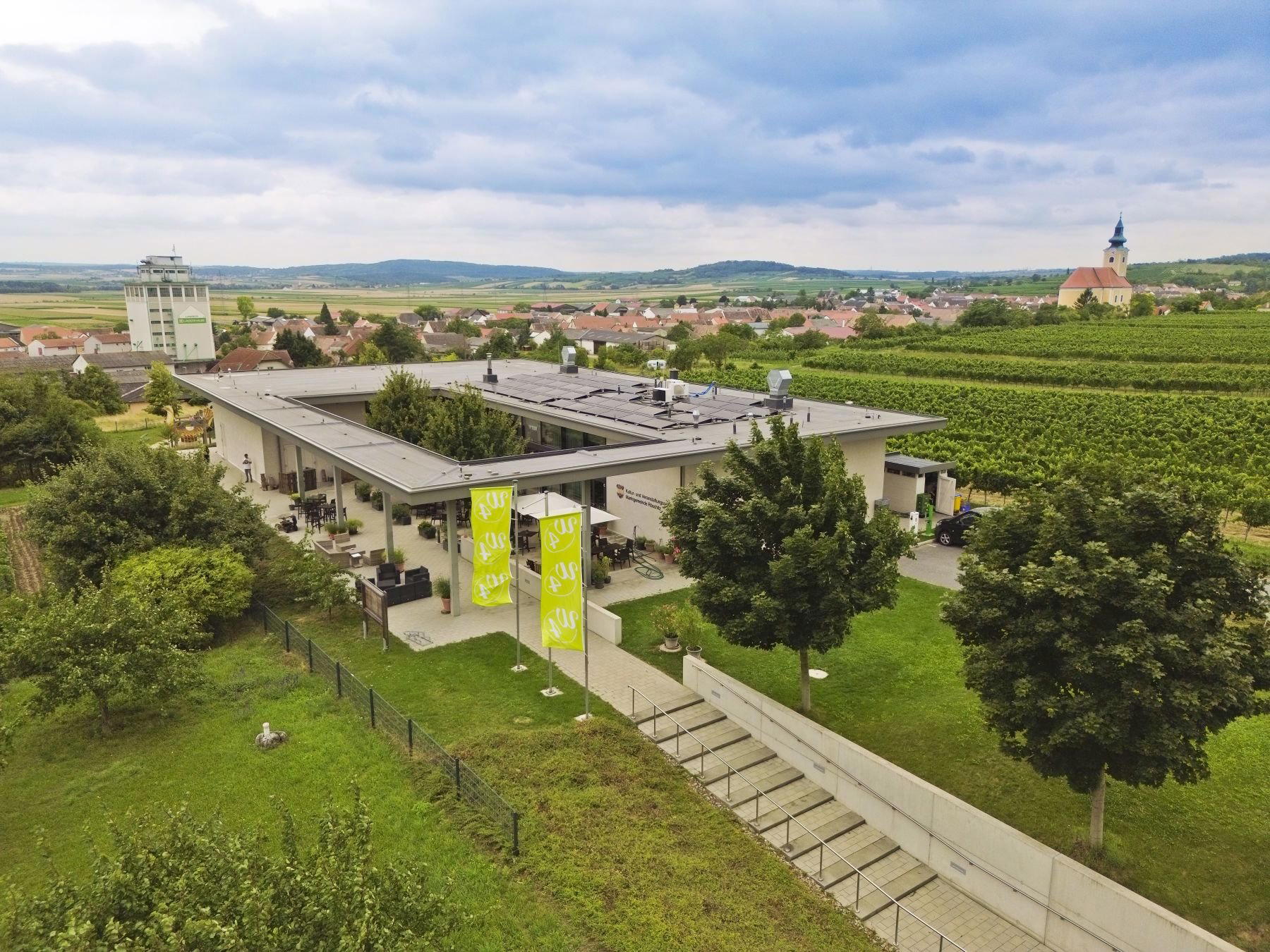
Destillerie Wieser operates out of Röschitz in Austria's Weinviertel, a region better known for its Grüner Veltliner than its spirits. The distillery earned a Pearl 1 Star Prestige in 2025, placing it among Austria's recognised producers in a category that rewards terroir precision over volume. For anyone tracing Austria's craft distilling circuit, Röschitz is a logical stop.
 Discover on Pearl
Pearl is the En Primeur Club membership app — saves, bookings, and concierge access live there. Same editors, same standards.
Röschitz and the Weinviertel's Quiet Spirits Tradition
Austria's distilling identity rarely leads with Weinviertel. The region, which stretches across Lower Austria's northeastern plateau, built its reputation on Grüner Veltliner and Zweigelt. But the same agricultural conditions that shaped those wines, loess-heavy soils, a dry continental climate, and an abundance of orchard fruit, have long supported small-scale distilling. Destillerie Wieser sits inside that tradition, based in Röschitz, a village in Lower Austria's Weinviertel region.
Destillerie Wieser has received recognition including Pearl 1 Star Prestige in 2025. In Austria's craft spirits field, that recognition matters: the country's distilling scene is smaller and less globally visible than its wine sector, so formal acknowledgment carries disproportionate weight as a reference point for visitors building an itinerary.
What Terroir Means for Austrian Fruit Spirits
The terroir argument for fruit spirits is less familiar than the same argument for wine, but it follows a comparable logic. In the Weinviertel, the loess and sandy soils that drain quickly and retain warmth contribute to fruit that is concentrated rather than dilute. Stone fruits, apricots, plums, pears, grown in this climate arrive at harvest with higher sugar levels and more defined aromatic profiles than fruit from wetter, cooler zones. For a distillery working with regional raw material, that specificity translates directly into the base product before any intervention in the still house.
Austria has a legal framework that formalises some of this: Qualitätsbrand and protected geographic designations exist for categories including Williams pear and apricot. Producers who use local fruit and meet production standards can place the region on the label, which is a meaningful signal in a market where provenance increasingly drives purchasing decisions. Wieser's position in Röschitz, a Weinviertel town surrounded by orchard land, places it inside the sourcing geography that these designations describe.
Comparing the Weinviertel distilling context to other Austrian producing zones is useful. The Wachau, where producers like Weingut Emmerich Knoll in Dürnstein represent the wine tradition, has a more dramatic topographic profile and a long reputation for apricot cultivation tied to its steep, schist-and-gneiss slopes. Wachau apricot spirits carry a geographic prestige that Weinviertel producers have historically not competed for directly. Weinviertel's proposition is different: it is flatter, more agricultural, and produces at a scale and diversity that suits distilleries working across several fruit categories rather than anchoring on a single origin story.
Austria's Craft Distilling Field in Context
Austria's craft spirits sector occupies a smaller footprint than its wine sector but has grown steadily over the past two decades, supported by both domestic consumption of Obstbrand (fruit brandy) and growing interest from European spirits buyers. The country's distilling map now includes operations across a wide geographic and stylistic range: from Weingut Scheiblhofer Distillery in Andau on the Burgenland flatlands near the Hungarian border to 1310 Spirit of the Country Distillery in Sierning in Upper Austria. Distilleries embedded in wine estates, like Weingut Wohlmuth in Kitzeck in Styria, represent one model; standalone distilleries focused on fruit spirits represent another.
Destillerie Wieser belongs to that second category, operating in a Lower Austrian context where the winemaking neighbours include producers of significant standing. Weingut Bründlmayer in Langenlois and the wider Kamptal appellation lie within a reasonable distance of Röschitz, and the regional wine tourism infrastructure around those names brings visitors into the zone. For spirits-focused travellers, that wine infrastructure can make a distillery visit in Röschitz more practical than the village's size would otherwise suggest.
The 2025 Pearl 1 Star Prestige award places Wieser among recognised Austrian craft producers. Among distilleries that have appeared in the same recognition tier, names like A. Batch Distillery in Bergheim and Abfindungsbrennerei Franz in Leithaprodersdorf reflect the breadth of the Austrian craft scene. Each operates from a distinct regional base and production model. What the award recognition signals, across the group, is a move away from volume production toward defined provenance and technical discipline.
Visiting Röschitz: Practical Considerations
Röschitz does not have the wine tourism infrastructure of Langenlois or Klosterneuburg. Visitors arriving specifically for Destillerie Wieser should approach the trip with Kamptal or Waldviertel as the wider framework: base accommodation in Langenlois or Krems, both of which sit within Lower Austria's established wine circuit, and treat Röschitz as a day destination. The town is accessible by car from Vienna in under ninety minutes, putting it inside a realistic day-trip range from the capital for travellers who want to combine the distillery visit with a Kamptal winery stop. Reaching out directly before visiting is the most reliable first step for visit planning.
The broader Austrian spirits circuit benefits from being paired with wine itineraries. Weingut Kracher in Illmitz on the Burgenland Neusiedlersee and Weingut Pittnauer in Gols represent a southern Lower Austria and Burgenland circuit that can anchor a multi-day itinerary including a Weinviertel distillery day. The geographic logic of Austrian producer tourism is that no single destination is dense enough to fill more than a half-day; the most productive visits build a circuit across several producers in adjacent zones.
For those extending their spirits research further afield, the Austrian craft scene sits within a wider European context that now includes producers from 1404 Manufacturing Distillery in Sankt Peter-Freienstein, 1516 Brewing Company Distillery in Vienna, and internationally recognised benchmarks like Aberlour in Aberlour. Placing Wieser against that broader field makes the Pearl 1 Star Prestige recognition more legible: it is a signal that production here is being held to standards that travel beyond regional self-assessment. Even a comparison as geographically distant as Accendo Cellars in St. Helena illustrates the global pattern of small, place-anchored producers earning formal recognition precisely because their outputs are traceable to a specific soil and climate argument. Weingut Heinrich Hartl in Oberwaltersdorf represents another example within Austria of a producer whose geographic identity is as central to its positioning as any single product.
The Case for Röschitz on an Austrian Spirits Itinerary
The producers who earn serious recognition in low-visibility regions do so against a structural disadvantage. When a distillery in a village like Röschitz earns Pearl 1 Star Prestige recognition, it signals production quality that exists independently of the marketing infrastructure around it. That is, in fact, a useful filter when building a spirits itinerary in Austria: the producers whose recognition comes through award systems rather than through volume or visibility tend to be the ones where the visit itself carries more weight. Destillerie Wieser, in that frame, is a logical inclusion for anyone approaching Austrian spirits with the same seriousness they bring to Austrian wine.
In Context: Similar Options
Comparable venues nearby, for context on price, style, and recognition.
| Venue | Cuisine | Price | Awards | Notes |
|---|---|---|---|---|
| Destillerie WieserThis venue — the venue you are viewing | Winery | , | 1 recognition | |
| Destillerie Krauss | plum, pear | , | 1 recognition | Schwanberg |
| Brennerei Weigand | Winery | , | 1 recognition | Steyr |
| Krautinger Distillery | Wildschönau | , | 1 recognition | |
| Phillips Distillery | Winery | , | 1 recognition | Pinkafeld |
| Siegfried Herzog Distillery | cornelian cherry, raspberry | $$ | 1 recognition | Saalfelden |
Continue exploring