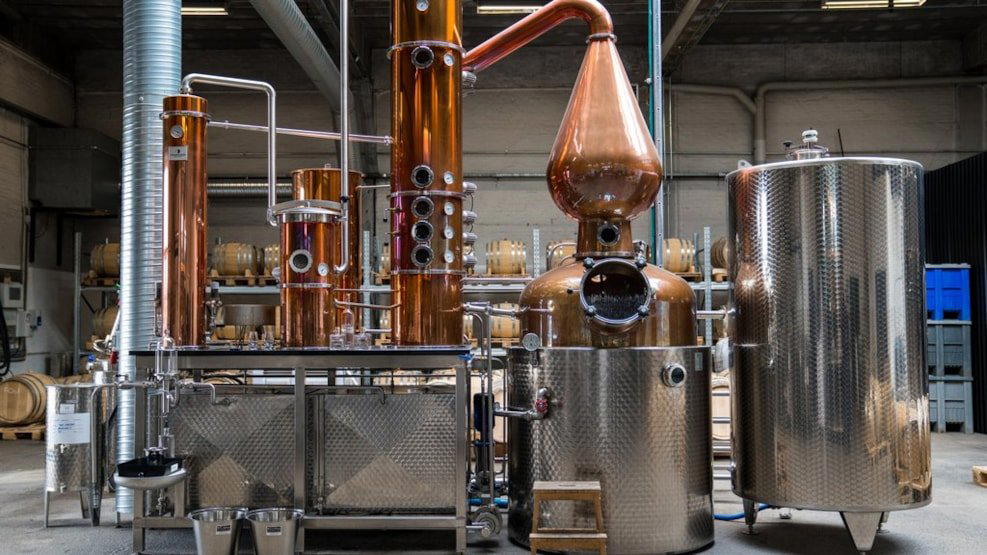
What Austrian Craft Distilling Actually Looks Like
Austria has a longer tradition of small-batch distilling than most visitors realise. The country's Obstbrand and Schnapps culture runs deep through farming communities in Lower Austria and Styria, where surplus orchard fruit has been processed into spirits for generations. The modern craft tier builds on that base but applies more deliberate technique: controlled fermentation, careful cut points, and in some cases extended maturation that moves the product away from the raw agricole style of traditional farmhouse distillation.
Producers in this space tend to cluster around two approaches. The first treats distilling as an extension of viticulture, using grape marc or wine-based raw materials and drawing credibility from proximity to Austria's established wine regions. Weingut Scheiblhofer Distillery in Andau represents that category, where the distillery operation sits alongside a wine estate in Burgenland. The second approach, more common in areas without a dominant wine identity, centres on fruit-forward and grain-based spirits drawn from whatever the local agricultural landscape produces well. Kirchschlag's position in the hills, away from the Pannonian warmth that drives Burgenland viticulture, points toward the latter tradition.
For comparison across Austria's spirits scene, operations like 1310 Spirit of the Country Distillery in Sierning, 1404 Manufacturing Distillery in Sankt Peter-Freienstein, and A. Batch Distillery in Bergheim define different regional approaches to the same craft tier. The Abfindungsbrennerei Franz in Leithaprodersdorf represents the older farmhouse distilling tradition that predates the current craft movement. Königsberg sits somewhere between those poles, recognised enough to hold a 2025 award, small enough to remain outside the tourist circuit.
Terroir and the Distiller's Raw Material
The terroir argument in spirits is more contested than it is in wine, but in fruit distilling it holds genuine weight. Altitude, soil drainage, and the temperature swing between warm days and cool nights all affect the sugar content, acidity, and aromatic profile of orchard fruit. The hills around Kirchschlag experience a continental climate modified by elevation, which produces fruit with higher acidity and more pronounced aromatic intensity than the fruit grown in the warmer valley floors to the east. That raw material character carries through into the still and, in well-made Obstbrand, remains identifiable in the finished spirit.
Austrian wine producers have long understood this connection between site and product. The Kamptal and Wachau producers who built the country's international reputation in Grüner Veltliner and Riesling, names like Weingut Bründlmayer in Langenlois and Weingut Emmerich Knoll in Dürnstein, built their arguments on the idea that specific geology and microclimate express themselves in the glass. Distillers working with local fruit make the same claim in a different medium. At Königsberg, the Kirchschlag hills provide the raw material context that a wine producer would call terroir, even if the word is less commonly used for spirits in Austrian marketing.
That regional specificity is one reason that small distilleries in marginal agricultural zones can earn recognition that their size alone would not justify.
Situating Königsberg in the Lower Austrian Scene
Lower Austria is better known for wine than spirits, and the producers who have built international profiles there, from the Kamptal names above to Weingut Heinrich Hartl in Oberwaltersdorf, tend to anchor their identities in the grape. Spirits producers in the same region operate in a different commercial space, typically selling locally or through direct visitor channels rather than through international export. That local orientation is not a weakness so much as a structural feature of Austrian craft distilling: the domestic market for quality Obstbrand and small-batch spirits is strong enough to support producers who have no ambition to ship to London or Tokyo.
Burgenland's wine estates, including Weingut Pittnauer in Gols and Weingut Kracher in Illmitz, draw visitors to that region specifically for wine tourism, with the distillery operations serving as secondary attractions where they exist. In Kirchschlag, the dynamic reverses: the distillery is the primary reason to visit, without a large wine estate or branded tourism infrastructure around it. That puts more weight on the product itself to justify the trip.
For visitors planning a broader Austrian spirits itinerary, the 1516 Brewing Company Distillery in Vienna and the internationally recognised Aberlour in Aberlour represent very different points on the same spectrum, from urban hybrid production to single-malt tradition. Königsberg operates in the rural, fruit-focused middle ground that is distinctly Austrian and distinctly regional. The southern Styrian wine estate model, exemplified by Weingut Wohlmuth in Kitzeck, shows how altitude and cool-climate conditions can define a producer's identity in that part of the country; Königsberg draws on the same geographic logic in Lower Austria.
Planning a Visit
Kirchschlag is a small town that rewards visitors who have already made the decision to go rather than those looking for a destination to anchor a long trip. The practical approach is to build a broader Lower Austrian itinerary around the distillery, combining it with wine estate visits in the Kamptal or Thermenregion, both within driving range. Small Austrian distilleries often operate on limited schedules or by appointment, particularly outside the autumn harvest and distilling season.
For a fuller picture of what Kirchschlag and the surrounding region offer, see our full Kirchschlag restaurants guide.