Bulleit Frontier Whiskey

Bulleit Frontier Whiskey sits at 3900 Benson Pike in Shelbyville, Kentucky, the heart of the American bourbon corridor. Awarded a Pearl 3 Star Prestige rating in 2025, the distillery draws visitors interested in the production heritage and frontier spirit tradition that define this stretch of the Bluegrass State. Shelbyville places it squarely within day-trip range of Louisville's broader whiskey tourism circuit.
 Discover on Pearl
Pearl is the En Primeur Club membership app — saves, bookings, and concierge access live there. Same editors, same standards.
- Address
- 3900 Benson Pike, Shelbyville, KY 40065
- Phone
- +1 502-647-5799
- Website
- bulleit.com
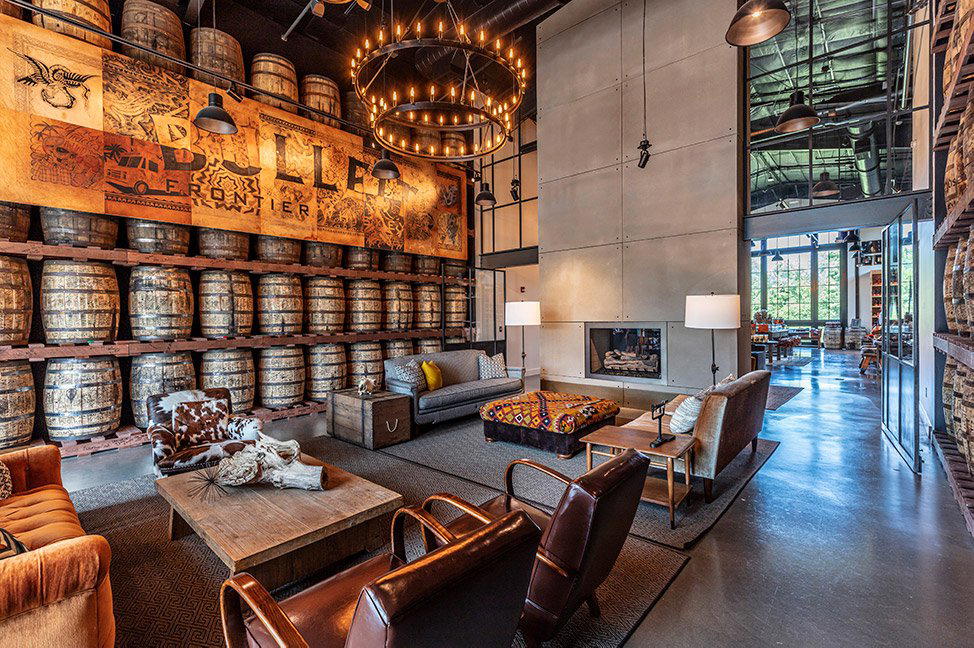
Bourbon Country's Eastern Edge: Shelbyville's Place in the Kentucky Whiskey Circuit
Bulleit Frontier Whiskey is a whiskey production site in Shelbyville, Kentucky, at 3900 Benson Pike. Shelbyville sits roughly thirty miles east of Louisville along the I-64 corridor, which places it on the quieter, less-trafficked end of the bourbon trail compared to the denser cluster of distilleries around Bardstown and Loretto. That positioning has defined the visitor experience at this end of the circuit: fewer large tour buses, more space between stops, and a pace that suits visitors approaching whiskey tourism as a considered interest rather than a checklist exercise.
Within that context, Bulleit Frontier Whiskey at 3900 Benson Pike occupies a specific tier. The Bulleit name carries broad commercial recognition across bar programs, and the Shelbyville production facility is the operational backbone behind that recognition. For visitors arriving with some prior knowledge of American whiskey, the Shelbyville location offers a chance to connect a familiar label to a specific production process and a specific piece of Kentucky landscape.
The Frontier Spirit Tradition and What High-Rye Actually Means
American bourbon must, by federal regulation, contain at least 51 percent corn in the mash bill, but the character of any given bourbon is shaped significantly by what fills the remaining percentage. Rye and malted barley are the two most common secondary grains, and the ratio between them produces markedly different flavor profiles even within the same aging conditions. Lower-rye bourbons, which dominate many of the state's largest-volume producers, tend toward softer, sweeter profiles with prominent vanilla and caramel notes from the oak. Higher-rye formulas push toward spice, dried fruit, and a drier finish that holds up differently under dilution, which partly explains why Bulleit has built consistent placement in cocktail programs, where its structure survives ice and mixers in ways that softer bourbons sometimes don't.
The frontier branding that Bulleit carries reflects a specific marketing narrative around nineteenth-century distilling history in Kentucky, but the more substantive connection to that era is the grain choice itself. High-rye mash bills were more common in early American whiskey production, particularly in the rye-producing mid-Atlantic states, and their relative scarcity in twentieth-century Kentucky bourbon reflected the industry's consolidation around sweeter, more accessible profiles. The revival of higher-rye formulas across the premium American whiskey category over the past two decades sits alongside broader interest in heritage grain choices, which you can trace across producers from Shelbyville to the wine-adjacent distilling operations beginning to appear in California and Oregon.
Pearl 3 Star Prestige: What the 2025 Award Signals
Bulleit Frontier Whiskey earned a Pearl 3 Star Prestige rating from EP Club in 2025, which places it in the upper tier of EP Club's assessed spirit and distillery programs. In the context of American whiskey, third-party recognition at this level functions somewhat differently than it does in, say, the Napa Valley wine circuit, where awards often track individual vintages or single-vineyard programs. For a production distillery operating at commercial scale, sustained recognition reflects consistency of product and experience across high visitor volume, a different kind of discipline than small-batch artisanal output, but not a lesser one.
Visitors who use awards as a planning cue should read the 2025 rating as a signal of the Shelbyville experience. For comparison, other high-recognition spirit programs assessed by EP Club tend to cluster around facilities that offer both production transparency and a coherent tasting narrative, and Shelbyville's positioning within the broader Bulleit commercial story gives it material to work with on both counts.
Shelbyville in the Wider American Spirits Context
The growth of distillery tourism across the United States over the past decade has produced a bifurcation similar to what happened in Napa wine tourism in the 1990s: a split between large-format, high-throughput visitor centers that prioritize brand storytelling and smaller, production-forward operations where the physical reality of distilling is more present. Shelbyville's Bulleit facility sits in an interesting position in that spectrum, large enough to have structured tour programming and the logistics to handle volume, but located away from the highest-traffic nodes of the bourbon trail in a way that keeps the experience from feeling like a theme park.
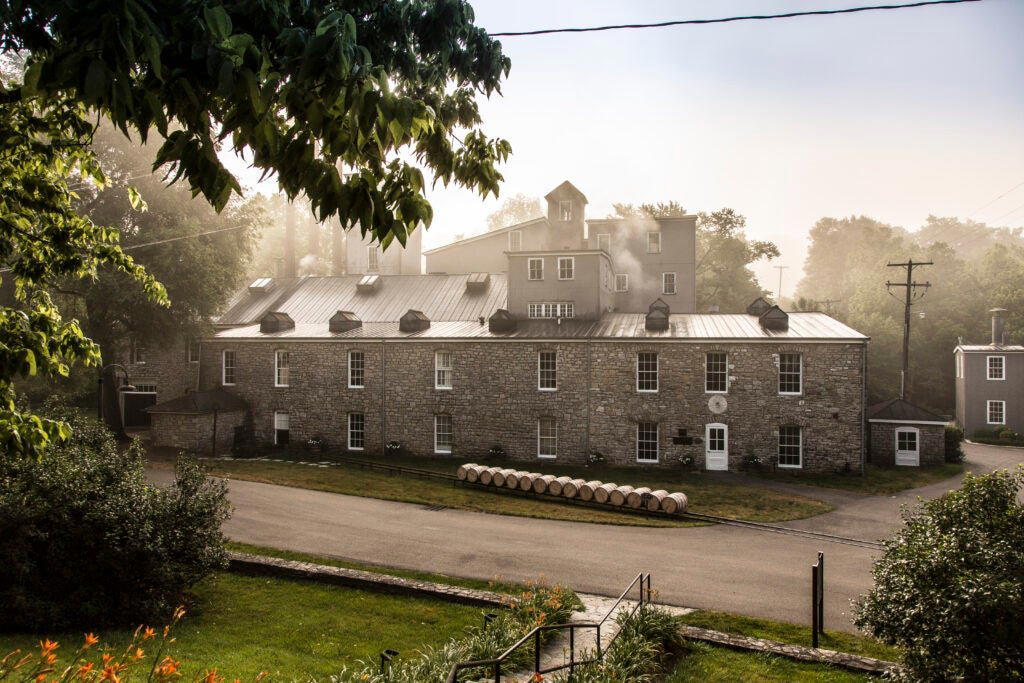
That geographic separation also means Shelbyville rewards visitors who build a deliberate itinerary around this part of the state rather than treating it as an add-on to a Louisville weekend. Nearest Green Distillery offers a complementary stop for those spending time in the Shelbyville area.
For readers whose primary interest is premium American whiskey, the comparison to estate-driven producers in California and Oregon is worth drawing. The discipline of working with a consistent grain formula across years, essentially what Bulleit does with its high-rye bill, has more in common with a winery committed to a single varietal expression, like Adelsheim Vineyard in Newberg with its long-form Pinot Noir focus, or Adelaida Vineyards in Paso Robles with its Rhône-oriented commitment, than it might appear across category lines. The winemaker analogy holds in another direction too: just as Chardonnay houses like Au Bon Climat in Santa Barbara built reputations by holding to a production philosophy across market cycles, Bulleit's consistency with the high-rye formula through decades of shifting American whiskey trends represents a form of production conviction worth noting.
Other points of comparison for readers building broader itineraries include estate-focused wine programs in California and elsewhere, which illustrate the value of a clear site-specific identity. The Shelbyville distillery functions within that same logic for American whiskey. Readers tracking Rhône and Syrah-forward programs might also note Alban Vineyards in Arroyo Grande and Andrew Murray Vineyards in Los Olivos as further examples of producers whose identity is built on grain or varietal commitment rather than stylistic range, a parallel that cuts across the wine-spirits divide more cleanly than most itinerary planning assumes.
For those extending travel into Scotland's whisky tradition, Aberlour in Aberlour offers a direct point of comparison in the Speyside single malt context. And for European wine heritage context, Achaia Clauss in Patras demonstrates how nineteenth-century production heritage can anchor a modern visitor program, which is, in structural terms, what Bulleit is doing with its frontier narrative at the Shelbyville site. Additional regional wine context can help round out a broader producer-focused itinerary.
Planning a Visit to Shelbyville
Bulleit Frontier Whiskey is located at 3900 Benson Pike, Shelbyville, Kentucky 40065. Visitors are advised to confirm tour availability, current hours, and admission pricing before traveling. Shelbyville is accessible by car from Louisville in approximately thirty to forty minutes via I-64 East, making it practical as a half-day excursion or as the anchor of a longer Bluegrass itinerary that extends toward Frankfort or Lexington. The 2025 Pearl 3 Star Prestige rating places it among the more substantive distillery experiences in the region.
Continue exploring
More in Shelbyville
Wineries in Shelbyville
Browse all →
Bars in Shelbyville
Browse all →
At a Glance
- Rustic
- Iconic
- Group Outing
- Wine Education
- Special Occasion
- Corporate Event
- Barrel Room
- Estate Grounds
- Historic Building
- Private Tasting
- Sustainable
Modern industrial setting with historic frontier aesthetic, featuring barrel houses and educational exhibits celebrating bourbon craftsmanship.