
Bodega Marichal operates in the Canelones Department, Uruguay's most consequential wine-growing region, and holds a Pearl 2 Star Prestige rating for 2025. The winery sits within a Canelones producer cohort that has reshaped how international buyers read Uruguayan Tannat and white varieties. For visitors tracking sustainability-oriented production in South America, it represents one of the region's more considered addresses.
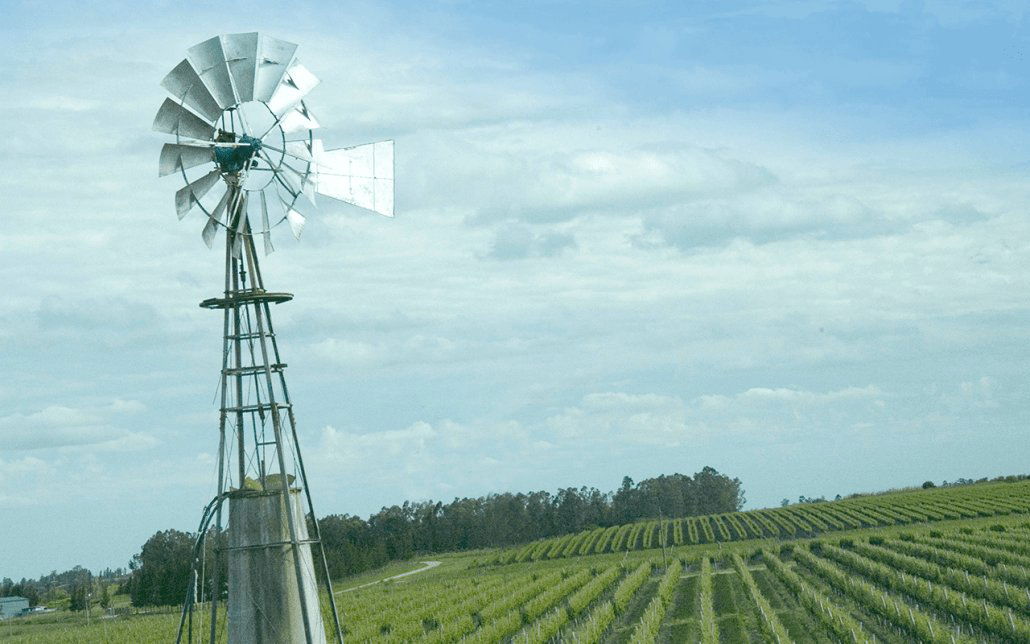
The Ground Beneath Canelones Wine
Canelones is not Uruguay's most cinematic wine region. It lacks the dramatic topography of Patagonia or the colonial grandeur of Mendoza. What it has instead is proximity, continuity, and a particular quality of Atlantic-influenced clay and loam soils that have shaped Uruguayan viticulture more than any other department. Roughly 60 percent of the country's wine production originates here, spread across small and mid-sized estates that range from industrial cooperatives to estate producers with serious international ambitions. Bodega Marichal belongs to the latter category, holding a Pearl 2 Star Prestige rating in 2025 — a signal that places it clearly within the department's upper tier rather than its commodity centre.
Understanding what that positioning means requires knowing how Canelones has changed. A decade ago, the department's identity was largely defined by volume Tannat destined for domestic consumption. The shift toward lower-intervention viticulture, export-oriented winemaking, and estate transparency has been gradual but consistent. Producers in this newer cohort, including Varela Zarranz, Antigua Bodega Stagnari, and Artesana, have collectively repositioned the department as something worth visiting rather than simply buying from.
Viticulture and the Sustainability Question in Canelones
The sustainability conversation in Uruguayan wine is quieter than its equivalent in, say, Chilean or Argentine natural wine circles, but it is not absent. Canelones producers have been working with organic and integrated pest management approaches for longer than the marketing around them might suggest. The region's humid Atlantic climate — the same climate that gives Tannat its particular density in this latitude , also creates significant viticultural pressure from fungal disease, which means any move toward reduced-input farming carries real agronomic cost. Producers that pursue it do so with full knowledge of that difficulty.
Bodega Marichal's positioning within this context is consistent with the department's more considered tier. The 2025 Pearl 2 Star Prestige recognition signals a level of production quality and estate discipline that aligns with the producers in Canelones taking the longest view on land stewardship. This is not a boutique operation marketing itself on organic certification alone; it is a winery that has earned recognition through the bottle rather than through branding. For visitors interested in how Atlantic-climate viticulture intersects with lower-intervention farming, the Canelones Department offers more honest case studies than most of South America, and Marichal sits among those worth examining directly.
Comparing it to the wider Canelones cohort is instructive. Bodega De Lucca and Bodega Juanicó (Familia Deicas) represent different production scales and export strategies within the same department, which underlines how varied the Canelones producer set actually is. A single visit to the region rewards more when framed as a comparative exercise across these estates rather than a single-destination trip.
What Arriving in Canelones Looks Like
The Canelones Department wraps around Montevideo to the north and east, making it the most accessible wine region from the capital , most estates are within 30 to 60 minutes by road. The address for Bodega Marichal places it within the 90000 postal zone of the department, a largely agricultural stretch where the road infrastructure is functional but not always obvious. Renting a car in Montevideo remains the most practical approach for visiting multiple producers in a single day. Rideshare and taxi options exist from the capital but are less reliable for return journeys once you move into the rural interior.
The broader Canelones wine circuit pairs naturally with a Montevideo base. The city's food and bar scene has developed considerably alongside its wine culture, and staying in the capital allows visitors to use the department's estates as day trips without sacrificing access to Montevideo's better restaurants and wine bars. For accommodation options that anchor a Canelones visit, our full Canelones hotels guide covers the available range from rural guesthouses to larger properties near the department's town centres.
Marichal in Its Regional Peer Set
Uruguay's wine geography is more compact than its neighbours'. The country's most recognised producers cluster between Canelones, the coastal departments, and pockets around Rivera and Colonia. Within that concentration, Canelones holds a dominant share of both volume and prestige-tier production. Bodega Marichal's Pearl 2 Star Prestige rating for 2025 places it in company with the stronger estates in the department, a cohort that is increasingly visible at export level.
Beyond Canelones, the regional comparison extends to producers in greater Montevideo and beyond. Bodega Bouza in Montevideo and Bodega Carrau in Las Piedras represent adjacent geographies with their own distinct terroir arguments, while Bodega Cerro del Toro in Piriápolis illustrates how coastal Atlantic influence translates across different parts of Uruguay's southeast. Together, these producers sketch a picture of a small wine country finding its critical voice , and Marichal is part of that story.
For those approaching Uruguay as part of a wider South American wine itinerary, the contrast with Old World production is also worth considering. Estate-focused wineries with sustainability programmes like Abadía Retuerta in Sardón de Duero operate within long-established European appellations where organic and biodynamic norms carry decades of institutional weight. Canelones producers are building equivalent credibility with far less infrastructure and in a climate that forgives far less. That makes the discipline required here genuinely harder, and the results , where they land well , correspondingly more interesting.
Planning a Visit
For anyone putting together a Canelones wine itinerary, the department's concentration of estates makes it practical to visit three or four producers in a single day. Our full Canelones wineries guide covers the complete range of options across different styles and scales. Complementary planning resources include our Canelones restaurants guide, our bars guide, and our experiences guide for the wider department. For visitors with a longer itinerary and a specific interest in how single-malt and terroir-driven production compare across categories, Aberlour in Aberlour offers an instructive parallel in how a small region can build international standing through consistency rather than scale.
Because Bodega Marichal's website and direct booking contact are not currently listed in public databases, the most reliable approach for visit planning is through Uruguayan wine tourism networks or the department's regional tourism office, both of which maintain updated contact details for estate visits. Spring (September through November) and harvest season (February through April) are the periods when most Canelones wineries offer the most active cellar programming, though the more serious estates typically receive visitors year-round by appointment.
Frequently Asked Questions
- What do visitors recommend trying at Bodega Marichal?
- Given the winery's Pearl 2 Star Prestige recognition for 2025, the focus should be on the estate's Tannat-based wines, which represent the core identity of Canelones production and the variety through which most of the department's serious producers make their strongest arguments. Canelones Tannat tends toward more structure and Atlantic freshness than examples from warmer inland sites, and producers at this recognition level typically show the variety at its most considered. The winemaking team and specific current releases are leading confirmed directly with the estate before visiting.
- Why do people go to Bodega Marichal?
- Bodega Marichal draws visitors who are tracking Uruguay's emerging premium wine tier rather than its volume production. Its 2025 Pearl 2 Star Prestige rating positions it within the upper band of Canelones producers, making it a logical stop for anyone building a comparative picture of how this department is evolving. The Canelones Department's accessibility from Montevideo , typically under an hour by road , makes it easy to include in a broader itinerary without the logistical commitment required for more remote South American wine regions.
- Should I book Bodega Marichal in advance?
- Given that the estate's phone number and website are not currently in public circulation, advance contact through Uruguayan wine tourism channels is advisable rather than optional. Estates at this recognition level in Canelones generally operate visits by appointment, and those holding prestige ratings tend to have sufficient demand that arriving without prior arrangement risks finding the cellar unavailable. Planning two to three weeks ahead is a reasonable minimum for harvest-season visits; shoulder months may allow shorter lead times.
Cuisine Lens
A small set of peers for context, based on recorded venue fields.
| Venue | Classification | Awards | First Vintage | Notes |
|---|---|---|---|---|
| Bodega Marichal | 1 awards | This venue | ||
| Varela Zarranz | 1 awards | |||
| Antigua Bodega Stagnari | 1 awards | |||
| Artesana | 1 awards | |||
| Bodega De Lucca | 1 awards | |||
| Bodega Juanicó (Familia Deicas) | 1 awards |
Access the Cellar?
Our members enjoy exclusive access to private tastings and priority allocations from the world's most sought-after producers.
Access the Concierge