Bodega Carrau

Bodega Carrau holds a Pearl 2 Star Prestige rating (2025) among Las Piedras' most serious wine producers, situated along Ruta Nacional César Mayo Gutiérrez in Canelones' core Tannat country. The winery operates in a region where Atlantic-influenced soils produce some of Uruguay's most structured reds, placing Carrau in the upper tier of Uruguayan fine wine alongside a small peer set that exports the country's identity grape to discerning international markets.
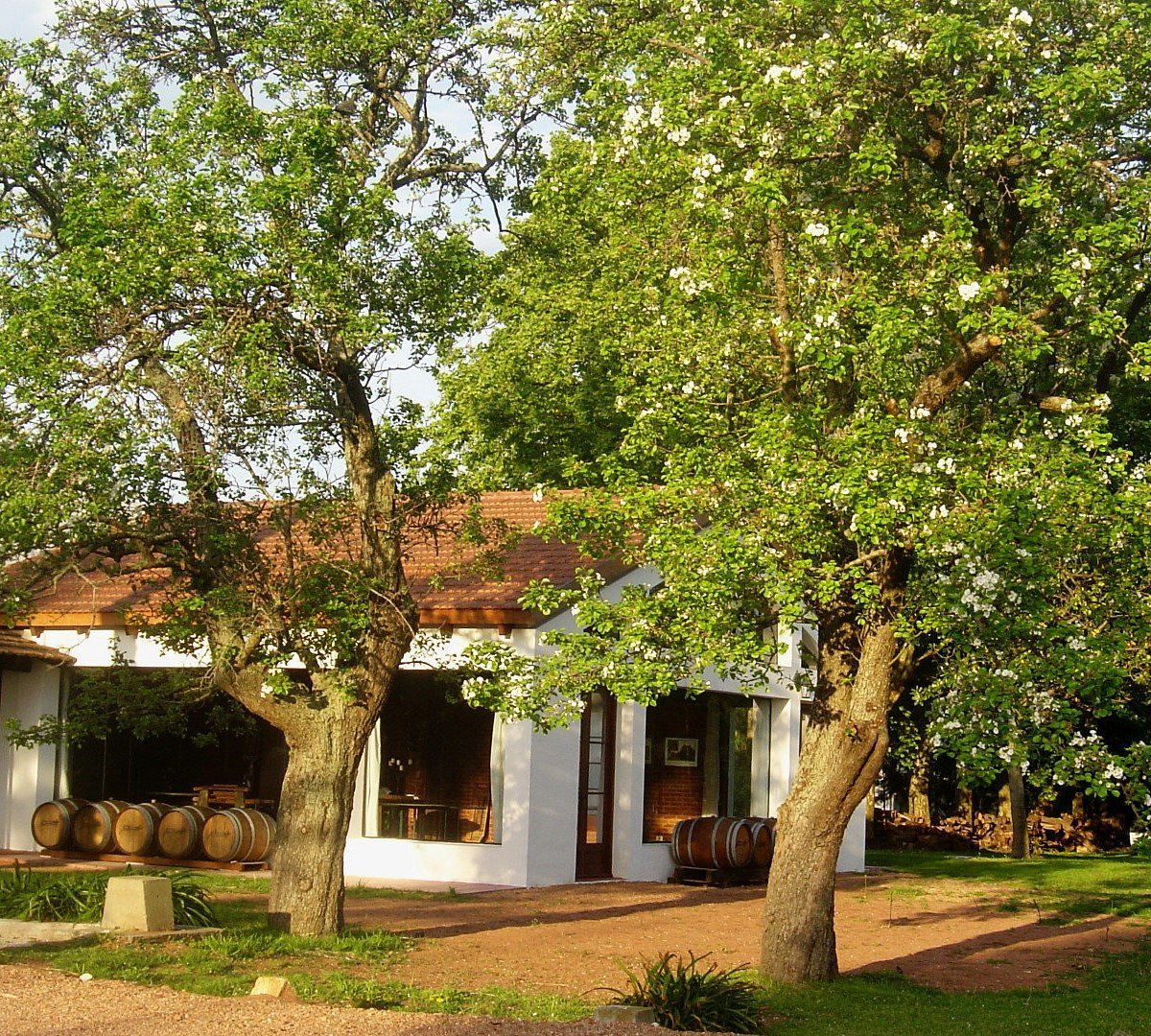
Where the Canelones Terroir Makes Its Case
The road running through Las Piedras toward Ruta Nacional César Mayo Gutiérrez is not particularly dramatic by wine-country standards. There are no steep hillside amphitheatres, no river gorges cutting through valley floors. What this stretch of Canelones delivers instead is something more subtle: deep, clay-heavy soils cooling under Atlantic influence, with moisture levels that coax slow, even ripening across a growing season that refuses to rush. This is the physical argument behind the wines produced in Las Piedras, and it is an argument that Bodega Spinoglio and others in this corridor have been making for generations. Bodega Carrau, situated at Ruta Nal. César Mayo Gutiérrez 2556, belongs squarely to that conversation.
The Canelones department as a whole accounts for the majority of Uruguay's fine wine output, and Las Piedras sits within its most densely planted zone. The soils here — predominantly clay loam over fractured rock — retain moisture through dry spells and drain efficiently after heavy Atlantic rain events, a combination that tends to produce grapes with firm structure and moderate alcohol rather than the overripe profiles that warmer, more continental wine regions risk in strong vintages. For Tannat, Uruguay's defining variety, this translates to tannin management through site rather than intervention: the grape arrives at the winery with the kind of phenolic maturity that makes reductive winemaking viable without excessive extraction.
Tannat Country: The Grape and the Ground
Understanding Bodega Carrau requires understanding what Tannat actually does in this latitude. The variety arrived in Uruguay from the Basque Country and the Madiran appellation in southwest France, where it produces wines of formidable grip that typically require extended cellaring to soften. In France's hands, Tannat often reads as austere, iron-fisted, demanding patience from anyone who opens a bottle before its time. What Uruguayan producers discovered, particularly those working in Canelones' maritime-tempered soils, is that the Atlantic proximity moderates the tannin phenolics in ways that Madiran's continental climate simply does not allow. The result is Tannat with presence and longevity, but without the hostile edge that characterises its French source.
Bodega Carrau's Pearl 2 Star Prestige rating for 2025, awarded through EP Club's assessment framework, places it within a specific tier of Uruguayan production: wineries delivering consistent quality with clear terroir expression, positioned above entry-level commercial labels but operating in a category that rewards attention from collectors and trade buyers who track South American fine wine beyond the Argentine Malbec circuit. For context within the local peer set, comparable Canelones operations such as Varela Zarranz in Canelones and Bodega Bouza in Montevideo occupy adjacent positioning within Uruguay's quality tier, each making the case for Canelones clay in their own register.
The Carrau Presence Across Uruguay
One of the more instructive things about Bodega Carrau as a producer is its geographic spread across Uruguayan wine country. The same family name appears at Cerro Chapeu (Carrau) in Rivera, Uruguay's northernmost wine region, where granite soils and a warmer, more continental climate produce an entirely different expression of the same varieties. That range, from Rivera's granite to Las Piedras' clay, demonstrates a deliberate strategy of exploring Uruguay's full terroir diversity rather than replicating a single house style across multiple sites. For wine-focused visitors, the contrast between a Carrau wine from Rivera and one from Las Piedras offers a textbook study in how soil composition shifts wine character more dramatically than latitude alone might suggest.
Beyond the Carrau family's own spread, the broader Uruguayan fine wine scene that surrounds the Las Piedras winery spans the country's coastline and interior with notable variation. Bodega Oceánica José Ignacio in Maldonado works in the oceanic extreme, where sea spray and sandy soils shape a lighter-framed style. Campotinto in Carmelo and Bodega Los Cerros de San Juan in Colonia del Sacramento work Río de la Plata-influenced terrain in the country's southwest. Bodega Cerro del Toro in Piriápolis sits further east along the Atlantic coast. Each of these producers interprets Uruguay's varied terroir through a distinct geographic lens, and Las Piedras, with its Canelones clay concentration, remains the country's most densely argued wine corridor.
Visiting Las Piedras' Wine Corridor
Las Piedras sits close enough to Montevideo that it functions as a practical day-trip for wine visitors based in the capital, though most travellers with a focused interest in Uruguayan wine will find that a multi-day itinerary across Canelones yields more depth. The department's wineries cluster along several national routes, and the geography rewards self-drive visitors who can move between producers without the constraint of scheduled tour departures. For accommodation and broader planning in the area, EP Club's full Las Piedras hotels guide covers current options, while the Las Piedras restaurants guide maps where to eat between visits.
For those building a full picture of the region's drinking culture beyond wine, the Las Piedras bars guide and Las Piedras experiences guide round out the picture. The full Las Piedras wineries guide is the most direct reference for mapping Bodega Carrau against the full range of local producers operating in the same clay-soil corridor.
On the question of booking and visit logistics for Bodega Carrau specifically: contact details and current opening arrangements are not listed in EP Club's database at time of publication. Standard practice at Uruguayan wineries of this tier is to arrange visits directly, often through the winery's own channels or through a Montevideo-based wine tour operator who maintains current relationships with producers. Given Carrau's two-site operation across Las Piedras and Rivera, it is worth confirming in advance which property you intend to visit, as the Rivera estate involves a longer journey north and warrants its own day or overnight plan.
The Uruguayan Fine Wine Argument, Made in Clay
Uruguay's wine industry has spent two decades building a credible case outside South America, largely on the back of Tannat's novelty value in international markets that had saturated on Argentine Malbec and Chilean Cabernet. The more durable argument, now emerging as the initial novelty premium fades, is a terroir argument: that Canelones' specific combination of clay soils, Atlantic humidity, and long growing seasons produces red wines that age differently and express themselves more precisely than the casual observer of South American wine might expect.
Bodega Carrau's Pearl 2 Star Prestige recognition in 2025 is, in that context, both a quality signal and a positioning marker. It places the winery in the company of Uruguayan producers working at the level where export credibility and collector interest begin to overlap. For visitors to Las Piedras approaching from a Spanish wine background, the comparison that surfaces most naturally is not with Napa or Mendoza but with mid-tier Ribera del Duero or Priorat producers: serious terroir work, moderate production scale, and pricing that reflects local costs rather than global prestige premiums. For a wider European winery comparison from EP Club's broader coverage, Abadía Retuerta in Sardón de Duero represents the kind of estate-scale, terroir-driven winemaking that operates in a recognisably similar register, even if the varieties and soils differ substantially.
Frequently Asked Questions
What wines is Bodega Carrau known for?
Bodega Carrau operates in Las Piedras, within Canelones' core Tannat-growing territory, where Atlantic-influenced clay soils shape the variety's tannin structure and longevity. The winery holds a Pearl 2 Star Prestige rating (2025) from EP Club, placing it among Uruguay's more consistently recognised fine wine producers. The Carrau family also operates Cerro Chapeu (Carrau) in Rivera, which produces wines from granite soils under a more continental climate, offering a contrast to the Las Piedras expression.
What is Bodega Carrau leading at?
Based on available recognition, Bodega Carrau's strongest position is in Canelones terroir-driven production, where the combination of Las Piedras' clay soils and Atlantic influence supports structured red wines with genuine cellaring potential. The Pearl 2 Star Prestige award (2025) from EP Club anchors that assessment. Price information is not currently listed in EP Club's database, but the winery's positioning within the Uruguayan fine wine tier suggests pricing consistent with the quality tier rather than commercial-scale operations.
How hard is it to get in to Bodega Carrau?
Phone and website details for Bodega Carrau are not currently listed in EP Club's database. At wineries of this tier in Canelones, visits are typically arranged directly with the producer in advance rather than through walk-in access. Contacting a Montevideo-based wine tour operator who works with Las Piedras producers is a practical alternative if direct contact details are not immediately available. The winery's Pearl 2 Star Prestige recognition (2025) suggests a producer with active trade relationships, which may facilitate introductions through the wine tourism circuit.
Does Bodega Carrau's winemaking operation span more than one Uruguayan terroir?
Yes. The Carrau family operates across two distinct terroirs within Uruguay: the Las Piedras estate in Canelones, where Atlantic-influenced clay soils define the wine's structure, and Cerro Chapeu (Carrau) in Rivera, located in Uruguay's northern wine region on granite soils with a warmer, more continental climate. The contrast between these two sites makes Carrau one of the few Uruguayan producers through which visitors can directly compare how soil type and climate shift the character of the same grape varieties. Both estates are covered separately in EP Club's winery database.
A Quick Peer Check
Comparable venues for orientation, based on our database fields.
| Venue | Classification | Awards | First Vintage | Notes |
|---|---|---|---|---|
| Bodega Carrau | 1 awards | This venue | ||
| Bodega Bouza | World's 50 Best | |||
| Varela Zarranz | 1 awards | |||
| Bodega Spinoglio | 1 awards | |||
| ANCAP Alcoholes | 1 awards | |||
| Antigua Bodega Stagnari | 1 awards |
Access the Cellar?
Our members enjoy exclusive access to private tastings and priority allocations from the world's most sought-after producers.
Access the Concierge