
Bodega Juanicó (Familia Deicas) sits at kilometre 38 on the Brigadier Rivera road in Canelones, one of Uruguay's oldest and most substantial wine estates. Awarded Pearl 2 Star Prestige in 2025, it occupies a different tier from the smaller boutique operations that define much of the Canelones scene. The scale of the property and the depth of its viticultural history make it a reference point for understanding Uruguayan wine at its most established.
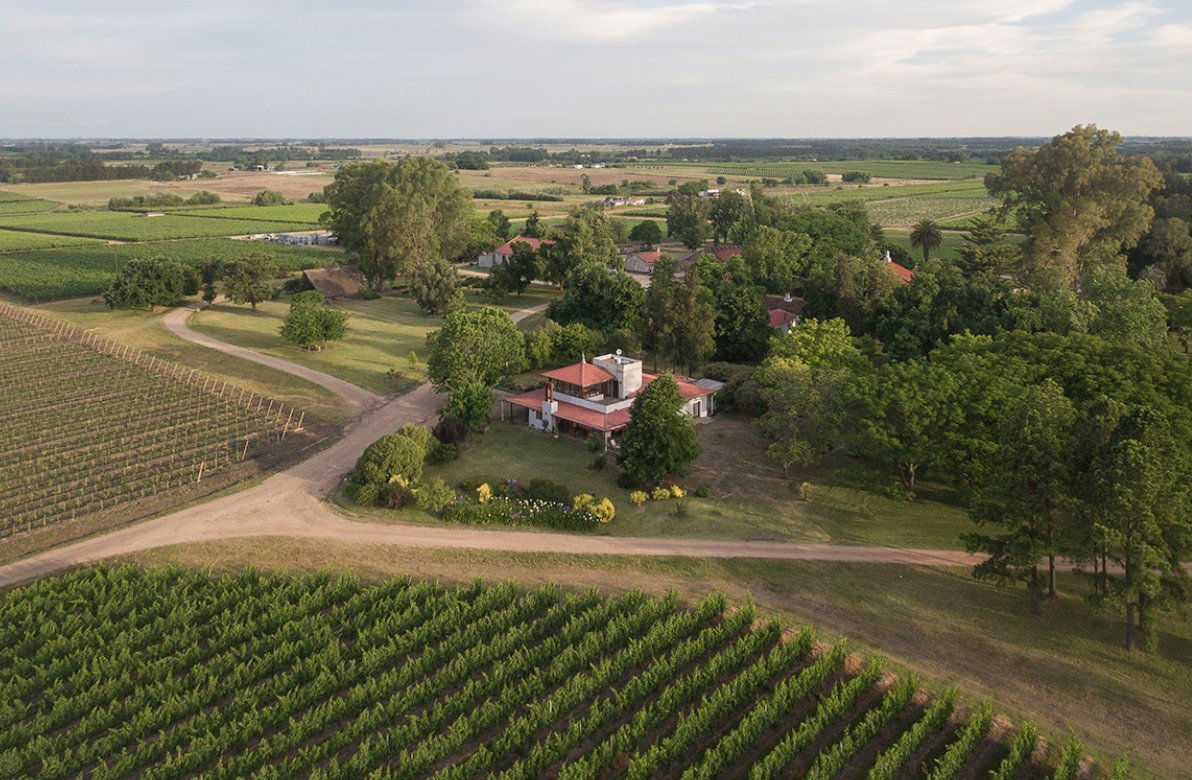
Forty Kilometres from Montevideo, a Different Scale of Wine Country
The road from Montevideo toward the interior of Canelones flattens quickly into agricultural land, and by kilometre 38 on the Brigadier General Fructuoso Rivera highway, the landscape signals a different order of winemaking. The entry to Bodega Juanicó (Familia Deicas) is not the compact, artisan operation that characterises many of the smaller Canelones producers. What opens up instead is one of Uruguay's largest and most historically rooted wine estates, a property where the relationship between land, vine, and production has been shaped over generations. In a regional wine scene that increasingly favours boutique formats and micro-lot production, Juanicó represents the other tradition: scale managed with serious intent.
Canelones accounts for roughly 60 percent of Uruguay's total wine production, and its departmental identity is built on that agricultural weight. The rolling terrain, the proximity to the River Plate's moderating coastal influence, and the deep loam and clay soils create conditions that allow Tannat, the country's signature red variety, to develop with a structure distinct from expressions grown further inland. Juanicó sits within that broader Canelones template while operating at a scope that few of its neighbours can match. For the context of the regional scene, see our full Canelones wineries guide.
The Physical Estate: Vineyards, Cellars, and the Sense of Accumulated Time
The editorial angle on any large historic estate is not simply what it produces, but what the physical place communicates about a wine tradition. At Juanicó, the sense of accumulated time is architectural and agricultural in equal measure. Estates of this age in Canelones carry within their cellars and vineyard blocks a visual record of how Uruguayan wine has evolved, from the early immigrant-European model of the nineteenth century through the quality revolution of the late twentieth century that brought Uruguayan Tannat to international attention.
The vineyard terrain at this latitude sits within a transitional zone: warm enough for full ripeness in most vintages, but with Atlantic-adjacent humidity that demands careful canopy management and, in the leading years, delivers aromatic complexity that warmer, more arid zones cannot replicate. Walking the vine rows in the morning, before the day's heat builds, the property reads as a working agricultural landscape, not a curated garden. That distinction matters: it places the estate in a lineage of functional, generational viticulture rather than the design-driven visitor experience that has become common in more recently developed wine regions globally.
For the broader travel and accommodation context around the estate, our full Canelones hotels guide covers options within reasonable reach of the department's wine corridor.
Where Juanicó Sits in the Canelones Peer Set
The Canelones wine corridor contains producers at very different scales and with different production philosophies. Bodega Marichal, Varela Zarranz, and Artesana represent the smaller, more focused end of the Canelones spectrum. Antigua Bodega Stagnari and Bodega De Lucca each carry their own legacy positioning. Juanicó, operating under the Familia Deicas name, occupies a different competitive tier: a large-format estate with export reach, a history of international recognition, and a portfolio broad enough to address multiple market segments simultaneously.
The 2025 Pearl 2 Star Prestige award from EP Club places it within a tier of properties recognised for sustained quality and visitor-experience depth, not just wine production metrics. That distinction is relevant for anyone considering a visit: a Pearl 2 Star Prestige property is expected to deliver at a level where the experience of the place reinforces what is in the glass. Peer properties operating at equivalent prestige levels in Uruguay include Bodega Bouza in Montevideo and Bodega Carrau in Las Piedras, both of which have built strong visitor programs alongside their production reputations. Outside Uruguay, the structural parallel for a large historic estate holding prestige recognition would be a property like Abadía Retuerta in Sardón de Duero, where estate scale and accumulated history are part of the value proposition.
The Wine Tradition Behind the Property
Uruguay's wine identity since the 1990s has been built in large part on Tannat, the thick-skinned, tannic variety transplanted from the Basque-French border region of Madiran. In Canelones and across the River Plate basin, the variety has adapted with notable results: the tannins tend to soften relative to their Madiran counterparts, and the fruit profile shifts toward darker, more concentrated expressions that can carry meaningful aging potential. Juanicó has been a part of that national conversation about Tannat for decades, and its scale means its approach to the variety has influenced how the category is understood both domestically and in export markets.
Beyond Tannat, the Canelones terroir supports Marselan, Merlot, Cabernet Franc, and a range of white varieties including Albariño, which has attracted increasing attention as the Uruguayan wine trade looks for white wine identity beyond the generic international varieties. How Juanicó manages this breadth of varieties across its vineyard blocks reflects the decisions made by estates that must balance commercial volume with quality positioning, a tension that defines large, serious wine operations everywhere from Bordeaux to Napa to the Douro.
For comparison with a producer working at a very different scale, Bodega Cerro del Toro in Piriápolis offers a sense of how Uruguayan wine traditions translate across different departmental contexts.
Planning a Visit
The estate is located at km 38.200 on the Brigadier General Fructuoso Rivera road in Juanicó, Canelones, placing it within direct driving distance of Montevideo's centre. The address is specific enough that navigation is reliable via standard mapping tools. As with most serious wine estate visits in this region, advance contact is advisable rather than arriving without prior arrangement, particularly during harvest periods when the cellar team's attention is concentrated on production. The venue database does not carry current hours, booking method, or direct contact details, so visitors should seek updated logistics through the estate's current online presence. For dining and bar options within the department to complement a winery visit, our full Canelones restaurants guide, our full Canelones bars guide, and our full Canelones experiences guide cover the broader picture. Aberlour in Aberlour provides an instructive reference for how heritage production sites in other traditions structure visitor programs at scale.
Frequently Asked Questions
- What's the must-try wine at Bodega Juanicó (Familia Deicas)?
- Tannat is the place to start: as Uruguay's signature red variety and the variety most closely associated with Canelones' clay-heavy soils and River Plate-moderated climate, it is the clearest indicator of what the estate does with its deepest-rooted viticultural tradition. Juanicó's scale means it produces Tannat across multiple tiers, from accessible entry-level expressions to reserve formats with extended aging. The higher tiers are where the Pearl 2 Star Prestige recognition becomes most legible in the glass.
- What's the main draw of Bodega Juanicó (Familia Deicas)?
- The combination of estate scale, generational history, and current quality recognition sets Juanicó apart from most of the Canelones peer set. The 2025 Pearl 2 Star Prestige rating from EP Club places it in a small group of Uruguayan wine properties where the visit itself, not just the wine purchase, is considered a substantive experience. For visitors approaching Canelones wine country from Montevideo, it functions as a strong reference point for understanding what the department's most established production tradition looks like at full scale.
- What's the leading way to book Bodega Juanicó (Familia Deicas)?
- Current phone and website details are not available in the EP Club database at time of publication. The estate's km 38 location on the Rivera highway is confirmed, and the most reliable booking approach is to locate current contact information through the estate's own digital presence before visiting. Given its size and Pearl 2 Star Prestige standing, Juanicó is likely to have a structured visitor program, but arrangements made in advance will produce a more focused experience than an unscheduled arrival.
- Is Bodega Juanicó (Familia Deicas) better for first-timers or repeat visitors to Canelones wine country?
- First-time visitors to Canelones wine country will find Juanicó a useful reference estate: the scale, the breadth of varieties, and the historical depth give an immediate sense of what the department is capable of at its most established. Repeat visitors who already know the smaller boutique operations in the corridor will find a different kind of value here, using the estate's scope to benchmark how large-format, prestige-rated Uruguayan production compares to the micro-lot approach common at producers like those listed in our full Canelones wineries guide.
- How does Bodega Juanicó (Familia Deicas) fit into the broader context of Uruguayan wine history?
- Juanicó is one of the oldest continuously operating wine estates in Uruguay, with roots that predate the country's modern quality-wine era by several generations. That longevity makes it a useful lens for understanding how Uruguayan viticulture evolved from a settler-agricultural tradition into an internationally recognised producing country. The Pearl 2 Star Prestige recognition in 2025 signals that the estate's current output is being assessed against contemporary quality standards, not simply legacy reputation, placing it at the intersection of historical depth and present-day relevance in the Canelones story.
Style and Standing
A short peer set to help you calibrate price, style, and recognition.
| Venue | Classification | Awards | First Vintage | Notes |
|---|---|---|---|---|
| Bodega Juanicó (Familia Deicas) | 1 awards | This venue | ||
| Varela Zarranz | 1 awards | |||
| Antigua Bodega Stagnari | 1 awards | |||
| Artesana | 1 awards | |||
| Bodega De Lucca | 1 awards | |||
| Bodega Marichal | 1 awards |
Access the Cellar?
Our members enjoy exclusive access to private tastings and priority allocations from the world's most sought-after producers.
Access the Concierge