
Artesana sits on Ruta 48 in Canelones, Uruguay's most concentrated wine-producing department, and holds a Pearl 2 Star Prestige rating for 2025. The address places it within close reach of several of the region's most recognized producers, making it a logical anchor point for anyone tracing Canelones wine country seriously. Details on booking and format are best confirmed directly before visiting.
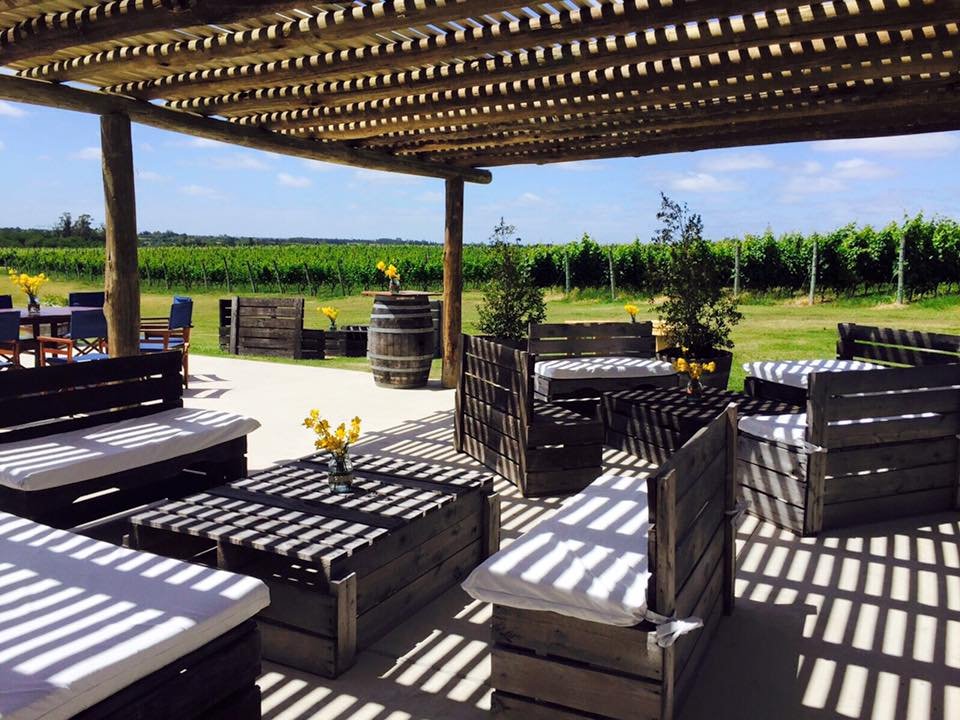
Wine Country at Kilometre 3.6
The road out of Montevideo into Canelones changes character quickly. Within forty minutes, the urban sprawl gives way to low hills covered in vine rows, and the kilometre markers along Ruta 48 become a reliable index of the wine estates that define this department. At kilometre 3.6, Artesana sits on that road, positioned inside a corridor that has become Uruguay's most productive fine-wine zone and the place where the country's Tannat identity has been most seriously tested and refined over the past three decades.
Canelones accounts for the largest share of Uruguay's wine output by volume, but the department's more interesting story is qualitative. Producers here have spent years calibrating Tannat to a softer, Atlantic-influenced style that diverges from the grape's Madiran origins in southwest France, and a secondary wave of Albariño, Petit Verdot, and Mediterranean varieties has added range to what was once a single-variety conversation. Artesana enters this context holding a Pearl 2 Star Prestige recognition for 2025, a credential that places it inside the upper tier of producers operating in this department.
The Pearl 2 Star Prestige Standard
In the EP Club rating framework, a Pearl 2 Star Prestige designation is not distributed broadly. It signals consistent quality at a level that warrants deliberate travel rather than casual detour, and in Canelones that puts Artesana in a peer set that includes producers with decades of export track records and international press attention. The region's most visited names, among them Bodega Juanicó (Familia Deicas) and Bodega Marichal, have built their reputations over long production histories. Artesana's 2025 recognition places it alongside that cohort on merit rather than longevity alone.
For comparative orientation: Varela Zarranz, Antigua Bodega Stagnari, and Bodega De Lucca are all active in the same department, each with their own stylistic emphasis. The concentration of recognized producers along this corridor means that a serious day or weekend in Canelones wine country can be structured around a tight geographic circuit. Artesana at kilometre 3.6 on Ruta 48 is near enough to Montevideo to serve as either a first or final stop on that circuit without significant detour.
What the Ruta 48 Address Tells You
Location on a named highway kilometre marker is not incidental in Uruguayan wine country. The ruta system here functions the way appellation sub-zones do elsewhere: certain corridors carry reputational weight, attract a denser cluster of serious producers, and generate the kind of infrastructure, from wine tourism facilities to specialist retail, that supports a visitor economy. Ruta 48 through Canelones sits in that category. It is not the scenic mountain wine route of Argentina's Mendoza or the valley-floor procession of Napa, but it has its own flat, oceanic-plain character that is legible once you understand what the Atlantic proximity does to temperature variation and growing-season length in this part of South America.
Uruguay's wine geography is compact by any international standard. The country's entire planted vineyard area would fit inside a mid-sized Bordeaux appellation, which means individual producers carry proportionally more weight in shaping national identity. That compression also means the gap between a department-level address and a specific producer's stylistic choices is smaller than it would be in France or Italy. When Artesana's address resolves to a specific kilometre on a specific ruta, you are already getting meaningful information about the climatic conditions, the soil profiles, and the stylistic tendencies that shape what ends up in the bottle.
The Canelones Producer Network
Understanding Artesana's position requires some familiarity with the broader Canelones producer network, which is one of the most internally varied wine communities in South America relative to its size. Beyond the department's borders, the comparison points shift: Bodega Bouza in Montevideo operates with a strong tourism infrastructure and a hospitality-forward model, while Bodega Carrau in Las Piedras brings one of Uruguay's longest family production histories. Further afield, Bodega Cerro del Toro in Piriápolis operates in a cooler coastal microclimate that produces a different expression of the same national varieties.
These comparisons matter because they frame what Canelones, and Artesana within it, actually represents in the national picture. Canelones is not the outlier or the emerging zone. It is the centre of gravity for Uruguayan wine, and producers rated at the Pearl 2 Star level here are operating inside the country's most competitive and scrutinized production environment.
Planning a Visit
Artesana's address on Ruta 48 in the Departamento de Canelones places it within direct driving range of Montevideo, which is the practical base for most international visitors approaching Canelones wine country. The ruta corridor means access does not require navigating secondary farm roads, though verifying current visit formats, opening times, and whether advance booking is required is essential before departure. No phone number or website is currently listed in EP Club's verified data, so confirmation via direct contact or through regional wine tourism channels is the recommended approach before committing to a visit.
Canelones wine country is most productively visited as a multi-stop itinerary rather than a single-producer day trip. The concentration of recognized producers in the department means that a well-planned route can cover three to four wineries without excessive driving. For a fuller picture of what the region offers beyond wine production itself, our full Canelones restaurants guide, our full Canelones hotels guide, and our full Canelones bars guide cover the broader hospitality picture. For a structured overview of the department's wine producers as a whole, our full Canelones wineries guide maps the competitive set in detail. Those interested in the wider range of what the region offers beyond tasting rooms can also consult our full Canelones experiences guide.
For international context on what a Pearl 2 Star Prestige standard means when measured against wine producers operating in very different environments, the contrast with estates like Abadía Retuerta in Sardón de Duero or Aberlour in Aberlour illustrates how the rating framework applies across wine styles and geographies.
Frequently Asked Questions
- What's the must-try wine at Artesana?
- Specific current release information for Artesana is not available in EP Club's verified data at this time. Given the producer's location in Canelones and its Pearl 2 Star Prestige recognition for 2025, Tannat-based wines represent the most nationally significant category to explore, as it is the variety through which Canelones producers have most consistently demonstrated their strongest results. Confirming current releases directly with the producer before visiting is the practical first step.
- What's the defining thing about Artesana?
- The defining characteristic is the combination of a Canelones address, which puts the producer inside Uruguay's most concentrated fine-wine zone, and a Pearl 2 Star Prestige rating for 2025 from EP Club, which positions it in the upper tier of producers operating in that department. That pairing, geographic centrality and recognised quality, places Artesana among the producers in Canelones that justify deliberate, planned visits rather than incidental stops.
- How far ahead should I plan for Artesana?
- No booking window data is currently available in EP Club's verified records for Artesana. Given that no website or phone number is listed in confirmed data, the practical approach is to allow extra lead time and pursue contact through regional wine tourism bodies or Canelones visitor resources before finalising plans. For a Pearl 2 Star Prestige producer, some advance arrangement is generally prudent regardless of the specific format on offer.
- Is Artesana accessible as a day trip from Montevideo?
- The Ruta 48 kilometre 3.6 address places Artesana within the Departamento de Canelones, the department immediately north of Montevideo, making it practical for a day visit from the capital. Most Canelones wine estates along this corridor are reachable by car in under an hour from central Montevideo, and the route is well-travelled by wine visitors. Combining Artesana with one or two neighbouring producers, such as those listed in our full Canelones wineries guide, is the most efficient use of the journey.
Cuisine-First Comparison
A quick peer snapshot; use it as orientation, not a full ranking.
| Venue | Classification | Awards | First Vintage | Notes |
|---|---|---|---|---|
| Artesana | 1 awards | This venue | ||
| Varela Zarranz | 1 awards | |||
| Antigua Bodega Stagnari | 1 awards | |||
| Bodega De Lucca | 1 awards | |||
| Bodega Juanicó (Familia Deicas) | 1 awards | |||
| Bodega Marichal | 1 awards |
Access the Cellar?
Our members enjoy exclusive access to private tastings and priority allocations from the world's most sought-after producers.
Access the Concierge