

Bodega Kaiken sits at Roque Sáenz Peña 5516 in Mendoza's wine country, earning a Pearl 2 Star Prestige recognition in 2025. The bodega operates in a region where altitude viticulture and Andean terroir define the competitive tier, placing it among a select group of producers whose practices and credentials draw serious wine travelers from across the Southern Hemisphere and beyond.
 Discover on Pearl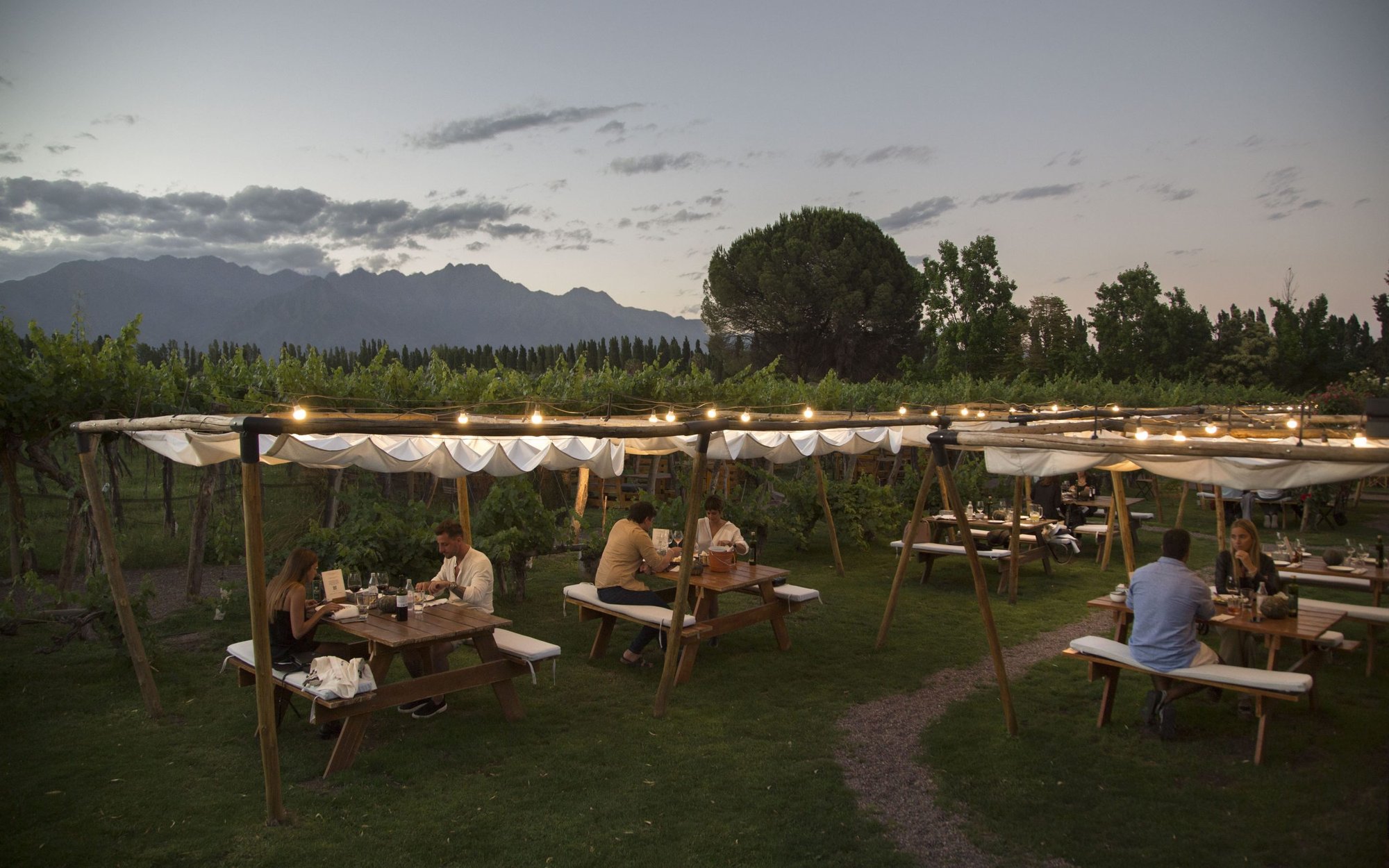
Where the Andes Shape the Wine
Drive out along Mendoza's western corridors toward the Andes foothills and the air changes before the landscape does. At altitude, the ultraviolet intensity that defines high-elevation viticulture becomes something you notice on your skin before you notice it in a glass. Bodega Kaiken, located at Roque Sáenz Peña 5516, occupies this terrain in a city whose wine identity is inseparable from its geography. The Andes are not scenic backdrop here; they are the technical condition that makes Mendoza's premium tier possible, driving the diurnal temperature swings that concentrate phenolics while preserving acidity in ways that lower-altitude winemaking regions cannot replicate.
In 2025, Bodega Kaiken received a Pearl 2 Star Prestige recognition, placing it within a cohort of producers whose output is taken seriously by the kind of evaluators who benchmark across hemispheres. That credential positions the bodega inside Mendoza's upper tier, alongside peers like Terrazas de los Andes and Bodegas CARO, both of which have built international reputations on the same foundational terroir argument: that elevation, not just variety, is the defining variable in Argentine fine wine.
The shortlist, unlocked.
Hard-to-book tables, cellar releases, and concierge-planned trips.
Get Exclusive Access →Sustainability as Method, Not Marketing
Mendoza's wine industry arrived at sustainability through necessity as much as philosophy. Water scarcity in a high-desert agricultural region means that producers who ignore soil health and irrigation efficiency pay a compounding cost over time. The bodegas that have built the strongest long-term reputations here tend to be those that treated regenerative and organic practices as agronomic strategy rather than as a label to print on a back label.
This approach runs through the broader regional conversation. Producers across Luján de Cuyo and the Uco Valley have been incrementally reducing chemical inputs, experimenting with cover crops, and rethinking canopy management to cope with increasing temperature variability linked to climate shifts at altitude. Bodega Norton in Luján de Cuyo and Bodega DiamAndes in Tunuyán represent different expressions of this shift within the regional spectrum, with DiamAndes in particular demonstrating how Uco Valley altitude amplifies the gains from low-intervention viticulture.
The bodega's address places it within a zone where these questions about sustainable practice are not abstract. They are decisions made vine-row by vine-row, in soil that holds memory across decades. Any serious producer operating in this tier is engaging with that reality in some form, whether or not the language used to describe it changes with the marketing cycle.
The Mendoza Prestige Tier: A Competitive Reading
Argentina's wine map has consolidated significantly over the past two decades. The entry-level export market remains dominated by accessible Malbec at commodity price points, but the prestige tier has differentiated sharply. Producers competing in that upper bracket are no longer simply making better versions of the same wine; they are making arguments about specific sub-zones, elevation bands, and viticulture disciplines that separate them from volume players.
Bodega Kaiken's Pearl 2 Star Prestige award in 2025 anchors it in that differentiated conversation. The recognition places it in a framework that evaluates producers across multiple dimensions, not just the quality of a single bottling. Peers in this tier include Bodega Riccitelli, which has built a reputation around old-vine sourcing and minimal intervention, and Bodega Navarro Correas, which represents a longer-established strand of Mendocino wine culture. Each operates with a distinct identity, but all are answering the same underlying question: what does Mendoza's finest terroir actually taste like when treated with the seriousness it warrants?
Further afield, producers like Bodega El Esteco in Cafayate and Bodega Colomé in Molinos offer useful comparison points from Argentina's northwest, where even higher elevations produce wines with a markedly different structural profile. The contrast between Salta's torrontés and extreme-altitude reds and Mendoza's Malbec-dominant framework illustrates just how varied Argentina's premium wine geography has become.
Visiting Mendoza's Wine Corridor
Mendoza's wine tourism infrastructure has matured to the point where serious visitors arrive with itineraries, not just curiosity. The city itself serves as a logistical hub, with most premium bodegas radiating outward into the surrounding departments. Bodega Kaiken's location on Roque Sáenz Peña places it accessible from the city center, though as with most Mendoza wineries, a hired driver or organized transfer makes the most practical sense, particularly if the visit extends to a full tasting session.
The city's broader wine scene rewards structured planning. A well-built Mendoza itinerary might anchor around two or three bodega visits per day, with lunch at one of the estate restaurants that have become a defining feature of the region's hospitality model. For context on how to build that framework, our full Mendoza restaurants guide maps the food and wine scene with the depth this region requires.
Visitors with a broader interest in Argentine spirits and production culture should also note Casa Tapaus Destilados in Mendoza, which operates in a different production category but reflects the same artisanal precision that defines the region's premium tier. And for those extending trips across hemispheres, the contrast between Mendoza's altitude-driven viticulture and the production philosophy at Aberlour in Aberlour or Accendo Cellars in St. Helena provides useful reference points across entirely different terroir traditions.
For those constructing a wider Argentina wine tour, Familia Schroeder in San Patricio del Chañar in Neuquén represents Patagonia's cooler-climate response to the Mendoza model, while Fratelli Branca Distillery in Buenos Aires offers a metropolitan production counterpoint. And Escorihuela Gascón in Godoy Cruz provides a historic Mendoza reference point, its 19th-century cellars representing the deep institutional layer beneath the region's contemporary prestige ambitions.
Planning a Visit
Bodega Kaiken is located at Roque Sáenz Peña 5516, Mendoza. Given that specific booking methods, hours, and current pricing are leading confirmed directly with the bodega before your visit, reaching out through official channels ahead of arrival is advisable. Mendoza's premium bodega tier generally requires advance reservation, particularly for guided experiences or seated tastings, and that pattern applies broadly across the region regardless of individual venue policy. The southern hemisphere harvest season, running roughly from February through April, brings the most activity to Mendoza's wine corridor and also makes last-minute bookings harder to secure during peak weeks.
The shortlist, unlocked.
Hard-to-book tables, cellar releases, and concierge-planned trips.
Get Exclusive Access →Frequently Asked Questions
A Credentials Check
A quick peer list to put this venue’s basics in context.
| Venue | Awards | Cuisine | Notes |
|---|---|---|---|
| Bodega Kaiken | This venue | ||
| Terrazas de los Andes | |||
| Bodega Navarro Correas | |||
| Bodegas CARO | |||
| Bodega Riccitelli | |||
| Casa Tapaus Destilados |
Access the Cellar?
Our members enjoy exclusive access to private tastings and priority allocations from the world's most sought-after producers.
Get Exclusive AccessThe shortlist, unlocked.
Hard-to-book tables, cellar releases, and concierge-planned trips.
Get Exclusive Access →