Barboursville Vineyards

Barboursville Vineyards sits on one of Virginia's most historically significant wine estates, where the Piedmont's clay-loam soils and continental climate have shaped a serious viticulture program recognized with a Pearl 3 Star Prestige award in 2025. The property pairs estate wine production with the ruins of a Thomas Jefferson-designed manor house, making it a reference point for understanding what Virginia's wine country has become.
 Discover on Pearl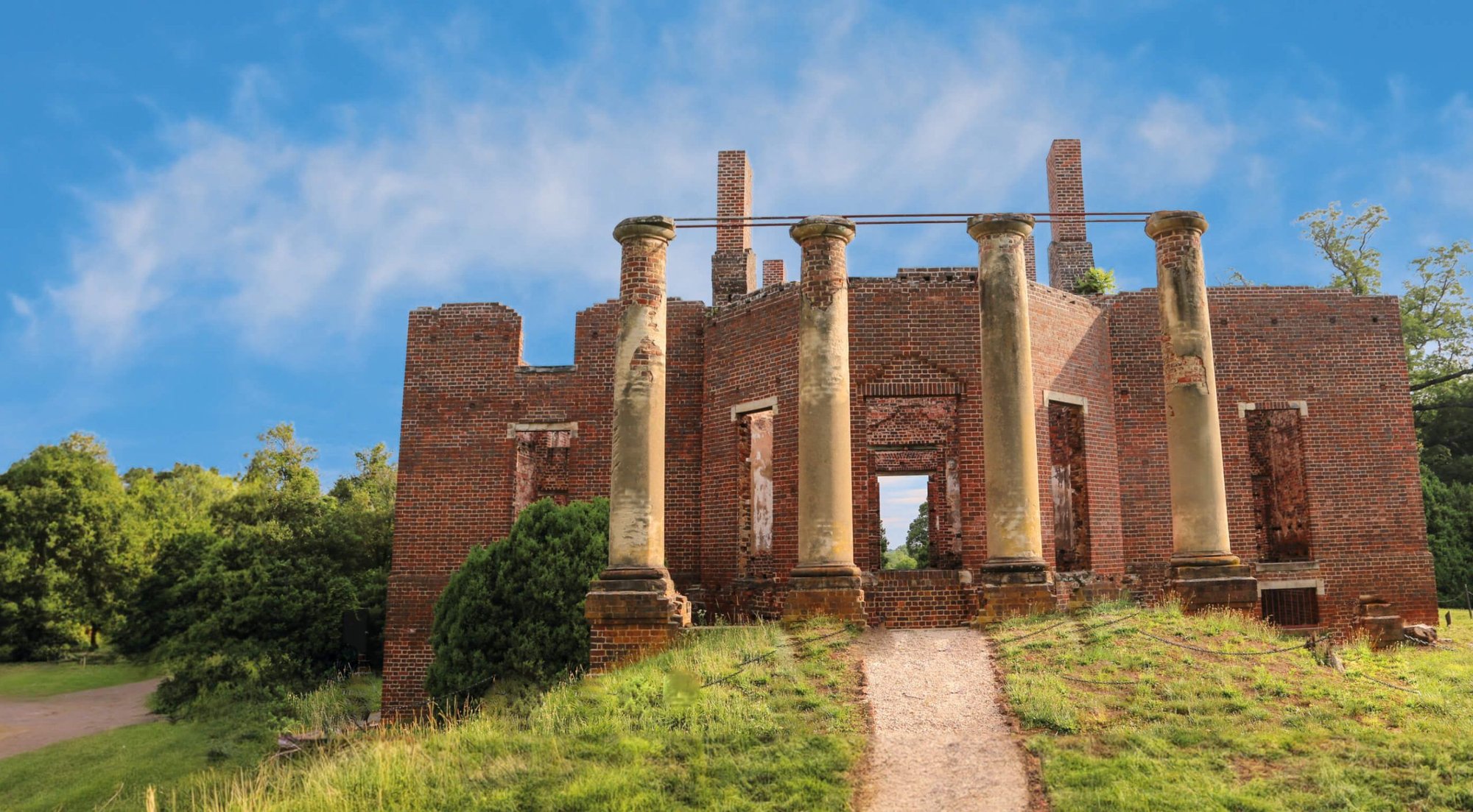
Where Virginia's Geology Writes the Wine
The Piedmont foothills of Orange County, Virginia, occupy a transitional zone that winemakers elsewhere might envy and then quietly worry about. Continental air masses push down from the north, Atlantic humidity creeps in from the southeast, and the clay-loam and decomposed granite soils of the Blue Ridge foothills drain just unevenly enough to stress vines into concentration without shutting them down. This is the ground beneath Barboursville Vineyards, and it is the reason the estate sits at the serious end of Virginia's wine conversation rather than its decorative end.
Virginia wine has spent two decades trying to articulate what it actually is. The state's producers have moved through a period of Italian-variety experimentation, through Bordeaux-blend ambition, and into a more honest reckoning with which sites and which varieties actually translate terroir rather than simply survive it. Barboursville, as one of the Piedmont's anchor estates, has been present for most of that evolution. The Pearl 3 Star Prestige recognition awarded in 2025 confirms a standing that the estate's consistent presence in serious Virginia wine discussions had long implied.
The Estate and Its Ground
The ruins of the Barboursville manor house, designed by Thomas Jefferson and destroyed by fire in 1884, stand on the property as an architectural fact rather than a marketing device. Their presence does something more useful for the visitor: it calibrates the age of the land's cultivation. This was farming and orchard country long before American wine culture developed the vocabulary to describe what the soil could produce. The estate's vineyards draw from that same ground, where centuries of weathering have left the kind of mineral substrate that shows up in wine as texture and persistence rather than as fruit weight.
The Piedmont clay-loam holds water through dry spells but sheds excess moisture after heavy summer rains, a drainage profile that matters enormously in a region where August humidity regularly tests canopy management. Vines that manage their own water stress tend to produce smaller berries with tighter skins, which translates to more concentrated flavors and firmer structural tannins in red varieties. For white varieties on the same soils, the result is a mineral tension that distinguishes estate-grown fruit from production sourced off-site. These are not abstract claims about terroir philosophy; they are the practical consequences of specific geology under specific weather patterns.
Italian Varieties in American Piedmont Soil
Virginia's most convincing argument for a distinct regional identity has been built partly on Italian varieties, and Barboursville has been central to that argument. Nebbiolo, Vermentino, and Viognier have each found advocates among Virginia producers, but the sustained case for Sangiovese-based wines in particular runs through estates with the patience and site history to understand how those varieties behave across multiple vintages in Piedmont conditions. The clay-loam soils replicate some of the drainage characteristics of central Italian wine regions without reproducing their temperatures, which means the growing season produces a different acid-sugar balance than Tuscany achieves, but not necessarily an inferior one.
For the visitor making comparisons across American wine regions, the useful frame is restraint and site specificity rather than varietal power. The wines produced from this ground do not compete directly with California Cabernet programs at properties like Accendo Cellars in St. Helena or Alpha Omega Winery in Rutherford, nor with the Rhône-focused output of Alban Vineyards in Arroyo Grande or Andrew Murray Vineyards in Los Olivos. Their peer set is closer to estate-focused producers working in transitional climates, where the land's complexity shows up as structural interest rather than sheer fruit concentration. Properties like Adelaida Vineyards in Paso Robles offer a partial comparison in that both estates draw identity from specific calcareous or clay-mineral soils rather than from brand-scale production.
Reading the 2025 Recognition
The Pearl 3 Star Prestige award, assigned to Barboursville Vineyards in 2025, sits at the top tier of the EP Club rating system and places the estate in a small cohort of American wineries recognized at that level. What the award indexes, in this case, is a program that has demonstrated consistency across vintages and a site capable of producing wines that carry a legible sense of place. At this tier, the comparison set becomes international: Abadía Retuerta in Sardón de Duero and the focused production programs of estates like Adelsheim Vineyard in Newberg or Alexander Valley Vineyards in Geyserville represent the kind of serious regional anchor that a three-star designation implies.
For Virginia wine, the recognition carries additional weight because the state's wine identity is still being written. A prestige-tier award at Barboursville contributes to a regional argument, not just an estate one. It places Orange County terroir in a conversation with American wine regions that have had decades more time to establish their reputations.
The Ruins as Context, Not Backdrop
Arriving at Barboursville, the Jefferson ruins appear before the winery itself comes fully into view. That sequencing matters. The estate occupies land that has been shaped by human intention for over two centuries, and the wines produced here carry some of that layered history in the way serious wine regions tend to. The ruins are not decorative; they are the most honest marker of how long this particular piece of Virginia soil has been under cultivation and how much has changed in the understanding of what that cultivation should produce.
The tasting room experience at a property of this standing in Virginia's wine scene falls into the specialist-format category: visitors arrive to engage seriously with the wines rather than to sample broadly through a large portfolio. The estate's position as one of Orange County's reference producers means the experience is calibrated toward those who have already oriented themselves within Virginia wine, though the historical and geological context makes it accessible to informed visitors arriving from other wine regions.
Planning a Visit
Barboursville sits in Orange County, Virginia, roughly ninety minutes southwest of Washington, D.C. and within the broader Piedmont wine corridor that makes it possible to combine a visit here with stops at Chestnut Oak Vineyard and other nearby producers. The town of Barboursville itself is small; accommodation and dining options in the immediate area are limited, which makes advance planning necessary for anyone treating this as a destination rather than a day trip. For a fuller picture of what the area offers, our full Barboursville restaurants guide, our full Barboursville hotels guide, and our full Barboursville bars guide cover the supporting infrastructure around the estate.
Spring and fall offer the most favorable visiting conditions in the Virginia Piedmont. Summer humidity can be significant, and while it does not diminish the wine program, it shapes the outdoor experience around the estate grounds. The harvest window in September and October brings the property into its most active phase and gives visitors a direct read on how the season's conditions have developed. For those building a broader itinerary around Virginia wine country, our full Barboursville wineries guide and our full Barboursville experiences guide map the wider options across the region. Visitors interested in the distillery programs that have grown up alongside Virginia wine production will find additional context in those guides as well, including reference to producers like Aberlour for comparative craft spirits context.
Frequently Asked Questions
- What is the main draw of Barboursville Vineyards?
- The combination of historically significant grounds, including the ruins of a Thomas Jefferson-designed manor house, and a wine program that earned a Pearl 3 Star Prestige recognition in 2025 makes Barboursville one of Virginia's most complete estate wine destinations. The terroir argument the estate makes through its Piedmont clay-loam soils and Italian-variety program is the most substantive draw for wine-focused visitors.
- What wine should I prioritize at Barboursville Vineyards?
- The estate's engagement with Italian varieties, particularly its Sangiovese-based program, represents what has most clearly established Barboursville within serious Virginia wine discussions. The Orange County Piedmont soils produce a structural acid-mineral profile in those varieties that is worth tasting alongside the estate's white and Bordeaux-influenced red programs to understand the range the terroir supports. The 2025 Pearl 3 Star Prestige award signals that the program as a whole, rather than any single bottling, is what has earned recognition.
Peer Set Snapshot
These are the closest comparables we have in our database for quick context.
| Venue | Awards | Notes |
|---|---|---|
| Barboursville Vineyards | Pearl 3 Star Prestige | This venue |
| Chestnut Oak Vineyard | Pearl 2 Star Prestige | |
| Robert Mondavi Winery | 50 Best Vineyards #39 (2025); Pearl 3 Star Prestige | Geneviève Janssens, Est. 1966 |
| Jordan Vineyard & Winery | 50 Best Vineyards #13 (2025); Pearl 3 Star Prestige | |
| Brooks Winery | 50 Best Vineyards #35 (2025); Pearl 2 Star Prestige | |
| Aperture Cellars | 50 Best Vineyards #14 (2025); Pearl 2 Star Prestige |
Access the Cellar?
Our members enjoy exclusive access to private tastings and priority allocations from the world's most sought-after producers.
Get Exclusive Access