

Founded in 1980 on a dairy farmer's pivot to viticulture, Ata Rangi has become one of Martinborough's most closely watched organic estates, earning a Pearl 4 Star Prestige rating in 2025. Its name translates as 'new beginning,' a phrase that captures both the estate's origins and the region's broader emergence as a serious Pinot Noir address. Visitors come for wines that read as direct expressions of Wairarapa's clay-over-limestone subsoils.
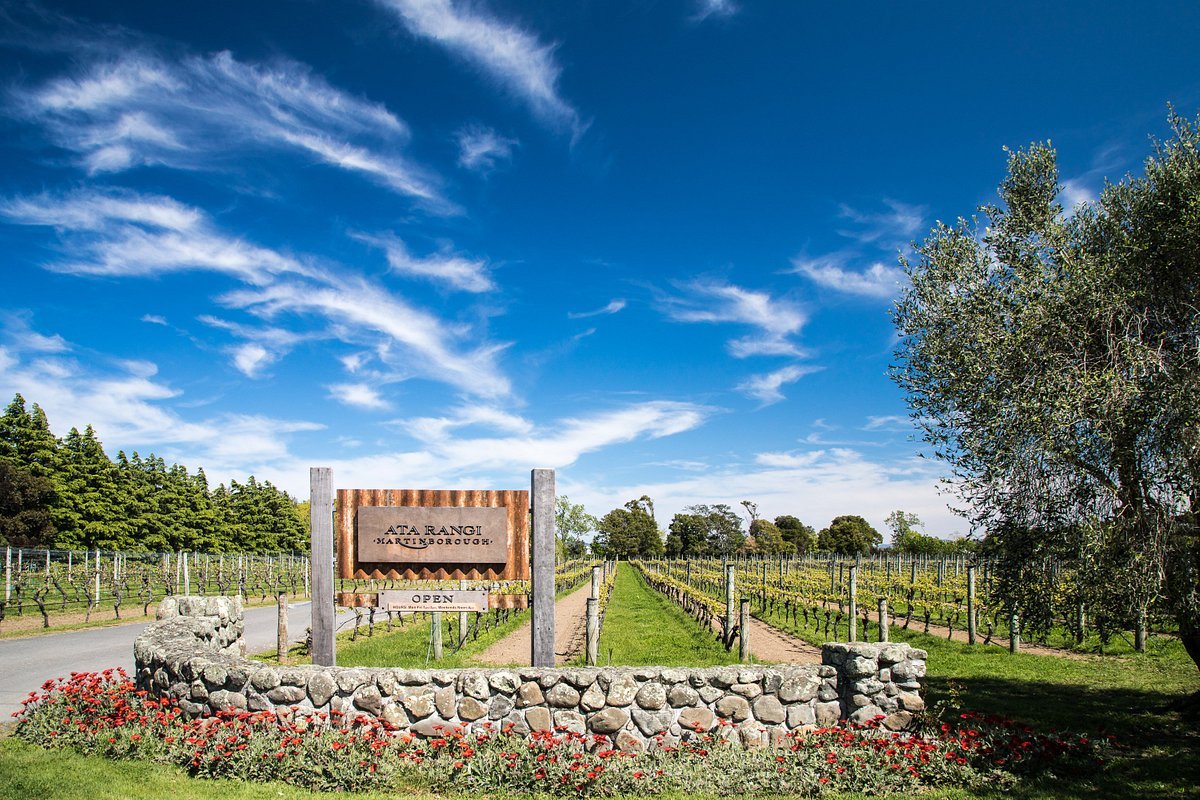
Martinborough sits at the southern tip of the North Island, separated from Wellington by the Rimutaka Range and from most wine tourists by a road that demands commitment. That friction is part of what keeps the village's wine culture disciplined. The estates here are small, the appellations tight, and the producers who have stayed since the 1980s have had decades to read their particular patch of free-draining gravel and wind-scoured terrace. Arriving along Puruatanga Road, you pass low-slung vines in rows that sit close to the ground, shaped by the same nor'west winds that concentrate sugars and keep yields honest. The physical setting does not announce itself with drama. It works quietly, and so do the wines.
Ata Rangi occupies that founding generation of Martinborough producers. Established in 1980 when a dairy farmer redirected his land toward grape growing, the estate carries a name that translates from te reo Māori as 'new beginning,' a phrase that proved apt not just for one property but for an entire region's identity shift. Few estates in New Zealand carry that kind of generational context, and fewer still have converted it into consistent critical standing. The estate's 2025 Pearl 4 Star Prestige award from EP Club places it in the top tier of New Zealand wine producers currently being tracked, a peer group that includes Felton Road Wines in Bannockburn and Rippon Vineyard in Wānaka, two South Island estates working with similarly serious intent on climate-sensitive varieties.
What Martinborough's Terroir Demands
The Wairarapa's terroir case is built on contrast. The region is warmer and drier than Marlborough, with a continental temperature swing that pushes grapes through a longer, slower ripening arc than the maritime conditions further south. The soils in the Martinborough sub-region are predominantly free-draining alluvial gravel over a clay pan, a combination that stresses vines into low yields while retaining just enough moisture to avoid shut-down in dry summers. For Pinot Noir, which rewards struggle more than almost any other variety, this setup produces fruit with concentration and structure that warmer, more generous sites often cannot achieve.
Organic farming in this context is not a marketing position but a practical reading of soil health over decades. Wairarapa producers who have committed to organic certification generally argue that the region's dry climate reduces the disease pressure that makes organics difficult elsewhere in New Zealand. Ata Rangi received its organic certification after years of transitional management, a process that shows up in vineyard data: organic plots typically show greater microbial diversity in soil tests, which translates into a more complex mineral character in wines from those blocks. This is the kind of background detail that separates a wine that tastes like it came from somewhere specific from one that simply tastes competent.
For visitors comparing New Zealand's leading Pinot addresses, Martinborough generally produces wines with more structural tension than Central Otago's riper, darker profile. The two regions are often discussed as a binary, but the contrast is better understood as a spectrum of climate influence. Martinborough sits at the cooler end of the North Island, while Central Otago, despite its altitude, accumulates heat through long summer days. Estates like Greystone Wines in Waipara represent a third point of reference, working in North Canterbury with biodynamic discipline and a similarly restraint-oriented approach to Pinot Noir.
The Estate in Its Competitive Context
Among New Zealand's boutique prestige wineries, Ata Rangi operates in a tier defined by allocation-based sales, a committed following in key export markets, and a production scale that keeps volumes tight enough to sustain that following without oversupply. This places it in a different competitive frame from larger appellations-led producers. Cloudy Bay Vineyards in Blenheim and Wairau River Wines in Rapaura both work at Marlborough scale, where Sauvignon Blanc drives volume and Pinot Noir plays a supporting role. Ata Rangi's narrower, terroir-focused range sits closer in spirit to Craggy Range in Hastings, another New Zealand estate that treats individual vineyard blocks as the unit of argument rather than the appellation as a whole.
International comparisons are instructive but imperfect. Kumeu River Wines in Kumeu offers a useful parallel in the sense that both estates trace their prestige through family continuity and a single-minded focus on a small number of varieties. Outside New Zealand, the model of a founder-generation organic estate with a prestige-tier rating and export-market allocation signals echoes what Abadía Retuerta in Sardón de Duero has achieved in Spain, where winemaking ambition and estate identity have built a following that travels beyond the home market.
Planning a Visit
Martinborough is approximately 80 kilometres from Wellington by road, a journey of around 90 minutes through the Rimutaka Hill Road or the Remutaka Range tunnel route. The village is compact, and Puruatanga Road, where Ata Rangi sits at number 14, is within easy walking distance of the central square. Most visitors to the region cluster visits across a day or weekend, pairing winery stops with the restaurants and bars that have built up around the wine trade. For broader planning, our full Martinborough restaurants guide, our full Martinborough hotels guide, our full Martinborough bars guide, and our full Martinborough experiences guide cover the full picture of what the region offers around a winery visit. For those comparing estates before committing to a visit, our full Martinborough wineries guide maps the region's producers against each other. The Martinborough Fair and Toast Martinborough festival in November are the two high-traffic weekends; accommodation books out months in advance for both, and tasting room traffic spikes accordingly. Outside those weekends, spring and autumn offer better access and more considered conditions for tasting.
A note on the estate itself: as a boutique organic producer with a Pearl 4 Star Prestige standing, Ata Rangi operates on the kind of scale where direct contact before visiting is standard practice. Specific hours, tasting formats, and booking requirements are not published here, as this information changes seasonally and is leading confirmed through the estate directly. Also worth exploring nearby is Bosman Family Vineyards in Wellington, which offers a different take on small-estate winemaking for visitors extending their trip into the capital.
Frequently Asked Questions
- What should I expect atmosphere-wise at Ata Rangi?
- Ata Rangi sits on Puruatanga Road within Martinborough's compact vineyard grid, a short walk from the village square. The estate is boutique in scale, and the approach reflects that: this is not a destination with large hospitality infrastructure but a working organic vineyard where the wine rather than the venue is the draw. Martinborough itself has a low-key, wine-focused character that attracts visitors looking for producer access rather than resort amenity. The Pearl 4 Star Prestige rating (2025) signals a prestige-tier experience in a setting that remains grounded in agricultural reality. Expect engagement with the wines in a context that prioritises substance over spectacle.
- What do visitors recommend trying at Ata Rangi?
- Ata Rangi's Pinot Noir is the reference point for Martinborough as a region: structured, cooler-climate fruit shaped by the free-draining alluvial soils and dry growing conditions of the Wairarapa. The estate was founded in 1980 and has been farming organically, which means the vineyard data on soil health and vine age supports more complexity in the wines than younger plots can offer. Specific current releases and tasting notes should be confirmed with the estate directly, as vintage variation in this climate is meaningful and older vintages occasionally appear through the estate's own library. For visitors building a comparative tasting across New Zealand's leading Pinot producers, Ata Rangi alongside estates like Felton Road in Bannockburn gives a direct read on how climate and soil interact differently across the country's main Pinot regions.
A Quick Peer Check
These are the closest comparables we have in our database for quick context.
| Venue | Cuisine | Price | Awards | Notes |
|---|---|---|---|---|
| Ata Rangi | Pearl 4 Star Prestige (2025); Translating as “new beginning,” this boutique organic estate was founded in 1980 by a dairy farmer who has so successfully turned his hand to grape growing (wit | This venue | ||
| Greystone Wines | ||||
| Wairau River Wines | ||||
| James Sedgwick Distillery (Three Ships & Bain’s) | ||||
| Cloudy Bay Vineyards | ||||
| Craggy Range |
Access the Cellar?
Our members enjoy exclusive access to private tastings and priority allocations from the world's most sought-after producers.
Access the Concierge