"Located in the Mouraria neighborhood, the birthplace of fado, this restaurant is a prime pick for sampling traditional Portuguese food. The codfish, or bacalhau, is a priority here. It is served with plenty of bread to clean your plate. In the style of a classic tasca (Portuguese tavern), the walls are adorned with blue tiles and many photos, paintings and drawings."
Pearl is the En Primeur Club membership app — saves, bookings, and concierge access live there. Same editors, same standards.
- Address
- R. João do Outeiro 24, 1100-292 Lisboa, Portugal
- Phone
- +351 21 886 5436
- Website
- facebook.com
- Directions
- Get directions
 Saves & bookings on Pearl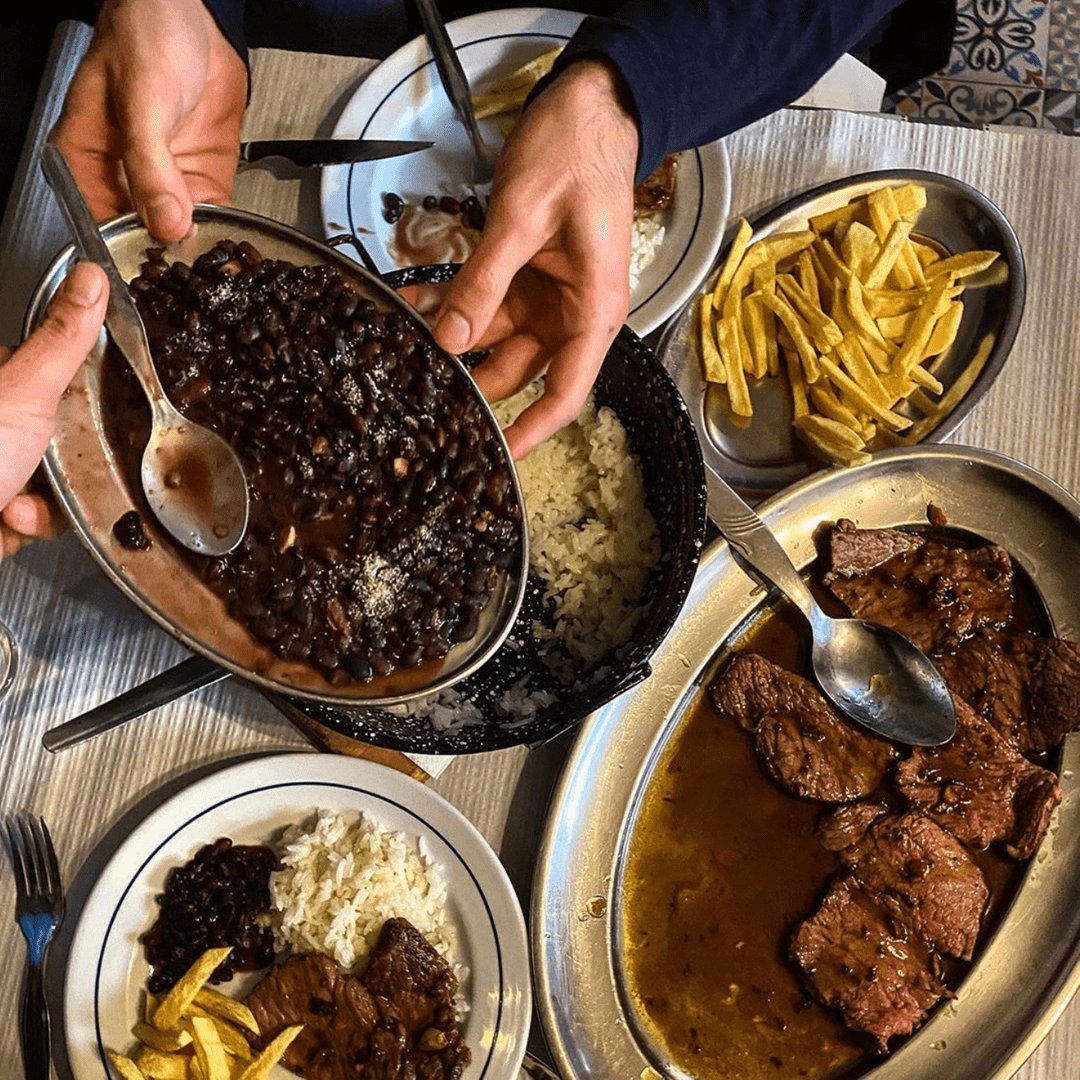
Mouraria's Physical Grammar
The address alone orients you. Rua João do Outeiro sits inside Mouraria, Lisbon's oldest surviving Islamic-era neighbourhood and the quarter most closely associated with the origins of fado. The streets here are narrow enough that two people walking abreast must negotiate passage, and the tiles on surrounding building facades range from intact eighteenth-century azulejos to patched repairs that tell their own compressed history. Arriving at Zé da Mouraria, you are already reading the neighbourhood as architecture before you reach the door.
Mouraria occupies a particular position in Lisbon's spatial hierarchy. Unlike Alfama, which tourism has thoroughly repackaged, or the Chiado, which operates as the city's polished commercial centre, Mouraria has retained a denser mix of long-term residents, small traders, and newer arrivals. The neighbourhood's dining rooms tend to reflect that texture: compact spaces, tables arranged with practical logic rather than theatrical spacing, menus that make sense within a few hundred metres of where the food is produced or sourced. Zé da Mouraria belongs to that category of Lisbon eating house where the room and the cooking are calibrated to the same register.
The Space as Argument
In Lisbon's dining taxonomy, the tascas and casas de pasto that populate older neighbourhoods represent a distinct architectural and social typology. The interiors tend to be tiled or whitewashed, with low ceilings that hold sound and warmth in equal measure. Seating arrangements prioritise density over distance: shared tables are common, individual reservations less so, and the expectation is that the room will be full and audible. This is not a design failure but a deliberate spatial argument, one that the leading examples of the format have sustained across decades without revision.
What distinguishes the physical character of places like Zé da Mouraria from the higher-end addresses on Lisbon's dining circuit is the absence of mediation. At Belcanto or CURA, the dining room is itself a designed message about what the kitchen values: controlled light, deliberate material choices, spacing that creates the conditions for concentration. At addresses like Zé da Mouraria, the room makes a different argument — that proximity and shared space are part of the meal's logic, not obstacles to it.
That distinction places Zé da Mouraria in a competitive set that includes other Mouraria and Alfama addresses operating on similar spatial and culinary principles, rather than in conversation with the city's Michelin-recognised rooms. Portugal's decorated restaurants — Vila Joya in Albufeira, Ocean in Porches, The Yeatman in Vila Nova de Gaia, Casa de Chá da Boa Nova in Leça da Palmeira, operate with an entirely different spatial grammar. Zé da Mouraria's value is precisely that it does not attempt to translate into that register.
Neighbourhood Cooking in Context
Traditional Portuguese urban cooking in Lisbon's older quarters centres on a specific set of techniques and ingredients that have remained stable across generations: salt cod preparations, braised meats, green broths, and rice dishes cooked with the cooking liquid of whatever protein anchors the plate. The simplicity of the list obscures the technical discipline required to execute these dishes at a consistent standard over a long service. The calibration of salt, the management of fat, the texture of rice, these are the parameters that separate a reliable house from a mediocre one in this format.
The neighbourhood context matters for reading what Zé da Mouraria represents. Mouraria has historically been a neighbourhood of working-class and immigrant communities, and its food culture reflects that: portions are calibrated for appetite rather than presentation, and the measure of a dish is whether it sustains rather than whether it impresses. That framing separates the format from the modern Portuguese cooking being practised at places like Eleven or 50 Seconds from Martin Berasategui, where the reference points are international and the ambition is explicitly creative. It also separates it from the crossover addresses like 2Monkeys that operate in a more experimental register within the city.
Across Portugal, the contrast between traditional casa de pasto cooking and the country's contemporary fine dining cohort is instructive. Antiqvvm in Porto, Il Gallo d'Oro in Funchal, Fortaleza do Guincho in Cascais, and Gusto by Heinz Beck in Almancil each operate within formal, structured environments where the meal is an extended occasion. Zé da Mouraria occupies the other end of that spectrum: a meal here is an episode in a day rather than the architecture of the day itself.
Placing the Visit
Mouraria works well approached on foot from the Martim Moniz square, which serves as the neighbourhood's practical gateway from the lower city. The square itself carries its own social complexity, it functions as a meeting point for Lisbon's West African and South Asian communities as well as an increasingly tourist-trafficked transition zone between the Baixa and the hillside quarters. From Martim Moniz, Rua João do Outeiro is a short climb into the denser residential fabric of the neighbourhood.
Lunch is the primary service logic for this category of Lisbon restaurant. The midday meal in traditional Portuguese urban culture carries more weight than dinner in comparable formats, and the kitchen's output is typically calibrated to that rhythm. Arriving in the early afternoon, after the main lunch rush, is often the most practical approach for visitors without a local network to guide timing.
The broader Lisbon restaurant picture for visitors planning a full stay is documented in our full Lisbon restaurants guide. For context on how neighbourhood cooking like this sits within international reference points, the contrast with a room like Le Bernardin in New York or Lazy Bear in San Francisco is clarifying: both operate with structural formats and advance booking requirements that are categorically different from the drop-in logic of a Mouraria tasca.
For visitors specifically interested in Lisbon's traditional residential quarters, Mouraria and the Zé da Mouraria address sit within a coherent neighbourhood walk that also passes through the area's small squares and the tiled facades of the Intendente. The restaurant's position on Rua João do Outeiro places it inside the neighbourhood rather than at its edge, which means arriving requires commitment to the streets themselves. That is not incidental. In Mouraria, the walk is part of what the meal means.
Also worth tracking for the broader Portugal circuit: Ó Balcão in Santarém and Al Sud in Lagos represent two further expressions of regional Portuguese cooking operating outside the capital, and together with Lisbon's neighbourhood addresses they form a useful picture of how the country's food culture distributes across formats and geography.
How Zé da Mouraria Lisbon compares with similar nearby venues.
| Venue | Cuisine | Price |
|---|---|---|
| Varanda | Meats and Grills | $$$ |
Continue exploring
More in Lisbon
Restaurants in Lisbon
Browse all →
Bars in Lisbon
Browse all →
Hotels in Lisbon
Browse all →

At a Glance
- Rustic
- Cozy
- Classic
- Casual Hangout
- Historic Building
Current opening hours
- Monday
- 12–4 PM
- Tuesday
- 12–4 PM
- Wednesday
- 12–4 PM
- Thursday
- 12–4 PM
- Friday
- 12–4 PM
- Saturday
- 12–4 PM
- Sunday
- Closed
Hours can change for holidays and private events. Last verified .
Noisy, informal atmosphere with a welcoming, typical neighborhood feel.
Know Before You Go
- Getting there
- R. João do Outeiro 24, 1100-292 Lisboa, Portugal