Yunomi Handroll

Michelin Plate
Our verdict
A Michelin Plate-recognised handroll counter on East 3rd Street in Downtown Los Angeles, Yunomi Handroll holds its own on one of the city's most competitive restaurant corridors. The counter format drives the experience, with a menu that moves between Japanese technique and assertive seasoning, from rock shrimp tempura tossed in shichimi-spiced mayo to the signature albacore and truffle soy handroll. Priced at $$, it sits well below the city's omakase tier.

Pearl is the En Primeur Club membership app — saves, bookings, and concierge access live there. Same editors, same standards.
The menu
What to order
- Spicy Albacore on Crispy Rice
- Rock Shrimp Tempura
- Yunomi Special Handroll
- Soft Shell Crab Handroll
- Negi Toro
East 3rd Street and the Rise of Downtown's Restaurant Corridor
Downtown Los Angeles took its time becoming a serious dining destination. For most of the twentieth century, the area east of the civic centre was industrial and largely overlooked by the restaurant industry. That changed gradually through the 2010s, as warehouse conversions and rising rents in Silver Lake and Echo Park pushed operators eastward. By the early 2020s, the stretch of East 3rd Street running through the Arts District had become one of the city's most concentrated patches of ambitious food and drink, a block-by-block accumulation of wine bars, izakayas, and chef-driven independents that now competes credibly with West Hollywood and Beverly Grove for the city's dining attention.
Yunomi Handroll, at 806 East 3rd Street, arrived as that corridor was reaching critical mass. The Michelin Guide awarded it a Plate recognition in 2025, a designation that in the context of this neighbourhood says something specific: this is not a destination in the rarefied sense of Hayato or n/naka, both of which operate at the top of Los Angeles Japanese dining with price points and booking windows to match. Yunomi occupies a different position entirely, one where the counter format and Japanese vocabulary are preserved but the register is looser, the price is accessible at $$, and the room is designed for energy rather than ceremony.
The Counter as Cultural Form
The handroll bar is a relatively recent export from Japan's street food and casual dining culture, distinct from the omakase counter in both intent and economics. Where omakase positions the chef as author and the guest as recipient of a fixed narrative, the handroll format is faster, more interactive, and built around a narrow product executed at volume. In Tokyo, casual hand-rolled temaki is associated with izakaya side orders and late-night eating rather than deliberate dining destinations. The format's translation to the American market, particularly in Los Angeles and New York, has involved a degree of elevation: cleaner ingredients, more composed flavour profiles, and dining-room design that signals intention.
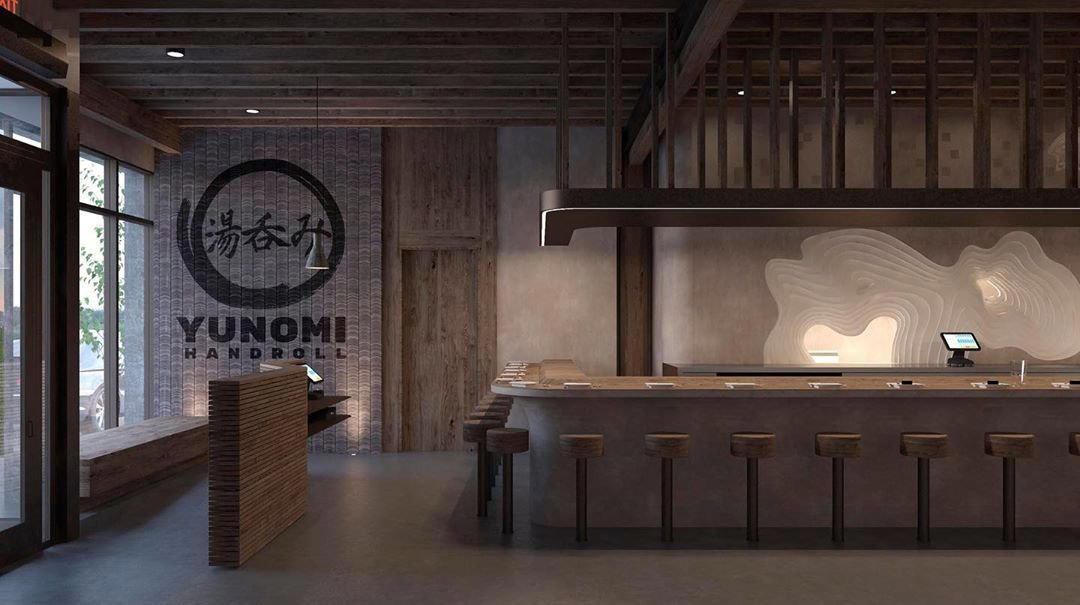
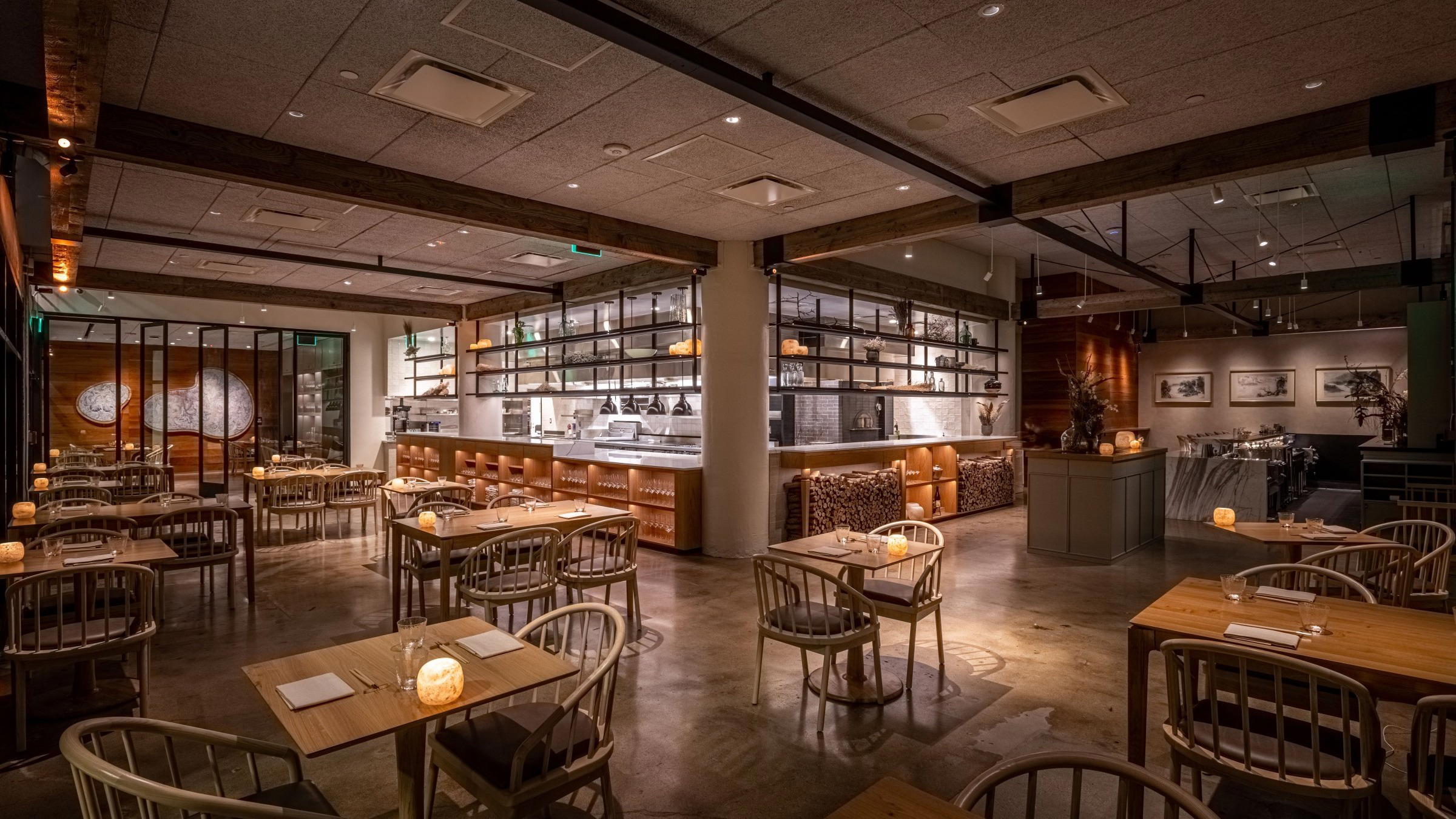
Yunomi's room reads as deliberately low-key against that shift. The interior is moody and dark, with a pared-down design that keeps the focus on the counter. In a city where Japanese dining ranges from the kaiseki formality of Hayato to the modern Japanese-adjacent menus at Hinoki & The Bird, that atmospheric restraint is a positioning choice as much as an aesthetic one. The counter is, as the Michelin note describes it, the heartbeat of the operation.
A Menu That Works Against Type
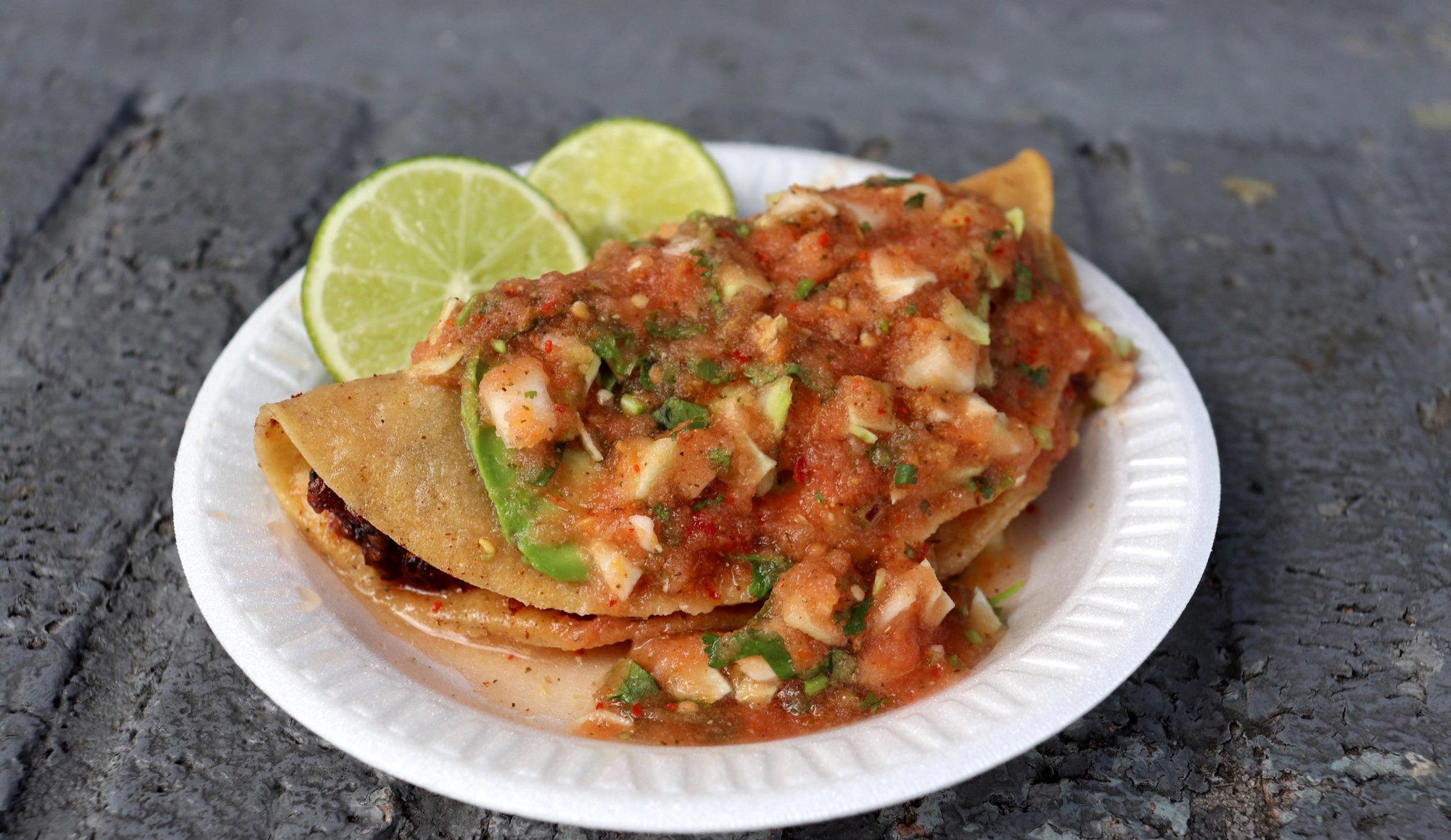
What separates Yunomi from the more generic end of the handroll category is a menu that introduces friction into what could easily be a smooth, crowd-pleasing format. Crispy Brussels sprouts with sweet soy, sesame seeds, and ichimi pepper sit alongside rock shrimp tempura tossed in spicy mayo seasoned with shichimi togarashi. These are not conservative bridge dishes designed to broaden the appeal of Japanese food for a non-Japanese audience. They are assertively seasoned, textured plates that use Japanese spice vocabulary with confidence.
The Yunomi special handroll makes the clearest statement about what the kitchen is after. Spicy albacore, shrimp tempura, crunchy onions, and truffle soy in one roll is a construction that would strike a purist as excessive, but that is precisely the point. This is not a menu making claims to tradition. It is a menu making claims to flavour, and the distinction matters for how you approach the experience. Compared to the restrained Japanese technique on display at Bar Sawa or the kaiseki precision of Hayato, Yunomi is working from a different brief entirely, one where intensity and satisfaction per bite take precedence over subtlety.
It places Yunomi in the same recognition framework as restaurants like 715, while operating at a completely different price and formality level than Michelin-starred peers in other cities, such as Myojaku or Azabu Kadowaki in Tokyo.
Where Yunomi Sits in the Broader Los Angeles Japanese Scene
Los Angeles has one of the most stratified Japanese dining ecosystems outside Japan itself. The top tier, anchored by multi-Michelin-starred omakase counters and kaiseki rooms, operates on allocation and months-long waiting lists. Below that sits a dense middle market of ramen shops, izakayas, conveyor-belt sushi, and casual Japanese-American hybrids. Yunomi occupies a narrow band between those tiers: it has Michelin recognition and a counter format that implies intention, but it prices and operates like a neighbourhood spot. That positioning is hard to sustain in Los Angeles, where rents on corridors like East 3rd Street are rising in lockstep with the neighbourhood's profile.
The sustained energy at the counter, described in the Michelin citation as consistently lively, suggests the format is holding. For context, the broader Downtown Arts District dining scene has produced several durable independents alongside higher-profile arrivals, and the density of options on East 3rd Street means that foot traffic tends to reward spots that can hold their own on a second and third visit rather than those built purely on novelty.
Planning Your Visit
Yunomi Handroll is located at 806 East 3rd Street, Suite 100, in the Arts District, Downtown Los Angeles. The $$ price range makes it accessible for a weeknight or pre-show meal without the planning overhead of the city's reservation-heavy omakase rooms.
| Venue | Cuisine | Price | Booking | Recognition |
|---|---|---|---|---|
| Yunomi Handroll | Japanese / Handroll | $$ | Walk-in / counter | Michelin Plate 2025 |
| Hayato | Japanese / Kaiseki | $$$$ | Reservation required, advance planning | Michelin Star |
| n/naka | Japanese / Kaiseki | $$$$ | Reservation required, months ahead | Michelin Star |
| Bar Sawa | Japanese / Bar | $$$ | Reservation recommended | Michelin recognition |
For broader Los Angeles planning, see our full Los Angeles restaurants guide, our full Los Angeles bars guide, our full Los Angeles hotels guide, our full Los Angeles wineries guide, and our full Los Angeles experiences guide. For comparable counter dining in other cities, Lazy Bear in San Francisco and Le Bernardin in New York City operate in entirely different registers but illustrate how counter and tasting formats vary across the American dining market. Alinea in Chicago, The French Laundry in Napa, Single Thread Farm in Healdsburg, and Emeril's in New Orleans provide further points of reference for the range of Michelin-recognised dining across the United States.
Frequently asked questions
Where is Yunomi Handroll located?
Yunomi Handroll is located at 806 E 3rd St #100, Los Angeles, CA 90013, Los Angeles.
What's Yunomi Handroll known for in terms of accolades?
Yunomi Handroll has received recognition including: Michelin Plate (2025); Chef David Movsisian's Yunomi Handroll is located on a stretch of East 3rd Street that has become a hotbed of terrific restaurants and nightlife, and this cool, inviting spot is certainly keeping up with its neighbors….
What dish is Yunomi Handroll famous for?
The Yunomi special handroll is the signature: spicy albacore, shrimp tempura, crunchy onions, and truffle soy rolled together. The menu also draws attention for rock shrimp tempura tossed in shichimi togarashi-seasoned spicy mayo and crispy Brussels sprouts with sweet soy and Ichimi pepper — combinations that push the handroll format further than most bars in the category.
How much does it cost to eat at Yunomi Handroll?
Pricing at Yunomi Handroll is listed as $$.
What's the best way to book Yunomi Handroll?
Yunomi Handroll is located at 806 East 3rd Street, Suite 100, in Downtown Los Angeles's Arts District.
What's Yunomi Handroll best at?
Yunomi holds a Michelin Plate (2025) and operates in the $$ price range, which is notable given the calibre of its East 3rd Street neighbours. Its strength is a counter-centred format that prioritises textural contrast and seasoning precision — Brussels sprouts with Ichimi pepper alongside handrolls built around truffle soy — rather than defaulting to safe, crowd-neutral combinations.
Cuisine and Credentials
| Venue | Cuisine | Price | Awards | Notes |
|---|---|---|---|---|
| Yunomi HandrollThis venue — the venue you are viewing | Japanese Handroll Bar | $30–50 | Michelin Plate | Not listed |
| Kato | Modern Taiwanese Fine Dining | $300–500 | 2 Michelin Stars · World's 50 Best #49 | New Taiwanese, Asian |
| Hayato | Traditional Japanese Kaiseki | $300–500 | 2 Michelin Stars · La Liste Top Restaurants | Japanese |
| Vespertine | Avant-Garde Tasting Menu | $200–300 | 2 Michelin Stars · La Liste Top Restaurants | Progressive, Contemporary |
| Camphor | Modern French with Southeast Asian influences | $150–200 | Michelin Plate · World Best Burgers World's 101 Best Burgers #15 | French-Asian, French |
| Gwen | Contemporary American Steakhouse | $50–100 | Michelin Plate · Wine Spectator Best of Award of Excellence | New American, Steakhouse |
Recognition history
Dated appearances from independent guides and award organizations, with the underlying list record or original source where available.
Michelin Plate
Michelin · 2026 Michelin Plate
Full recognition history (3 entries)
Michelin Plate
Michelin
Michelin Plate
Michelin
Continue exploring
More in Los Angeles
Restaurants in Los Angeles
All restaurants in Los Angeles →
Bars in Los Angeles
All bars in Los Angeles →
Hotels in Los Angeles
All hotels in Los Angeles →
Wineries in Los Angeles
All wineries in Los Angeles →
Details
- Modern
- Trendy
- Intimate
- Casual Hangout
- After Work
- Open Kitchen
- Chefs Counter
- Sake Program
- Counter Dining
- A La Carte
- Sake
- Loose Leaf Tea
- Pescatarian Friendly
Current opening hours
- Monday
- 12–9:30 PM
- Tuesday
- 12–9:30 PM
- Wednesday
- 12–9:30 PM
- Thursday
- 12–9:30 PM
- Friday
- 12–10 PM
- Saturday
- 12–10 PM
- Sunday
- 12–9:30 PM
Hours can change for holidays and private events. Last verified .
Sleek, modern, moody and dark with pared-down design; bar counter is the heartbeat with efficient staff movement; well-lit with contemporary aesthetic.