
Michelin Plate
Our verdict
Yuè sits on the 13th floor of Times Square in Causeway Bay, holding a Michelin Plate in both 2024 and 2025 for its Cantonese cooking at mid-range prices. The restaurant occupies a practical middle ground in Hong Kong's dense dining hierarchy: serious recognition without the full-starred price premium. A reliable address for classic Cantonese at a fraction of what the harbourfront flagships charge.

Pearl is the En Primeur Club membership app, where members save venues, book tables and use the concierge.
The menu
What to order
- Deep-Fried Crispy Chicken with Scallions
- Crab Roe Fried Rice
- Shrimp Dumplings
Causeway Bay's Cantonese Middle Ground
Times Square Causeway Bay is one of the more vertically ambitious retail-dining towers in Hong Kong, stacking restaurants across multiple floors above one of the city's densest transit intersections. By the time you reach the 13th floor, the street noise below has been absorbed into the building's air-conditioning hum, and the register shifts from pavement-level chaos to something more considered. Yuè occupies Shop 1301 on that floor, and its position inside the mall is, in a sense, a reasonable map of where it sits in Cantonese dining overall: above the casual Cantonese rice shops by several floors, well short of the harbour-view flagships that define the genre's upper ceiling.
That middle position is where a significant and underappreciated tier of Hong Kong Cantonese cooking operates. Below the three-starred rooms at Lung King Heen and the one-starred grandeur of Lai Ching Heen or T'ang Court, there is a tier of Michelin Plate-recognised restaurants that handle classical technique at price points most visitors can actually sustain across a week of eating. Yuè sits in that bracket, holding a Michelin Plate recognition in both 2024 and 2025 at a $$ price range.
What the Michelin Plate Signals Here
The Michelin Plate is the Guide's marker for restaurants that cook well but have not reached star territory. In cities with thinner coverage it can feel like a consolation. In Hong Kong, where the inspector density is among the highest anywhere in Asia, a Plate in consecutive years carries more weight. The city's Michelin listings are genuinely contested, and the Cantonese category in particular runs deep, from street-level roast shops through to multi-starred dining rooms. Holding a Plate across two consecutive editions in that environment indicates consistent technical execution rather than a single good season.
For context on what the starred tier looks like in this same cuisine category: Forum represents the kind of decades-deep, single-focus approach to Cantonese that accumulates multi-star recognition. Rùn operates at a different register again, carrying contemporary Cantonese ambitions that attract their own Michelin attention. Yuè is not in competition with either, but it draws from the same tradition and benefits from the same pool of Hong Kong diners who treat Cantonese not as occasion dining but as regular practice.
The Arc of a Cantonese Meal
Classical Cantonese multi-course structure has a logic that distinguishes it from Japanese omakase or French tasting menus, even though all three share the idea of a sequence. Where omakase tends toward single-ingredient focus and French tasting menus toward sauce-and-season elaboration, Cantonese sequencing is built around textural and temperature contrast across a wider spread of proteins, with congee or fried rice arriving as a palate reset before the sweet finish. The meal at this tier of Cantonese dining in Hong Kong typically moves through cold appetisers, then roasted meats, then seafood preparations, then braised or clay-pot dishes, then a starch course, then something light and sweet to close.
At a $$ price range in the Hong Kong context, the ingredient tier will be calibrated accordingly. Whole fish at premium grades, abalone, or aged Jinhua ham belong to the starred rooms. What mid-range Cantonese kitchens trade in instead is precision on technique: the cleanliness of a broth, the snap of correctly wok-fried greens, the glaze on roasted meats. These are markers that separate serious kitchens from perfunctory ones at any price point, and they are harder to fake than ingredient prestige.
Comparing Yuè to Cantonese addresses elsewhere in the region puts its local context into relief. Jade Dragon in Macau operates at the starred end of the same tradition, as does Chef Tam's Seasons. Further afield, Summer Pavilion in Singapore carries Cantonese cooking into a hotel dining format with significant investment. The Cantonese restaurants now operating in mainland China's main cities, including 102 House and Imperial Treasure Fine Chinese Cuisine in Shanghai, and Le Palais in Taipei, all draw from Hong Kong's template but operate without the source city's ingredient access or inspector scrutiny. In that regional hierarchy, Yuè's position as a twice-recognized Plate restaurant in Hong Kong itself carries more weight than equivalent recognition would in a market with less competition.
For Shanghai-based Cantonese options at a similar price tier, Canton 8 (Huangpu) and Bao Li Xuan offer points of comparison, though the ingredient sourcing conditions and dining culture differ considerably from Hong Kong's Causeway Bay.
Causeway Bay as a Dining Address
Causeway Bay's reputation as a dining district rests on density rather than any single food identity. The area contains one of the highest restaurant-per-block concentrations in Hong Kong, covering Japanese, Korean, Shanghainese, and Cantonese across an enormous price spread. The mall format that Yuè occupies is normal rather than exceptional here. Times Square has housed serious dining alongside retail for years, and the 13th floor positioning is standard for this kind of Cantonese room: refined enough to signal formality, accessible enough to draw repeat local business rather than exclusively tourist or occasion traffic.
This has practical implications. A Cantonese restaurant in a Causeway Bay mall is drawing from the neighbourhood's resident and working population as its regular base, not only from hotel guests or pre-theatre diners. That audience applies consistent pressure on quality in a way that purely destination-driven restaurants may not experience.
Planning Your Visit
For more on eating and drinking in Hong Kong, see our full Hong Kong restaurants guide, our full Hong Kong bars guide, our full Hong Kong hotels guide, our full Hong Kong wineries guide, and our full Hong Kong experiences guide.
Address: Shop 1301, 13/F, Times Square, 1 Matheson St, Causeway Bay, Hong Kong. Budget: Mid-range ($$); one of the more accessible price points among Michelin-recognised Cantonese rooms in Hong Kong. Getting there: Causeway Bay MTR station is the primary access point, with multiple exits feeding directly into the Times Square complex.
Frequently asked questions
What should I eat at Yuè (Causeway Bay)?
The kitchen holds Michelin Plate recognition in both 2024 and 2025, which in the context of Hong Kong's Cantonese category indicates consistent execution of classical technique. The cuisine type is Cantonese, the tradition that the city treats as its own native form. At a $$ price range, the meal sequence will follow classical Cantonese structure: roasted meats and cold plates early, seafood and braised dishes through the middle, a starch course, and a light sweet finish. For reference on how the starred rooms in this same tradition are structured, see Lung King Heen or Lai Ching Heen.
How far ahead should I plan for Yuè (Causeway Bay)?
At a mid-range price point in a Causeway Bay mall location, Yuè is not operating at the multi-week advance booking pressure of the city's three-starred rooms. That said, Hong Kong Cantonese restaurants at this recognition level fill quickly at weekend lunch, when the yum cha format drives the highest foot traffic of the week across the city. If you are visiting during major public holidays or over Chinese New Year, when Cantonese dining citywide is at peak demand, booking several days ahead is a practical precaution.
Comparable Spots
Comparable options at a glance, pulled from our tracked venues.
| Venue | Cuisine | Price | Awards | Notes |
|---|---|---|---|---|
| Yuè (Causeway Bay)This venue (the venue you are viewing) | Modern Cantonese | $50–100 | Michelin Plate | Not listed |
| 8 1/2 Otto e Mezzo Bombana (Hong Kong) | 3 Michelin-Star Italian Fine Dining | $200–300 | 3 Michelin Stars · World's 50 Best #94 | Italian |
| Ta Vie | Modern French-Japanese Fine Dining | $300–500 | 3 Michelin Stars · World's 50 Best #68 | Japanese - French, Innovative |
| Caprice | Contemporary French Fine Dining | $200–300 | 3 Michelin Stars · World's 50 Best #35 | French, French Contemporary |
| Feuille | Modern Vegetable-Forward French | $200–300 | 1 Michelin Star · World's 50 Best #93 | French Contemporary |
| Neighborhood | Modern French with Asian Influences | $50–100 | 1 Michelin Star · World's 50 Best #24 | International, European Contemporary |
Recognition history
Dated appearances from independent guides and award organizations, with the underlying list record or original source where available.
Michelin Plate
Michelin
Full recognition history (3 entries)
Michelin Plate
Michelin
Michelin Plate
Michelin
Continue exploring
More in Hong Kong
Restaurants in Hong Kong
All restaurants in Hong Kong →
Bars in Hong Kong
All bars in Hong Kong →
Hotels in Hong Kong
All hotels in Hong Kong →
Wineries in Hong Kong
All wineries in Hong Kong →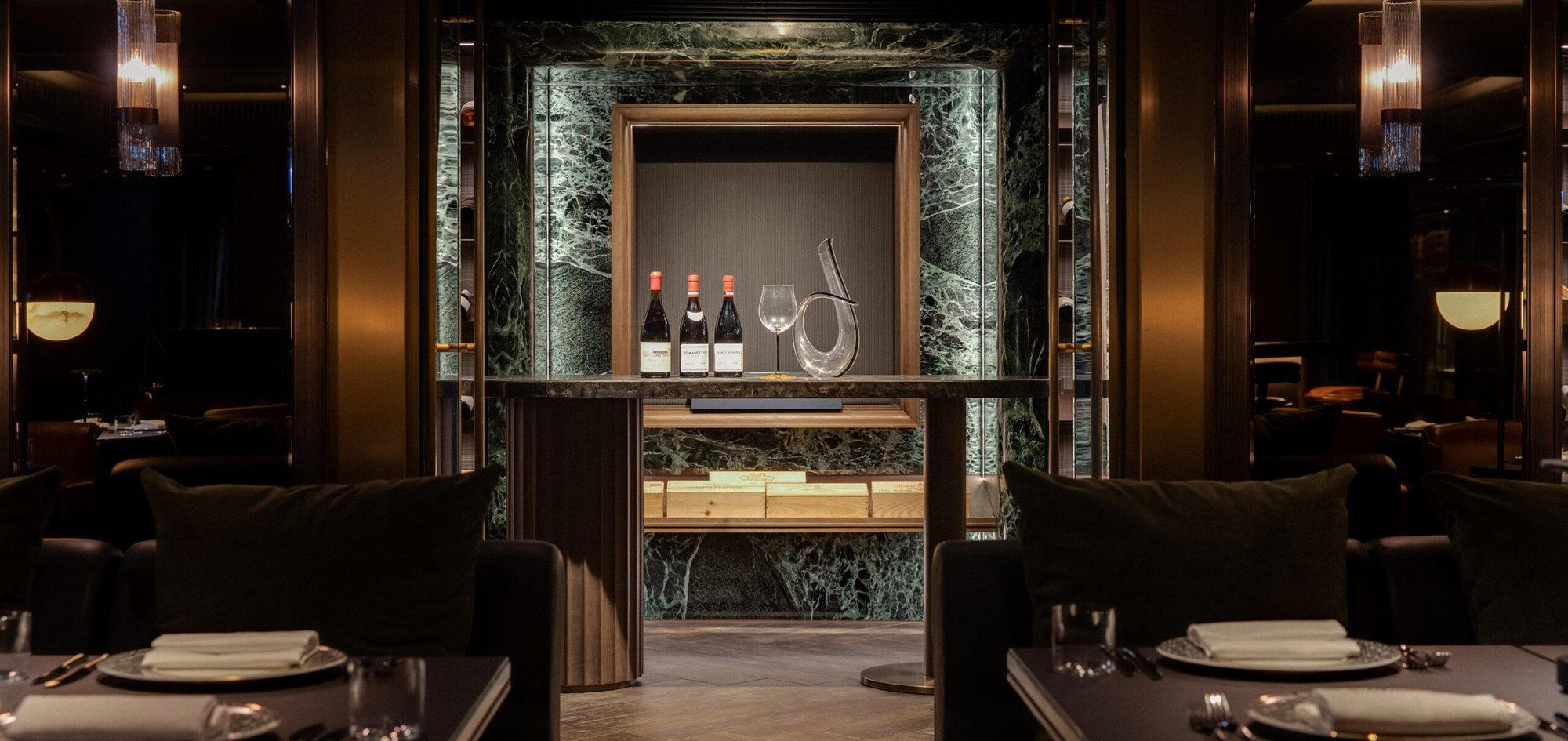
Details
- Elegant
- Sophisticated
- Modern
- Quiet
- Family
- Business Dinner
- Group Dining
- Special Occasion
- Hotel Restaurant
- Local Sourcing
- A La Carte
- Vegetarian Friendly
- Allergy Accommodating
Current opening hours
- Monday
- 11:30 AM–4 PM, 5:30–11 PM
- Tuesday
- 11:30 AM–4 PM, 5:30–11 PM
- Wednesday
- 11:30 AM–4 PM, 5:30–11 PM
- Thursday
- 11:30 AM–4 PM, 5:30–11 PM
- Friday
- 11:30 AM–4 PM, 5:30–11 PM
- Saturday
- 11:30 AM–4 PM, 5:30–11 PM
- Sunday
- 11:30 AM–4 PM, 5:30–11 PM
Hours can change for holidays and private events. Hours as of .
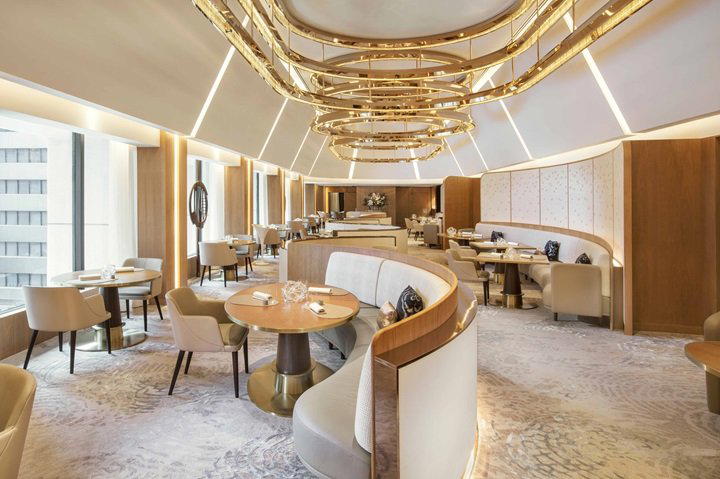
Elegant and serene with thoughtfully arranged tables providing privacy and comfort; subtle lighting enhances sophistication; spacious and well-ventilated with modern decor balanced by Chinese design elements.