
Tabelog 100 #18
Our verdict
Yappari India gives Tokyo’s curry conversation a useful counterpoint to high-ticket tasting rooms: a small Otsuka address with Indian curry, repeat Tabelog 100 recognition, and pricing that keeps it in regular-dinner territory. The draw is not spectacle, but the confidence of a room built around return visits, spice fluency, and a narrow, practical format.

Pearl is the En Primeur Club membership app, where members save venues, book tables and use the concierge.
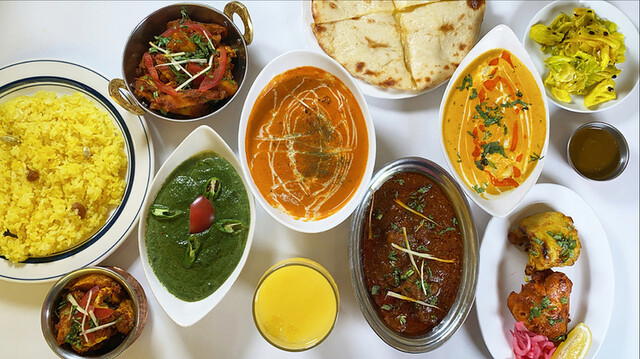
The menu
What to order
- Butter chicken curry
- Mutton curry
- Shrimp curry
- Vegetable curry
- Cheese naan
Tokyo’s everyday dining map works best when it feels built for dinner rather than performance: station foot traffic, compact rooms, modest signs, and regulars who know exactly how long they can linger before the next train. Here, curry plays a different role from the banquet-room version in larger commercial districts. It is weekday food, family food, after-work food, and repeatable because the format is clear and the value legible.
Yappari India fits that role. The setting is modest, the cooking sits in the Indian, Indian curry, and curry lane, and its recognition exceeds the room’s scale: a 2024 Tabelog Hyakumeiten listing, with a posted score of 3.69. In Tokyo, that matters. Curry is not minor here; the city has serious subcultures around Japanese curry, South Asian cooking, spice-curry shops, and hybrid rooms between lunch counter and destination restaurant.
Tokyo curry culture rewards repeatable pleasure over ceremony
The useful way to read this restaurant is through its regulars. Tokyo has many restaurants built for occasion dining, but curry houses earn loyalty through repetition: dependable lunch, low-friction dinner, a room that works for one person or a small group. Yappari India’s price band supports that rhythm, with lunch at JPY 1,000 to JPY 1,999 and dinner at JPY 2,000 to JPY 2,999. It sits far from the luxury tasting-menu economy and close to the category where neighbourhood trust is built plate by plate.
That price position also separates it from Tokyo peers that may function more as planned evening meals. Otsuka Miyaho, Soten Minamiguchi ten, Sichuan Ryori Kae, and Yoshoku GOTOO all sit on the wider city map in different ways. The point is not cuisine equivalence; it shows how compact Tokyo supports everyday restaurants and more deliberate destination meals. Curry’s advantage is frequency. It can be revisited without turning dinner into a financial event.
For readers mapping Tokyo by appetite rather than district prestige, the lesson is simple. Serious dining is not confined to the city’s most famous restaurant zones. Tokyo has enough station energy to support focused rooms and enough neighbourhood texture to keep them from becoming anonymous. The repeat customer is the organising principle: office workers, families, curry followers, and diners who would rather eat well twice than perform one grand evening.
The kitchen's credibility sits in spice experience, not theatre
The kitchen is best discussed through what is publicly supported rather than through personality. Yappari India is identified in listings as Indian, Indian curry, and curry, which is enough to frame the restaurant without overloading it with mythology. Tokyo’s Indian restaurant scene is not one lane, and the strongest small rooms often distinguish themselves through consistency, pacing, and spice experience rather than ceremony.
The menu is best understood by category rather than one named dish. Public listings define the restaurant around Indian, Indian curry, and curry, and the Tabelog Hyakumeiten recognition reinforces that identity in 2024. The signal is that the restaurant is judged as part of Tokyo’s broader conversation around approachable, repeatable Asian dining rather than only as a quick curry stop.
Regulars often create an unwritten menu in places like this, not through secret dishes, but through habits: lunch when the decision must be quick, dinner when the evening calls for something focused, and repeat visits when the room itself is not the whole point. The structure supports that pattern through its accessible budget and clear category. Those details decide whether a curry restaurant becomes part of someone’s week rather than a single map entry.
How it fits into a Tokyo dining itinerary
Yappari India is better treated as a precise Tokyo meal than a detour requiring a whole evening. The smarter itinerary pairs it with a wider Tokyo day, especially for travellers who already know the headline restaurant districts. In a Tokyo plan, it balances reservation-heavy dining with something more flexible and local, useful between bigger meals or as a reset after several nights of counters and formal service.
The broader Tokyo list sharpens that choice. Diners looking at curry across the city can compare the category with other Tokyo dining rooms without turning the exercise into a checklist. Those planning a mixed Tokyo run can place it alongside other meals depending on whether the day calls for grilling, casual dining, seafood, or café culture. For the wider city map, use the full Tokyo restaurant, hotel, bar, winery, and experience guides as planning context rather than as a substitute for the restaurant’s own everyday appeal.
Beyond Tokyo, the useful lens is not “Indian restaurant versus Indian restaurant,” but how compact specialist rooms behave across cities. Different dining formats serve different urges: regional stop, design-led room, café pause, local dining, or a more focused evening meal. Yappari India’s place is clear: a small Tokyo curry address with enough recognition for destination diners and enough everyday logic to explain why locals return.
Comparison Snapshot
Comparable venues at the same tier.
| Venue | Cuisine | Price | Awards | Notes |
|---|---|---|---|---|
| Yappari IndiaThis venue (the venue you are viewing) | Indian Curry House | $10–20 | Tabelog 100 #18 | Not listed |
| Bangera's Kitchen | Mangalorean South Indian coastal cuisine | $30–50 | Tabelog 100 #48 | Chiyoda |
| DELHI Ginza ten | Indian & Pakistani curry house | $10–20 | Tabelog 100 #16 | Chūō |
| spice kitchen moona | Spice-driven Indian & Asian curry bar | $20–30 | Tabelog 100 #11 | Setagaya |
| Tandoor Bar Kamal 2 Go | Creative Indian curry & tandoor bar | $20–30 | Tabelog 100 #32 | Kōtō |
| Sansar Koiwa ten | Traditional Nepalese Home-Style Cuisine | $10–20 | Tabelog 100 #86 | Edogawa |
Recognition history
Dated appearances from independent guides and award organizations, with the underlying list record or original source where available.
Tabelog 100 #18 · No. 18
Tabelog · Tabelog 100 - Asian cuisine / Ethnic cuisine - TOKYO - 2024
Continue exploring
More in Tokyo
Restaurants in Tokyo
All restaurants in Tokyo →


Bars in Tokyo
All bars in Tokyo →





Details
- Cozy
- Classic
- Casual Hangout
- Group Dining
- Solo
- Standalone
- A La Carte
- Set Menu
- Vegetarian Friendly
Current opening hours
- Monday
- Closed
- Tuesday
- 11 AM–2:30 PM, 5–10 PM
- Wednesday
- 11 AM–2:30 PM, 5–10 PM
- Thursday
- 11 AM–2:30 PM, 5–10 PM
- Friday
- 11 AM–2:30 PM, 5–10 PM
- Saturday
- 11 AM–2:30 PM, 5–10 PM
- Sunday
- 11 AM–2:30 PM, 5–10 PM
Hours can change for holidays and private events. Hours as of .
A modest, neighborhood-style Indian restaurant with a warm, approachable, and no-frills atmosphere focused on authentic curry service.