
Yamada Ya Nishinippori ten sits in Tokyo’s serious yakiniku tier: a Nippori address with Tabelog 100 Yakiniku Tokyo selection in 2025 and prior Tabelog 100 recognition in 2023 and 2024. The draw is not chef theatre but coordination: grill format, offal fluency, Korean influence, shochu and wine, and a room set up for family and friend gatherings rather than hushed ceremony.
Pearl is the En Primeur Club membership app — saves, bookings, and concierge access live there. Same editors, same standards.
- Address
- Japan, 〒116-0013 Tokyo, Arakawa City, 荒川区Nishinippori, 2 Chome−25−1 Station Garden Tower
- Phone
- +81 3-3806-8929
- Website
- tabelog.com
 Saves & bookings on Pearl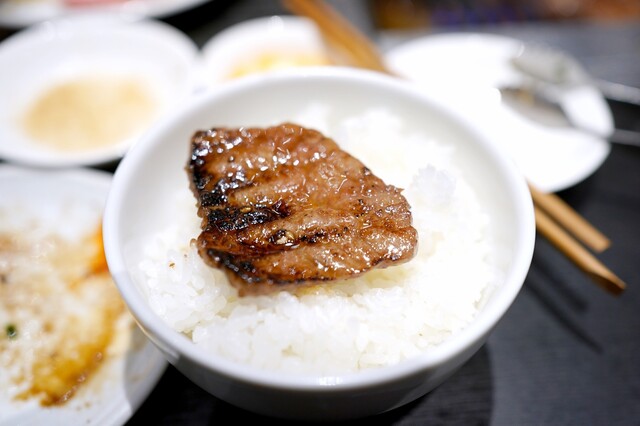
Approach Nippori Station and the mood changes quickly: commuter Tokyo gives way to small restaurants, old-town snack routes, and the practical appetite of Arakawa. Yakiniku suits this part of the city because it is social by design. The table is the kitchen, timing is shared, and the meal depends on coordination between the people cutting, seasoning, serving, drinking, and grilling. Yamada Ya Nishinippori ten belongs to that tradition rather than the performance-heavy end of Tokyo dining.
Tokyo’s yakiniku scene splits into several lanes. There are luxury beef counters built around provenance, casual chains built around speed, and specialist rooms where offal, Korean-derived dishes, smoke control, and drink pacing matter as much as branded wagyu. This address sits in the specialist bracket. Its Tabelog 100 Yakiniku Tokyo 2025 selection, with earlier Tabelog 100 recognition in 2023 and 2024, places it among restaurants that regular diners rate for repeatable craft rather than novelty.
Yakiniku here is a team sport, not a chef monologue
The strongest yakiniku rooms make the front-of-house role visible without turning it theatrical. Cuts arrive in a sequence that needs judgment from both sides of the table: thinner pieces ask for speed, fattier ones punish distraction, and offal rewards diners who understand texture as much as tenderness. The staff’s job is to keep that rhythm legible. At this level, service is less about speeches and more about timing plates, reading drink pace, and keeping a grill meal from sliding into chaos.
The listed categories, yakiniku, tripe, and Korean, say a great deal about the restaurant’s position. Tripe is not a decorative add-on in Tokyo’s better yakiniku culture; it is a test of sourcing, trimming, and confidence. Korean influence matters too, not as fusion branding but as part of the postwar dining lineage that shaped Japanese barbecue: grilled beef, banchan-adjacent accompaniments, rice, soup, and alcohol all belong to the grammar. The drink list points toward shochu and wine, a pairing range that makes sense for smoke, fat, and seasoning.
That puts the restaurant in a different conversation from lighter daytime specialists around the same city. Teuchi Udon Akau, French Gashi Patissier Chocolatier Inamura Shozo, Habutae Dango Honten, Himitsu Do, and Meishan speak to Tokyo’s breadth at lower or different price points; they are useful reminders that the city’s dining quality is not concentrated in formal rooms. Yakiniku at this tier asks for a separate calculation: diners are paying for ingredient handling, meat variety, ventilation, service timing, and the pleasure of controlling part of the meal themselves.
Nippori gives the meal a more local cadence
Nippori is not Ginza, Aoyama, or Roppongi, and that distinction matters. The area’s appeal is its everyday density: rail access, old shopping streets, fabric-town traffic, temple-side walks, and restaurants that serve locals as much as destination diners. A yakiniku room here can be serious without asking guests to behave as if dinner were a ceremony. Family-friendly notes and children welcome status reinforce that point. The experience is structured, but not brittle.
The room details support that reading. Tatami seating changes the tempo of a grilled meat meal, making it feel closer to a shared table than a Western-style steakhouse. Private rooms are not part of the offer, so the atmosphere belongs to the room rather than enclosed VIP dining. Non-smoking status is also material for yakiniku, where the grill already defines the air; in Tokyo, that detail can affect whether the meal feels comfortable across a longer sitting.
Price is another marker. Dinner listed at JPY 6,000 to JPY 7,999 and lunch at JPY 5,000 to JPY 5,999 place it above casual chain yakiniku but below the rarefied beef temples built around trophy cuts and extended tasting formats. That middle-high band is often where Tokyo’s yakiniku culture feels most convincing: enough budget for careful sourcing and a fuller sequence, without turning the meal into a luxury-car brochure.
How to read the recognition, and where it fits in a Tokyo itinerary
Tabelog’s Hyakumeiten selections matter in Japan because they tend to reflect category-specific enthusiasm rather than a single fine-dining template. For yakiniku, the award is especially useful: the genre is crowded, highly local, and difficult for visitors to judge from the street. A 2025 Tabelog 100 Yakiniku Tokyo selection signals that this is not merely a convenient station-area grill room. It has enough category weight to justify a planned detour within northern and eastern Tokyo.
The better way to use the restaurant is as part of a Tokyo itinerary that respects neighbourhood logic. Pairing Nippori with Yanaka, Ueno, or the fabric district makes more sense than forcing it between luxury shopping and hotel-bar appointments. For broader city planning, use Our full Tokyo restaurants guide, then balance the evening with Our full Tokyo bars guide, Our full Tokyo hotels guide, Our full Tokyo experiences guide, and Our full Tokyo wineries guide.
Within EP Club’s wider Japan and dining map, it also helps to see the contrast across formats. Tokyo’s range runs from. 鮪と炭火焼き うお炭 秋葉原店 and 12/10 Shinjuku ten to 124. KAGURAZAKA (Yakitori), 2D Cafe, and 3 Chome no Curry Ya San. Beyond the capital, compare beef formats with -Grilled beef Sukiyaki- KAMAKURA TANUKIAN 鎌倉 たぬき庵 in Kamakura, or switch registers entirely with.cafe in Osaka.know in Kumamoto, (Shoku) Vietnam in Kawasaki, [Curry Senmon Ten] Maruyama Kyoju. in Sapporo, and [ki:] in Kyoto. For a transpacific sake and comfort-food counterpoint, see Jōdo Saké Bar in Los Angeles and Onigiri Time in Pasadena.
The editorial call is simple: choose Yamada Ya Nishinippori ten when the night calls for shared grilling, offal literacy, and a Tokyo neighbourhood rhythm rather than a tasting-menu procession. It is a restaurant for diners who enjoy participating in the meal, not just receiving it.
Side-by-Side Snapshot
Comparable venues in the metro at similar price points.
| Venue | Cuisine | Price | Notes |
|---|---|---|---|
| Yamada Ya Nishinippori tenThis venue — the venue you are viewing | Yakiniku (Japanese BBQ) & Offal Grill | $$$ | Not listed |
| Iruka Tokyo Roppongi | Modern Ramen | $$$ | Roppongi |
| Yakiniku Dan Asakusa | Japanese Yakiniku (BBQ) | $$$ | Taitō |
| 龍圓 | japanese | $$$ | Taitō |
| Myojinshita Kandagawa Honten | Historic Traditional Unagi (Grilled Eel) Restaurant | $$$ | Chiyoda |
| 鷹匠 寿 | japanese | $$$ | Taitō |
Recognition history
Dated appearances from independent guides and award organizations, with the underlying list record or original source where available.
Tabelog 100 #86 · No. 86
Tabelog · Tabelog 100 - Yakiniku - TOKYO - 2025







At a Glance
- Lively
- Cozy
- Energetic
- Group Dining
- Family
- Casual Hangout
- After Work
- Celebration
- Standalone
- Beer Program
- Byob
Current opening hours
- Monday
- Closed
- Tuesday
- 5:30–10 PM
- Wednesday
- 5:30–10 PM
- Thursday
- 5:30–10 PM
- Friday
- 5:30–10 PM
- Saturday
- 5–10 PM
- Sunday
- 12–4 PM, 5–9 PM
Hours can change for holidays and private events. Last verified .