
Yakiniku Miyoshi puts Yonezawa beef into a local, grill-led format rather than a formal wagyu tasting script. Its Tabelog 100 Yakiniku EAST 2025 selection gives it a clear quality signal in a city where beef is the main dining language, with tripe and curry extending the meal beyond standard premium cuts.
Pearl is the En Primeur Club membership app — saves, bookings, and concierge access live there. Same editors, same standards.
- Address
- 3 Chome-2-23 Ekimae, Yonezawa, Yamagata 992-0027, Japan
- Phone
- +81 238-21-0274
- Website
- www5.omn.ne.jp
- Directions
- Get directions
 Saves & bookings on Pearl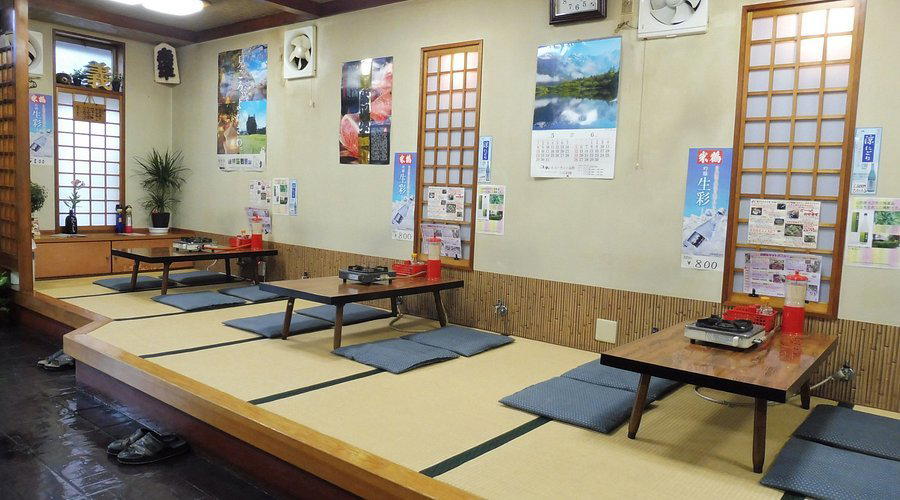
Near Yonezawa Station, the city’s beef culture feels less like a luxury import than a local habit: smoke, tabletop heat, groups arriving with a shared appetite, and a room built for meat rather than ceremony. Yonezawa sits inside Japan’s wider wagyu map, but its appeal is specific. This is not Kobe-style brand theatre or Tokyo counter minimalism; it is a regional cattle town where yakiniku, sukiyaki, steak, offal and curry all become ways of reading the same ingredient.
That context matters for Yakiniku Miyoshi. Its selection for Tabelog 100 Yakiniku EAST 2025 places it among the stronger grill specialists in eastern Japan, but the more useful point is local: in Yonezawa, beef restaurants compete not only on marbling and provenance, but on format. A traveller choosing between Yonezawa Gyutei Good, Yonezawa Gyuu Yakiniku Sakano, Yonezawa Gyuu Tokiwa, Torikatsu Gyuniku Ten and Meatopia is choosing a style of beef meal as much as a restaurant.
Yonezawa beef through the yakiniku lens
Yakiniku is often treated as casual Japanese barbecue, but in wagyu regions it becomes a sharper test of sourcing and portion judgment. The grill exposes fat structure quickly; over-heavy cuts tire the table, while leaner or organ-led orders can make the meal more compelling. Yakiniku Miyoshi’s listed categories, yakiniku, tripe and curry, suggest a broader local beef vocabulary than a simple premium-sirloin procession. That matters in Yamagata, where nose-to-tail comfort and regional beef pride sit close together.
The format also gives visitors control. Sukiyaki and steak houses tend to direct the pace; yakiniku lets the table decide how quickly to move from richer cuts into offal, vegetables, rice and the final savoury course. The venue’s own positioning around Yonezawa beef cooked in a cast-iron pot with cabbage points to a local style in which fat is not treated as spectacle alone. It becomes seasoning for the vegetables and the rest of the meal.
The curry element is not incidental. Across Japan, beef curry often works as a second register for a restaurant’s stock, trimmings and braised meat, especially in houses built around wagyu. Here, curry gives the meal a Yonezawa-specific finish: less formal than a kaiseki closing course, more satisfying than simply stopping after the final grilled cut. For travellers eating one serious beef dinner in the city, that breadth is the draw.
A regional beef room rather than a Tokyo luxury script
Room’s scale changes the experience. With 60 seats, private rooms in several sizes, counter seating and tatami options, this is not the tiny, reservation-only counter model that dominates luxury dining discourse in Tokyo. It belongs to a different tradition: the regional specialist designed for families, friends and groups who know why they came. That format is valuable in Yonezawa, where beef is a civic calling card rather than a rarefied subculture.
Tabelog 100 Yakiniku EAST 2025 selection is the clearest external trust signal, joined by a Tabelog score of 3.63. Those numbers should be read with cultural literacy. In Japan, especially outside the largest cities, a mid-3 Tabelog score can still indicate a serious, locally supported restaurant; the platform’s scoring culture is compressed, and regional specialists rarely behave like media-facing destination dining rooms. The award selection therefore carries more practical weight than the raw score alone.
Compared with nearby beef options, the value proposition sits in the middle of Yonezawa’s serious dining range. Meatopia occupies a lower price bracket, Yonezawa Gyuu Tokiwa reaches higher, and Yonezawa Gyutei Good sits close on budget. The decision is therefore not simply cost. It is whether the night should be grill-led, group-friendly and built around Yonezawa beef in several forms.
How to place it in a Yonezawa itinerary
Yonezawa rewards travellers who treat dinner as part of the destination rather than an afterthought between train segments. The city’s beef restaurants are practical anchors for a short stay, especially for visitors combining food with onsen towns, mountain routes or a wider Tohoku itinerary. For broader planning, Our full Yonezawa restaurants guide gives the clearest dining frame, while Our full Yonezawa hotels guide, Our full Yonezawa bars guide, Our full Yonezawa wineries guide and Our full Yonezawa experiences guide help place the meal inside a full city plan.
As a national comparison point, beef-focused cooking in Japan runs from regional sukiyaki houses such as -Grilled beef Sukiyaki- KAMAKURA TANUKIAN 鎌倉 たぬき庵 in Kamakura to urban charcoal formats such as. 鮪と炭火焼き うお炭 秋葉原店 in Tokyo. Yonezawa’s appeal is narrower and more grounded: a cattle-region meal where the local brand has daily meaning. Travellers building a wider Japan food route might pair this kind of beef dinner with less meat-centric stops such as.cafe in Osaka.know in Kumamoto, (Shoku) Vietnam in Kawasaki, [Curry Senmon Ten] Maruyama Kyoju. in Sapporo, or, outside Japan, sake and rice-led references such as Jōdo Saké Bar in Los Angeles and Onigiri Time in Pasadena.
The editorial case is clear: Yakiniku Miyoshi is for travellers who want Yonezawa beef in a vernacular setting, not a polished luxury performance. The award recognition gives confidence, the category mix gives range, and the format suits a table that wants to eat across cuts rather than admire a single steak. In a city defined by cattle, that is often the more revealing meal.
Price and Positioning
Side-by-side context: comparable cuisine and price.
| Venue | Price | Notes |
|---|---|---|
| Yakiniku Miyoshi | $$$ | Ekimae, Traditional Yonezawa Beef Yakiniku |
| Yonezawa Gyuu Tokiwa | $$$ | Chuo, Traditional Yonezawa Beef Restaurant |
| Torikatsu Gyuniku Ten | $$ | Yonezawa, Japanese Beef Hotpot / Sukiyaki |
| Yonezawa Gyuu Yakiniku Sakano | $$ | Chuo, Yonezawa, Yonezawa beef yakiniku, sukiyaki & steak |
| Yonezawa Gyutei Good | $$ | / Shimohanazawa, Yonezawa beef steak, sukiyaki & shabu-shabu |
| Meatopia | $$ | Chuo, Yonezawa, Yonezawa beef steak, sukiyaki & shabu‑shabu |
Recognition history
Dated appearances from independent guides and award organizations, with the underlying list record or original source where available.
Tabelog 100 #24 · No. 24
Tabelog · Tabelog 100 - Yakiniku - EAST - 2025
Continue exploring
More in Yonezawa
Restaurants in Yonezawa
Browse all →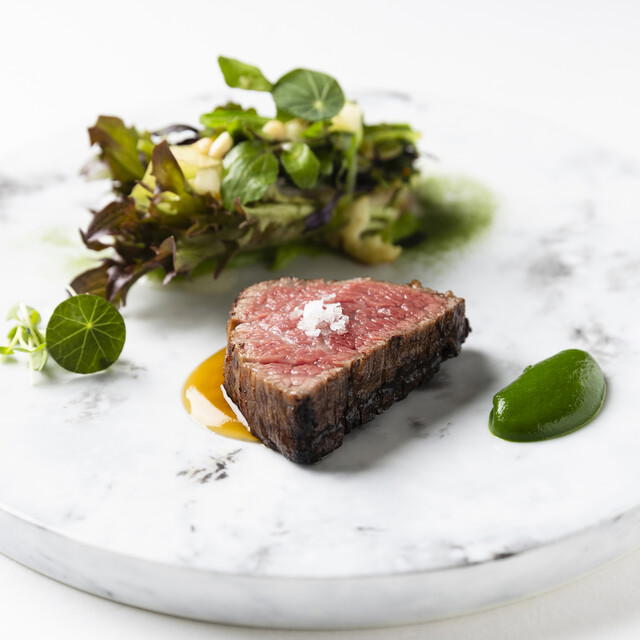

At a Glance
- Cozy
- Classic
- Lively
- Group Dining
- Family
- Casual Hangout
- Solo
- Celebration
- After Work
- Standalone
- Sake Program
- Local Sourcing
Current opening hours
- Monday
- 5–9 PM
- Tuesday
- 5–9 PM
- Wednesday
- 5–9 PM
- Thursday
- 5–9 PM
- Friday
- 5–9 PM
- Saturday
- 5–9 PM
- Sunday
- Closed
Hours can change for holidays and private events. Last verified .