
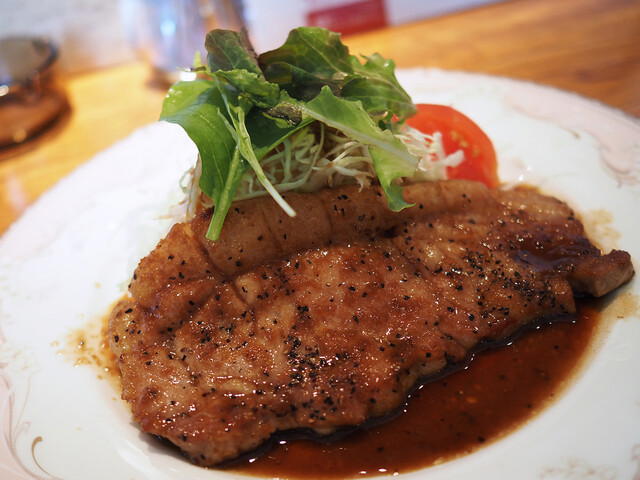
Meatopia belongs to Yonezawa’s beef-driven dining culture rather than the luxury steakhouse lane, pairing cafeteria ease with sukiyaki and shabu shabu formats. Its Tabelog 100 Diner selections in 2024 and 2026 give it a clear quality signal in a city where beef restaurants range from casual lunch rooms to higher-spend yakiniku counters.
Pearl is the En Primeur Club membership app — saves, bookings, and concierge access live there. Same editors, same standards.
- Address
- Japan, 〒992-0045 Yamagata, Yonezawa, Central, 1 Chome−11−9 2F
- Phone
- +81 238-21-0377
- Website
- y-ougiya.com
- Directions
- Get directions
 Saves & bookings on Pearl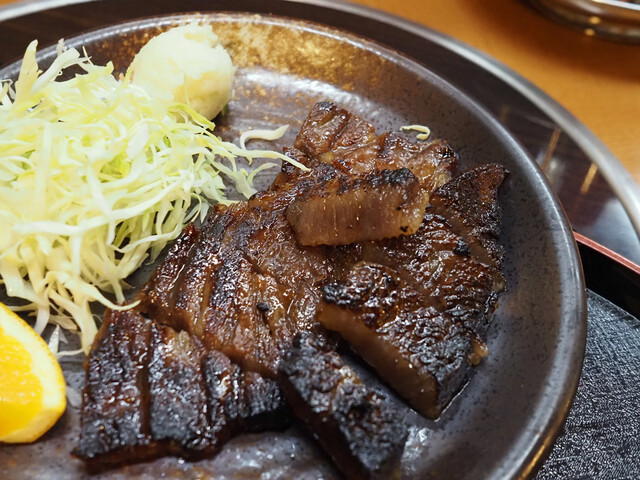
Central Yonezawa is not a stage-set food district; it is a working city where beef culture appears in practical rooms as much as in polished dining rooms. The local rhythm matters. Yonezawa beef has long been tied to the city’s identity, but the eating formats around it split into several lanes: yakiniku for grill-focused tables, sukiyaki for sweet-soy depth, shabu shabu for lighter broth-based cooking, and shokudo-style dining for a more everyday register. Meatopia sits in that last category while keeping sukiyaki and shabu shabu in view, which is why it reads as part of the city’s food culture rather than a detached luxury address.
That positioning is useful for travelers. In beef cities, the temptation is to chase the highest tariff as a proxy for quality. Yonezawa complicates that instinct. The city’s more formal beef rooms can command a far higher spend, while casual dining rooms often carry the local argument more directly: accessible portions, family tables, counter seating, and a format that lets the ingredient remain central without turning dinner into ceremony. A Tabelog 100 Diner selection in 2024 and again in 2026 gives Meatopia a public recognition marker within Japan’s broader shokudo and diner field, not just within Yamagata tourism.
Yonezawa beef culture, without the steakhouse performance
Yonezawa’s beef reputation belongs to the same national conversation as Japan’s other named wagyu regions, but its dining culture is less monolithic than outsiders expect. The local scene moves between celebratory beef houses and plainspoken rooms built for repeat meals. Sukiyaki and shabu shabu are important because they show how beef quality can be expressed through cooking method rather than spectacle: sliced meat, heat control, sauce or broth, rice, and a table format that makes the meal social.
In that context, a cafeteria classification is not a downgrade. It signals a different promise. The room is not asking diners to decode a chef’s tasting-menu thesis; it is part of a Japanese tradition in which reliable set-meal logic, family use, and regional ingredients can coexist. The presence of counter seating and tatami space points to that mixed audience. Private rooms and a non-smoking policy add further practical comfort, while the listed drinks, sake, shochu, and wine, keep the meal anchored in familiar Japanese dining patterns rather than cocktail-led theatrics.
The comparison set in Yonezawa clarifies the decision. Yonezawa Gyuu Tokiwa occupies a higher-spend beef lane, while Torikatsu Gyuniku Ten also prices above the casual bracket. Yakiniku Miyoshi, Yonezawa Gyutei Good, and Yonezawa Gyuu Yakiniku Sakano pull the conversation toward grill and beef-house formats. Meatopia’s appeal is different: it offers a lower-key shokudo route into the same civic obsession with beef, with the recognition to justify choosing it over a purely convenient stop.
The shokudo format explains the value
Japan’s shokudo tradition rewards clarity. These are places where the meal is meant to function: lunch, dinner, family use, friends, a counter for solo diners, and a menu structure that does not require long explanation. In regional cities, that format can be more revealing than destination dining because it shows how a prized ingredient is folded into ordinary life. Yonezawa beef is not only a souvenir-box idea or a splurge course; it is also something eaten in rooms where the service model remains direct and the spending level is kept in check.
That is the editorial reason to pay attention here. A score of 3.65 on Tabelog and inclusion in the 2026 Tabelog 100 Diner list place the restaurant inside a national selection for the diner category, a field where polish is not the sole criterion. The recognition is meaningful precisely because the category is broad and competitive: it measures public regard for restaurants that often work through repetition, comfort, and local usefulness rather than luxury signifiers.
The format also shapes expectations. Diners should think in terms of cafeteria, sukiyaki, and shabu shabu rather than tasting-menu progression. No chef personality needs to carry the story. The city’s beef culture carries it. For travelers building a Yonezawa itinerary, this makes the restaurant a sensible counterweight to higher-priced beef specialists: one meal can be formal, another can be rooted in a room designed for regular use.
How to place it in a Yonezawa itinerary
The practical value is strongest for travelers who want Yonezawa beef without committing every meal to a premium beef-house format. Pairing this stop with a more grill-focused address gives a clearer reading of the city: shabu shabu or sukiyaki on one side, yakiniku or steakhouse-style beef on the other. For broader planning, Our full Yonezawa restaurants guide is the natural starting point, while Our full Yonezawa hotels guide, Our full Yonezawa bars guide, Our full Yonezawa wineries guide, and Our full Yonezawa experiences guide help frame the stay beyond dinner.
Travelers comparing Japanese casual and regional formats elsewhere can usefully contrast it with -Grilled beef Sukiyaki- KAMAKURA TANUKIAN 鎌倉 たぬき庵 in Kamakura. 鮪と炭火焼き うお炭 秋葉原店 in Tokyo.cafe in Osaka.know in Kumamoto, (Shoku) Vietnam in Kawasaki, [Curry Senmon Ten] Maruyama Kyoju. in Sapporo, Jōdo Saké Bar in Los Angeles, and Onigiri Time in Pasadena. The point is not sameness; it is seeing how casual formats carry regional identity with less friction than formal dining often allows.
The strongest case for Meatopia is cultural rather than decorative. It gives Yonezawa beef a shokudo frame, supported by repeat Tabelog 100 Diner recognition and a format that works for ordinary dining as well as travel research. In a city where beef can easily become an expensive checklist item, that restraint is the argument.
Booking and Cost Snapshot
Nearby venues at a similar price tier for orientation.
| Venue | Price | Notes |
|---|---|---|
| Meatopia | $$ | Chuo, Yonezawa, Yonezawa beef steak, sukiyaki & shabu‑shabu |
| Yonezawa Gyuu Tokiwa | $$$ | Chuo, Traditional Yonezawa Beef Restaurant |
| Yakiniku Miyoshi | $$$ | Ekimae, Traditional Yonezawa Beef Yakiniku |
| Yonezawa Gyuu Yakiniku Sakano | $$ | Chuo, Yonezawa, Yonezawa beef yakiniku, sukiyaki & steak |
| Torikatsu Gyuniku Ten | $$ | Yonezawa, Japanese Beef Hotpot / Sukiyaki |
| Yonezawa Gyutei Good | $$ | / Shimohanazawa, Yonezawa beef steak, sukiyaki & shabu-shabu |
Recognition history
Dated appearances from independent guides and award organizations, with the underlying list record or original source where available.
Tabelog 100 #97 · No. 97
Tabelog · Tabelog 100 - Diner - 2026
Continue exploring
More in Yonezawa
Restaurants in Yonezawa
Browse all →

At a Glance
- Cozy
- Classic
- Family
- Group Dining
- Casual Hangout
- Solo
- Special Occasion
- Standalone
- Sake Program
- Local Sourcing
Current opening hours
- Monday
- Closed
- Tuesday
- Closed
- Wednesday
- 11 AM–1:50 PM, 5–8:20 PM
- Thursday
- 11 AM–1:50 PM, 5–8:20 PM
- Friday
- 11 AM–1:50 PM, 5–8:20 PM
- Saturday
- 11 AM–1:50 PM, 5–8:20 PM
- Sunday
- Closed
Hours can change for holidays and private events. Last verified .