Xieng Thong Noodle Soup
Our verdict
In Luang Prabang's morning street-food culture, Xieng Thong Noodle Soup occupies the kind of position that no glossy tasting menu can replicate: a neighbourhood bowl built on local produce, river-town rhythms, and a recipe logic that has evolved slowly rather than been designed. For visitors who want to understand how the city actually eats, this is where that conversation starts.

Pearl is the En Primeur Club membership app, where members save venues, book tables and use the concierge.
The menu
What to order
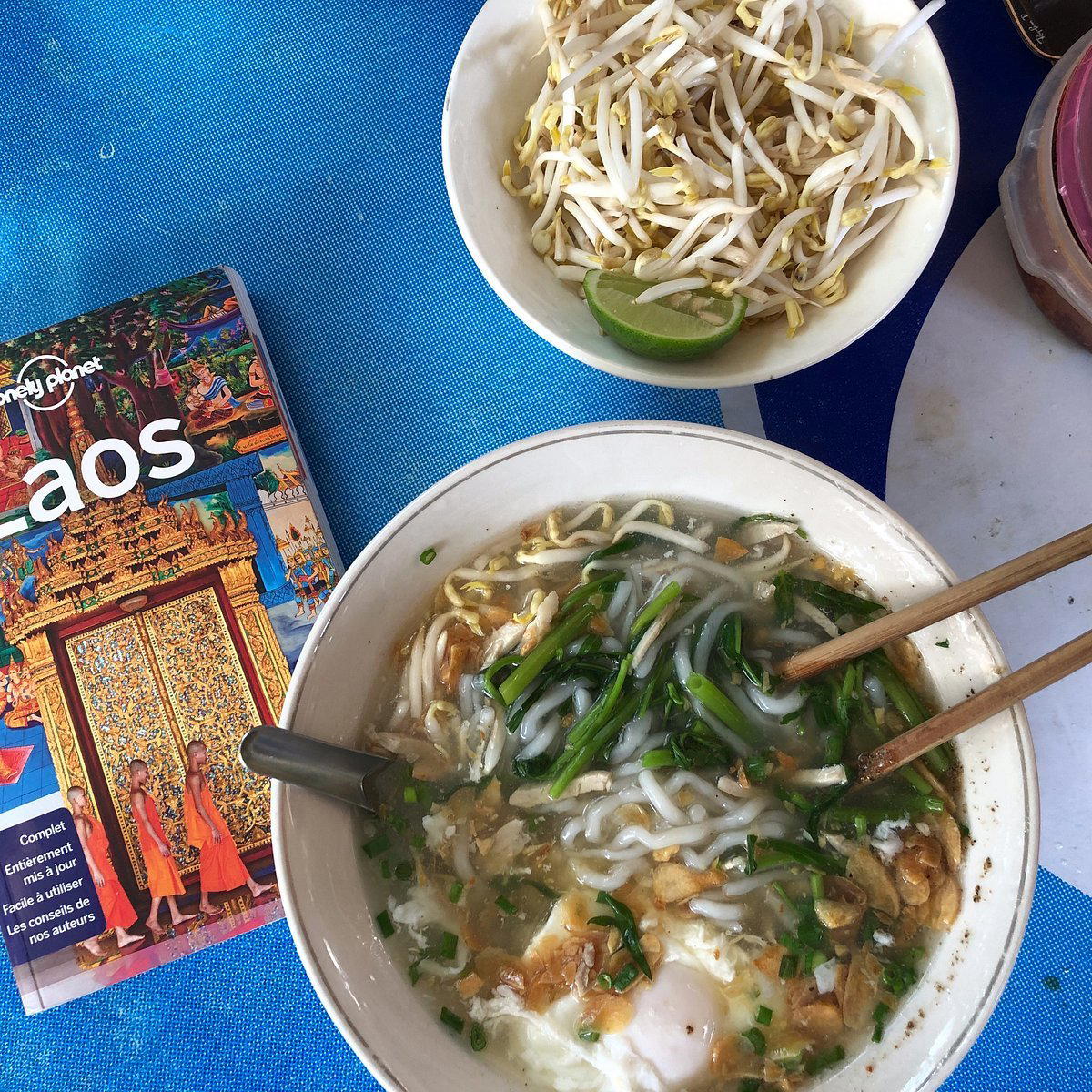
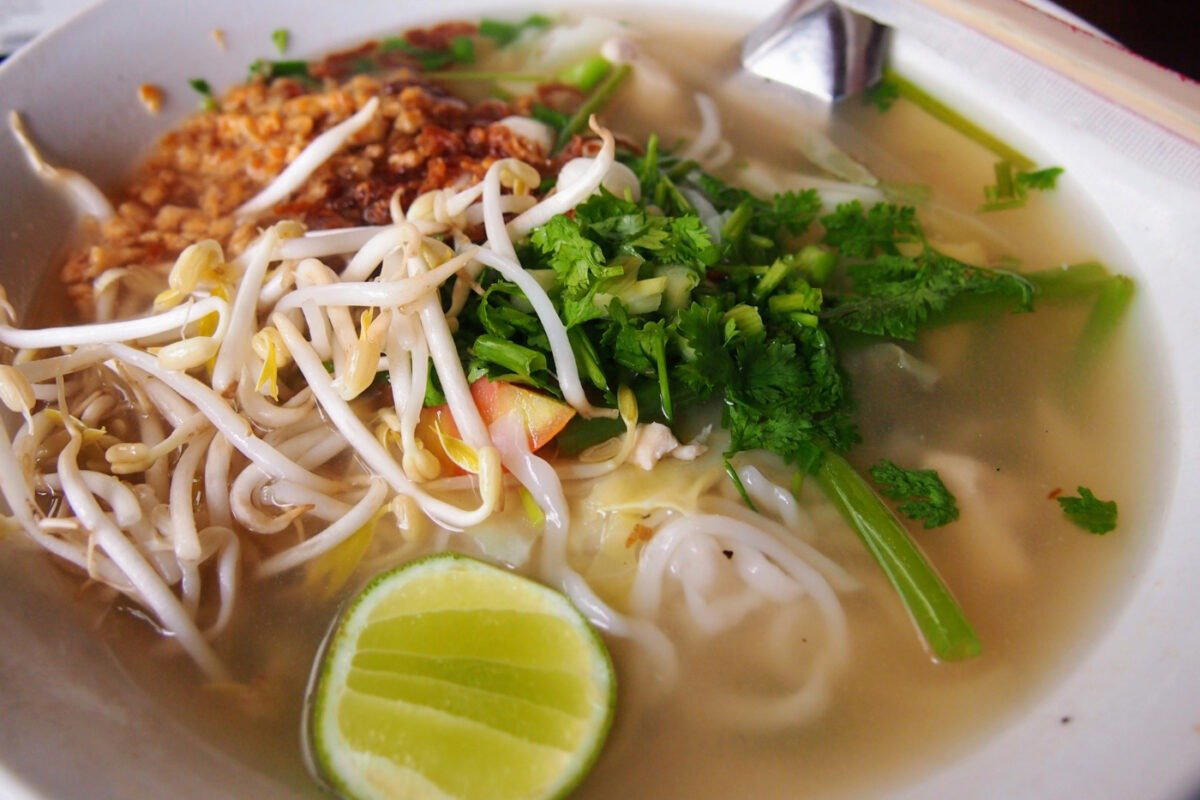
- Khao Piak Sen with Pork and Egg
Where Luang Prabang Eats Before the Tourists Wake Up
Morning in Luang Prabang follows a sequence that has changed little in decades. Monks file along Sisavangvong Road in saffron robes for the tak bat alms ceremony as the Mekong catches the first pale light. By the time that procession ends, the city's noodle shops are already deep into their first service. The smell of simmering pork bone broth, bruised lemongrass, and charred shallots drifts from open-fronted kitchens before 7 a.m. Xieng Thong Noodle Soup belongs to this early-morning register, a format built not around theatre or destination dining, but around the daily feeding logic of a river town.
Named for the Xieng Thong quarter, the oldest district in Luang Prabang and home to the sixteenth-century Wat Xieng Thong temple complex, this spot operates within a neighbourhood that frames the cultural identity of the entire city. That address matters because it signals a particular kind of clientele and a particular rhythm: locals who work nearby, monks from adjacent temples, and the smaller subset of travellers who have learned that the most instructive meals in any Lao city tend to cost less than a dollar and happen before 9 a.m.
The Sourcing Logic Behind a Bowl of Lao Noodles
To understand what makes a Lao noodle shop worth seeking out, it helps to understand what goes into the broth. In Luang Prabang, proximity to the Mekong and the Nam Khan river has historically shaped what ends up in the pot. Pork, river fish, and water buffalo are the dominant proteins. Fresh herbs, including saw-tooth coriander, Vietnamese mint, and Thai basil, come from the Phosi morning market, which operates daily a short walk from the old town and functions as the city's primary produce exchange. The quality of a bowl here is inseparable from the quality of what vendors at that market bring in each morning.
Lao noodle soups, particularly khao piak sen (a thick fresh rice noodle in pork or chicken broth) and khao soi (Luang Prabang's specific version, a tomato-forward broth with rice noodles distinct from its Thai namesake), depend on this daily sourcing in a way that fixed-menu restaurants often do not. The broth cannot be made ahead by more than a few hours without losing the aromatic leading notes that distinguish a serious preparation from a perfunctory one. At the handful of noodle shops in the Xieng Thong area that operate this way, the pot that starts at 4 a.m. is the same pot that finishes when the soup runs out, sometimes before noon. That scarcity is not a marketing device; it is the consequence of cooking to a perishable schedule rather than a commercial one.
This sourcing-driven constraint separates the old-town noodle shops from the more tourist-facing operations along the main strip, where stock can be extended, diluted, and adjusted throughout the day. The discipline required to cook this way, and the neighbourhood networks required to source consistently at this scale, are not easily replicated by newer entrants to the market. For comparison, the noodle category in Luang Prabang splits fairly cleanly between shops with generational supply relationships and those without. The former tend to be earlier, smaller, and less visible to visitors arriving mid-morning.
Reading the Bowl: What Lao Noodle Tradition Actually Signals
A Lao noodle bowl communicates through accumulation rather than composition. The diner constructs the final flavour by adding condiments from a table tray: fish sauce, dried chilli flakes, sugar, and vinegar-soaked chillies. This is not a restaurant affectation imported from elsewhere; it reflects a genuine tradition of individual calibration that predates the tourist economy by generations. The base broth is typically unseasoned enough to accommodate a wide range of palates, and the herb plate arrives separately, allowing each diner to build their own aromatic register.
In the context of the wider region, Luang Prabang's noodle culture occupies a distinct position. Unlike the more assertively spiced broths of northern Thailand or the herb-heavy preparations of Vietnamese pho, Lao soups tend toward subtlety in the base and intensity in the condiments. The heat is optional, the umami is structural. Travellers who have spent time eating their way through Cafe Ango in Vientiane or the formal Lao menu at 3 Nagas Hotel Luang Prabang will recognise familiar flavour logic presented here in its most economical form. Those who want to map the full spectrum of Luang Prabang's food culture, from temple-quarter noodle shops through to the city's more developed restaurant scene, can use our full Luang Prabang restaurants guide as a reference.
For context on how this kind of ingredient-first, process-led cooking compares to fine dining traditions elsewhere, venues like Arpège in Paris and Aponiente in El Puerto de Santa María have built international reputations on the same foundational principle: that sourcing determines outcome, and that the honest expression of a local ingredient is more interesting than technical intervention for its own sake. The scale and price points are incomparable, but the underlying logic is not.
Practical Considerations for Visiting
Noodle shops of this type in Luang Prabang operate on a compressed morning schedule. Arriving before 9 a.m. gives the leading chance of eating at peak broth quality and avoiding the late-morning crowd that coincides with the end of organised tour itineraries. No booking infrastructure exists for venues in this category; walk-in is the only format. Payment is cash-based, in Lao kip, and the price point for a bowl sits well below the threshold of any formal restaurant in the city. For dietary considerations, visitors with specific allergies should be prepared for limited communication options given the informal service environment; the broth base typically contains pork and fish derivatives, which are structural rather than optional.
The Xieng Thong quarter is navigable on foot from most guesthouses in the old town, and the area rewards early-morning walking in its own right, particularly in the dry season between November and February when humidity is low and the temple grounds are at their most photogenic. Comparable noodle shop experiences in the same district include Thongmoun Aunt Noodle Soup, which operates in a similar format and provides a useful point of comparison for visitors eating across multiple mornings.
Frequently asked questions
How does Xieng Thong Noodle Soup fit into Luang Prabang's broader morning food culture?
The shop sits within a well-established local tradition of post-tak bat breakfast eating in Luang Prabang, where the morning almsgiving ceremony shapes the rhythm of the entire neighbourhood before 8 a.m. Noodle shops like this one serve as the functional continuation of that sequence for residents. In a city where food tourism increasingly orbits cooking classes and hotel buffets, a functioning local noodle counter on a compressed morning schedule represents a different register of engagement with Lao food culture.
What's the best thing to order at Xieng Thong Noodle Soup?
In Lao noodle shops of this type, the broth-based noodle bowl is the central reason to visit. Luang Prabang's proximity to the Mekong shapes the sourcing logic, so the stock tends to reflect what is locally available that morning. Order early when the broth is at full depth, and expect to build flavour at the table using the standard condiment array.
Do they take walk-ins at Xieng Thong Noodle Soup?
Noodle shops in Luang Prabang of this category operate as walk-in counters by convention. No reservation infrastructure exists in this format. Arriving before 9 a.m. gives you the strongest chance of a seat during peak service, which aligns with the post-tak bat rhythm of the neighbourhood.
What's the defining dish or idea at Xieng Thong Noodle Soup?
The defining idea is the Lao noodle bowl as a participatory format: the kitchen provides the broth and noodles, and the diner assembles the final flavour using table condiments. This is not a passive experience. The bowl communicates through accumulation rather than a fixed composition, which places this style apart from Vietnamese pho or Thai noodle formats where the bowl arrives complete.
What if I have allergies at Xieng Thong Noodle Soup?
Lao noodle broths in Luang Prabang are typically built on pork or mixed meat stocks, with fish sauce and fermented condiments common on the table. Language barriers are a practical factor at local-format shops in Luang Prabang.
Is Xieng Thong Noodle Soup overpriced or worth every penny?
Local noodle shops in Luang Prabang sit at the low end of the city's price range, typically costing a fraction of what tourist-facing restaurants charge. You are paying for a functional, time-specific meal that locals rely on daily.
What's the best season to visit Xieng Thong Noodle Soup?
Luang Prabang's dry season, running roughly November through March, is when visiting is most comfortable and tourist traffic peaks in the city. The noodle shop operates on a morning-only schedule regardless of season, so the visit window is narrow either way. During the wet season (May to October), mornings are often cooler and less crowded, which suits the format well.
Comparison Snapshot
| Venue | Cuisine | Price |
|---|---|---|
| Xieng Thong Noodle SoupThis venue (the venue you are viewing) | Traditional Lao Khao Piak Sen Noodle Soup | $1–10 |
| 3 Nagas Hotel Luang Prabang | Traditional Lao Cuisine | $30–50 |
| L'Elephant Restaurant Français | French-Lao Fusion Bistro | $30–50 |
| Cafe Ango | Japanese Cafe | Not listed |
| Kimsatcat Korean Restaurant | Korean Restaurant | Not listed |
| Manda de Laos | Traditional Laotian Family Cuisine | Not listed |
Continue exploring
More in Luang Prabang
Restaurants in Luang Prabang
All restaurants in Luang Prabang →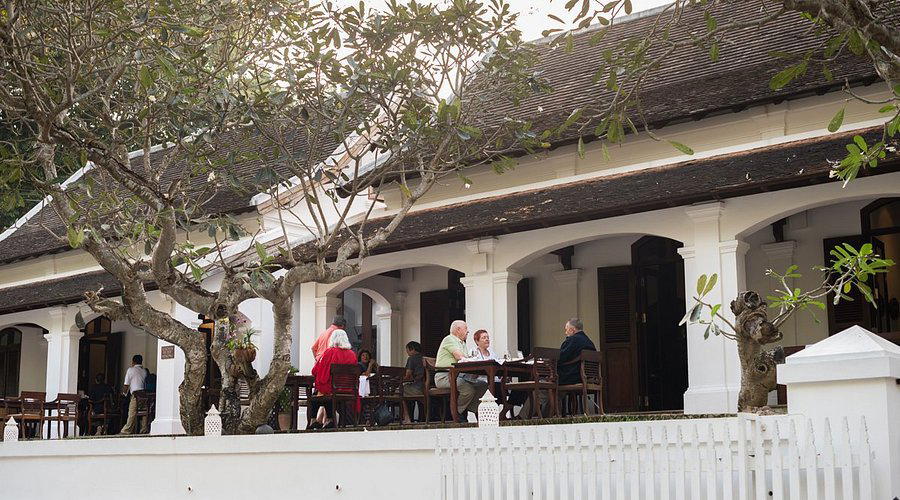
Details
- Rustic
- Casual Hangout
- Solo
- Standalone
- A La Carte
- Vegetarian Friendly
Casual, unassuming roadside noodle shop with simple seating and a local, no-frills atmosphere.