Set on Sakkaline Road in the heart of Luang Prabang's UNESCO-protected old quarter, 3 Nagas Hotel occupies a restored colonial-era compound where the architecture does as much interpretive work as the kitchen. The property sits within a dining scene shaped by Mekong river produce, highland herbs, and centuries of Lao court cooking — a context that gives even a casual meal here a degree of cultural weight that few hotel restaurants in Southeast Asia can match.
 Discover on Pearl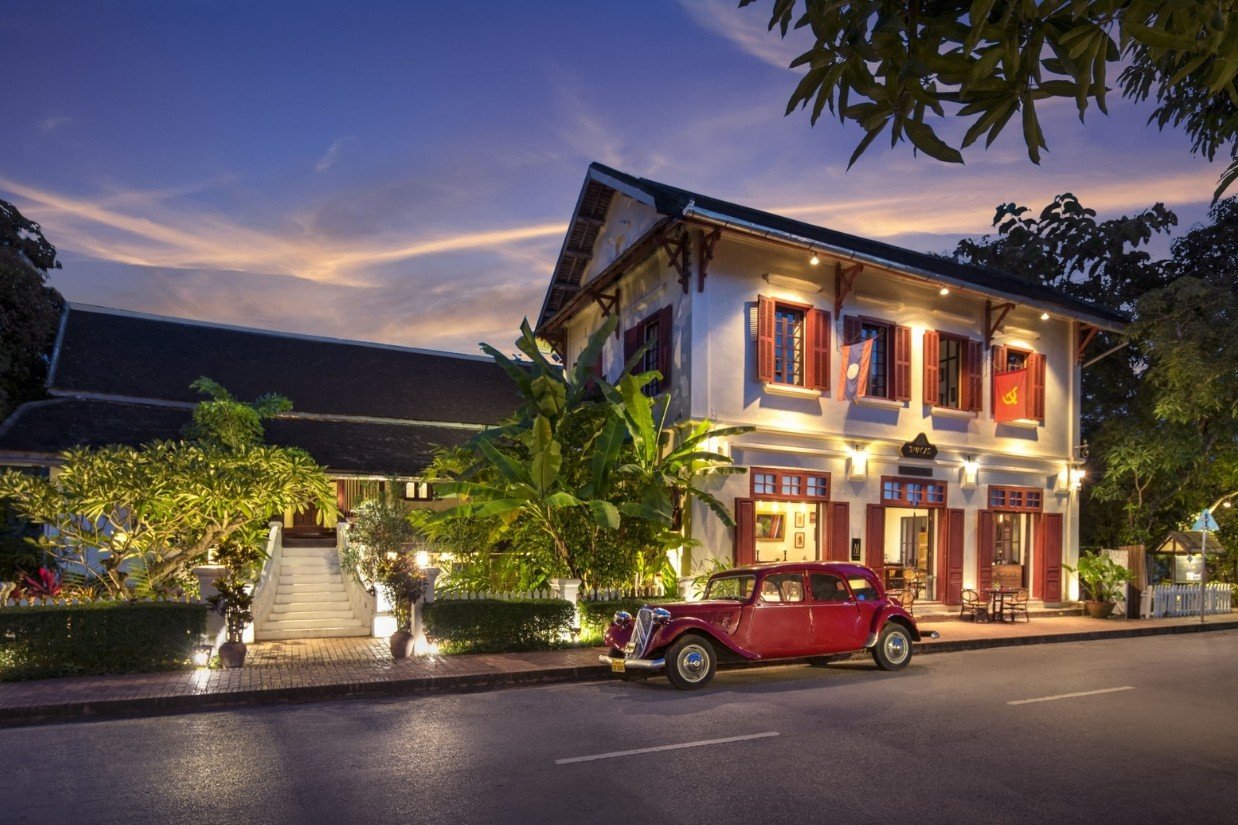
Sakkaline Road and the Architecture of a Lao Meal
Luang Prabang's Sakkaline Road runs parallel to the Mekong for much of its length, threading past saffron-robed monks on their alms rounds and teak-framed shophouses that have survived French colonial administration, wartime upheaval, and the quieter disruption of mass tourism. It is on this road that 3 Nagas Hotel sits, within a restored compound whose physical fabric — shuttered windows, pitched rooflines, shaded verandas — sets the interpretive frame before any food arrives. In a city where the built environment is itself a UNESCO-listed document, the setting is not decorative; it is argumentative, making a case for continuity between place, produce, and plate.
That argument is worth taking seriously. Luang Prabang's dining scene has developed along two parallel tracks over the past two decades: an internationalist current, represented by French-influenced kitchens like L'Elephant Restaurant Français, and a current oriented toward Lao culinary preservation, where the goal is to document and serve the rice-based, herb-forward cooking of the northern highlands before agricultural change and supply-chain homogenisation erase it. 3 Nagas occupies the second track, placing itself in a cohort of properties that treat Lao cuisine as primary subject rather than supporting colour.
The shortlist, unlocked.
Hard-to-book tables, cellar releases, and concierge-planned trips.
Get Exclusive Access →Where the Ingredients Come From , and Why That Matters
The ingredient question is the right one to ask in Luang Prabang, because the answer shapes everything downstream. The city sits at the confluence of the Mekong and Nam Khan rivers, within reach of highland villages that cultivate varieties of sticky rice, bitter greens, and wild herbs that do not travel well and rarely appear in lowland markets. River fish , caught rather than farmed, from a Mekong system that remains biologically diverse in this stretch , supply a different flavour profile than the aquaculture products that dominate menus in Vientiane or Bangkok.
Hotels and restaurants positioned to source directly from these supply chains, or to work with morning market networks that aggregate highland produce, access ingredients that represent a distinct regional specificity. For comparison, Tamarind has built a reputation in Luang Prabang explicitly around Lao cooking classes and direct market sourcing, while Manda de Laos uses its garden setting to anchor a similar localisation argument. 3 Nagas enters this conversation through its compound's physical rootedness and its positioning within the old quarter's cultural core, where proximity to the morning alms market and the Sakkaline street vendors creates a sourcing geography that urban-peripheral properties cannot replicate.
This matters because ingredient provenance in northern Laos is not a marketing category , it is a culinary fact with flavour consequences. Galangal grown in limestone-rich highland soil, padaek (fermented fish paste) produced by riverside households, and glutinous rice varieties cultivated in terraced paddies above the Nam Ou valley carry chemical profiles shaped by microclimate and traditional processing. A kitchen that reaches these supply chains is working with different raw material than one sourcing from regional wholesale distributors.
The Luang Prabang Dining Context
Understanding where 3 Nagas fits requires a brief map of how dining options distribute across the city. The old quarter supports a range of formats: street-side noodle counters like Xieng Thong Noodle Soup serving khao piak sen at a fraction of hotel restaurant prices; mid-register casual dining across the peninsula; and a handful of hotel-anchored dining rooms that serve an international visitor base. Secret Pizza and Kimsatcat Korean Restaurant represent the city's broader appetite for non-Lao formats , a reminder that Luang Prabang's dining scene, like those of most well-trafficked heritage cities, runs multiple registers simultaneously.
Within the hotel dining subcategory, properties on or near Sakkaline Road compete on heritage credentials and experiential coherence rather than on price or format novelty. The question a guest should ask is not whether a hotel restaurant is good by absolute standards , the relevant reference class for that kind of comparison would be kitchens like Le Bernardin in New York City or Amber in Hong Kong , but whether it offers something the surrounding street and casual dining scene cannot: a composed, ingredient-literate interpretation of northern Lao cooking within a setting that contextualises the food historically and spatially.
What the Colonial-Era Compound Does to a Meal
Restored colonial properties in Southeast Asia exist on a spectrum from theme-park reproduction to genuinely inhabited cultural continuity. The distinction matters because it affects whether the setting illuminates the food or simply decorates it. Luang Prabang's old quarter has maintained sufficient physical integrity , through a combination of UNESCO oversight since 1995 and Lao government preservation policy , that its heritage buildings carry documentary rather than merely aesthetic weight. A restored compound on Sakkaline Road is adjacent to active religious and civic life, not separated from it by a hotel perimeter fence.
That adjacency is the core experiential argument for properties like 3 Nagas. The morning alms-giving ceremony (tak bat) passes directly through the old quarter streets. Temple bells and chanting provide an acoustic backdrop that no interior design decision can manufacture. The compound's orientation toward this neighbourhood life , rather than inward toward a pool or atrium , creates a dining experience shaped as much by the city's rhythm as by the kitchen's output. For travellers arriving from high-production dining environments like Alinea in Chicago or Alain Ducasse at Louis XV in Monte Carlo, the register shift is total and deliberate.
Planning a Visit
Luang Prabang is most comfortably visited between November and February, when the dry season brings cooler temperatures and lower humidity to the Mekong valley. This period also aligns with the city's peak produce season, when highland markets supply the widest range of fresh vegetables and river fish. Sakkaline Road properties are walkable from the main peninsula attractions , Wat Xieng Thong is at the road's northern end , making 3 Nagas an efficient base for guests who want to move between cultural sites and dining without relying on tuk-tuks. For a broader orientation to where this property sits within Luang Prabang's dining options, our full Luang Prabang restaurants guide maps the full range of formats and price points across the city. Travellers extending their Laos itinerary south should note that Cafe Ango in Vientiane represents a comparable commitment to place-specific sourcing in the capital, making it a useful reference point for understanding how Lao culinary identity shifts between the northern highland context and the lowland Mekong plain.
Frequently Asked Questions
- What do people recommend at 3 Nagas Hotel Luang Prabang?
- Guests consistently point to the Lao-focused dining as the central draw , dishes grounded in northern highland ingredients and traditional preparation methods rather than pan-Asian hotel fare. The compound setting on Sakkaline Road, within the UNESCO old quarter, gives the food a context that amplifies its cultural specificity. For a comparable commitment to Lao cuisine at a dedicated restaurant format, Tamarind is the most frequently cited peer.
- Can I walk in to 3 Nagas Hotel Luang Prabang?
- Luang Prabang's old quarter properties generally see lighter lunch traffic than dinner, and walk-in availability at hotel restaurants is more common at midday than in the evening peak. That said, the city draws a significant volume of visitors year-round, and the November-to-February dry season tightens availability across all dining formats. Contacting the property directly before arriving , particularly for dinner during high season , is the practical approach, since Sakkaline Road's heritage hotels tend to have limited dining room capacity by design.
- What do critics highlight about 3 Nagas Hotel Luang Prabang?
- Editorial coverage of 3 Nagas consistently emphasises the coherence between the restored colonial setting and the Lao culinary focus , a pairing that positions the property within a small cohort of Southeast Asian hotels where architecture and cuisine operate as a single interpretive argument rather than separate amenities. The Sakkaline Road address, within the UNESCO-protected zone, is frequently cited as the property's most durable credential. Peer references in coverage tend to include Manda de Laos as a comparable exercise in setting-led Lao hospitality.
- How does 3 Nagas Hotel compare to other heritage properties for experiencing traditional Lao cuisine in Luang Prabang?
- Among old-quarter properties on or near Sakkaline Road, 3 Nagas occupies a position defined by the overlap of architectural heritage and cuisine rooted in northern Lao ingredients , a combination that distinguishes it from hotels where international menus are the default. The property's alignment with the Lao culinary preservation current in the city places it in a peer set alongside restaurants like Tamarind and Manda de Laos, both of which share the sourcing orientation and cultural emphasis, even if their formats differ from a hotel dining room. For travellers whose priority is eating Lao food in a setting that contextualises it historically, the UNESCO old quarter address is itself a meaningful filter.
Quick Comparison
A short peer set to help you calibrate price, style, and recognition.
| Venue | Cuisine | Price | Awards | Notes |
|---|---|---|---|---|
| 3 Nagas Hotel Luang Prabang | This venue | |||
| L'Elephant Restaurant Français | ||||
| Kimsatcat Korean Restaurant | ||||
| Manda de Laos | ||||
| Secret Pizza | ||||
| Tamarind |
Need a table?
Our members enjoy priority alerts and concierge-led booking support for the world's most difficult tables.
Get Exclusive AccessThe shortlist, unlocked.
Hard-to-book tables, cellar releases, and concierge-planned trips.
Get Exclusive Access →