Google: 4.8 · 242 reviews

Among Lübeck's fine dining options, Wullenwever holds the city's most visible Michelin accolade, operating from a 1585 patrician house in Beckergrube. Roy Petermann's classic cuisine with Mediterranean accents rotates on a three-week cycle, offered across three-to-five course set menus or a pre-bookable seven-course surprise format. The wine list skews European, with German labels at its core.
 Discover on Pearl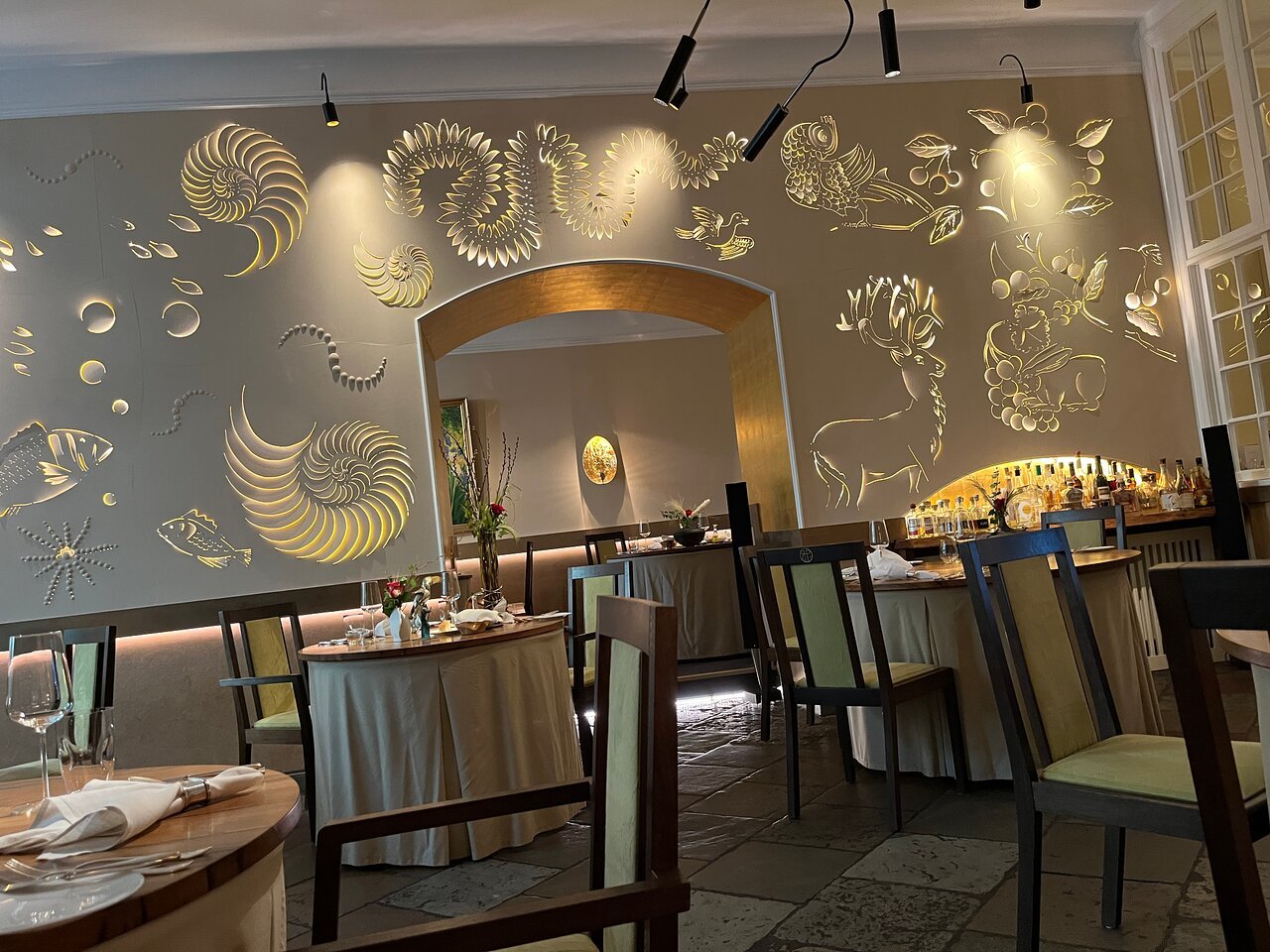
A Hanseatic Address, Four Centuries in the Making
Beckergrube is one of Lübeck's older merchant streets, and the building at number 71 has been marking its presence there since 1585. The patrician house format, typical of prosperous Hanseatic civic architecture, carries a particular weight in this part of the city: high ceilings, formal proportions, walls given over to decorative artworks. Arriving at Wullenwever, the exterior makes a statement about continuity before a single dish has been ordered. The inner courtyard extends the experience outward in warmer months, with a terrace that operates as a genuine second dining room rather than an overflow arrangement.
This context matters for understanding where Wullenwever sits within Lübeck's restaurant scene. The city's dining options span casual regional cooking at places like Fangfrisch, international formats at Johanna Berger, and contemporary menus at Meilenstein. Wullenwever occupies the leading of that structure, with a 2025 Michelin star that positions it against a small cohort of formally recognised northern German restaurants, including Restaurant Haerlin in Hamburg. For a city whose international profile runs heavily toward marzipan tourism and UNESCO heritage sites, holding a Michelin star at this level is a meaningful designation.
The Architecture of the Meal
The ritual at Wullenwever is structured in the traditional continental mode, where the menu is a document to be read before it becomes a sequence of courses. That menu is written in calligraphy, a choice that signals the kitchen's relationship to ceremony and the formal dining tradition. The practice is increasingly rare in contemporary European fine dining, which has largely moved toward printed card formats or digital alternatives. Here, handwriting functions as the first indicator of pacing: this is not a meal that will be hurried through.
The format offers three options. A three-course menu and a five-course menu handle most evenings, with the programming rotating every three weeks so that regular guests encounter a genuinely different kitchen across a season. The third option is a seven-course surprise menu, which must be pre-ordered by the entire table. That pre-ordering requirement is standard practice at this level of European fine dining — it allows the kitchen to calibrate timing and sourcing — but it also makes the seven-course format a table-level commitment rather than an individual choice. It places the meal in a category closer to a shared event than a personal restaurant visit. Vegetarian options are available across the menu formats, a practical consideration that Michelin's inspectors noted alongside the broader offering.
Roy Petermann's cooking operates within classic cuisine framed by Mediterranean influence, which in practice means the technique vocabulary is European and French-adjacent while the ingredient palette draws wider. First-rate ingredients are the stated priority, and within the classic cuisine tradition, that emphasis on sourcing over technical showmanship carries a specific meaning: the kitchen is not attempting to obscure or transform its produce, but to present it with precision. This places Wullenwever in the same broad school as KOMU in Munich or, internationally, Maison Rostang in Paris, where classical foundations remain the governing logic.
Service as Structure
In formal European dining, service is not simply delivery mechanism; it is the connective tissue that holds the pacing of a long meal together. At Wullenwever, Manuela Petermann leads the front of house alongside her team, and the Michelin description makes specific mention of professional service suited to the elegant setting. That combination of a named hostess and acknowledged formality places the service model in the tradition of family-run French and German Michelin establishments, where the dining room is as deliberately managed as the kitchen.
This matters in practice. A seven-course meal in a room of this character relies on the front of house to set tempo between courses, to read the table's state, and to manage the transition between the calligraphed menu as document and the menu as lived sequence. The charming quality Michelin attributes to the Petermann-led team is, in this context, a functional description as much as a social one. Service that reads as warm but controlled is precisely what allows a formal dining ritual to feel hospitable rather than ceremonial.
The Wine List's Geographic Logic
German fine dining has a complicated relationship with its own wine. The country produces some of Europe's most discussed Rieslings and a growing portfolio of serious Pinot Noirs, yet many prestige restaurant wine lists have historically skewed French, treating domestic labels as a secondary consideration. Wullenwever takes a different position: the list is principally devoted to German and broader European labels, with international options as a considered extension rather than the main event. That orientation reflects both the regional pride that characterises Hanseatic culinary culture and the broader reassessment of German wine's status within fine dining circles over the past fifteen years.
Pairing a wine list built around German and European producers with classic cuisine that carries Mediterranean accents is a specific curatorial decision. The tension between the two is productive: a kitchen drawing on Mediterranean produce and technique can be served well by the acidity structures of German whites and the restraint that characterises many contemporary European reds. Within the German Michelin context, this approach finds parallels at restaurants like Schanz in Piesport, which operates in wine country, and at broader-scope addresses like Vendôme in Bergisch Gladbach.
Where Wullenwever Fits in the German Fine Dining Map
Germany's Michelin-starred restaurant network is denser in the southwest , Baden-Württemberg and Bavaria carry the highest concentrations , with northern Germany representing a smaller, more scattered field. In that context, a single star in Lübeck carries geographic significance: it marks the city as part of the national fine dining circuit in a region where such recognition is less frequent. The comparison set for Wullenwever at the one-star level includes both technically ambitious contemporary addresses such as JAN in Munich and CODA Dessert Dining in Berlin, as well as classically grounded operations at the other end of the stylistic range, like ES:SENZ in Grassau. Wullenwever's position within that spectrum, committed to classic technique and formal ritual rather than progressive formats, makes it a specific kind of reference point: a place where the tradition is the argument, not the constraint.
For guests approaching from Hamburg, the journey to Lübeck is under an hour by rail, which places Wullenwever within plausible day-trip distance for city-based visitors. The three-week menu rotation means that a return visit within a single season will encounter different programming, giving the restaurant a cadence that rewards repeat engagement. For Lübeck itself, the address on Beckergrube 71 functions as an anchor for any serious consideration of the city's dining character. The broader Lübeck dining scene, including hotels, bars, wineries, and experiences, is covered in our full Lübeck restaurants guide, Lübeck hotels guide, Lübeck bars guide, Lübeck wineries guide, and Lübeck experiences guide.
Reservations for the seven-course surprise menu require the whole table to commit in advance. Given the restaurant's Google rating of 4.8 across 226 reviews and its Michelin status, advance booking is the practical approach regardless of format. The price tier sits at the leading of Lübeck's range, consistent with the €€€€ bracket and in line with what a Michelin-starred address at this service level commands in northern Germany. Two higher-register comparisons from the German scene , Schwarzwaldstube in Baiersbronn and Aqua in Wolfsburg , illustrate where the wider one-to-three star continuum reaches; Wullenwever sits at a purposeful one-star level, which in practice means the formal ritual without the extended tasting-menu economics of multi-star counterparts.
A Tight Comparison
A quick look at comparable venues, using the data we have on file.
| Venue | Notes | Price |
|---|---|---|
| Wullenwever | This venue | €€€€ |
| Johanna Berger | International, €€ | €€ |
| Fangfrisch | Regional Cuisine, €€ | €€ |
| Meilenstein | Contemporary, €€€ | €€€ |
Continue exploring
More in Lübeck
Restaurants in Lübeck
Browse all →
At a Glance
- Elegant
- Historic
- Intimate
- Cozy
- Sophisticated
- Date Night
- Special Occasion
- Celebration
- Historic Building
- Courtyard
- Private Dining
- Extensive Wine List
- Garden
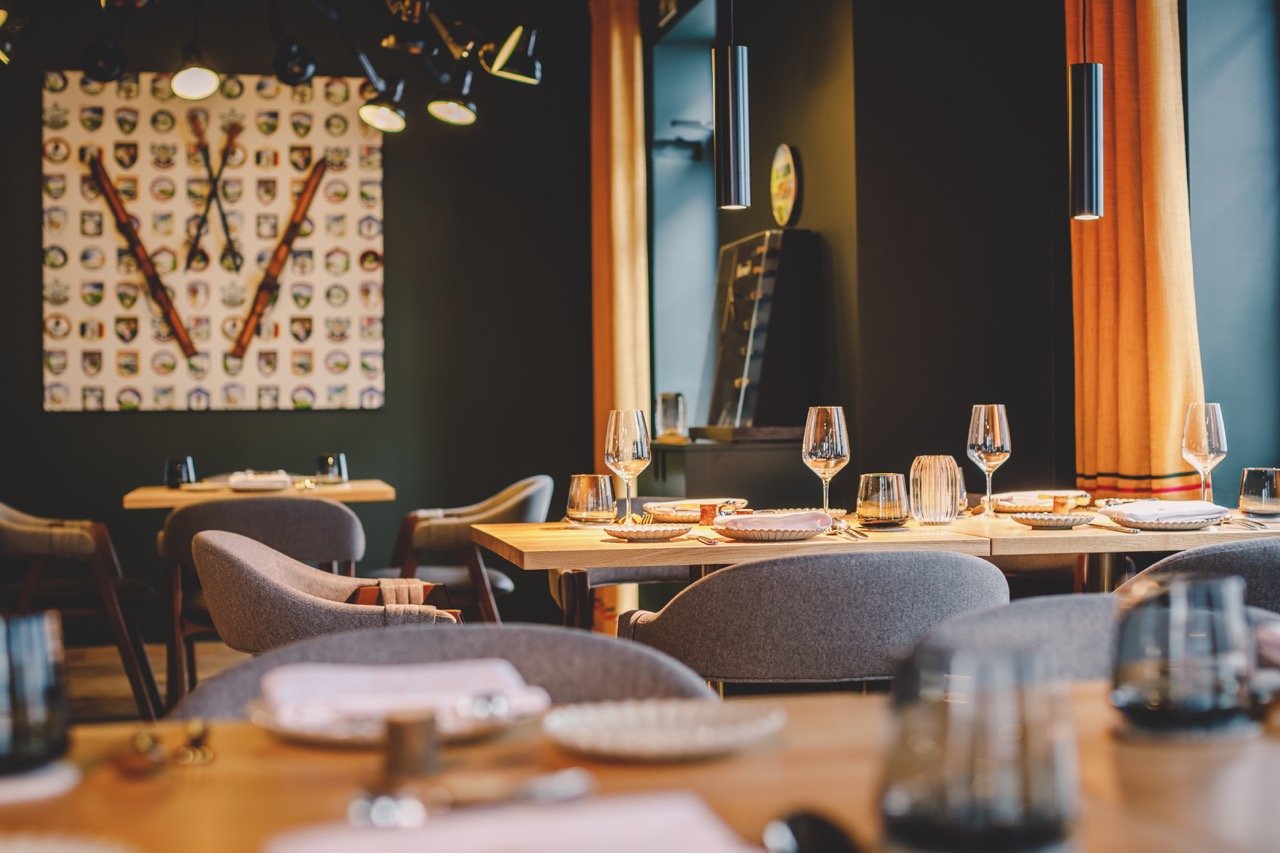
Elegant historic setting with chandeliers, oil paintings, candlelit tables, and floral arrangements in a serene, refined atmosphere.