On Breite Strasse, Lübeck's main pedestrian artery, Haus des Döners occupies a position that says something about how the city actually eats day to day. This is a döner counter serving the working rhythm of a Hanseatic city, where fast food has deep Turkish-German roots and the sourcing conversation around kebab meat has become increasingly serious across northern Germany.
Pearl is the En Primeur Club membership app — saves, bookings, and concierge access live there. Same editors, same standards.
- Address
- Breite Str. 68-70, 23552 Lübeck, Germany
- Website
- url
- Directions
- Get directions
 Saves & bookings on Pearl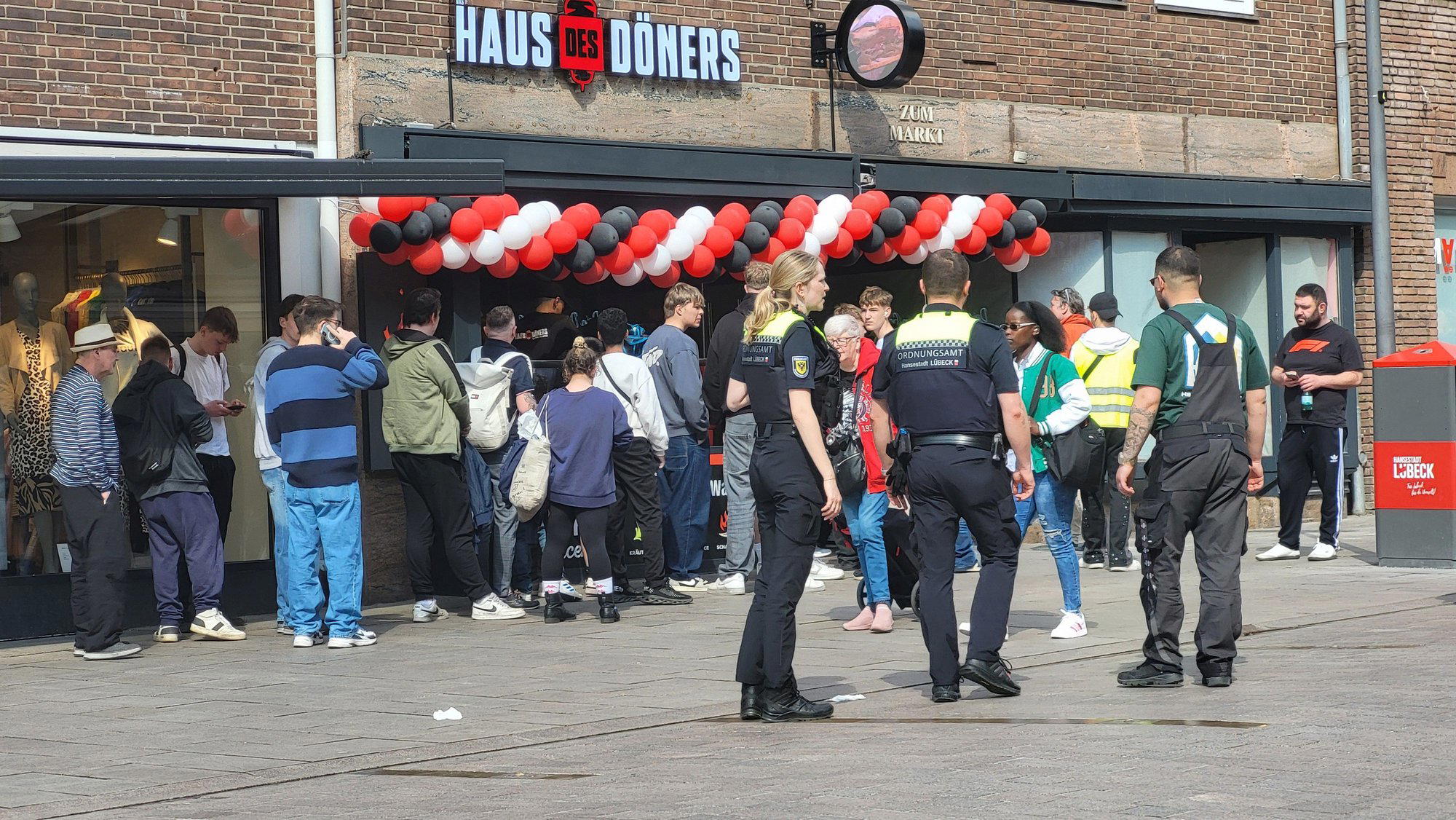
Where Lübeck Eats on Its Feet
Breite Strasse is Lübeck's commercial spine, the long pedestrian corridor that connects the Holstentor end of the old town to the market square. On any weekday afternoon it carries shoppers, students, and city workers in roughly equal measure, and the food offer along it reflects that mix: bakeries, fast-casual chains, and a handful of independent counters that fill the gap between a sit-down lunch and nothing at all. Haus des Döners, at number 68-70, sits inside that pattern. It is not a destination in the way that Wullenwever is a destination, nor does it occupy the regional-produce niche that Fangfrisch has carved out. It is a counter that feeds the city at pace, and understanding it means understanding the role the döner has come to play in German urban eating more broadly.
The Döner as a Northern German Institution
Germany consumes more döner kebab per capita than Turkey. That fact has been repeated often enough to become a cliché, but the underlying economics are worth taking seriously. The döner economy in Germany turns over roughly 2.5 billion euros annually, employs hundreds of thousands of people, and has generated an entire secondary supply chain: dedicated spice blenders, specialist flatbread bakeries, and livestock producers who raise animals specifically for the vertical spit. In northern Germany, where Turkish-German communities established themselves in cities like Hamburg, Kiel, and Lübeck from the 1960s onward, the kebab counter became embedded in the everyday food infrastructure of the city long before the current wave of interest in street food provenance.
That provenance question has become the defining tension in the contemporary döner conversation. On one side is the low-cost model, where compressed and reconstituted meat products are sourced purely on price. On the other is a smaller cohort of operators who have moved toward whole-muscle cuts, declared spice mixes, and bread baked to order rather than shipped frozen. The distance between those two approaches is not always visible from the street, which is why the sourcing conversation matters: it is the only reliable guide to what you are actually eating. Lübeck's position as a historically prosperous Hanseatic city, with a food culture that extends from the marzipan trade to its proximity to Schleswig-Holstein's agricultural hinterland, gives local operators access to better raw material than many comparable cities of similar population.
Ingredient Sourcing and What It Signals
The döner's ingredient list is deceptively short: meat, flatbread, salad vegetables, and sauce. That brevity makes sourcing decisions more visible, not less. The meat on a vertical spit tells you almost everything you need to know about an operator's priorities. Whole-cut lamb or beef, seasoned with fresh herb blends and slow-rotated, behaves differently from a processed product: it holds moisture differently, chars at a different rate, and produces a different yield ratio that directly affects the economics of the slice. Bread is the second indicator. In the better döner operations across northern Germany, the flatbread is delivered fresh each morning from a regional bakery and has a shelf life measured in hours rather than days. The vegetables, particularly tomato and cabbage, are prepared in-house and cycled through the day rather than pre-cut and held for extended periods.
Haus des Döners sits on Breite Strasse at the point where the pedestrian volume is high and the competition for the lunch trade is real. That commercial reality is its own form of quality signal: a counter operating at this location, at this volume, depends on repeat custom from a local population that walks past every day and has plenty of alternatives. It is a different pressure from the tourist trade that sustains some old-town food operators, and it tends to produce a more honest product. Lübeck's visitors concentrate around the Marienkirche and the Holstentor; the stretch of Breite Strasse toward number 68-70 draws a more local footfall.
Lübeck's Fast Casual Tier in Context
Set against Lübeck's sit-down dining options, the fast-casual tier occupies a distinct structural role. Wullenwever operates at the leading end, with a classic cuisine approach and price point that positions it outside everyday eating. HANA represents the mid-tier international offer, and Jawed's Remise brings a different register of Middle Eastern and Oriental cooking to the city. Alhambra Orient Food operates in a broadly adjacent space, serving the city's appetite for Eastern Mediterranean flavour at accessible price points. Haus des Döners occupies the fastest and most accessible end of that spectrum, where the transaction is quick, the price is low relative to a sit-down meal, and the product is eaten standing or walking.
That positioning is not a limitation; it is a category. Germany's döner culture produced among the more significant food hybridisations in modern European culinary history, and the leading counters in the country now attract the same kind of critical attention that refined ramen and taco trucks drew in other markets a decade ago. The question for any specific counter is whether it is executing the basics with care or treating the format as a race to the lowest input cost. That distinction is rarely advertised and almost always legible in the product itself.
For broader context on how Germany's fine dining operates at the opposite end of the spectrum, the contrast is instructive: Aqua in Wolfsburg, JAN in Munich, and Schwarzwaldstube in Baiersbronn represent the Michelin-starred tier where sourcing narratives are documented and verifiable. Internationally, the sourcing rigour applied at counters like Le Bernardin in New York City or the precision of Atomix reflects how seriously ingredient origin is taken at the summit of the market. The same underlying logic, applied at a different price point, is what separates a good döner counter from a poor one. Dessert-led concepts like CODA Dessert Dining in Berlin, or destination restaurants such as Vendôme in Bergisch Gladbach, ES:SENZ in Grassau, Victor's Fine Dining in Perl, Waldhotel Sonnora in Dreis, Restaurant Haerlin in Hamburg, and Schanz in Piesport all occupy a different register entirely, but they share with the leading street food operators a fundamental respect for where the ingredient begins.
Planning a Visit
Breite Strasse 68-70 is a ten-minute walk from Lübeck Hauptbahnhof, straight through the Holstentor and up the main pedestrian axis. No reservation is required; this is counter service and the queue, if there is one, moves quickly. Lunch hours on weekdays tend to be the busiest window.
At-a-Glance Comparison
Comparable venues nearby, for context on price, style, and recognition.
| Venue | Cuisine | Price | Awards | Notes |
|---|---|---|---|---|
| Haus des DönersThis venue — the venue you are viewing | Turkish Döner Kebab | $ | Not listed | Not listed |
| Alhambra Orient Food | Middle Eastern & Falafel | $$ | Not listed | Lübeck Altstadt |
| Johanna Berger | Modern Mediterranean | $$ | Michelin Plate | Lübecker Altstadt |
| The Newport Marina & Restaurant | Modern Northern German Seafood | $$$ | Not listed | Media Docks / Harbor District |
| Prätor-Haus - Da Luigi | Traditional Italian Trattoria | $$$ | Not listed | Altstadt (Old Town) |
| Namaste India | Authentic Indian | $$ | Not listed | Altstadt |
Continue exploring
More in Lübeck
Restaurants in Lübeck
Browse all →
At a Glance
- Lively
- Casual
- Casual Hangout
Current opening hours
- Monday
- 11 AM–12 AM
- Tuesday
- 11 AM–12 AM
- Wednesday
- 11 AM–12 AM
- Thursday
- 11 AM–12 AM
- Friday
- 11 AM–3 AM
- Saturday
- 11 AM–3 AM
- Sunday
- 11 AM–12 AM
Hours can change for holidays and private events. Last verified .
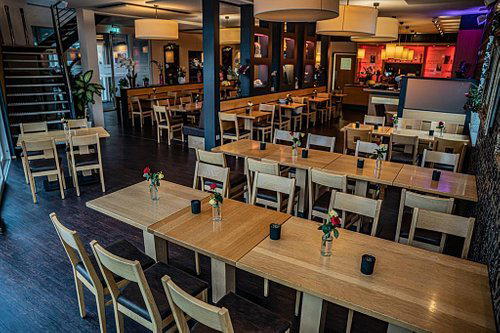
Casual and welcoming street food atmosphere with efficient, friendly service during busy lunch hours.