Wise Sons Jewish Deli
Wise Sons Jewish Deli on Octavia Street brings the Ashkenazi deli tradition into a San Francisco frame, where Northern California's produce culture meets a cuisine built on curing, brining, and slow-cooked technique. It occupies a distinct position in the city's food scene: casual in format, precise in method, and rooted in a culinary tradition that travels well but rarely gets this kind of local ingredient attention.
Pearl is the En Primeur Club membership app — saves, bookings, and concierge access live there. Same editors, same standards.
- Address
- 537 Octavia St, San Francisco, CA 94102
- Phone
- +14154297226
- Website
- wisesonsdeli.com
- Directions
- Get directions
 Saves & bookings on Pearl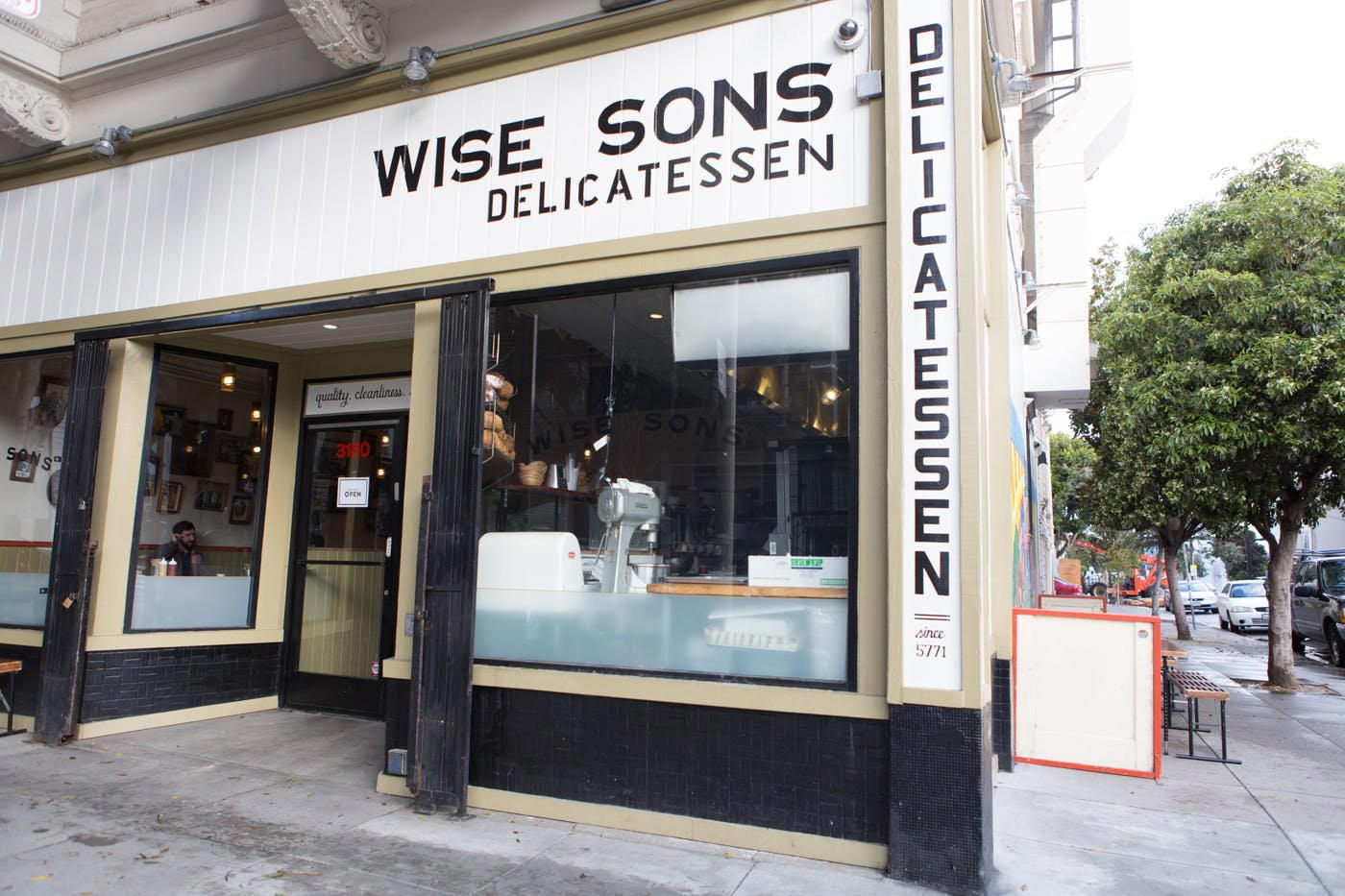
Where a Immigrant Food Tradition Meets California's Larder
Wise Sons Jewish Deli is a Jewish deli in San Francisco, located at 537 Octavia St in Hayes Valley. The city's Jewish deli scene is no exception. The Ashkenazi deli format, built around cured meats, smoked fish, pickled vegetables, and enriched breads, arrived in American cities with immigrant communities in the late nineteenth and early twentieth centuries. In New York, it calcified into something almost ceremonial. In San Francisco, at 537 Octavia Street, Wise Sons Jewish Deli represents what happens when that tradition gets filtered through a Bay Area sensibility that insists on sourcing first.
The Octavia Street address places the deli in Hayes Valley, a neighbourhood that sits between the performing arts district and the lower Haight. Hayes Valley's food character is defined by a mix of neighbourhood-scaled independents and a customer base that expects both technical competence and sourcing transparency. That context matters: a deli operating here is implicitly in dialogue with Northern California's agricultural bounty in a way that a traditional New York deli on the Lower East Side is not.
The Deli Format as a Technical Exercise
Jewish deli cooking is, at its core, a cuisine of transformation. Raw ingredients, often humble cuts of meat or basic fish, are preserved, cured, smoked, or braised into something with concentrated flavour and extended shelf life. That process, honed in Eastern European communities over centuries, arrived in America as a practical food tradition and gradually became a comfort food category. What gets less attention is how technically demanding it actually is. Proper pastrami requires a multi-day cure followed by smoking and steaming. House-cured salmon demands precise salt ratios and timing. Babka's laminated dough is not dissimilar in patience requirement to croissant production.
The editorial angle that matters here is the intersection of those imported methods with California's ingredient depth. Northern California produces some of the country's most consistent smoked fish, notable heritage grain rye, and a year-round supply of vegetables suited to pickling. A deli in this geography has access to a larder that the original Ashkenazi community, working with what immigrant urban markets offered, could not have imagined. Whether a kitchen chooses to use that advantage, and how, defines whether a deli becomes a faithful reproduction or a genuine local institution.
Lazy Bear, Atelier Crenn, Benu, Quince, and Saison all operate at the $$$$ tier, with multi-course formats and extensive wine programs. Wise Sons occupies a different bracket entirely, where the measure of quality is fidelity to a demanding craft tradition at accessible price points, not the architecture of a tasting menu. Both approaches can be serious. They are simply serious about different things.
Hayes Valley and the Neighbourhood Context
Hayes Valley developed its current character after the demolition of the Central Freeway in 2003 opened Octavia Boulevard, which transformed what had been a underserved corridor into a tree-lined street with small parks and ground-floor retail. The neighbourhood's independent food scene filled in over the following decade, drawn by relatively affordable rents and foot traffic from the nearby Davies Symphony Hall and SF Jazz Center. A deli on Octavia Street in this context serves a neighbourhood that runs from weekday lunch crowds to pre-performance dinners, a range of occasions that suits the deli format's flexibility across meal types.
San Francisco's broader dining culture has increasingly rewarded restaurants that do one thing at depth rather than attempting range. The deli format, by its nature, concentrates expertise into a specific craft tradition: curing, smoking, fermenting, baking. That focus is a feature in the current market, not a limitation.
Jewish Deli in the American Context
The American Jewish deli is experiencing a documented revival across major cities. The format had contracted significantly by the 1990s and 2000s, as first- and second-generation immigrant communities assimilated and the old neighbourhood delis lost their cultural anchors. What has returned is different in character: smaller operations, often chef-led, with a conscious decision to restore craft standards rather than operate on volume. The parallel exists across American comfort food categories. Operations like Emeril's in New Orleans demonstrated early that regional American food traditions could be taken seriously at the restaurant level. More recently, farm-to-table programs at places like Blue Hill at Stone Barns in Tarrytown have shown that sourcing discipline can be applied to any food tradition, including those not originally associated with premium ingredients.
The Jewish deli revival fits that pattern. The question being asked, implicitly, at a place like Wise Sons is whether deli food, made with serious ingredients and genuine craft, can occupy a respected position in a city where The French Laundry in Napa, Alinea in Chicago, and Le Bernardin in New York City set one definition of what serious restaurant cooking looks like. The answer, in San Francisco's food culture, is yes, provided the sourcing and craft justify the claim.
California's other serious dining destinations, from Providence in Los Angeles to Single Thread Farm in Healdsburg and Addison in San Diego, each anchor their credibility in local sourcing combined with technique imported from a formal culinary tradition. Wise Sons applies the same logic at a different price point and format register. Further afield, Atomix in New York City, Bacchanalia in Atlanta, The Inn at Little Washington, and 8½ Otto e Mezzo Bombana in Hong Kong each represent what happens when a specific culinary tradition gets applied with precision and sourcing rigour. The methodology scales across formats.
Planning Your Visit
Address: 537 Octavia St, San Francisco, CA 94102. Reservations: Walk-ins are welcome. Dress: Casual. Budget: About $20 per person. Hours: Mon to Fri 7 AM to 3 PM, Sat and Sun 8 AM to 3 PM.
At-a-Glance Comparison
Comparable venues nearby, for context on price, style, and recognition.
| Venue | Cuisine | Price | Notes |
|---|---|---|---|
| Wise Sons Jewish DeliThis venue — the venue you are viewing | Jewish Deli | $$ | Not listed |
| Wise Sons - Square HQ | Jewish Deli | $$ | South Beach |
| Grubstake Diner | Classic American Diner with Portuguese Influences | $$ | Nob Hill |
| Sears Fine Food | Classic American Diner with Swedish Pancakes | $$ | Nob Hill |
| Atlas Cafe | California-style American Cafe | $$ | Mission |
| As Quoted | Gluten-Free Farm-to-Table American | $$ | Presidio Heights |
Continue exploring
More in San Francisco
Restaurants in San Francisco
Browse all →
Bars in San Francisco
Browse all →
Hotels in San Francisco
Browse all →

At a Glance
- Lively
- Cozy
- Classic
- Casual Hangout
- Brunch
- Local Sourcing
Current opening hours
- Monday
- 7 AM–3 PM
- Tuesday
- 7 AM–3 PM
- Wednesday
- 7 AM–3 PM
- Thursday
- 7 AM–3 PM
- Friday
- 7 AM–3 PM
- Saturday
- 8 AM–3 PM
- Sunday
- 8 AM–3 PM
Hours can change for holidays and private events. Last verified .
Casual, community-focused deli atmosphere with a nod to tradition through hearty comfort food.