A Wirtshaus-style address on Gračanska Cesta, Wirtshaus brings the Central European tavern tradition to Zagreb's northern residential fringe. The format sits between the formal dining rooms of the city centre and the casual neighbourhood konoba, a register that remains underserved in Zagreb's restaurant scene. For those tracing the older continental dining customs that predate Croatia's Mediterranean pivot, this address warrants attention.
Pearl is the En Primeur Club membership app — saves, bookings, and concierge access live there. Same editors, same standards.
- Address
- Gračanska Cesta 112, 10000, Zagreb, Croatia
- Phone
- +38513450682
- Website
- wirtshaus-restaurant.com
- Directions
- Get directions
 Saves & bookings on Pearl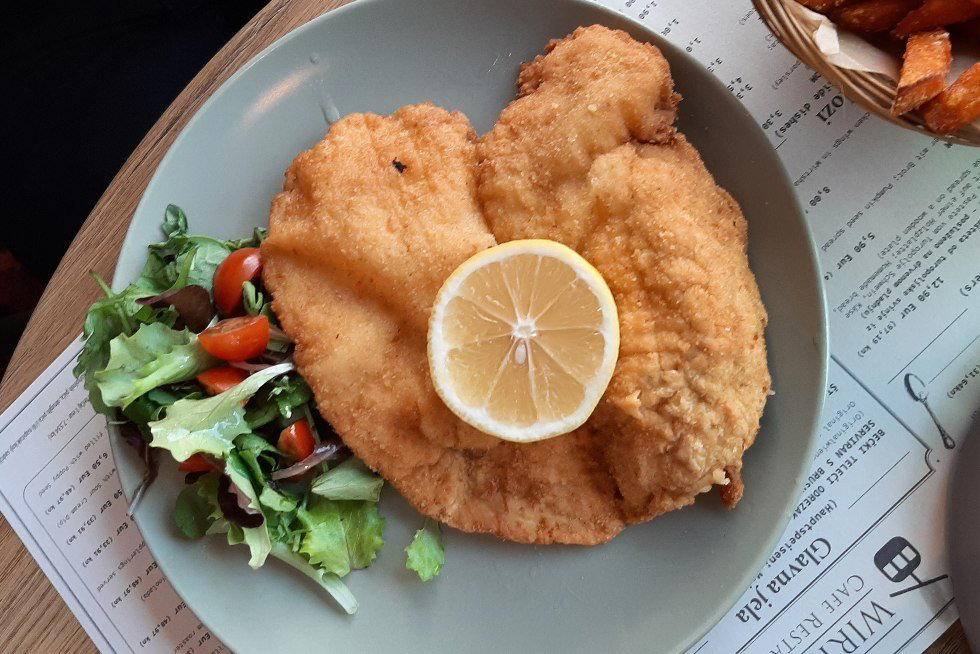
Where the Tavern Tradition Still Has Weight
The northern arc of Zagreb, where Gračanska Cesta climbs toward the forested slopes of Medvednica, has long maintained a dining culture distinct from the city's baroque centre. This is not the territory of tasting menus or wine-pairing theatrics. The houses here are larger, the gardens deeper, and the restaurants that have taken root along these roads tend to operate on a different social contract: longer tables, slower pacing, and a meal format that expects you to stay. Wirtshaus, at number 112 on that road, occupies exactly this register.
The German word Wirtshaus translates loosely as inn or tavern, and the name itself signals a deliberate positioning. Central European tavern culture, Austrian, Bavarian, and by extension the Austro-Hungarian traditions that shaped Zagreb for centuries, is built around the idea of the meal as occasion rather than transaction. You arrive, you settle, and the food arrives in its own sequence. There is no particular pressure to turn the table. That rhythm, once common across Zagreb's older restaurants, has been squeezed out of the city centre by rising rents and the faster cadence that tourist traffic demands. On Gračanska Cesta, it survives.
The Dining Ritual: Pacing, Custom, and What That Means in Practice
Zagreb's relationship with Central European tavern customs runs deeper than cuisine. The city spent much of the nineteenth and early twentieth centuries as a provincial capital within the Habsburg sphere, and the social rituals of that era left a durable mark on how residents eat. The Wirtshaus format, in its traditional sense, is not a menu category, it is a pace and a posture. Bread arrives early, often without asking. Soups and starters are genuinely preparatory rather than ornamental. Main courses are portioned for appetite rather than aesthetics. And the expectation, implicit but firm, is that the table is yours for the evening.
This stands in contrast to the direction Zagreb's more prominent dining rooms have taken over the past decade. Venues like Noel (Modern Cuisine) operate at the ambitious end of contemporary Croatian cooking, with multi-course formats and wine lists calibrated to international palates. Dubravkin Put (Mediterranean Cuisine), set in the green zone near Tuškanac forest, has its own version of the leisurely garden meal, though its Mediterranean frame places it in a different tradition entirely. Wirtshaus, by name and by location, positions itself as something older and more specifically continental.
For a visitor tracing Zagreb's dining history rather than its current ambitions, that distinction matters. The tavern meal is not a lesser version of the fine-dining experience, it is a different set of values. Generosity over precision. Duration over efficiency. The ritual of the long table over the ceremony of the tasting counter.
Gračanska Cesta and the Medvednica Foothills Context
Restaurants along the Medvednica foothills have historically served a dual purpose in Zagreb's social geography: destination dining for city residents willing to make the drive, and anchor points for the wealthy residential neighbourhoods that line the northern slopes. This pattern holds across several European cities with similar topographies, where the hillside addresses develop a slightly different dining culture from the urban core, more spacious, more oriented toward weekends and longer visits, less dependent on foot traffic.
Reaching Wirtshaus from the city centre requires a car or a tram connection followed by a walk; it is not a drop-in address for those on foot in the Donji Grad. That access profile shapes its clientele and, by extension, its atmosphere. The guests who make the journey tend to have chosen deliberately, which changes the tenor of a room in ways that proximity to a tourist corridor does not. Compare this with Izakaya (Japanese Contemporary), which operates at a much lower price point and higher turnover rhythm in the more central parts of the city, or Al Dente and Amfora, both of which serve different functions within Zagreb's broader dining ecology.
Zagreb's wider restaurant scene, for those mapping the full picture, extends well beyond the capital. Croatia's most-discussed dining addresses are distributed across the coast: Pelegrini in Sibenik and Restaurant 360 in Dubrovnik represent the Adriatic's highest-profile dining; Agli Amici Rovinj in Rovinj and Nebo by Deni Srdoč in Rijeka anchor the Kvarner and Istrian ends of the spectrum. Inland, Korak in Jastrebarsko represents a similar foothills-and-wine-country tradition to the southwest of Zagreb. The full Zagreb restaurants guide maps the city's dining character in greater depth. Further along the Croatian coast and islands, Alfred Keller in Mali Losinj, Boskinac in Novalja, LD Restaurant in Korčula, Krug in Split, and BioMania Bistro Bol in Bol complete a geography where Croatian cooking has developed different registers depending on whether you are on the coast, on an island, or in the continental interior. For international reference points at the furthest end of the formal-dining spectrum, Le Bernardin in New York City and Atomix in New York City demonstrate how different the values of the Wirtshaus tradition are from the haute cuisine that dominates global conversation.
Planning Your Visit
Wirtshaus sits at Gračanska Cesta 112, in Zagreb's northern residential zone below Medvednica. Given the location, arriving by car is the practical approach for most visitors; those relying on public transport should allow time for tram and walking connections from the city centre. The address suits a weekend lunch or an unhurried weekday evening rather than a pre-theatre dinner.
What It’s Closest To
Comparable venues nearby, for context on price, style, and recognition.
| Venue | Cuisine | Price | Notes |
|---|---|---|---|
| WirtshausThis venue — the venue you are viewing | Austrian | $$ | Not listed |
| RESTORAN Maksimir | Traditional Croatian | $$ | Maksimir |
| Amélie | French-Inspired Pastry Shop & Cafe | $$ | Gornji Grad |
| Batak Centar Cvjetni | Croatian Barbecue Grill | $$ | Centar Cvjetni |
| Saralee's thai street food | Authentic Thai Street Food | $$ | City Centre (Galleria Business Center area) |
| Reunion POP | Modern Croatian Mediterranean | $$ | City Centre |
Continue exploring
More in Zagreb
Restaurants in Zagreb
Browse all →
Bars in Zagreb
Browse all →
Hotels in Zagreb
Browse all →

At a Glance
- Cozy
- Rustic
- Classic
- Family
- Casual Hangout
Current opening hours
- Monday
- Closed
- Tuesday
- Closed
- Wednesday
- 12–10 PM
- Thursday
- 12–10 PM
- Friday
- 12–10 PM
- Saturday
- 9 AM–10 PM
- Sunday
- 9 AM–7 PM
Hours can change for holidays and private events. Last verified .
Cozy and beautifully decorated with a homey atmosphere.