Willoughby & Co.
Willoughby & Co. occupies a well-worn position at the V&A Waterfront, where the working harbour meets Cape Town's most-visited retail district. Long associated with seafood and a crowd that ranges from local regulars to international visitors, it functions as a reliable read on how the city's port heritage translates to the table. The address alone situates it at the intersection of accessibility and provenance.
Pearl is the En Primeur Club membership app — saves, bookings, and concierge access live there. Same editors, same standards.
- Address
- Shop 6132, 19 Dock Rd, Victoria & Alfred Waterfront, Cape Town, 8001, South Africa
- Phone
- +27 21 418 6115
- Website
- willoughbyandco.co.za
- Directions
- Get directions
 Saves & bookings on Pearl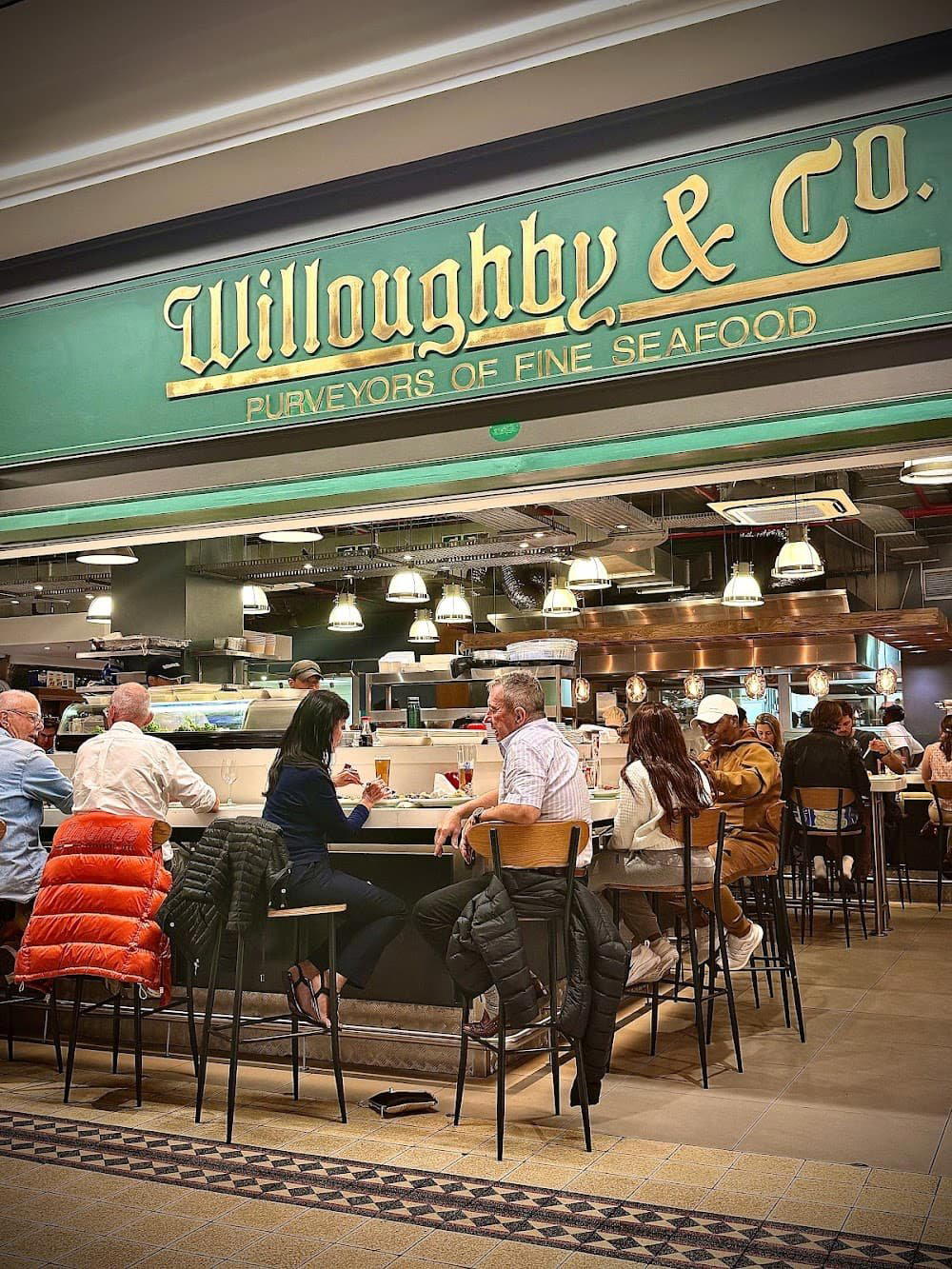
Where the Harbour Meets the Table
Willoughby & Co. is a casual, walk-in-friendly Fusion Japanese Sushi & Seafood restaurant at Shop 6132, 19 Dock Rd, Victoria & Alfred Waterfront, Cape Town, 8001, South Africa. Cape Town's V&A; Waterfront is not a backdrop, it is the source. The working harbour at Dock Road has offloaded catch from the cold Benguela Current-fed waters of the South Atlantic for well over a century, and the restaurants that have grown up around it carry that provenance in their bones. Willoughby & Co. at Shop 6132 on 19 Dock Rd, sits inside that tradition: a seafood address whose location is itself an argument about freshness, because the distance between ocean and plate, in this part of Cape Town, is measured in metres rather than kilometres.
The Benguela Current is one of the more consequential facts in South African seafood. Cold, nutrient-dense water upwelling along the Western Cape coastline produces hake, linefish, West Coast rock lobster, snoek, and yellowtail of a quality that few other southern-hemisphere fisheries can match at volume. Restaurants positioned at the Waterfront benefit from supply chains that are, by the standards of international fish cookery, unusually short. That proximity to source is what separates the V&A; dining precinct from, say, a seafood restaurant in a landlocked city importing the same species with two more days of travel on the product.
The Waterfront's Place in Cape Town's Dining Order
Cape Town's restaurant scene has bifurcated sharply over the past decade. At one end, fine-dining addresses like Fyn, La Colombe, Salsify at the Roundhouse, and The Test Kitchen have built internationally recognised tasting-menu programs that sit comfortably against comparable addresses in London or Tokyo. At the other, the city sustains a category of accessible, ingredient-led venues where the quality of the raw material does more work than the technique applied to it. Willoughby & Co. operates in that second register. The Waterfront address means a broader, more mixed audience than a destination-only fine-dining room, but the sourcing logic is the same: the Western Cape's waters are the product, and the kitchen's job is not to obscure that fact.
This is a meaningful distinction in the South African context. The country's best-regarded seafood traditions, particularly along the Cape coast, have always prioritised species integrity and preparation simplicity over elaborate saucing. Compare that approach with the French-influenced formats at Le Quartier Français in Franschhoek or the foraged coastal focus at Wolfgat in Paternoster, and you can trace three distinct lines through the same regional ingredient pool. Willoughby & Co. sits on the accessibility end of that spectrum, where volume and consistency matter as much as novelty.
What the Sourcing Argument Actually Means
The Benguela Current's productivity is well-documented in fisheries science, but its implications for dining are often left abstract. In practical terms, it means that West Coast linefish landed at Cape Town's harbour arrives with a texture and salinity profile that deteriorates quickly with distance. The argument for eating seafood at the Waterfront, rather than importing the same species to a restaurant inland, rests on that perishability. South Africa's hake is among the more sustainably managed stocks in the southern hemisphere, the Marine Stewardship Council has certified South African hake fisheries, and its availability at Waterfront venues like Willoughby & Co. reflects a supply chain that is both shorter and more traceable than most.
That sourcing context matters because Cape Town's dining culture has grown more ingredient-conscious across all price tiers. The conversation that once belonged only to high-end tasting menus, where does this come from, how was it caught, what is the season, has moved into the mid-market. Venues at the Waterfront that can point to local catch benefit from that shift without necessarily having to restructure their menus around it.
For a broader picture of how Cape Town's wine country intersects with its seafood culture, Delheim Wine Estate in Stellenbosch represents the agricultural counterpart: the Western Cape produces both the fish and the wine that frames it on the table, a convergence that makes this region's food identity unusually self-contained.
Regulars and What They Order
Waterfront seafood restaurants in Cape Town develop a reliable regular clientele alongside tourist traffic, and the two groups tend to order differently. Visitors follow recommendations and default to lobster or linefish; regulars gravitate toward the species that represent seasonal value, snoek during its winter run, yellowtail when the water temperature shifts, calamari that benefits from proximity to landing rather than extended cold storage. The distinction is not trivial: a venue that sources well will have catch on the menu that reflects what is actually coming off the boats that week, and regulars who know the rhythm will eat accordingly.
Willoughby & Co.'s position at the Waterfront places it in a competitive set that includes 95 at Parks and a handful of other accessible Cape Town addresses, but its Dock Road location gives it the clearest physical connection to the harbour supply chain. That geography is not incidental, it is the primary editorial argument for the venue's continued relevance in a city where fine-dining alternatives at Fyn or Salsify represent a different tier entirely.
Planning Your Visit
The V&A; Waterfront is accessible from central Cape Town by taxi, rideshare, or a short walk from the De Waterkant and Green Point areas. Dock Road sits on the working harbour side of the complex rather than the retail core, which means the setting carries more of the industrial port character than the shopping mall atmosphere that defines parts of the Waterfront precinct. Visits during the Southern Hemisphere summer (November through February) align with peak tourist season and longer evening light over the harbour, but winter, when the Atlantic swell brings different species to market, can offer a more local experience at lower crowd density.
For those extending beyond Cape Town, the Western Cape's seafood and wine triangle connects naturally to Wolfgat in Saldanha Bay on the West Coast and Le Quartier Français in Franschhoek in the winelands. Further afield in South Africa, Foundry in Sandton, Sympathy's Restaurant in Johannesburg, and Capito in Pretoria represent the country's inland fine-dining tier, while Silvan Safari Lodge and Londolozi Game Reserve in Kruger anchor the bush-lodge dining category. Internationally, the seafood-forward standard is set by addresses like Le Bernardin in New York City, against which Cape Town's mid-market seafood venues occupy a distinct, more accessible register. For a different model of ingredient-sourced community dining, Lazy Bear in San Francisco and Ellerman House in Bantry Bay show how provenance-led formats can operate across different price points.
Same-City Peers
Comparable venues nearby, for context on price, style, and recognition.
| Venue | Cuisine | Price | Notes |
|---|---|---|---|
| Willoughby & Co.This venue — the venue you are viewing | Fusion Japanese Sushi & Seafood | $$ | Not listed |
| Jade Court | Japanese Sushi | $$ | Tyger Waterfall |
| The Kitchen | Cape Malay | $$ | City Bowl |
| The Foodbarn Café & Tapas | French Tapas & Café | $$ | Noordhoek |
| Talking To Strangers | Modern African Street Food Tapas | $$ | Bo-Kaap |
| Arthur’s Mini Super | Quirky Neighborhood Cafe | $$ | Bantry Bay |
Continue exploring
More in Cape Town
Restaurants in Cape Town
Browse all →
Bars in Cape Town
Browse all →
Hotels in Cape Town
Browse all →
At a Glance
- Lively
- Modern
- Casual
- Casual Hangout
- Date Night
- Family
- Group Dining
- Late Night
- Open Kitchen
- Waterfront
- Beer Program
- Sustainable Seafood
- Waterfront
Current opening hours
- Monday
- 12–10 PM
- Tuesday
- 12–10 PM
- Wednesday
- 12–10 PM
- Thursday
- 12–10 PM
- Friday
- 12–10 PM
- Saturday
- 12–10 PM
- Sunday
- 12–10 PM
Hours can change for holidays and private events. Last verified .
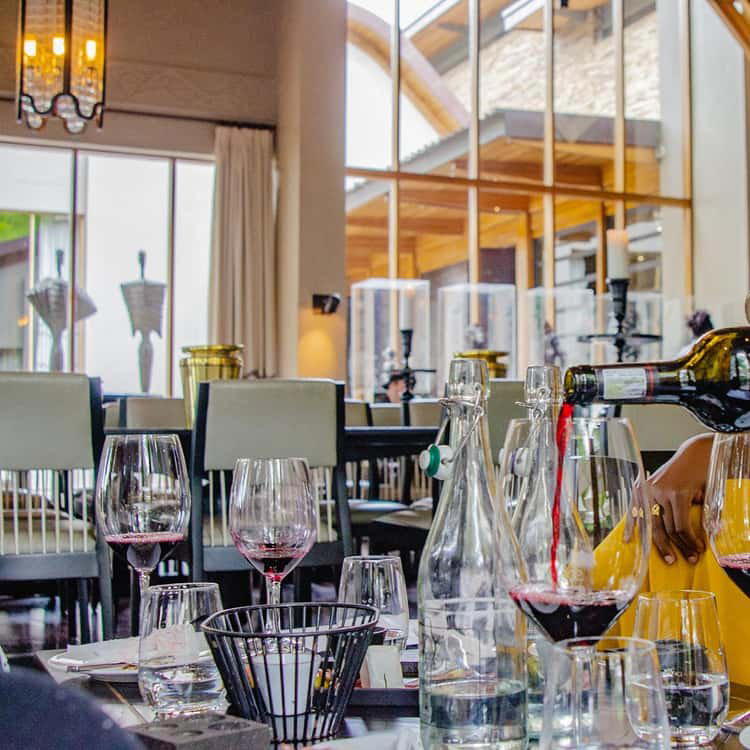
Bright, bustling mall food court atmosphere with an open kitchen where chefs are visible preparing dishes; energetic and casual rather than fine dining.