Wild by Tart

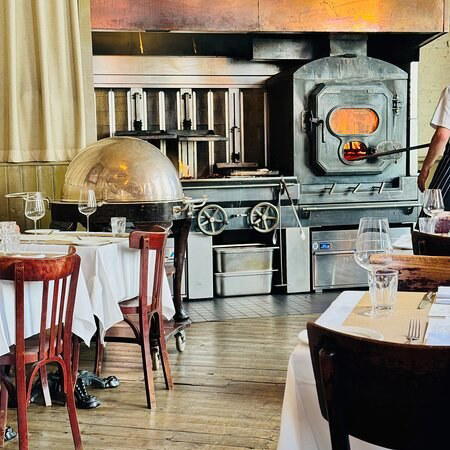
A Michelin Plate-recognised brasserie occupying a converted power station and coal store in Eccleston Yards, Wild by Tart delivers Mediterranean-influenced cooking with occasional Asian inflections in one of Belgravia's more relaxed dining settings. The glass-roofed interior, open kitchen, and mid-range pricing position it as a daytime and evening anchor for the SW1 postcode.
Pearl is the En Primeur Club membership app — saves, bookings, and concierge access live there. Same editors, same standards.
- Address
- Eccleston Yards, London SW1W 9AZ, United Kingdom
- Phone
- +44 20 3848 6240
- Website
- wildbytart.com
- Directions
- Get directions
 Saves & bookings on Pearl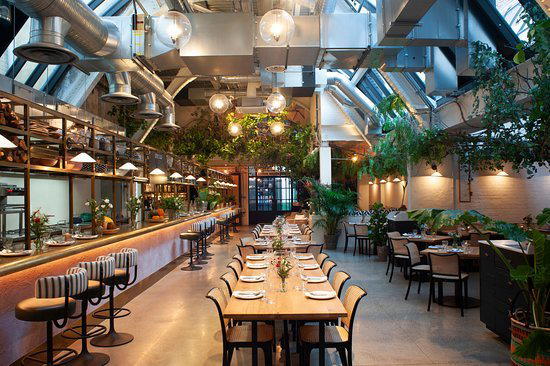
A Converted Industrial Space in Belgravia's Quieter Corner
Belgravia's dining identity has long been defined by white-tablecloth formality and price points that align with the neighbourhood's property values. Eccleston Yards disrupts that pattern. The former coal store and power station complex, tucked behind Victoria Coach Station, has attracted a cluster of independent operators who trade on relaxed formats and accessible pricing rather than the ceremony that dominates Eaton Square and Sloane Street. Wild by Tart sits at the centre of that shift, occupying a space where a lofty glass roof floods the room with natural light and an open kitchen keeps the atmosphere grounded and immediate.
That industrial provenance matters editorially. London's most interesting mid-market restaurants of the past decade have frequently occupied repurposed structures: warehouses in Bermondsey, railway arches in Vauxhall, printing works in Clerkenwell. The Eccleston Yards setting places Wild by Tart inside that tradition, though its SW1W postcode gives it a different kind of foot traffic than south-of-the-river equivalents. The clientele here skews toward office workers from the surrounding creative tenants, local residents, and visitors using Victoria as a transit hub.
Mediterranean Cooking with a Cross-Continental Edge
The cooking at Wild by Tart is positioned within Mediterranean cuisine, but the kitchen's reference points extend beyond the obvious coastal Southern European template. Michelin's assessors noted rustic, Mediterranean-influenced dishes that are tasty and satisfying, with bold flavours and the occasional Asian touch. That cross-continental gesture is worth taking seriously: Mediterranean-Asian fusion has become a genuine culinary current in London, running through restaurants from Bala Baya's Levantine-Tel Aviv food to the broader Middle Eastern-European hybrids emerging across the city.
Chef George Barson leads the kitchen at the restaurant. In the context of the Michelin Plate recognition, his role is one of consistent execution within a clearly defined format rather than the avant-garde menu development that characterises the city's starred tiers. The Plate designation signals food worth eating, competently prepared, without the tasting-menu architecture that defines London's four-pound-sign tier. For a comparative frame: restaurants such as The Fat Duck in Bray, L'Enclume in Cartmel, or Moor Hall in Aughton operate in an entirely different register. The restaurant's comparable set is the city's Plate-level, accessible brasserie category, a segment that competes on energy and value rather than on tasting-menu architecture.
For Mediterranean cooking drawing on broader European and Levantine registers, London offers several other reference points worth considering alongside the restaurant. Oren and Morchella represent the city's Islington-based Mediterranean-Middle Eastern corridor, while Bellanger anchors a more Alsatian-European brasserie tradition nearby. Internationally, the style connects to what La Brezza in Ascona represents on the Swiss-Italian border and the more theatrical Mediterranean ambition of Arnaud Donckele and Maxime Frédéric at Louis Vuitton in Saint-Tropez, though both operate several price tiers above Eccleston Yards.
The Drinks Programme and How It Fits the Format
The editorial focus at the restaurant is not the food alone but how the drinks programme supports the brasserie's positioning. Mediterranean cooking at the Plate level lives or dies on the quality of its wine list curation: the food is straightforwardly flavoured, bold, and designed to pair easily rather than to challenge. That means a wine list needs to work harder than the cooking to add genuine interest.
London's mid-market restaurant segment has increasingly split between venues that treat wine as a commodity add-on and those that apply genuine curation to build lists with regional depth in Southern European appellations. The Mediterranean remit gives the kitchen justification for lists that span Sicilian Nero d'Avola, Cretan Vidiano, Greek Assyrtiko, Spanish Garnacha, and Lebanese Cinsault blends, all categories where value is still achievable and bottle prices need not climb toward the four-figure territory common in Mayfair. The format creates the conditions for that ambition. For wine-focused dining elsewhere in the city, Peckham Cellars represents a more explicitly wine-led model at a similar price point in a different neighbourhood.
The ££ pricing across the menu, combined with the Michelin Plate recognition, places the restaurant in the productive middle of London's dining market: above the fast-casual tier, below the starred and pre-fixe bracket. That positioning should allow for a drinks programme with genuine breadth at accessible per-bottle pricing, a format that suits both the daytime brasserie trade and evening dining from the surrounding neighbourhood.
Atmosphere and Format: What to Expect
The open kitchen format at the restaurant is an editorial statement as much as a practical one. In post-pandemic London, transparent kitchens have become standard at this price tier, part of a broader shift toward hospitality that performs its own labour rather than concealing it. The glass roof reinforces that ethos: the room is designed to feel active and unguarded rather than hushed and hierarchical. This is a marked contrast to the formal register of the neighbourhood's older restaurants and sits closer to the energy of the Eccleston Yards complex as a whole.
For visitors using the venue as a destination within a broader London visit, the Victoria location is logistically useful. Victoria station connects directly to Gatwick Airport, and the neighbourhood's hotel stock includes options across multiple price tiers. For those extending a trip to UK countryside restaurants, Gidleigh Park in Chagford, Hand and Flowers in Marlow, and Le Manoir aux Quat' Saisons in Great Milton represent the higher end of that register.
Know Before You Go
- Address: Eccleston Yards, London SW1W 9AZ
- Cuisine: Mediterranean, with occasional Asian inflections
- Price range: ££ (mid-range)
- Recognition: Michelin Plate, 2024 6 from 722 reviews
- Chef: George Barson
- Setting: Converted power station and coal store, glass roof, open kitchen
- Nearest station: Victoria (National Rail, London Underground, Victoria Coach Station)
Budget and Context
Comparable venues nearby, for context on price, style, and recognition.
| Venue | Cuisine | Price | Awards | Notes |
|---|---|---|---|---|
| Wild by TartThis venue — the venue you are viewing | Belgravia, Mediterranean | $$ | Michelin Plate | Not listed |
| Honey & Smoke | Not listed | $$ | Not listed | Fitzrovia, Modern Middle Eastern Grill House |
| Pophams | Hackney Central, Modern Bakery & Pasta | $$ | Michelin Plate | Not listed |
| The Holland | Not listed | $$$ | Michelin Plate | South Kensington, Modern British Gastropub |
| Akub | Notting Hill Gate, Modern Palestinian | $$$ | Michelin Plate | Not listed |
| The Parakeet | Kentish Town, Modern British Gastropub | $$$ | Michelin Plate | Not listed |
Recognition history
Dated appearances from independent guides and award organizations, with the underlying list record or original source where available.
Michelin Plate
Michelin
Michelin Plate
Michelin
Michelin Plate
Michelin
Continue exploring
More in London
More from Chef George Barson
Browse all →
Restaurants in London
Browse all →
Bars in London
Browse all →
Hotels in London
Browse all →

At a Glance
- Modern
- Industrial
- Trendy
- Sophisticated
- Special Occasion
- Group Dining
- Private Event
- Date Night
- Business Dinner
- Historic Building
- Private Dining
- Design Destination
- Standalone
- Local Sourcing
- Farm To Table
Current opening hours
- Monday
- 12–11:30 PM
- Tuesday
- 12–11:30 PM
- Wednesday
- 12–11:30 PM
- Thursday
- 12–11:30 PM
- Friday
- 12 PM–12 AM
- Saturday
- 12 PM–12 AM
- Sunday
- 12–5:30 PM
Hours can change for holidays and private events. Last verified .
A beautiful, multipurpose former industrial space with a relaxed but polished restaurant-and-bar atmosphere suited to lunches, dinners and special occasions.