Warung Selasa at Indo Java

Our verdict
Warung Selasa at Indo Java turns the rear of a Queens Boulevard Indonesian grocery into a Tuesday-only lunch counter built around banana-leaf rice, sambal, and market-shelf immediacy. The appeal is not polish; it is the rare New York format where pantry, cooking, and dining room occupy the same narrow retail space.

Pearl is the En Primeur Club membership app, where members save venues, book tables and use the concierge.
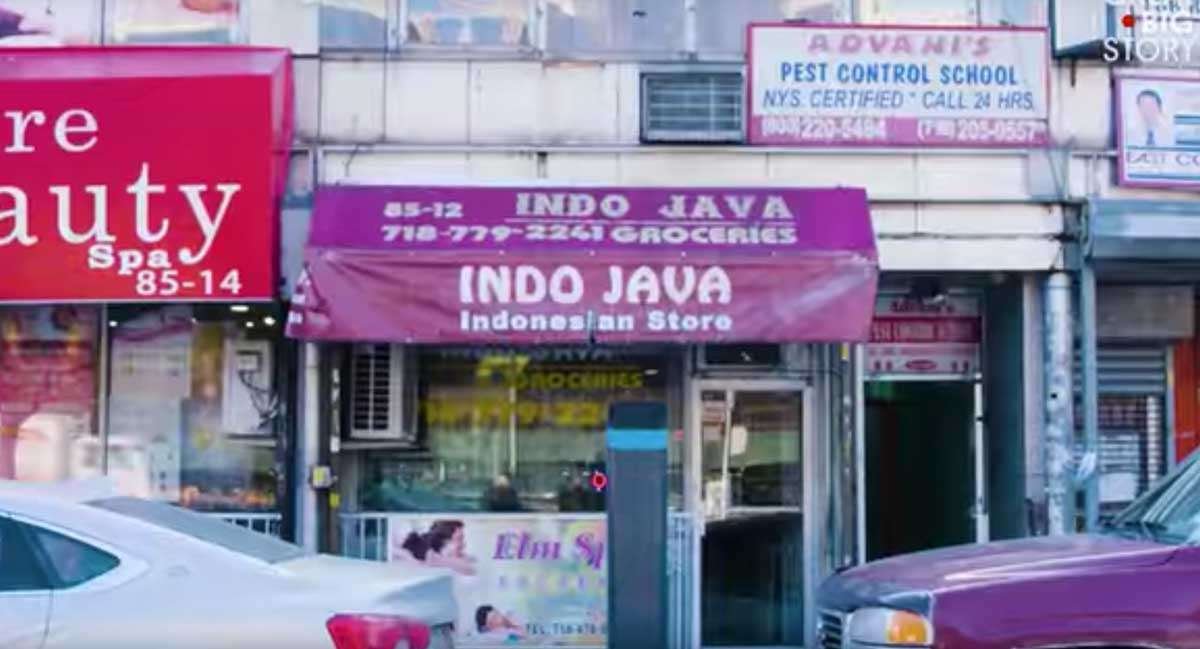
The approach is intentionally modest rather than theatrical: Warung Selasa at Indo Java is best understood as a New York City dining experience whose appeal comes from focus, restraint, and a clear sense of place. In New York City, where dining can often be filtered through design, branding, and reservation pressure, the format keeps attention on the food and the context around it. The experience reads less like a staged concept than a specific expression of Indonesian cooking in the city.
Warung Selasa at Indo Java belongs to a New York tradition easily missed by diners searching only reservation platforms and polished openings. New York City has long carried deeper immigrant food infrastructure: community-facing food businesses, informal rhythms, and kitchens closer to everyday cooking than commercial rollout. Here, restraint is part of the identity. The experience is focused and practical, with an appeal that feels tied to culinary purpose rather than engineered hype.
Indonesian cooking and the dining room as context
Indonesian food in New York is often framed through regional breadth, but the sharper story here is how a venue can make cuisine feel grounded without overexplaining it. Warung Selasa at Indo Java does not need elaborate staging to communicate what it is. The appeal lies in directness: Indonesian cooking presented in a New York City setting, where the surrounding context helps shape the meal as much as the menu language does.
That frame resists the simplification that often follows when a cuisine is translated for broader American dining rooms. The experience is not organized around spectacle or a single luxury cue, but around specificity, access, and the way a focused service can hold its own in a city crowded with larger formats. In a city comfortable with tasting menus and chef-led narratives, the intelligence here is practical: a restaurant can make its case without turning the food into a concept pitch.
The comparison is not to a named same-cuisine peer, but to how New York diners sort value and access. Other New York City dining rooms operate in different registers, with fuller restaurant infrastructure and a broader night-out rhythm. Warung Selasa at Indo Java is more tightly defined, and its authority comes from focus, repetition, and a clear sense of culinary identity. That distinction helps diners who track New York restaurants by format as much as cuisine.
A focused venue in a city built for scale
The setup gives the meal its editorial weight. A direct format can be a footnote elsewhere; in New York City, it argues against scale. The venue need not rely on expansiveness, spectacle, or leisure through design. It asks diners to accept a more direct kind of experience. That is not preciousness, but the consequence of a format built around a clear culinary identity and a focused service rhythm.
This separates the experience from both street-food nostalgia and restaurant minimalism. The setting is modest in spirit, not anonymous. The dining experience is functional, and the food arrives as a clear expression rather than a long sequence of formal cues. The city has many restaurants; fewer make the relationship between cuisine, context, and audience feel this visible. For readers mapping New York City food seriously, that visibility is the draw.
The authorship of the cooking should be read through the experience rather than mythology. What matters is that the food is tied to a clearly defined point of view, not that the page needs a personal origin story. Craft shows through choices of seasoning, composition, pacing, and the way the meal is made to work within its format. The strength is in focus and execution.
How to place it within a New York eating itinerary
This is not a flexible all-purpose dinner recommendation. It suits diners who build a day around New York City and value specificity over convenience. The reward is Indonesian cooking presented with unusual directness in the city’s broader dining landscape. The trade-off is clear: a focused format, practical surroundings, and a different rhythm from many conventional restaurants.
For a broader New York eating map, use it as a counterweight to conventional restaurant planning. The city’s range makes more sense when specialist formats sit alongside full-service rooms, neighborhood restaurants, sushi-focused dining, casual cooking, and other unnamed New York City dining rooms. The point is range, not equivalence. New York’s serious food culture includes highly specific venues as much as formal dining rooms.
For readers tracing how Asian and island cuisines shift across American cities, the more useful comparison is broad rather than venue-specific: look at how focused dining formats in other cities carry cuisine, access, and identity without needing the scale or polish of a conventional restaurant.
The editorial case is simple: Warung Selasa at Indo Java compresses Indonesian cooking, a New York City setting, and a focused dining experience into one sharp argument. In a city where access is often confused with luxury, this is a different kind of value, rooted in cuisine, context, and clarity.
Frequently asked questions
Is Warung Selasa at Indo Java child-friendly?
Plan around the nature of a focused New York City dining experience rather than assuming a long, spread-out meal. For families, the best fit will depend on the child’s comfort with a practical restaurant setting.
What should I expect atmosphere-wise at Warung Selasa at Indo Java?
Expect a modest New York City dining experience with a practical rather than elaborate mood. The appeal is in the focus of the format and the Indonesian cooking, not in heavy design language or a luxury-driven presentation.
What kind of recognition has Warung Selasa at Indo Java received?
Warung Selasa at Indo Java was listed as number 22 in the 2026 New York Times Best Restaurants in New York City, with a $ price designation.
How would you describe the cuisine at Warung Selasa at Indo Java?
Warung Selasa at Indo Java serves Indonesian cuisine.
Comparable Venues Nearby
Comparable venues nearby, for context on price, style, and recognition.
| Venue | Cuisine | Price | Notes |
|---|---|---|---|
| Warung Selasa at Indo JavaThis venue (the venue you are viewing) | Traditional Indonesian | $10–20 | Not listed |
| Seafood Momo | Tibetan Momo | $10–20 | Queensbridge-Ravenswood-Dutch Kills |
| Lhasa Fast Food | Tibetan Momos | $10–20 | Jackson Heights |
| FOOD | Quirky Daily Changing Menu | $30–50 | Chinatown-Two Bridges |
| Té Company | Taiwanese Tea House | $20–30 | West Village |
| Pierogi Boys | Traditional Polish Pierogi | $10–20 | Downtown Brooklyn |
Recognition history
Dated appearances from independent guides and award organizations, with the underlying list record or original source where available.
New York Times Best Restaurants in New York City #22
New York Times
Continue exploring
More in New York City
Restaurants in New York City
All restaurants in New York City →
Bars in New York City
All bars in New York City →
Hotels in New York City
All hotels in New York City →

Wineries in New York City
All wineries in New York City →
Details
- Cozy
- Intimate
- Rustic
- Solo
- Casual Hangout
- Special Occasion
- Standalone
- A La Carte
- Halal
Extremely small and tucked inside a grocery store, with a quiet, low-key, homey feel rather than a full restaurant atmosphere.