Our verdict
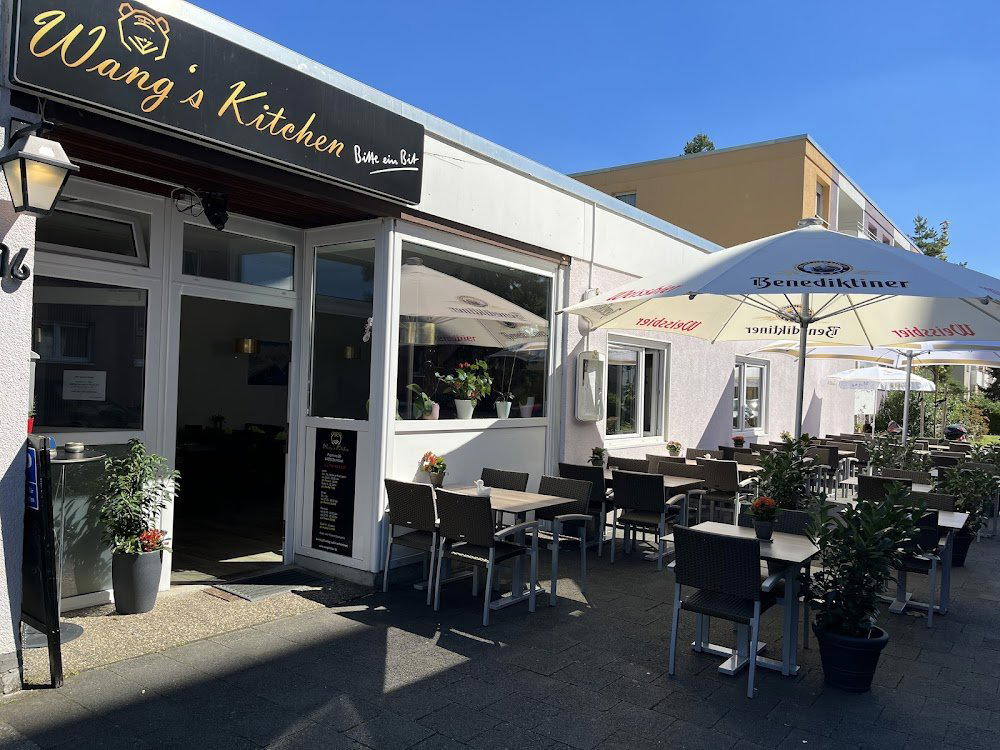
Wang's Kitchen occupies a residential address in Darmstadt's southern quarter, where the city's appetite for Chinese cooking meets a neighbourhood-scale setting far removed from the tourist-facing strips. The kitchen draws on sourcing and preparation traditions that distinguish it from the broader Rhine-Main Chinese dining field. For visitors mapping the city's more considered eating options, it sits alongside a compact but growing cohort of independently run specialist addresses.

Pearl is the En Primeur Club membership app — saves, bookings, and concierge access live there. Same editors, same standards.
- Address
- Pupinweg 16, 64295 Darmstadt, Germany
- Phone
- +4961518700892
- Hours
- Daily 11:30 AM–2:30 PM, 5:30–10:30 PM
- Website
- wangskitchen.de
- Directions
- Get directions
- Booking
- Book on the venue's website
Chinese Cooking in a City Finding Its Culinary Voice
Darmstadt is not Frankfurt. That distinction matters when reading the city's restaurant map. Where Frankfurt's Chinatown-adjacent streets operate at volume and velocity, Darmstadt's Chinese kitchens tend toward the neighbourhood-embedded model: smaller rooms, regulars who know the menu by memory, and a cooking style shaped as much by the owner's regional background as by commercial calculation. Wang's Kitchen, at Pupinweg 16 in the 64295 postcode, sits in this tradition. The address is residential, the setting domestic in scale, and the proposition pitched squarely at a local clientele rather than at passing trade.
This positioning is worth understanding before you visit. Darmstadt's dining scene is in a period of quiet expansion. Addresses like OX (Modern Cuisine) and das krü have pushed the city's more ambitious end of the register, while Radieschen and Djadoo occupy different points along the independent, neighbourhood-led spectrum. Wang's Kitchen belongs to a different cohort again: the specialist family-run Chinese address that functions as a fixture rather than a destination, valued most by those who have already made a habit of it.
Where the Food Comes From and Why That Defines the Kitchen
The editorial angle that matters most with a kitchen like this is sourcing. In Germany's Chinese restaurant sector, the gap between venues that cook from imported dry goods and MSG-heavy sauces and those that work with fresh produce and regionally adapted supply chains is wider than the menus suggest. The former category produces consistent, fast, and safe plates. The latter tends toward irregularity in the service experience but greater depth in the cooking itself.
Chinese kitchens embedded in residential German neighbourhoods often occupy an interesting middle ground: the base ingredients come from standard German wholesale channels, but the technique applied to them reflects a regional Chinese tradition that the cook brings rather than learns locally. The result can be dishes that taste quite different from what the same ingredient would produce in a city-centre Chinese restaurant working at speed for a mixed international crowd.
What the sourcing question points to, more broadly, is the importance of asking what a Chinese kitchen is actually doing with its vegetables. In regions like Sichuan, Cantonese, or Hunanese cooking, the treatment of greens, aromatics, and fermented condiments carries as much information about a cook's background as the proteins do. A kitchen working from fresh ginger, proper doubanjiang, and wok-breath heat tells you something different from one working from a standardised sauce packet. For a neighbourhood kitchen in a mid-sized German city, the ability to maintain any version of that fidelity depends heavily on supply relationships that take years to build.
Germany's Rhine-Main corridor, which includes Darmstadt within its radius, has a large enough Chinese-heritage population to support specialist ingredient supply. That geographic reality makes it plausible for kitchens like Wang's to source beyond the standard German wholesale tier when motivation and knowledge align. It is the kind of structural advantage that rarely appears on a menu but registers clearly in the cooking.
How Wang's Kitchen Sits in the Darmstadt Context
For comparison, consider the broader German fine dining field and what it tells you about where resources and attention tend to flow. Addresses like Aqua in Wolfsburg, Schwarzwaldstube in Baiersbronn, Vendôme in Bergisch Gladbach, and Waldhotel Sonnora in Dreis occupy the tier at which sourcing is both philosophically central and economically supported by high cover prices. Further down the price register, JAN in Munich, ES:SENZ in Grassau, Schanz in Piesport, Restaurant Haerlin in Hamburg, and Victor's Fine Dining by Christian Bau in Perl each demonstrate different ways in which a kitchen's supply chain thinking shapes its identity. Internationally, Le Bernardin in New York City and Atomix in New York City show how ingredient sourcing can become the central organising principle of an entire restaurant concept. Even CODA Dessert Dining in Berlin has built a reputation around ingredient specificity at the dessert-focused end of the spectrum.
None of that applies directly to a neighbourhood Chinese kitchen in Darmstadt. But the comparison is instructive because it underlines how sourcing questions cut across every price tier and format. At Wang's Kitchen, the questions are less about hand-dived scallops or biodynamic growers and more about whether the wok runs hot, whether the fermented pastes are imported from the right province, and whether the kitchen cooks with the kind of daily repetition that produces consistency in simple dishes. Those are the metrics that matter in this category.
Darmstadt also has Olbrick - Loved Sushi and Asian Fusion operating in the broader Asian dining space. The distinction between a fusion-oriented address and a single-cuisine specialist kitchen is one that diners in this city are increasingly able to read: fusion addresses trade on creativity and range, while specialists like Wang's Kitchen offer depth within a narrower frame. Both have their place in a maturing restaurant market.
Planning Your Visit
Wang's Kitchen is at Pupinweg 16, 64295 Darmstadt, in the city's southern residential zone. The address sits outside the central pedestrian area, which means arriving by tram or car is more practical than on foot from the main train station. Darmstadt's restaurant scene, taken as a whole, rewards some advance planning: the city's better independent addresses are not large, and the most considered kitchens fill on weekend evenings. For a broader orientation to what the city offers across categories and price points, the full Darmstadt restaurants guide maps the field more completely.
Frequently asked questions
Is Wang's Kitchen a family-friendly restaurant?
The address at Pupinweg 16 in Darmstadt's southern residential zone places Wang's Kitchen in a quieter neighbourhood setting, which tends to suit family dining more than a high-turnover city-centre room. Chinese restaurant formats in Germany at this scale commonly operate with shared dishes and flexible ordering, which works well for groups of mixed ages.
Is Wang's Kitchen better for a quiet night or a lively one?
The Pupinweg address sits outside Darmstadt's pedestrian centre, in a residential part of the 64295 postcode, which points toward a lower-tempo atmosphere than venues on the main dining streets. That said, Chinese restaurants in German cities of Darmstadt's size often see weekend surges driven by local regulars rather than passing trade.
Is Wang's Kitchen in Darmstadt worth the trip from Frankfurt?
Darmstadt sits roughly 30 kilometres south of Frankfurt by rail, making it a short journey rather than a detour. Wang's Kitchen occupies a residential address at Pupinweg 16 in the 64295 postcode rather than a high-profile dining strip, which means it draws from a local base rather than destination traffic. Travellers coming specifically from Frankfurt would be making the trip for a neighbourhood Chinese kitchen rather than an award-documented dining room, so the decision hinges on personal context and prior local knowledge of the venue.
What's the signature dish at Wang's Kitchen?
Chinese kitchens operating in mid-sized German cities like Darmstadt commonly anchor their menus around regional Chinese staples adapted for the local market, though the exact regional tradition this kitchen draws from has not been documented. Contacting the restaurant directly at Pupinweg 16 is the most reliable way to ask what the kitchen does best.
What part of town is Wang's Kitchen in?
Wang's Kitchen is located at Pupinweg 16, 64295 Darmstadt, Germany, Darmstadt.
Quick Comparison
Comparable venues nearby, for context on price, style, and recognition.
| Venue | Cuisine | Price | Notes |
|---|---|---|---|
| Wang's KitchenThis venue — the venue you are viewing | Pan-Asian All-You-Can-Eat | $20–30 | Not listed |
| Djadoo | Authentic Persian & Oriental | $20–30 | Viktoriaplatz |
| Radieschen | Vegetarian International with Organic Focus | $20–30 | Darmstadt-Eberstadt |
| Olbrick - Loved Sushi & Asian Fusion | Loved Sushi & Asian Fusion | Not listed | Not listed |
| Restaurant Yetenbi | Authentic Ethiopian | Not listed | Darmstadt-Mitte |
| das krü | Modern German with International Influences | $50–100 | Ludwigstraße, Darmstadt city center |
Continue exploring
More in Darmstadt
Restaurants in Darmstadt
Browse all →
Bars in Darmstadt
Browse all →

Hotels in Darmstadt
Browse all →
Details
- Cozy
- Casual Hangout
- Family
- Group Dining
- Buffet
- A La Carte
- Gluten Free Options
Current opening hours
- Monday
- 11:30 AM–2:30 PM, 5:30–10:30 PM
- Tuesday
- 11:30 AM–2:30 PM, 5:30–10:30 PM
- Wednesday
- 11:30 AM–2:30 PM, 5:30–10:30 PM
- Thursday
- 11:30 AM–2:30 PM, 5:30–10:30 PM
- Friday
- 11:30 AM–2:30 PM, 5:30–10:30 PM
- Saturday
- 11:30 AM–2:30 PM, 5:30–10:30 PM
- Sunday
- 11:30 AM–2:30 PM, 5:30–10:30 PM
Hours can change for holidays and private events. Last verified .
Relaxed and cozy atmosphere ideal for casual gatherings.