
In the upper reaches of Val Formazza, Walser Schtuba serves Alpine country cooking that draws directly from the valley's Walser heritage and mountain larder. The €€ price point and consecutive Michelin Plate recognitions (2024, 2025) make it one of the more considered stops in this remote corner of Piedmont's Verbano-Cusio-Ossola province. Summer outdoor dining extends the experience into the surrounding peaks.
Pearl is the En Primeur Club membership app — saves, bookings, and concierge access live there. Same editors, same standards.
- Address
- 28863 Riale Province of Verbano-Cusio-Ossola, Italy
- Phone
- +39 339 366 3330
- Website
- locandawalser.it
- Directions
- Get directions
 Saves & bookings on Pearl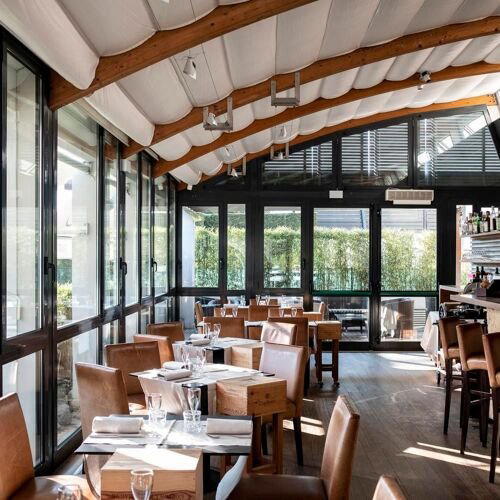
Where the Valley Ends and the Kitchen Begins
The upper section of Val Formazza sits at the kind of altitude where Italian roads narrow to a single lane and the air carries the particular sharpness of snowmelt and pine. Riale, the hamlet that holds this address, is as far up the valley as the asphalt goes. Getting here requires intention. The drive from Formazza village takes roughly twenty minutes along a road that follows the Toce river upstream, climbing past waterfalls and through stands of larch. By the time you arrive, the surrounding peaks have already done their work on your appetite. For those travelling from further afield, Ponte, the valley's main access point, sits approximately 90 kilometres north of Verbania on Lake Maggiore.
This geographical isolation is not incidental to what Walser Schtuba serves. It is the operational condition that shapes the entire menu. Restaurants at this elevation, in valleys that empty of visitors for six months a year, do not build their kitchens around broad supply chains. They work with what the mountain produces and what local producers maintain across generations. That constraint tends to produce cooking of a specific character: dense in tradition, spare in ornamentation, directly tied to the land.
The Walser Kitchen and Why It Matters Here
The name itself frames the culinary context. The Walser were a Germanic-speaking people who settled the high Alpine valleys of the Piedmont, Aosta Valley, and parts of Switzerland from around the thirteenth century. Their culture, still traceable in local dialect and architecture, produced a distinctive mountain cuisine built on what the short growing season allowed: dairy, preserved meats, root vegetables, rye, and whatever game and freshwater fish the valley offered. That kitchen tradition is not nostalgic decoration in this part of Val Formazza. It is still the baseline from which local cooking operates.
Walser Schtuba's menu works within that inheritance, applying what the Michelin assessment describes as a light, modern reinterpretation. This is the productive tension in contemporary Alpine cooking more broadly: how much of the original weight and plainness to retain, and where to introduce technique without erasing character. The Michelin Plate recognition in both 2024 and 2025 places the kitchen in a tier of restaurants the guide considers worth a detour, even if not yet operating at starred level. For context, the Michelin Plate sits below the star awards but above unrecognised peers, signalling consistent quality and a kitchen with a defined point of view. For a restaurant at this remove from any major city, that recognition reflects something beyond ambition alone.
Among country-cooking restaurants in northern Italy, the calibration of tradition and lightness is handled differently across the region. 21.9 in Piobesi d'Alba and Andrea Monesi at Locanda di Orta in Orta San Giulio represent comparable approaches in Piedmont, each grounding a seasonal menu in local agricultural identity. Walser Schtuba operates on a similar philosophical axis but with a more constrained ingredient palette dictated by altitude and cultural specificity rather than the more diverse lowland larder of the Langhe or Lago d'Orta.
What the Mountain Larder Produces
At elevation in the western Alps, sourcing is not a marketing decision. It is geography. The Val Formazza valley floor sits above 1,200 metres for most of its length, and Riale pushes above 1,700. At that altitude, the local food supply is built on Alpine dairy (the valley has a longstanding cheese and butter tradition), preserved and cured meats, mountain herbs that flower briefly in summer, and whatever comes from the forests and rivers. This is the raw material the kitchen inherits, and the menu reflects it. The modern reinterpretation framing suggests the kitchen applies current technique to that foundation rather than reproducing historical recipes without adjustment.
Italy's broader restaurant culture at the highest level tends toward either maximalist creativity or product-led minimalism. Restaurants like Osteria Francescana in Modena and Enrico Bartolini in Milan operate at €€€€ price points with global ingredient access and decade-long waiting lists for specific reservation windows. The mountain country-cooking tradition runs perpendicular to that trajectory. Its authority comes from vertical depth in a single place, not horizontal reach across ingredients or techniques. Atelier Moessmer Norbert Niederkofler in Brunico is one cited example of how Alpine ingredient sourcing can be pushed to a starred level, though it operates at a fundamentally different scale and price bracket from Walser Schtuba's accessible €€ positioning.
Summer at Altitude: Outdoor Dining in Context
The outdoor dining option in summer is not a peripheral feature here. In high-altitude Alpine restaurants, the seasonal availability of an outdoor terrace is tied directly to the rhythm of the place. Val Formazza sees substantial visitor numbers in summer from walkers, cyclists, and those using the valley as a base for crossing into Switzerland via the Passo San Giacomo. The surrounding landscape at Riale includes the Cascata del Toce, one of the tallest waterfalls in the Alps, which draws visitors through the warmer months. Eating outside in this setting is an extension of the valley experience rather than a simple weather amenity.
Summer and early autumn are the primary dining window for visitors not staying locally. Those planning a visit in shoulder season should check current operating dates directly, as the window between late spring snowmelt and late autumn closure can vary by several weeks year to year.
Planning a Visit
The restaurant carries a €€ price point, with meals averaging about $65 per person. The address is Riale, Province of Verbano-Cusio-Ossola, at the summit of Val Formazza. No direct booking contact is listed in public directories, so one reliable approach is to contact the restaurant through local tourism channels or arrive during service hours and check availability. Given the remote location and limited alternatives in the immediate area, calling ahead through regional tourism offices is worth the effort. For broader context on the area's dining options, see our full Ponte restaurants guide. Those spending time in the valley should also consult our Ponte hotels guide, the bars guide, the wineries guide, and the experiences guide for a fuller picture of what the region offers.
For those building a wider northern Italian itinerary around serious restaurants, the comparison set expands considerably: Dal Pescatore in Runate, Le Calandre in Rubano, Piazza Duomo in Alba, and Casa Perbellini 12 Apostoli in Verona all sit within the northern Italian fine dining circuit at higher price brackets. Enoteca Pinchiorri in Florence, Quattro Passi in Marina del Cantone, Uliassi in Senigallia, and Reale in Castel di Sangro extend that list to the broader national scene. The restaurant's argument is a different one: specificity of place, coherence of tradition, and a kitchen working seriously within a defined Alpine inheritance at a price that doesn't require advance financial planning.
Quick Comparison
Comparable venues nearby, for context on price, style, and recognition.
| Venue | Cuisine | Price | Awards | Notes |
|---|---|---|---|---|
| Walser SchtubaThis venue — the venue you are viewing | Modern Country Cooking | $$ | Michelin Plate | Not listed |
| Il Giardinetto | Classic Italian Lakeside Seafood | $$ | Michelin Plate | Mandello del Lario |
| La Cantina di Manuela | Italian Wine Bar | $$ | Michelin Plate | Buenos Aires - Porta Venezia - Porta Monforte |
| La Fortuna | Modern Italian Trattoria | $$ | Michelin Plate | Campagnola Cremasca |
| Bar à Fromage | Traditional Aosta Valley Cheese-Focused | $$ | Michelin Plate | Cogne |
| Crotto Valtellina | Traditional Valtellina Cuisine | $$ | Michelin Plate | Valle |
Recognition history
Dated appearances from independent guides and award organizations, with the underlying list record or original source where available.
Michelin Plate
Michelin
Michelin Plate
Michelin
Michelin Plate
Michelin
Continue exploring
More in Formazza
Restaurants in Formazza
Browse all →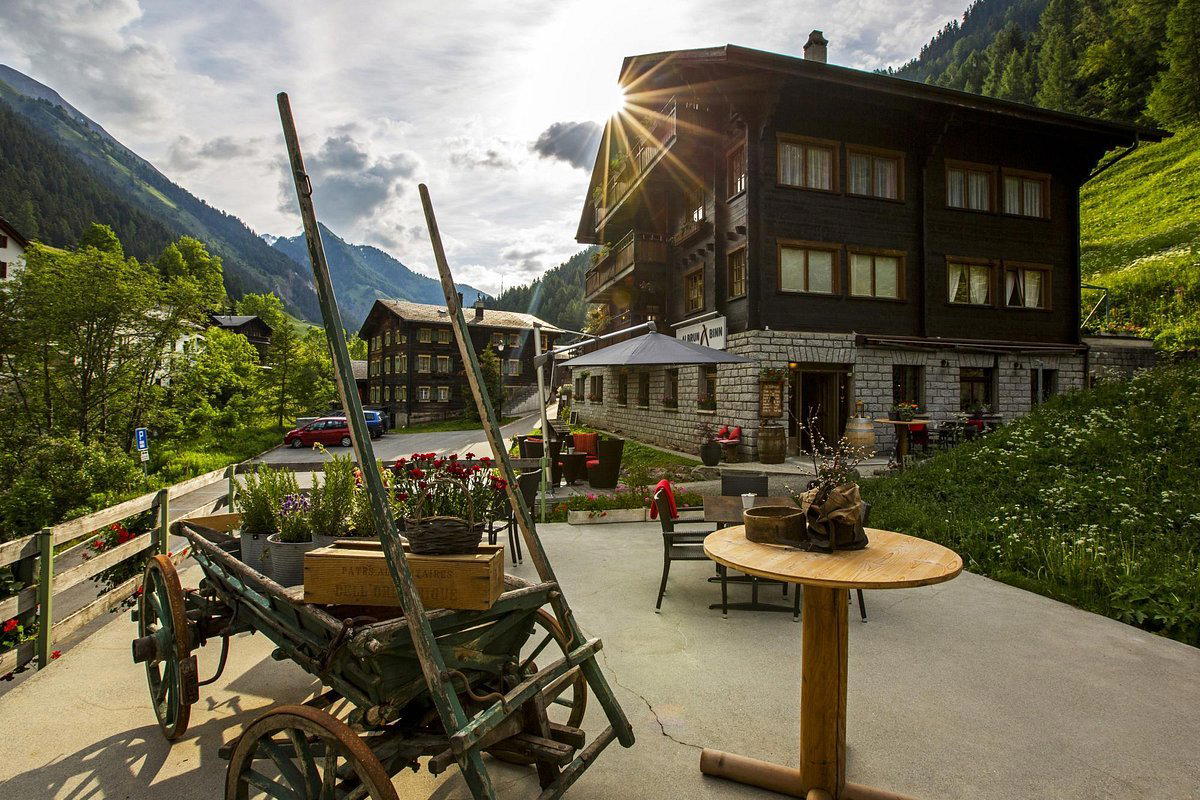
Bars in Formazza
Browse all →
Hotels in Formazza
Browse all →
Wineries in Formazza
Browse all →
At a Glance
- Rustic
- Cozy
- Scenic
- Group Dining
- Family
- Standalone
- Local Sourcing
- Mountain
Current opening hours
- Monday
- 8 AM–9 PM
- Tuesday
- 8 AM–9 PM
- Wednesday
- 8 AM–8 PM
- Thursday
- 8 AM–9 PM
- Friday
- 8 AM–9 PM
- Saturday
- 8 AM–9 PM
- Sunday
- 8 AM–9 PM
Hours can change for holidays and private events. Last verified .
Cozy Alpine-style interior with warm, rustic furnishings and bright, spacious rooms.