Walliser Kanne
Walliser Kanne occupies a address on Gerbergasse in Basel's pedestrian old town, placing it within reach of the city's compact dining quarter. The setting draws on the Valais tavern tradition, making it a reference point for Swiss regional cooking in a city that otherwise skews toward French and international fine dining. Occasion diners seeking a change from Basel's Michelin-focused circuit will find a different register here.
Pearl is the En Primeur Club membership app — saves, bookings, and concierge access live there. Same editors, same standards.
- Address
- Gerbergasse 50, 4001 Basel, Switzerland
- Phone
- +41612617017
- Website
- walliserkanne-basel.ch
- Directions
- Get directions
 Saves & bookings on Pearl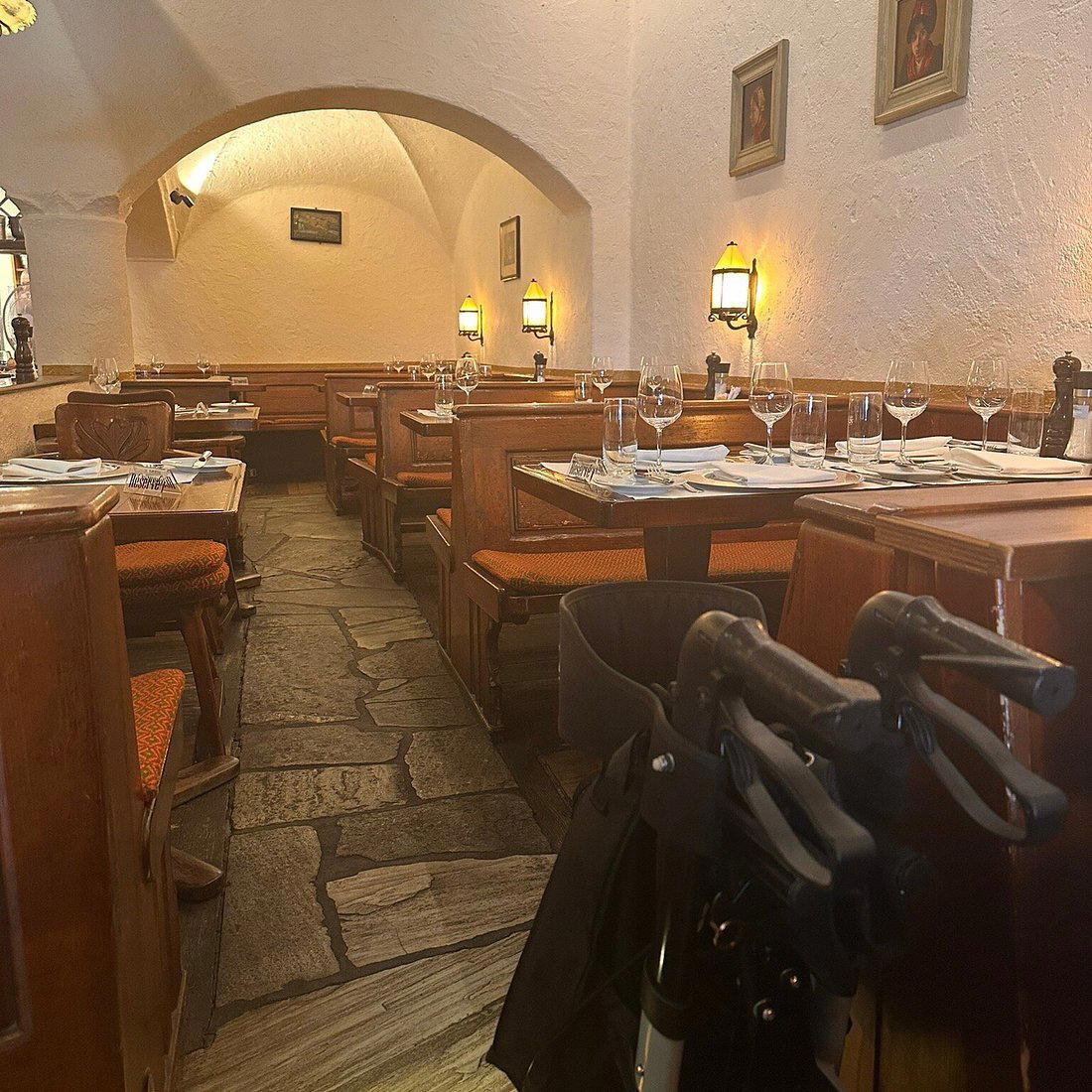
A Valais Outpost in Basel's Old Town
Basel's dining identity is shaped by its geography as much as its ambition. The city sits at the convergence of Switzerland, Germany, and France, and its restaurant culture reflects that tripartite pull: the Michelin tier runs heavily French, anchored by kitchens like Cheval Blanc by Peter Knogl and Stucki - Tanja Grandits, while the mid-range fills in with brasserie formats and international crossovers. Swiss regional cooking, in the Valais tradition, occupies a smaller, more specific niche — and Walliser Kanne on Gerbergasse holds that position in the city's old town.
Gerbergasse runs through the pedestrianised core of Basel's Innenstadt, the kind of street where the buildings narrow overhead and the foot traffic is a mixture of locals cutting through to the market and visitors moving between the Kunstmuseum and the Rhine embankment. The address at number 50 places the restaurant within a few minutes of Marktplatz, which matters for occasion diners arriving from hotels in the centre or coming in before or after an evening at the Theater Basel. Proximity to the city's institutional landmarks is part of what makes this stretch of the old town a reliable anchor for celebratory meals that need a central, easy-to-find location.
The Valais Tradition and What It Means in Practice
Walliser cooking — the cooking of the Valais canton in the southwestern Swiss Alps, has a character distinct from the French-inflected cuisine that dominates Basel's upper tiers. It draws on altitude agriculture: air-dried beef (Bundnerfleisch's Valais counterpart, Walliser Rohschinken), melted cheese in the raclette tradition, heavy-bodied mountain preparations designed for cold climates and physical labour. In a city where the reference kitchens at roots and 1777 push toward innovation and technique, a Valais house operates on different terms entirely: the draw is authenticity to a regional tradition rather than departure from it.
That positioning makes Walliser Kanne a different kind of occasion venue than the tasting-menu restaurants that dominate milestone dining conversations in Switzerland. Across the country, celebration meals increasingly default to the high-end tasting format, kitchens like Schloss Schauenstein in Fürstenau, Memories in Bad Ragaz, or Hotel de Ville Crissier in Crissier represent the formal end of that spectrum. But not every milestone calls for a multi-hour tasting sequence. Birthdays, anniversaries, and family gatherings sometimes want the weight of a specific regional tradition rather than the architecture of a modern tasting menu, and that is where a Valais tavern format earns its place in the occasion-dining conversation.
What the Setting Communicates
The Valais tavern typology has a visual grammar that signals its intentions before a single dish arrives. Dark timber, low ceilings, cow bells and cantonal crests used as decorative anchors, these are the elements that communicate a specific Alpine cultural identity rather than generic Swiss rusticity. In the context of Basel's old town, where the surrounding architecture dates to the medieval period and the streets are stone-paved, that visual register fits without feeling forced. The setting participates in the neighbourhood rather than contradicting it.
For occasion dining, setting legibility matters. A guest who has chosen a venue for a significant meal wants the room to confirm the decision. A Valais house in a historic old town address does that through accumulated cultural signals, the room tells a coherent story that a neutral contemporary space cannot. That coherence is part of the value for celebration dinners, particularly when the group includes guests from outside Switzerland who are looking for something that reads as specifically Swiss rather than generically European.
Basel's Occasion-Dining Tier and Where Walliser Kanne Sits
Basel's fine dining circuit has a clear upper tier: the starred kitchens carry the weight of the city's gastronomic reputation, and venues like Ackermannshof fill in the mid-level with Mediterranean-influenced cooking. Walliser Kanne occupies a different axis, defined less by price bracket and technique than by cultural specificity. It is the kind of restaurant that Basel's dining scene needs for completeness, a regional Swiss anchor in a city that otherwise imports most of its culinary reference points from across the border.
That positioning has parallels in other Swiss cities. The country's most recognized kitchens, from IGNIV Zürich by Andreas Caminada to focus ATELIER in Vitznau, operate at the technical frontier. But the Swiss dining market also sustains a parallel set of regional-tradition houses that serve a different clientele and a different occasion type. Internationally, the comparison holds too: just as a New York diner might choose between a tasting-menu institution like Le Bernardin or a more culturally specific format like Atomix depending on the nature of the occasion, a Basel diner choosing between the French fine-dining tier and a Valais house is making a similar kind of decision, register, not just price.
Planning a Visit
Gerbergasse 50 is accessible on foot from Basel SBB, the main railway station, in approximately fifteen minutes through the old town, or by tram to Marktplatz. The central location removes the need for taxis or additional logistics that can complicate the timing of occasion meals. For groups celebrating a milestone, the old town setting also allows the evening to extend naturally into the surrounding streets, the Rhine embankment is a short walk away and offers an obvious continuation for post-dinner conversation. Visitors planning a broader Swiss dining itinerary should note that Basel connects efficiently by train to destinations like Einstein Gourmet in Sankt Gallen, Colonnade in Lucerne, or Da Vittorio in St. Moritz, making it a practical base for a multi-city itinerary. For a full picture of Basel's dining options across cuisine types and price points, the EP Club Basel restaurants guide maps the current scene. For destinations further afield in Switzerland, 7132 Silver in Vals and L'Atelier Robuchon in Geneva represent contrasting models of Swiss destination dining.
Continue exploring
More in Basel
Restaurants in Basel
Browse all →
Bars in Basel
Browse all →

Hotels in Basel
Browse all →

At a Glance
- Rustic
- Cozy
- Classic
- Group Dining
- Casual Hangout
- Special Occasion
- Terrace
- Open Kitchen
- Street Scene
Current opening hours
- Monday
- 11:30 AM–12 AM
- Tuesday
- 11:30 AM–12 AM
- Wednesday
- 11:30 AM–12 AM
- Thursday
- 11:30 AM–12 AM
- Friday
- 11:30 AM–12 AM
- Saturday
- 11:30 AM–12 AM
- Sunday
- Closed
Hours can change for holidays and private events. Last verified .
Cozy rustic Alpine style with wood-paneled walls evoking a warm mountain hut atmosphere.
Know Before You Go
- Getting there
- Gerbergasse 50, 4001 Basel, Switzerland