
Michelin Plate
Our verdict
VIRTU holds back-to-back Michelin Plate recognition (2024 and 2025) and sits at the €€€ tier of Budapest's modern cuisine scene, occupying the 28th floor of the MOL Campus in the emerging Újbuda district.

Pearl is the En Primeur Club membership app — saves, bookings, and concierge access live there. Same editors, same standards.
- Address
- Budapest, MOL Campus, Dombóvári út 28-28.emelet, 1117 Hungary
- Phone
- +36 70 511 4900
- Hours
- Mon–Thu 11:30 AM–11 PMFri–Sat 11:30 AM–12 AMSun Closed
- Website
- virturestaurant.com
- Directions
- Get directions
- Booking
- Book on SevenRooms
The menu
What to order
- Keszthely sturgeon with orda cheese gnocchi
- Somlói trifle
Dining at altitude in Budapest's newest commercial district
The 28th floor of the MOL Campus changes the terms of the meal before a single plate arrives. Újbuda, the 11th district corridor stretching south along the Danube, has developed faster than Budapest's dining press has followed it, and the MOL Campus at Dombóvári út is its most visible architectural statement. Arriving here feels different from the inner-city restaurant ritual: no ruin-bar adjacency, no Andrássy boulevard grandeur, just a tower with unobstructed sightlines across the city and the river below. The physical context frames everything that follows.
That context matters for understanding where VIRTU sits in Budapest's modern cuisine tier. The city's Michelin-tracked restaurants have historically clustered in the 5th, 6th, and 7th districts, where foot traffic, hotel proximity, and heritage architecture have defined the premium dining geography. A Michelin Plate holder operating this far from that centre signals a deliberate repositioning: the kitchen is here because the ingredient sourcing, the commissioning context, and the corporate anchor make it viable independently of tourist-district adjacency.
What the Michelin Plate signals in a competitive city
VIRTU has held the Michelin Plate in both 2024 and 2025, a designation that indicates consistent cooking at a recognized standard without the star-level pressure that reshapes menus and booking windows around Michelin inspection cycles. In Budapest's current guide, that positions the restaurant in a cohort below Stand, Babel, and Costes at the starred level, and alongside Borkonyha Winekitchen and Textúra in the recognized-but-unstarred modern cuisine bracket.
The €€€ pricing also places it in an interesting middle position. It is more expensive than casual modern Hungarian addresses but does not reach the €€€€ tier where Budapest's tasting-menu-led fine dining operates. That gap between Plate recognition and the starred tier is where restaurants in many European cities find their most loyal local clientele: serious enough to attract the food-aware diner, accessible enough that the decision to book doesn't require a special occasion justification.
For a restaurant in a business-campus location with a non-tourist primary audience, that volume and score suggest repeat custom from a corporate and residential catchment rather than one-time visitor traffic, which is a different and arguably more demanding form of consistency.
Ingredient sourcing and the logic of modern Hungarian cuisine
The editorial angle that defines VIRTU's position in Budapest's scene is the sourcing question. Modern Hungarian cuisine, in its current form, operates within a tension: the country has exceptional primary produce, from Mangalica pork and grey cattle to paprika varieties, lake fish from Balaton, and a growing number of small-scale vegetable and dairy producers working with chefs directly. But translating that into a coherent modern restaurant idiom, rather than a nostalgia-coded folk cuisine, requires editorial discipline in sourcing and presentation.
Restaurants holding Michelin Plate recognition in this tier are generally those where the kitchen has made deliberate choices about which Hungarian ingredients to foreground and how to frame them against international technique. The comparison is useful: Platán Gourmet in Tata, Pajta in Őriszentpéter, and 42 Restaurant in Esztergom each work from strongly regional sourcing propositions tied to their local geography. A Budapest restaurant operating in a corporate tower faces a different brief: the sourcing still matters, but the provenance has to be communicated more actively because the context doesn't do it automatically.
Venues like 67 Sigma in Székesfehérvár, A Konyhám Stúdió 365 in Fonyód, and Alkimista Kulináris Műhely in Szeged represent the regionalist strand of Hungarian modern cooking, where geography and sourcing are the explicit argument. VIRTU operates in a complementary register: urban, altitude-anchored, with a guest profile that skews professional rather than destination-pilgrimage.
How VIRTU compares to its city-centre peers
Budapest's €€€ modern cuisine tier is more competitive than it was five years ago. Borkonyha Winekitchen has long anchored the wine-forward end of that bracket, pairing Hungarian varietals with a kitchen that takes seasonal produce seriously. Textúra occupies a different corner: tighter, more technique-led. VIRTU's campus location means it is not competing directly for the same walk-in or spontaneous-booking traffic as those inner-district addresses, but it competes for the same informed diner who plans ahead.
The comparison also extends beyond Hungary. At the €€€ modern cuisine tier in comparable European cities, the benchmark is whether the kitchen uses contemporary technique to illuminate local ingredients or whether local ingredients are decorative additions to a format borrowed from elsewhere. Budapest's Michelin Plate holders, including VIRTU, are increasingly in the former category, which is a meaningful shift from a decade ago when Hungarian fine dining largely imitated Western European idioms without the sourcing infrastructure to back them up.
For readers tracking this tier across borders, De Swarte Ruijter in Holten and Eden in Waalre offer instructive European parallels: Michelin-recognized modern cuisine operating outside major urban centres, where sourcing locality and a distinct spatial context substitute for metropolitan density as the core proposition.
Planning a visit
VIRTU is located at MOL Campus, Dombóvári út 28, on the 28th floor, in Budapest's 11th district. The campus is served by tram and metro connections into the city centre, making it accessible without a taxi from most central hotels, though the journey is longer than a walk from the inner districts would suggest. Given the corporate-tower setting and the Michelin recognition, booking ahead is advisable, particularly for evening slots and for lunch on weekdays when the business-dining audience is most active. The €€€ price point means a full meal with wine will be a meaningful but not extreme commitment by Budapest fine-dining standards. For a broader view of where this sits within the city's dining options, see our full Budapest restaurants guide, as well as our Budapest hotels guide, bars guide, wineries guide, and experiences guide.
Frequently asked questions
What dishes should I focus on at VIRTU?
What the Michelin Plate recognition across 2024 and 2025 does confirm is that the kitchen produces at a consistent recognized standard in the modern cuisine category. Diners familiar with Budapest's broader Babel or Costes end of the spectrum will find VIRTU working in a related idiom at a more accessible price point.
Is VIRTU reservation-only?
Advance booking is the practical approach for any evening or weekend visit. Budapest's recognized modern cuisine addresses at the €€€ tier and above routinely fill evening slots, and a campus location with a defined dining room capacity makes walk-in availability unreliable.
What do critics and reviewers highlight about VIRTU?
Michelin's Plate designation for two consecutive years points to a kitchen that inspectors consider worth noting, operating at a level above casual but below the starred tier. Together, these signals suggest a restaurant valued for reliable execution in the modern cuisine format rather than experimental volatility, which is its own argument at this price point in this city.
Cuisine Context
| Venue | Cuisine | Price | Awards | Notes |
|---|---|---|---|---|
| VIRTUThis venue — the venue you are viewing | Modern Hungarian Fine Dining | Not listed | Michelin Plate | Not listed |
| Babel | Modern Hungarian Fine Dining | Not listed | 1 Michelin Star · La Liste Top Restaurants | Modern Cuisine |
| Borkonyha Winekitchen | Modern Hungarian-Inspired Bistro | $30–50 | 1 Michelin Star · La Liste Top Restaurants | Modern Cuisine |
| Rumour by Rácz Jenő | Modern Fusion Tasting Menu | $100–150 | 1 Michelin Star · La Liste Top Restaurants | Not listed |
| Stand25 Bisztró | Modern Hungarian Bistro | $50–100 | Michelin Plate | Not listed |
| Bilanx | Modern Hungarian Contemporary | $50–100 | Michelin Plate | Not listed |
Recognition history
Dated appearances from independent guides and award organizations, with the underlying list record or original source where available.
Michelin Plate
Michelin
Full recognition history (2 entries)
Michelin Plate
Michelin
Continue exploring
More in Budapest
Restaurants in Budapest
Browse all →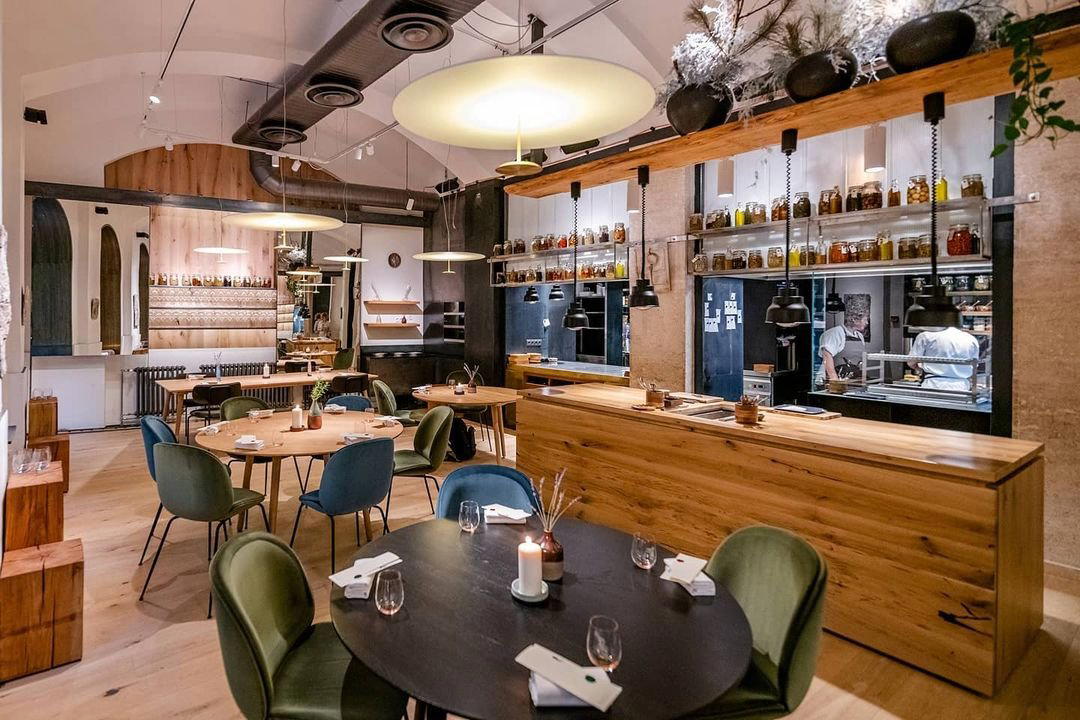
Bars in Budapest
Browse all →
Hotels in Budapest
Browse all →

Details
- Elegant
- Sophisticated
- Modern
- Scenic
- Intimate
- Date Night
- Special Occasion
- Celebration
- Panoramic View
- Open Kitchen
- Private Dining
- Extensive Wine List
- Craft Cocktails
- Local Sourcing
- Skyline
- Waterfront
- A La Carte
- Tasting Menu
- Wine
- Cocktails
- Gluten Free Options
- Allergy Accommodating
Current opening hours
- Monday
- 11:30 AM–11 PM
- Tuesday
- 11:30 AM–11 PM
- Wednesday
- 11:30 AM–11 PM
- Thursday
- 11:30 AM–11 PM
- Friday
- 11:30 AM–12 AM
- Saturday
- 11:30 AM–12 AM
- Sunday
- Closed
Hours can change for holidays and private events. Last verified .
Luxurious and inviting with dramatic panoramic views, beautiful decor, and a warm, professional atmosphere enhanced by an open kitchen and large bay windows.