Via Toscana
Via Toscana occupies a quiet corner of Midtown West at 344 W 52nd St, positioning itself within a neighborhood better known for pre-theater convenience than regional Italian commitment. For the regulars who return on their own schedule rather than a show's curtain call, the draw is consistency of place and the kind of familiarity that mid-priced Italian rooms in this part of Manhattan increasingly struggle to sustain.
Pearl is the En Primeur Club membership app — saves, bookings, and concierge access live there. Same editors, same standards.
- Address
- 344 W 52nd St, New York, NY 10019
- Phone
- +16469063192
- Website
- viatoscananyc.com
- Directions
- Get directions
 Saves & bookings on Pearl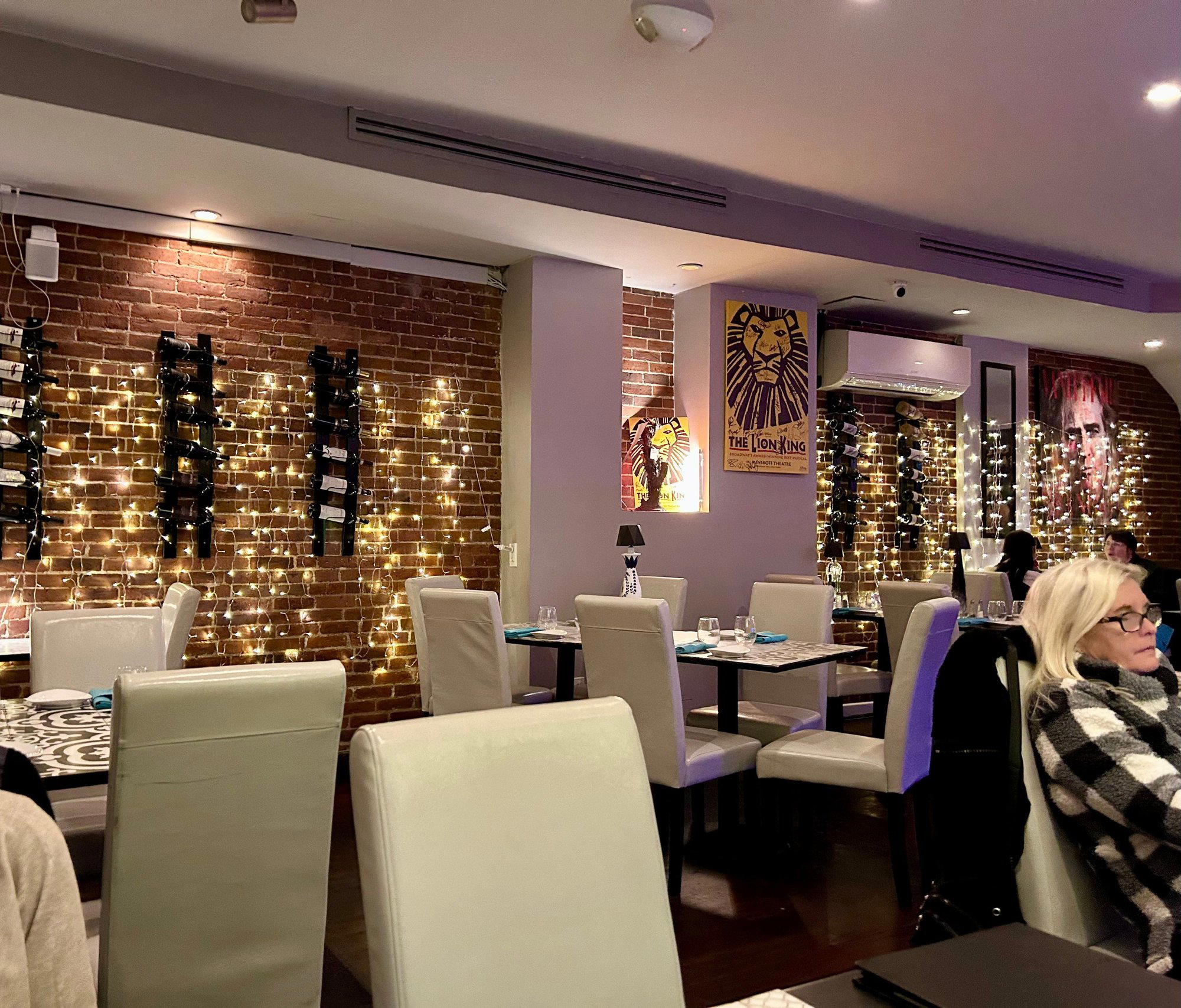
Midtown West and the Italian Room That Outlasts the Theater Crowd
West 52nd Street sits at the northern edge of Hell's Kitchen, a block type that has quietly shifted over the past decade from pure pre-theater utility toward something more considered. The restaurants that survive here without relying entirely on the 5:30 pm rush tend to do so because a local clientele decided to return. Via Toscana, at 344 W 52nd St, occupies that category: an Authentic Tuscan Italian restaurant in Midtown West, New York City, with a price tier around $50 per person.
That regulars' dynamic shapes how a room like this functions. The crowd at neighborhood Italian restaurants in Midtown West tends to stratify quickly: there are the theater-goers passing through, the office workers on a Tuesday, and then the regulars. It is the third group that defines a restaurant's actual identity, because they are the ones who know which table catches a draft, which nights the kitchen is at full strength, and how the room changes between early and late service. At Via Toscana, that layer of habitual familiarity is the operative lens through which the restaurant makes most sense.
The Tuscan Frame in a City of Regional Italian Rooms
New York's Italian dining scene has never been monolithic. The city holds Sicilian red-sauce institutions, Northern Italian white-tablecloth rooms, and a newer wave of regional specificity that treats Italy's twenty culinary zones as distinct categories rather than a single tradition. Tuscany occupies a particular position in that hierarchy: it is associated with restraint, with olive oil over butter, with bistecca and white beans and Chianti-adjacent wines, and with a cooking style that resists heavy sauce in favor of ingredient quality and simplicity of preparation.
That positioning places a Tuscan-named restaurant in an implicit conversation with how New Yorkers understand central Italian cooking. Midtown's Italian rooms have historically leaned toward a more generic pan-Italian format designed for broad appeal, which means a restaurant that signals a regional identity is making a quiet claim about specificity. The regional framing itself carries meaning in the context of this neighborhood.
For comparison, the upper tier of New York fine dining operates at a price point and reservation pressure that removes it from the consideration set for weekly or bi-weekly dining. The Italian neighborhood room serves a different function: it is where regulars eat on a Thursday without planning a month ahead, where the wine list is navigable rather than encyclopedic, and where the relationship with the staff accumulates over time rather than being reset with each visit.
What Keeps Regulars Returning
The regulars' economy at a Midtown Italian restaurant runs on a specific set of variables. Consistency matters more than occasional excellence, because a regular is not visiting for a peak experience but for a reliable one. The unwritten menu, meaning the dishes that experienced guests know to ask for or the modifications the kitchen will make without a fuss, functions as a form of social currency that distinguishes habitual guests from first-timers.
In the broader context of Italian-American dining in New York, this dynamic has a long history. The rooms that have survived decades in the city, from the old-guard Italian houses of the Upper East Side to the red-sauce institutions of Carroll Gardens, have done so because they built a constituency of returning guests rather than relying on a single wave of critical attention. Midtown has seen versions of this pattern at various Italian addresses over the years, though the neighborhood's transient character, driven by tourism and office cycles, makes it harder to sustain than in more residential areas.
The seasonal dimension matters here as well. Fall and winter tend to favor the kind of braised and roasted preparations central to Tuscan cooking, which aligns with the period when Midtown's theater season is at its densest and when the neighborhood sees its highest foot traffic. For regulars, the challenge is finding the room between the tourist peaks, when service can focus and the kitchen is not running at volume. Spring, when theater attendance dips and the pre-summer lull settles over the West 50s, is often when neighborhood Italian rooms like this one show their leading form.
Across the United States, the regional Italian format appears in different configurations at restaurants like Emeril's in New Orleans and more technique-driven addresses like Lazy Bear in San Francisco, Alinea in Chicago, Providence in Los Angeles, and Blue Hill at Stone Barns in Tarrytown, each of which anchors its identity in a specific regional or agricultural logic. That logic separates a credibly regional Italian room from a generalist Italian address using a geographic name as branding. Internationally, restaurants like 8½ Otto e Mezzo Bombana in Hong Kong and Alain Ducasse's Louis XV in Monte Carlo demonstrate how Italian and French regional frameworks can operate at the highest precision levels, a standard that filters down into how critics and regulars alike evaluate regional claims at every price point. Other strong regional anchors include Single Thread Farm in Healdsburg, The French Laundry in Napa, Addison in San Diego, The Inn at Little Washington, and Bacchanalia in Atlanta, all of which use place and season as primary organizing principles.
Planning Your Visit
Via Toscana is located at 344 W 52nd St, New York, NY 10019, in the Hell's Kitchen/Midtown West corridor, within walking distance of the Theater District. Reservations are recommended. Dress is smart casual. The price tier is about $50 per person. Timing: Avoid the pre-theater window if you prefer a quieter room; mid-week evenings and shoulder-season visits in spring tend to offer the settled service rhythm.
Peers You’d Cross-Shop
Comparable venues nearby, for context on price, style, and recognition.
| Venue | Cuisine | Price | Notes |
|---|---|---|---|
| Via ToscanaThis venue — the venue you are viewing | Authentic Tuscan Italian | $$$ | Not listed |
| Lucciola | Fine Dining Italian | $$$ | Upper West Side (Central) |
| Campagnola | Authentic Italian Countryside Trattoria | $$$ | Upper East Side-Lenox Hill-Roosevelt Island |
| L'incontro by Rocco | Traditional Italian Trattoria | $$$ | Upper East Side-Yorkville |
| Il Giglio | Tuscan Italian Fine Dining | $$$ | Tribeca-Civic Center |
| Stella 34 Trattoria | Modern Italian Trattoria | $$$ | Midtown-Times Square |
Continue exploring
More in New York City
Restaurants in New York City
Browse all →
Bars in New York City
Browse all →

Hotels in New York City
Browse all →






At a Glance
- Cozy
- Rustic
- Elegant
- Intimate
- Date Night
- Special Occasion
- Standalone
- Extensive Wine List
Current opening hours
- Monday
- Closed
- Tuesday
- 4 PM–12 AM
- Wednesday
- 4 PM–12 AM
- Thursday
- 4 PM–12 AM
- Friday
- 4 PM–12 AM
- Saturday
- 4 PM–12 AM
- Sunday
- 4 PM–12 AM
Hours can change for holidays and private events. Last verified .
Warm, rustic décor evoking Tuscany with a charming, village-like atmosphere and white-tablecloth service.