
In Wedding's Sprengelstraße, UUU has drawn the attention of serious Chinese food professionals across Europe who travel specifically to eat here. The kitchen delivers refined Chinese cuisine with a plant-based menu available by prior arrangement on Sundays, positioning it as one of Berlin's more considered addresses for contemporary Chinese cooking.
Pearl is the En Primeur Club membership app — saves, bookings, and concierge access live there. Same editors, same standards.
- Address
- Sprengelstraße 15, 13353 Berlin, Germany
- Phone
- +493056009028
- Website
- uuu-berlin.de
- Directions
- Get directions
 Saves & bookings on Pearl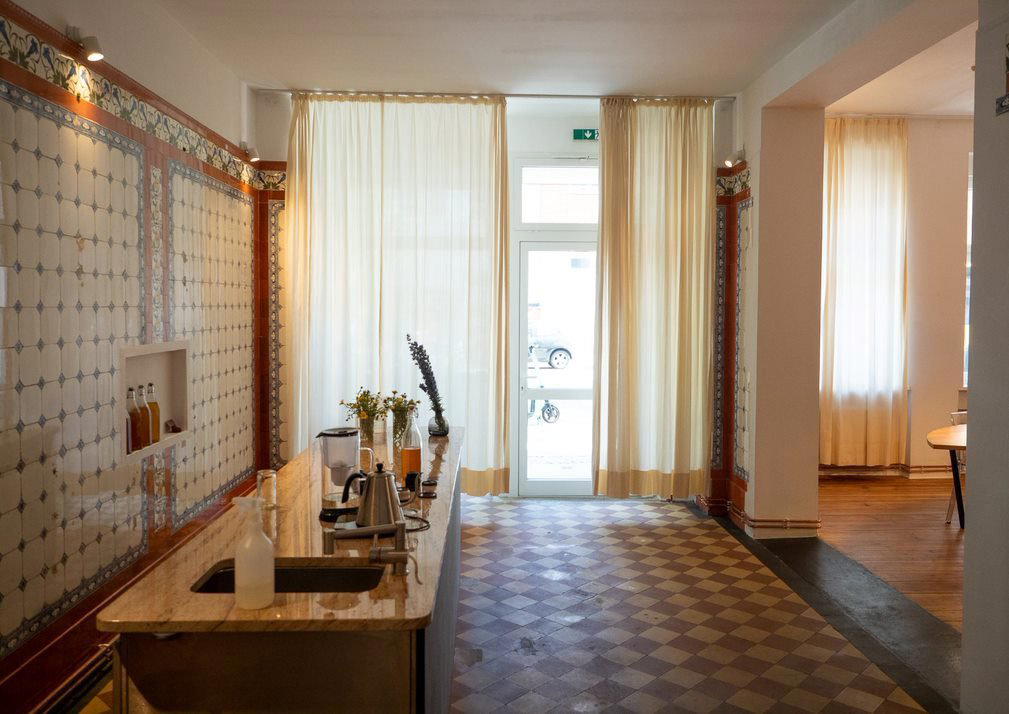
A Street in Wedding That Chefs Talk About
Wedding is not the neighbourhood you associate with refined Chinese cooking. The district sits north of Mitte, away from the gallery circuit and the tourist-facing restaurant belt, and Sprengelstraße offers none of the architectural theatre that frames high-end dining in other parts of the city. When chefs who work at the level of the JAN in Munich or Schwarzwaldstube in Baiersbronn make the trip to Berlin specifically to eat here, the address stops being incidental and becomes a signal in itself.
Chefs with the credentials to eat almost anywhere choose to arrive at Sprengelstraße 15. That is the kind of peer-group endorsement that awards panels cannot manufacture. In Berlin's competitive fine dining tier, which includes €€€€ addresses such as Rutz, Nobelhart & Schmutzig, and FACIL, UUU occupies a different kind of position: a specialist in refined Chinese cuisine operating largely outside the usual recognition machinery.
Where Chinese Cooking Meets European Fine Dining Discipline
Chinese fine dining in Europe has historically sat in an awkward position. One visible end of the market leans on familiar formats, large menus designed for groups, and execution built for volume. The other end, smaller and harder to find, applies European tasting-menu discipline to Chinese culinary logic without erasing what makes Chinese cooking structurally different from French or Nordic traditions. UUU belongs to the latter category, and that distinction matters when setting expectations for the meal.
For context on where the kitchen sits in the broader conversation about Chinese food in Germany, it helps to compare it against Restaurant Tim Raue, which also draws from Chinese and Southeast Asian flavour languages but through the perspective of a Berlin-born chef working at two-Michelin-star level. UUU and Tim Raue are not interchangeable propositions. They address Chinese cuisine from different angles, and the city is better for having both.
The Arc of the Meal
A tasting progression at UUU moves through the structural logic of refined Chinese cooking: the layering of texture, the calibration of heat and fat, the moments where broth or sauce does the work that a European kitchen might assign to a reduction. The kitchen's approach is not about fusion or hybridisation. It is about precision applied to a cuisine that demands a different kind of technical understanding than the French tradition that underpins most of Berlin's high-end restaurant culture.
What makes the meal's arc worth tracking is how the plant-based option intersects with that structure. Chinese cooking has deep vegetarian traditions rooted in Buddhist temple cuisine, and a kitchen that can translate those traditions into a contemporary tasting format is doing something genuinely specific. Refined Chinese cuisine is delivered here in a form where vegetarian and fully plant-based menus are possible. The caveat matters, though, and it is addressed plainly below.
The Plant-Based Question, Answered Honestly
Berlin has become one of Europe's most serious cities for plant-based dining. Addresses across the city, from creative European kitchens to neighbourhood spots, have built plant-forward menus into their core offer. UUU's plant-based menu is not that. The fully plant-based option requires communication at reservation, is subject to seasonal availability, and is only offered on Sundays. That is three layers of conditional access for a single menu format.
The 100% plant menu should be available without the current barriers, and ideally across more than one day of the week. The kitchen's capability is not in question. The format is. For guests who eat plant-based as a preference rather than a strict requirement, the standard menu will cover the visit without issue. For guests for whom a fully plant-based meal is the point, the Sunday-only, pre-arranged format requires planning well in advance.
For comparison, CODA Dessert Dining and other Berlin creative kitchens in the €€€€ tier have navigated similar questions with more structural flexibility. The standard in the category is moving toward always-available plant-based formats, and UUU's current approach sits behind that curve.
Planning a Visit
UUU is on Sprengelstraße 15 in the Wedding district of Berlin, reachable via the U9 line to Westhafen or a short walk from Leopoldplatz. The neighbourhood requires no particular acclimatisation for anyone who has spent time in Berlin's less-central districts. It is residential, low-key, and the restaurant will not announce itself the way a flagship address in Mitte might.
Booking ahead is advisable. Tables at addresses operating at this level of peer recognition tend to fill at pace, and the Sunday plant-based format in particular requires advance notice regardless of availability. Given the Sunday-specific constraints for plant-based guests, this is not a meal to leave to walk-in chance.
For those travelling across Germany with fine dining as the organising principle, nearby reference points include Aqua in Wolfsburg, Vendôme in Bergisch Gladbach, ES:SENZ in Grassau, and Restaurant Haerlin in Hamburg, among others. For international reference points in a similar register of cooking seriousness, Le Bernardin in New York City represents the kind of peer-set thinking that frames where UUU sits in the longer conversation about rigorous, specialist cuisine.
Comparable Venues
Comparable venues nearby, for context on price, style, and recognition.
| Venue | Cuisine | Price | Notes |
|---|---|---|---|
| UUUThis venue — the venue you are viewing | Modern Chinese Fine Dining | $$$ | Not listed |
| Da Jia Le | Authentic Northeastern Chinese (Dongbei) | $$ | Schoneberg |
| Golden Phoenix | French-influenced Chinese Fusion | $$$ | Wilmersdorf |
| Mr. Noodle Chen | Lanzhou Hand-Pulled Noodles | $$ | Wedding |
| Katz Orange | Modern German with North African Influences | $$$ | Mitte |
| Anabelas | Portuguese-Inspired Mediterranean | $$$ | Charlottenburg |
Recognition history
Dated appearances from independent guides and award organizations, with the underlying list record or original source where available.
We're Smart World 3 Radishes
We're Smart World
Continue exploring
More in Berlin
Restaurants in Berlin
Browse all →
Bars in Berlin
Browse all →
Hotels in Berlin
Browse all →


At a Glance
- Intimate
- Modern
- Cozy
- Special Occasion
- Date Night
- Chefs Counter
- Local Sourcing
Current opening hours
- Monday
- Closed
- Tuesday
- Closed
- Wednesday
- Closed
- Thursday
- Closed
- Friday
- 5:30–10 PM
- Saturday
- 5:30–10 PM
- Sunday
- 2–6:30 PM
Hours can change for holidays and private events. Last verified .
Calm and intimate atmosphere with a circular table for 9-10 guests, fostering engaging conversations during the menu progression.