Tuscany Ristorante
Tuscany Ristorante on Rhawn Street sits in Philadelphia's Northeast, where Italian-American cooking has put down deep roots over several decades. The room and menu speak to a neighborhood tradition that predates the city's current fine-dining moment, making it a reference point for the kind of everyday Italian that shaped how Philadelphians understand the cuisine.
Pearl is the En Primeur Club membership app — saves, bookings, and concierge access live there. Same editors, same standards.
- Address
- 2418 Rhawn St, Philadelphia, PA 19152
- Phone
- +12153314179
- Website
- tuscanyristorante-ne.com
- Directions
- Get directions
 Saves & bookings on Pearl
Northeast Philadelphia and the Italian-American Table
The stretch of Rhawn Street where Tuscany Ristorante sits belongs to a part of Philadelphia that rarely appears in dining coverage dominated by Center City and South Philly. Northeast Philadelphia built its Italian-American restaurant culture through community rather than criticism, through decades of Sunday dinners and weeknight regulars rather than award cycles or chef profiles. That context matters when you walk through the door. The room is not angling for a Michelin inspector's attention; it is operating inside a different set of expectations entirely, ones shaped by the neighborhood rather than the national conversation.
Italian-American cooking in the American Northeast occupies a peculiar position in the broader dining culture. It is simultaneously the most familiar cuisine most Americans know and the one most frequently dismissed by the critical establishment in favor of regional Italian traditions imported more recently. The red-sauce canon — braised meats, housemade pasta, long-cooked tomato preparations, veal and chicken in their many forms — developed its own coherence over generations, absorbing Sicilian, Neapolitan, and Calabrian influences while adapting to American ingredients and appetites. Restaurants like Tuscany Ristorante operate within that tradition, which means their frame of reference is the neighborhood rather than the trattoria, the regular rather than the tourist.
What the Room Asks of You
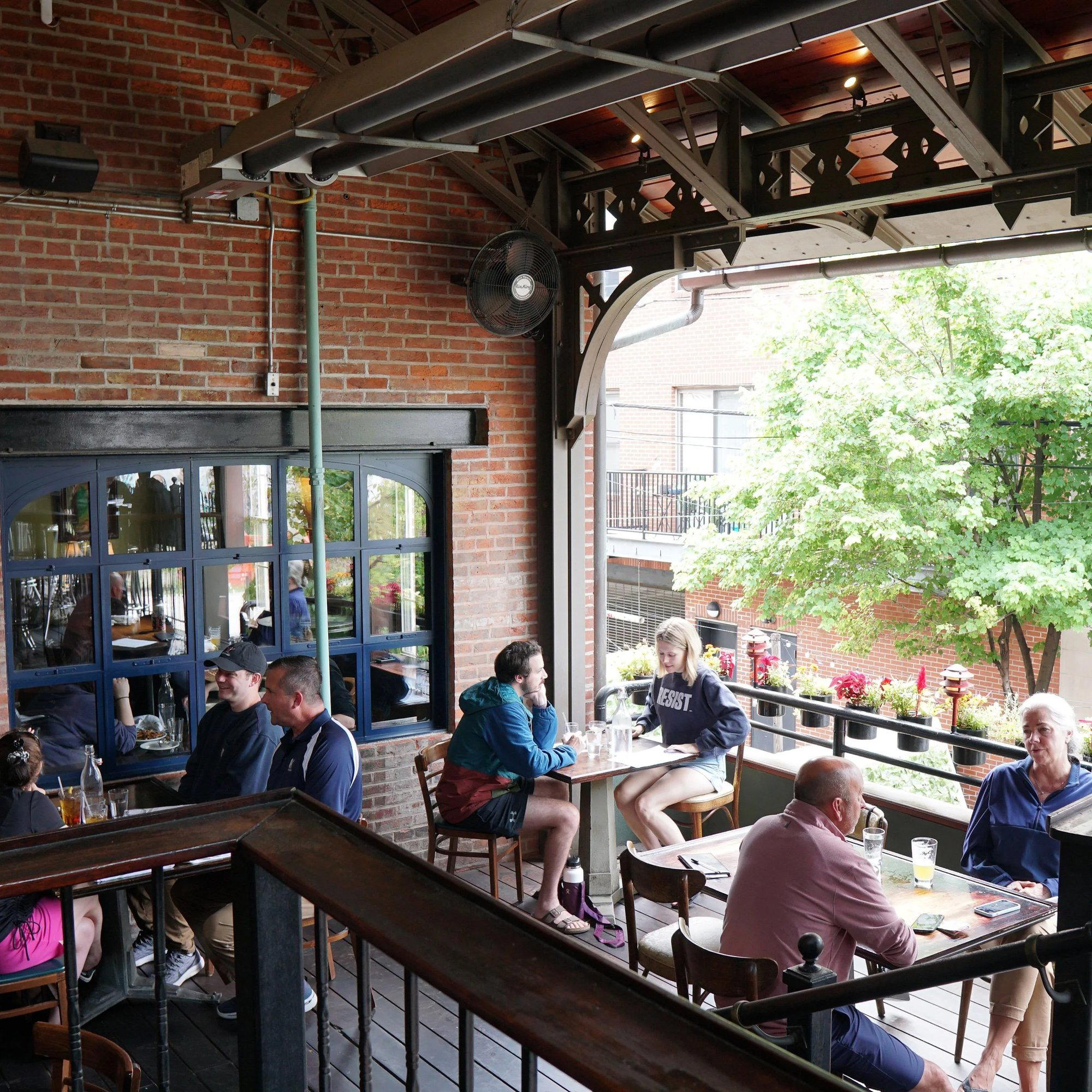
Atmosphere at a neighborhood Italian in Northeast Philadelphia is rarely about design conceits or curated playlists. It is about the accumulated presence of people who have been coming for years, about the specific weight of a dining room that has hosted enough occasions to carry a sense of memory. The physical environment on Rhawn Street follows that logic. This is not a space asking you to notice its lighting or its tile work; it is asking you to settle in, which is a different and in some ways more demanding request. Restaurants that rely on spectacle give the diner something to do from the moment they walk in. Restaurants that rely on comfort ask the diner to slow down and let the room work on them over the course of a meal.
That quality of ease is something Philadelphia's more celebrated destinations approach from a different direction. Fork and Friday Saturday Sunday have built their reputations on New American cooking that rewards close attention to technique and sourcing. Kalaya delivers the kind of Southern Thai intensity that demands full engagement. Mawn brings Cambodian and Pan-Asian flavors that are still finding their audience city-wide. My Loup operates in a French-inspired register that is self-consciously refined. Tuscany Ristorante does not compete in any of those registers. It competes in the register of the neighborhood restaurant, where the standard is reliability and the reward is familiarity.
The Italian-American Kitchen in Context
Italian cooking in American cities has never been monolithic. The wave of immigration that shaped neighborhoods like Northeast Philadelphia brought regional traditions that blended under the pressure of a new country and new ingredients. What emerged was not a dilution of Italian cooking but a distinct culinary form with its own internal logic. Braised short ribs finished with wine and aromatics, eggplant preparations that owe as much to Sicilian grandmothers as to any cookbook, pasta sauces that cook for hours rather than minutes: these are not approximations of something Italian but expressions of something Italian-American, which is its own thing.
That distinction is worth holding onto when thinking about how to read a menu in this tradition. The question is not whether a dish matches a Florentine or Roman original. The question is whether it executes the Italian-American form with conviction and care. Barbuzzo, operating closer to Center City, approaches Italian cooking from a more contemporary angle, with a wood-fired focus and a menu that nods to current tastes. Tuscany Ristorante operates in the older tradition, where the measure of a kitchen is how well it handles the long-cooked, the braised, and the slow.
For a wider map of where Italian and Italian-American cooking fits inside Philadelphia's full dining picture, our full Philadelphia restaurants guide covers the range from neighborhood rooms to the city's most decorated tables.
Philadelphia's Northeast in the Dining Map
The Northeast does not show up often in the city's dining coverage, which tends to concentrate on neighborhoods with higher foot traffic from visitors and younger professionals. That gap in coverage does not reflect a gap in quality so much as a gap in the critical infrastructure that generates coverage. Restaurants in the Northeast often serve a consistent local base rather than a rotating audience of food tourists, which means their reputations are built word of mouth over years rather than review cycles over months. That dynamic produces a different kind of restaurant: one calibrated to repeat visits rather than first impressions.
It is a pattern visible across American cities. The neighborhoods that received Italian, Eastern European, and working-class immigrant communities in the mid-twentieth century developed restaurant cultures tied to those communities' rhythms. As those neighborhoods evolved and as the children and grandchildren of those communities spread across metro areas, some of those restaurants followed. Others stayed put and became fixtures of a more settled, less mobile dining culture. Tuscany Ristorante on Rhawn Street belongs to that second category.
Planning Your Visit
Rhawn Street is in Philadelphia's Burholme and Fox Chase area, accessible by car from the Northeast Philadelphia arterials and reachable from Center City in roughly 25 to 30 minutes depending on traffic. As a neighborhood restaurant without a high-volume reservation apparatus, timing and booking approach are worth confirming directly before visiting, since operational details including hours and booking method are leading verified with the restaurant ahead of arrival. Weekend evenings at neighborhood Italians in this part of the city can fill early, particularly among regulars who have established their tables over many years. Arriving without a reservation on a Friday or Saturday night is a calculated risk. Midweek visits typically offer more flexibility.
Those interested in the wider Italian fine-dining tradition, from the red-sauce Northeast to the technically ambitious registers of restaurants like Le Bernardin in New York City, Alinea in Chicago, or The French Laundry in Napa, will find that the distance between those poles is instructive. The neighborhood Italian and the tasting-menu institution are solving different problems for different diners. Blue Hill at Stone Barns, Single Thread Farm in Healdsburg, Providence in Los Angeles, Addison in San Diego, The Inn at Little Washington, Atomix in New York City, Lazy Bear in San Francisco, Emeril's in New Orleans, and 8 1/2 Otto e Mezzo Bombana in Hong Kong all operate in that high-attention register where technique and sourcing are the primary languages. Tuscany Ristorante speaks a different language, one that requires fluency in the neighborhood rather than the kitchen's credential stack.
Continue exploring
More in Philadelphia
Restaurants in Philadelphia
Browse all →
Bars in Philadelphia
Browse all →
At a Glance
- Cozy
- Classic
- Family
- Date Night
- Casual Hangout
- Standalone
- Byob
Current opening hours
- Monday
- Closed
- Tuesday
- 3–10 PM
- Wednesday
- 3–10 PM
- Thursday
- 3–10 PM
- Friday
- 3–10 PM
- Saturday
- 3–10 PM
- Sunday
- 1–9 PM
Hours can change for holidays and private events. Last verified .
Warm and cozy atmosphere with attentive service, ideal for family dinners.
Know Before You Go
- Getting there
- 2418 Rhawn St, Philadelphia, PA 19152