Trinco Bay
Trinco Bay sits in Rayners Lane, Harrow, at a remove from the central London dining circuit that draws editorial attention. Where the capital's highest-profile rooms operate at ££££ price points and Michelin-tracked prestige, neighbourhood restaurants like Trinco Bay occupy a different register entirely, one where regulars, not critics, set the terms of the conversation.
Pearl is the En Primeur Club membership app — saves, bookings, and concierge access live there. Same editors, same standards.
- Address
- 8 Village Way E, Rayners Lane, Pinner, Harrow HA2 7LU
- Phone
- +44 20 4568 2676
- Website
- trincobay.co.uk
- Directions
- Get directions
 Saves & bookings on Pearl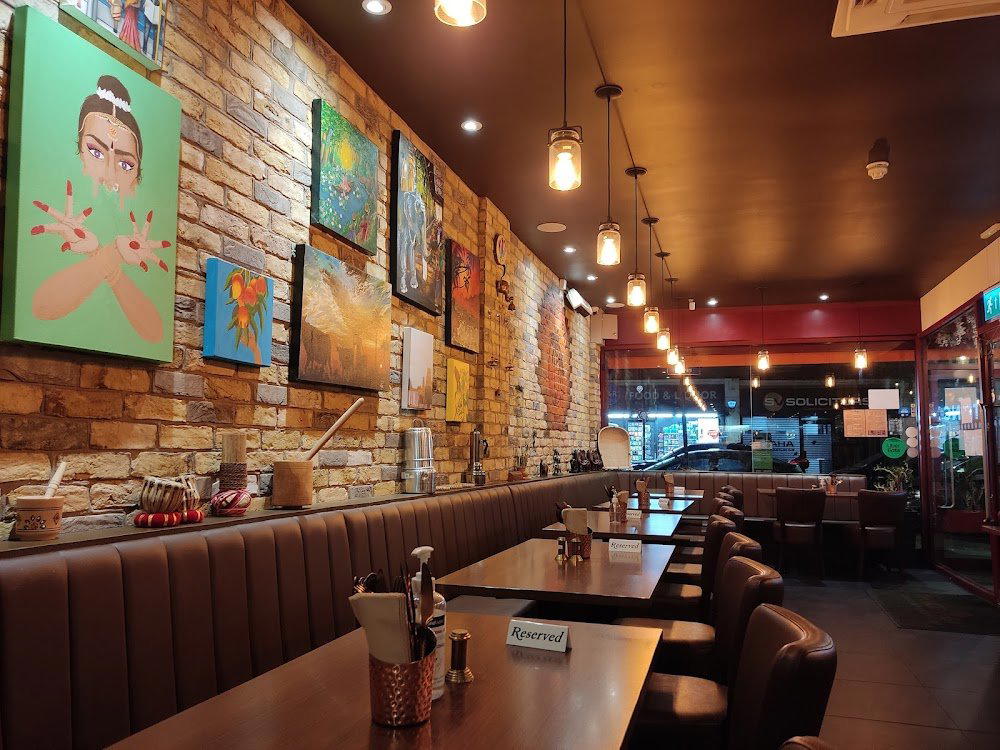
Outside the Circuit: Dining at the Edges of London
If there is one thing worth remembering about London's restaurant culture, it is that the venues receiving particularly column inches, the CORE by Clare Smyth tier, the Sketch Lecture Room set, the Ledbury generation, represent a narrow slice of how the city actually eats. The vast majority of Londoners eat within a few miles of home, in neighbourhood rooms that never appear in awards shortlists and rarely attract food journalists from the centre. Trinco Bay is a Sri Lankan restaurant at 8 Village Way E, Rayners Lane, Pinner, Harrow HA2 7LU. Understanding what it represents requires looking at the geography of the city's dining culture as much as the room itself.
What Harrow's Dining Scene Actually Looks Like
Harrow occupies a stretch of outer northwest London where South Asian, Sri Lankan, and East African communities have shaped the food culture for decades. The high streets around Rayners Lane, Kenton, and Wembley carry among the more concentrated corridors of South Asian cooking in the country, ranging from Gujarati sweet shops and Punjabi dhabas to Sri Lankan rice-and-curry counters that open early and close late. This is a dining scene shaped by residents, and the quality benchmark is set by people who know the cuisine well enough to notice shortcuts.
Sri Lankan food specifically occupies a distinct position within this geography. It shares ingredients with south Indian cooking, coconut milk, curry leaves, mustard seeds, tamarind, but diverges sharply in its use of roasted spice blends, the prominence of dried fish in everyday preparations, and the role of hoppers and string hoppers as vehicles for curry rather than bread or rice. In London, Sri Lankan restaurants remain less visible than their Indian counterparts at the national level, while being genuinely embedded in specific postcode communities. Rayners Lane is one of those communities.
The Team Dynamic in a Neighbourhood Room
In rooms like Trinco Bay, the collaboration between kitchen, service, and the people who actually run the floor tends to work differently than it does in the award-tracked restaurants of central London. At a Restaurant Gordon Ramsay or a Dinner by Heston Blumenthal, the hierarchy is documented, the front-of-house training is formalised, and the sommelier program runs on structured pairing logic. In a neighbourhood Sri Lankan room, the equivalent of that team dynamic plays out through shared community knowledge. The person taking the order often knows which dishes are freshest that day, which preparations take longer, and which regulars want their curry drier or wetter than the standard. That kind of operational intimacy is harder to replicate at scale and tends to produce a different quality of hospitality than the formally trained version.
Sri Lankan cuisine also demands a particular kind of coordination between whoever is managing the stove and whoever is managing the dining room, because the food does not hold well once plated. Hoppers deteriorate quickly; devilled preparations are better eaten immediately; the balance of a rice-and-curry spread depends on timing across multiple dishes arriving together. Getting that right in a small room requires communication between kitchen and floor that is less choreographed than at a fine dining counter but no less consequential for the guest experience.
Positioning in the Broader London Scene
London's Sri Lankan dining scene sits below the level of coverage given to, say, the Modern British fine dining track represented by venues like CORE by Clare Smyth or the destination dining that draws visitors from outside the city to places like The Fat Duck in Bray, L'Enclume in Cartmel, or Moor Hall in Aughton. Those rooms operate on tasting menu formats, advance booking requirements, and price points that function as filters. Trinco Bay operates in a different mode entirely, priced for regular use, and measuring success by repeat visits rather than critical coverage.
That distinction matters for how you approach it as a diner. The comparison set for a room like this is not Gidleigh Park in Chagford or Le Manoir aux Quat' Saisons in Great Milton. It is the other Sri Lankan and South Asian rooms in Harrow and the surrounding boroughs, where the standard of cooking is often higher than the price point implies and where the absence of media coverage is not a signal of quality but of geography.
For those whose reference points extend internationally, the contrast with something like Le Bernardin in New York City or Atomix is instructive: tightly controlled, award-tracked rooms at the summit of their respective cuisines share almost no operational DNA with a neighbourhood Sri Lankan restaurant in outer London, even when the cooking at the latter is excellent. They are answering different questions for different audiences.
What the Name Signals
The restaurant almost certainly takes its name from Trincomalee, the port city on Sri Lanka's northeast coast. Trincomalee is associated with some of the country's most distinct regional cooking, including preparations built around fresh seafood from the Bay of Bengal, and a Tamil culinary tradition that differs from the Sinhalese cooking more commonly represented in London. If the name is a regional signal, it positions the restaurant within a more specific niche inside the Sri Lankan dining category, one that shares reference points with the broader South Asian cooking corridor in Harrow.
Planning Your Visit
The restaurant is located at 8 Village Way East, Rayners Lane, Pinner, Harrow HA2 7LU, accessible via Rayners Lane station on the Piccadilly and Metropolitan lines. Outer London neighbourhood restaurants of this type typically operate without advance booking requirements, but visiting during off-peak hours reduces the risk of a wait. Current hours, pricing, and contact details are not confirmed; checking directly before travel is advisable.
Just the Basics
Comparable venues nearby, for context on price, style, and recognition.
| Venue | Cuisine | Price | Notes |
|---|---|---|---|
| Trinco BayThis venue — the venue you are viewing | South Harrow, Authentic Sri Lankan | $$ | Not listed |
| Farm Girl | Notting Hill, Healthy Cafe Brunch | $$ | Not listed |
| Freud Cafe | St Giles, Boho Cafe-Bar | $$ | Not listed |
| Tukdin | Bayswater, Authentic Malaysian | $$ | Not listed |
| Raw Press | Not listed | $$ | Belgravia, Plant-Based Juice Bar & Healthy Cafe |
| Frites Atelier London | Soho, Gourmet Dutch Frites | $$ | Not listed |
Continue exploring
More in London
Restaurants in London
Browse all →
Bars in London
Browse all →
Hotels in London
Browse all →


At a Glance
- Cozy
- Lively
- Group Dining
- Family
- Casual Hangout
- Open Kitchen
- Craft Cocktails
Inviting with nice ambience, calm and relaxing soft music, semi-open kitchen, and a mural of Sri Lanka.