Toscanini

Open since 1985, Toscanini has held its position on Lindengracht as one of Amsterdam's most respected Italian kitchens for four decades. Where much of the city's Italian dining ranges from tourist-facing trattorias to modern fusion, Toscanini stays committed to ingredient quality and classical technique. It occupies a comparable set defined less by price theatre and more by consistency across a long run.
Pearl is the En Primeur Club membership app — saves, bookings, and concierge access live there. Same editors, same standards.
- Address
- Lindengracht 75, 1015 KD Amsterdam, Netherlands
- Phone
- +31 20 623 2813
- Website
- restauranttoscanini.nl
- Directions
- Get directions
 Saves & bookings on Pearl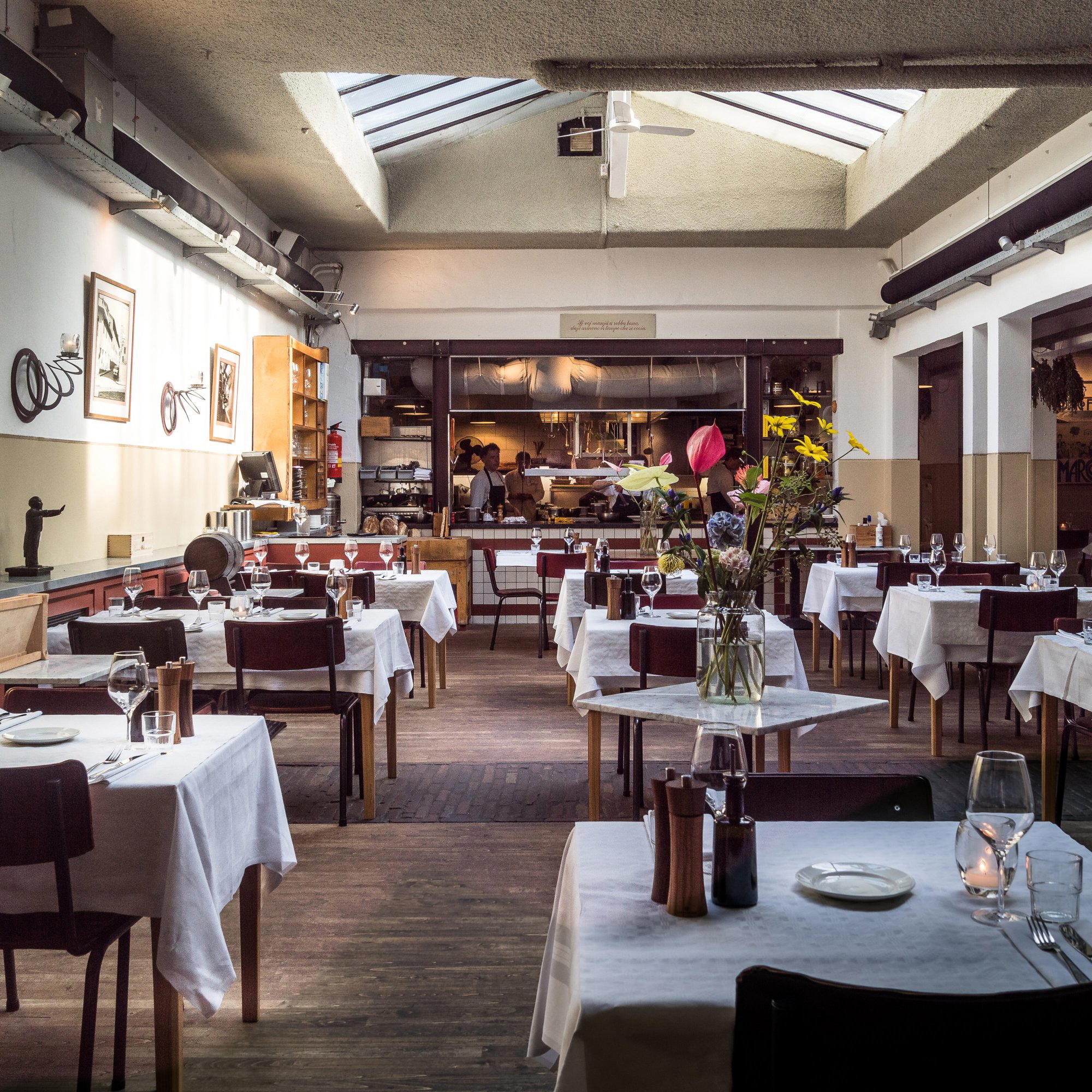
Lindengracht and What It Means for a Restaurant Like This
The Jordaan district has a way of sorting restaurants by longevity. Its narrow streets and neighbourhood character tend to favour places with genuine local support over those chasing footfall from the city's busier tourist corridors. Lindengracht sits at the residential end of that equation: a market street that empties into a quiet canal neighbourhood, where the foot traffic is mostly people who live there or have made a deliberate choice to visit. A restaurant that has operated at number 75 since 1985 is not surviving on passing trade. It has been chosen, repeatedly, by people who know what they want.
Toscanini opened in 1985, which places it in a different category from most of Amsterdam's Italian restaurants. The city's dining scene has shifted considerably across those four decades: a wave of international cuisines arrived, tasting-menu formats took hold at the upper end, and Italian food in particular fractured between quick-service pasta and high-concept modernist takes. Toscanini absorbed none of those pressures in any visible way. The kitchen's commitment to ingredient quality and authentic regional Italian cooking has remained the organising principle, and the restaurant has remained at the front of the city's Italian category because of it.
The Case for Classical Italian in a City That Prizes Experimentation
Amsterdam's current fine-dining scene is weighted toward creative and modern formats. Ciel Bleu, Spectrum, and Vinkeles represent the €€€€ creative tier that now anchors the city's Michelin representation, while Bolenius defines what serious modern-Dutch looks like in a comparable bracket. Toscanini operates outside this competition entirely. Its comparable set is not the tasting-menu circuit; it is the smaller group of European restaurants that have earned sustained loyalty through consistency rather than reinvention. The comparison is instructive: where formal creative kitchens in Amsterdam change menus seasonally and build identity around chef-led narrative, a restaurant like Toscanini builds identity around the food itself and the cumulative weight of forty years of getting it right.
That model has real parallels at a higher level. Institutions like Le Bernardin in New York City or, in a different tradition, Emeril's in New Orleans have maintained category leadership over decades by deepening a core identity rather than pivoting around trends. Toscanini occupies an analogous position in Amsterdam's Italian category. The difference between a restaurant that has been open since 1985 and one that opened three years ago and is already pivoting is not merely biographical. It reflects a fundamentally different approach to what a restaurant is for.
Quality as an Operational Position
The language Toscanini uses around its food, and the language that has attached to it over decades of coverage, centres on ingredient quality rather than technique display. In Italian regional cooking, that emphasis is not a modest claim. Sourcing correctly for Italian cuisine in the Netherlands requires active procurement: the right regional olive oils, aged cheeses brought in from specific producers, cured meats that have not been flattened by industrial process. A kitchen that has maintained that procurement discipline since 1985 has done so through supply relationships and operational rigour, not through a single inspired moment. The practical result is that what arrives at the table reflects choices made at the source, not only at the stove.
For context within the Netherlands, the country has produced serious cooking that reaches international recognition at places like De Librije in Zwolle, 't Nonnetje in Harderwijk, Aan de Poel in Amstelveen, De Bokkedoorns in Overveen, Brut172 in Reijmerstok, and De Groene Lantaarn in Staphorst. Most of that recognition clusters around Dutch and Nordic-influenced cooking. A non-Dutch kitchen sustaining a comparable level of seriousness for four decades in Amsterdam says something specific about execution: it cannot lean on local-produce provenance stories the way Dutch kitchens do. It has to earn its standing through the food alone.
How the Jordaan Shapes the Experience
The neighbourhood context matters to how an evening at Toscanini feels. The Jordaan has none of the transactional energy of the Leidseplein corridor or the museum-quarter hotel dining circuit. Reservations here are made by people who have planned a specific dinner, not people completing a tourist itinerary. That self-selection shapes the room. The crowd at Lindengracht 75 on any given evening will be predominantly local or visiting for considered reasons, which changes the atmosphere in ways that are difficult to manufacture: lower ambient noise, longer meal durations, a room where most tables know what they ordered before they arrived. For visitors approaching Amsterdam from a pure dining-itinerary perspective, Toscanini sits on a different axis from the Bistro de la Mer style of classic-seafood brasserie or the formal hotel dining represented elsewhere in the city. It is a neighbourhood restaurant that happens to operate at a level of quality that most neighbourhood restaurants do not reach.
Planning a Visit
Toscanini is at Lindengracht 75 in the Jordaan. Reaching it from the city centre is direct by foot or bicycle through the canal belt; from the main hotel concentration around Leidseplein, it is under twenty minutes on foot. Booking in advance is essential. Current hours and reservation details are best checked before you go.
A Lean Comparison
Comparable venues nearby, for context on price, style, and recognition.
| Venue | Cuisine | Price | Notes |
|---|---|---|---|
| ToscaniniThis venue — the venue you are viewing | Not listed | $$$ | Not listed |
| La Fiorita | Anjeliersbuurt Zuid, Modern Italian | $$$ | Not listed |
| A Tavola | Kadijken, Traditional Italian | $$ | Not listed |
| Van De Kaart | Spiegelbuurt, French Regional Bistro | $$$ | Not listed |
| Casa Italiana | Not listed | $$ | Leidsebuurt Noordoost, Authentic Italian Pizza and Pasta |
| Blue Pepper | Not listed | $$$ | Helmersbuurt Oost, Indonesian Rijsttafel & Modern Indian |
Recognition history
Dated appearances from independent guides and award organizations, with the underlying list record or original source where available.
Star Wine List
Star Wine List
Continue exploring
More in Amsterdam
Restaurants in Amsterdam
Browse all →
Bars in Amsterdam
Browse all →
Hotels in Amsterdam
Browse all →
Wineries in Amsterdam
Browse all →
At a Glance
- Lively
- Cozy
- Modern
- Date Night
- Casual Hangout
- Open Kitchen
- Extensive Wine List
Current opening hours
- Monday
- 6–11:30 PM
- Tuesday
- 6–11:30 PM
- Wednesday
- 6–11:30 PM
- Thursday
- 6–11:30 PM
- Friday
- 12 PM–1 AM
- Saturday
- 12 PM–1 AM
- Sunday
- Closed
Hours can change for holidays and private events. Last verified .
Bright, airy space with high ceilings, white walls, skylights, and lively buzz from the open kitchen encouraging good conversation.